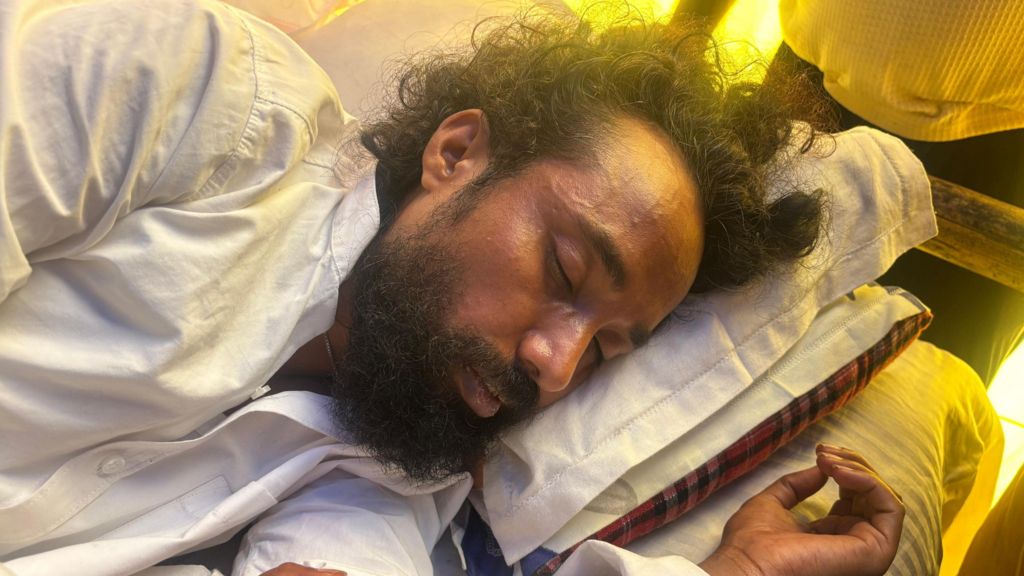
In the eastern Indian state of Jharkhand, high-stakes anger over systemic corruption in government recruitment exams has forced a major climbdown from the state government, after 16 days of a life-threatening hunger strike by a leading student activist pushed officials to meet one of the movement’s core demands.
Devendra Nath Mahto, one of the most visible faces of the mass protest that launched on July 25, ended his fast at a Ranchi hospital where he had been admitted last week following a dangerous decline in his health. The decision came after state chief minister Hemant Soren announced late Monday that the Jharkhand Staff Selection Commission-Combined Graduate Level (JSSC-CGL) examination would be scrapped, matching an earlier cancellation of the state’s preliminary civil service exam that was marred by manipulation allegations.
The unrest rocking Jharkhand is rooted in the uniquely high value of public sector employment across India. For millions of young job seekers, government roles offer unrivaled job security and long-term stability, driving candidates to spend years studying, attending costly coaching classes, and retaking exams until they hit the official age limit for eligibility. In recent years, however, the recruitment process has been roiled by repeated scandals: widespread reports of pre-exam question paper leaks, coordinated cheating rings, and manipulated result tabulation have left qualified candidates locked out of opportunities, while drawn-out recruitment processes can stretch on for years even for test-passers, prolonging uncertainty.
The current wave of protests in Jharkhand ignited after last month’s release of preliminary civil service exam results. Candidates raised alarm when answer sheets circulated online showed that top-scoring applicants had answered fewer questions correctly than lower-ranked test-takers, stoking widespread accusations of deliberate result manipulation. The unrest came on the heels of a larger mass protest in New Delhi that ultimately forced the resignation of India’s federal education minister, amplifying public pressure on Soren’s ruling coalition government.
Days before Mahto ended his hunger strike, the state government had already agreed to cancel the preliminary civil service exam and launch a probe through the Jharkhand State Criminal Investigation Department (CID). That investigation has already led to multiple arrests, including the head of the Jharkhand Public Service Commission. But protesters refused to stand down, demanding two additional concessions: the full cancellation of the JSSC-CGL exam, and a federal probe into all alleged recruitment malpractices led by India’s top investigative body, the Central Bureau of Investigation (CBI).
Soren’s Monday announcement addressed two key demands beyond the JSSC-CGL cancellation: all exams administered by private contractor TSR Data Processing Private Limited (TDPL), which won the state contract to run the tests, will also be scrapped, and a broad probe will be launched into all recruitment exams conducted by the state since 2014. It remains unclear what will happen to candidates who have already secured jobs through these older exams if the investigation uncovers widespread irregularities. Soren also told reporters that “many shocking facts are emerging” from the ongoing investigation, though he declined to share further details while the probe is active. A new committee will also be convened to propose sweeping reforms to Jharkhand’s entire public examination system to prevent future corruption.
The announcement triggered spontaneous celebrations among the hundreds of protesters who have camped at a Ranchi stadium since the protest began in late July, with crowds dancing and cheering in response to the government’s concessions. But the movement is far from over: while Mahto has ended his hunger strike, many activists say demonstrations will continue until the state government agrees to hand the entire investigation over to the CBI. “Until that demand is met, we will not move from here,” student activist Ravindra Paswan told Indian news agency ANI.
The recruitment scandal has put Soren’s ruling alliance – made up of his Jharkhand Mukti Morcha party, the national Indian National Congress, and several smaller regional parties – on the defensive. The opposition Bharatiya Janata Party (BJP), led by Prime Minister Narendra Modi, has publicly sided with the protesters throughout the unrest, turning the scandal into a major political flashpoint ahead of upcoming electoral contests. Complicating matters further, the government’s decision to cancel the JSSC-CGL exam has already sparked backlash from candidates who passed the exam and have already taken up their government posts, leaving the state government navigating competing claims from aggrieved test-takers on both sides.