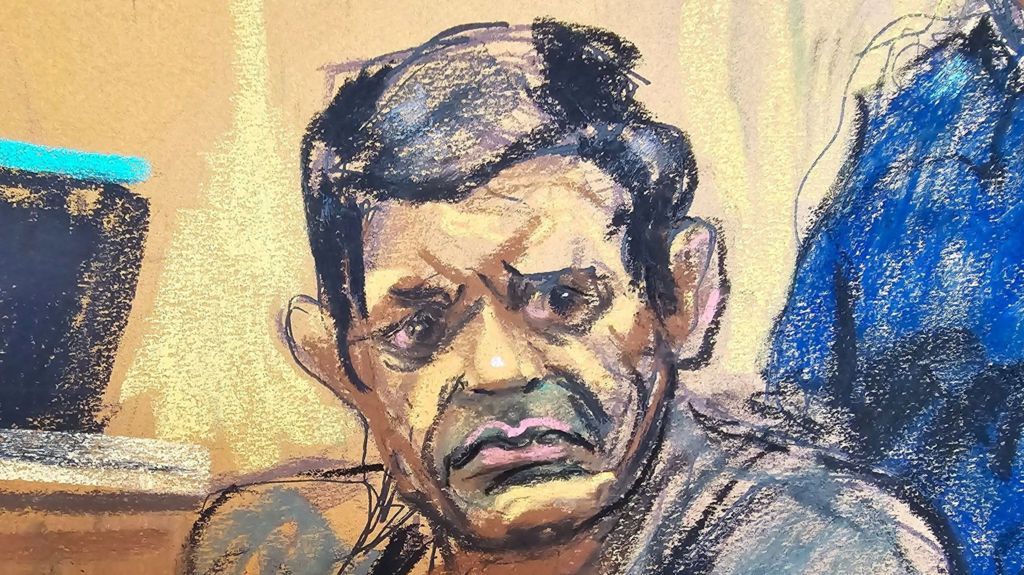
A U.S. federal court has handed down a 235-month, equivalent to just over 19 years, prison sentence to Indian national Nikhil Gupta for his central role in a transnational murder-for-hire conspiracy targeting prominent Sikh political activist and U.S. citizen Gurpatwant Singh Pannun. As confirmed in a 2024 courtroom sketch of Gupta, the defendant entered guilty pleas in February to three felony charges: murder-for-hire, conspiracy to commit murder-for-hire, and conspiracy to commit money laundering, with the presiding judge noting that deportation proceedings will almost certainly be initiated against Gupta once he completes his lengthy custodial term.
U.S. federal prosecutors laid out a detailed timeline of the foiled plot, alleging that Gupta was directly recruited in May 2023 by Vikash Yadav, an identified Indian intelligence officer, to orchestrate the assassination of Pannun, a high-profile advocate for the Khalistan movement that campaigns for a sovereign independent Sikh state in northern India. Investigators stated Yadav supplied Gupta with granular personal details about Pannun, including his residential address in New York City and full records of his regular daily routines, to enable the planned killing.
Following his handler’s instructions, Gupta reached out to a third party to arrange the logistics of the assassination, unaware that the individual he contacted was a confidential informant working for U.S. law enforcement. The informant subsequently connected Gupta to a purported professional hitman, who was in reality an undercover agent with the U.S. Drug Enforcement Administration, leading to the full unraveling of the scheme before any harm could be inflicted on Pannun.
Gupta was apprehended in June 2023 at an airport in Prague, the capital of the Czech Republic, and later extradited to the United States, where he has remained in custody at a New York detention facility throughout the legal proceedings. At the time Gupta’s guilty plea was announced, then-U.S. Attorney Jay Clayton emphasized in an official statement that the defendant had operated under the false assumption that he could carry out a targeted killing on U.S. soil from abroad with zero repercussions, solely to punish a U.S. resident for exercising their constitutionally protected right to free speech.
The case has sparked sharp diplomatic friction between Washington and New Delhi. U.S. prosecutors explicitly alleged the plot was directed by a serving Indian government official, a claim that the Indian government has categorically denied. Indian authorities have long labeled Pannun a terrorist, a designation Pannun firmly rejects. For his part, Pannun told the BBC that Gupta’s guilty plea stands as formal judicial proof that the administration of Indian Prime Minister Narendra Modi orchestrated a premeditated, structured murder-for-hire operation on American territory.
The long-running Khalistan independence movement has been uniformly opposed by successive Indian governments and mainstream political parties across India. Sikhs make up roughly 2% of India’s total population as a religious minority, with a subset of community activists advocating for a separate sovereign homeland for decades.
Across global Sikh diaspora communities, the sentencing has been met with widespread celebration. Narinder Singh Randhawa, a Sikh separatist leader who succeeded the late Hardeep Singh Nijjar as the head of a prominent Sikh temple in Surrey, British Columbia, described the ruling as the first tangible instance of justice delivered against what he characterized as decades of systemic, state-sponsored persecution of Sikhs by the Indian government, both within India’s borders and in overseas communities. Inderjeet Gosal, another Sikh separatist advocate based in Ontario, Canada, noted that the sentencing has become a landmark community milestone, marking the first time the public has seen a perpetrator of such transnational targeting caught and held fully accountable for their actions.