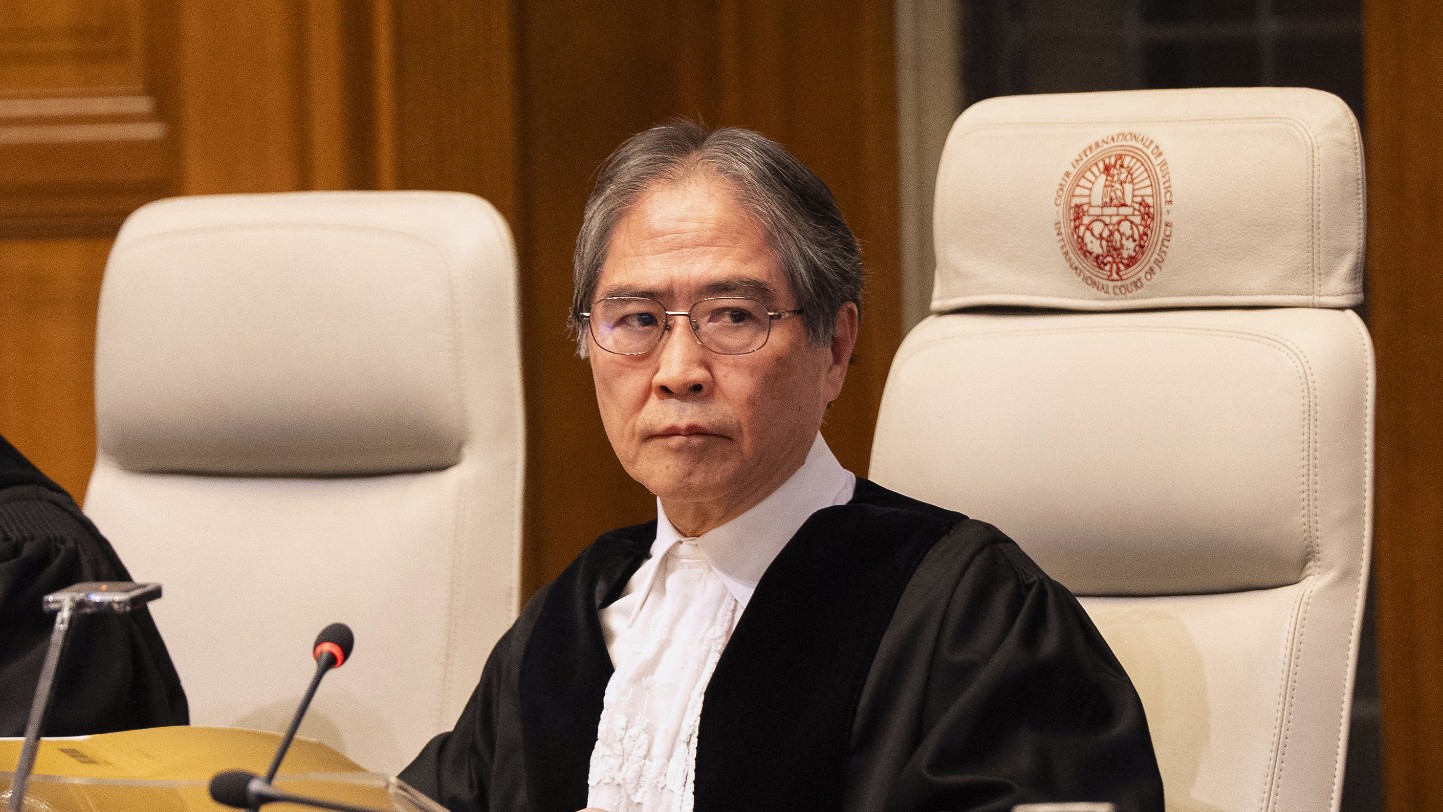
Judges at the International Court of Justice (ICJ), the United Nations’ highest judicial body based in The Hague, delivered a landmark final, non-appealable ruling on Thursday formally concluding that Myanmar’s state security forces perpetrated state-backed genocide against the ethnic Muslim Rohingya minority during the 2017 so-called “clearance operations” in Rakhine State. The historic decision marks the first time the ICJ has ever held a sovereign state fully accountable for genocide under the 1948 Convention on the Prevention and Punishment of the Crime of Genocide, a legal milestone widely celebrated as a transformative victory for the stateless Rohingya community and The Gambia, the small West African nation that initiated the case in 2019 with the full backing of the Organisation of Islamic Cooperation (OIC).
Genocide is universally recognized as the most severe offense under international law, with an extraordinarily high evidentiary threshold requiring explicit proof of specific intent to destroy a protected group in whole or in part. After exhaustive review of all submitted evidence, the ICJ panel ruled that the only reasonable inference that could be drawn from the full pattern of Myanmar’s state conduct was that it harbored clear genocidal intent to eliminate a substantial segment of the Rohingya population. The court formally verified that the Rohingya qualify as a protected ethnic group under Article II of the 1948 Genocide Convention, and confirmed that the roughly 815,000 Rohingya residing in northern Rakhine State prior to the 2017 operations constituted a substantial target group, large enough in both absolute numbers and proportion to the total Rohingya population in Myanmar to meet the legal threshold for partial destruction of a protected community. The court’s evidentiary review corroborated independent estimates that at least 10,000 Rohingya were systematically killed during the 2017 military campaign, alongside widespread, verified patterns of targeted sexual violence (including assaults against children), indiscriminate attacks on fleeing Rohingya civilians attempting to cross the border into Bangladesh, and the total systematic destruction of thousands of Rohingya villages. The judges further confirmed that the Myanmar state followed a deliberate policy of seizing razed Rohingya land, constructing permanent new infrastructure on the properties and resettling non-Rohingya civilian populations to replace the displaced community.
The court formally attributed all documented atrocities directly to the Myanmar state, and issued a binding order requiring the government to provide full reparations to affected Rohingya individuals and the broader community. Mandated reparations measures include facilitating the safe, voluntary return of displaced Rohingya to their ancestral lands in Myanmar, and establishing formal mechanisms to locate and account for all people who disappeared during the 2017 operations. Because ICJ rulings are final and carry no right of appeal, The Gambia retains the authority to refer any future non-compliance by Myanmar directly to the UN Security Council for enforcement action, marking a rare potential path to UN-level accountability for the decades-long marginalization of the Rohingya community.
In its formal legal holding, the ICJ confirmed that Myanmar had committed three distinct categories of genocidal acts explicitly outlined in the 1948 convention: killing members of the Rohingya group, inflicting severe bodily and mental harm on community members, and imposing deliberate living conditions designed to prevent future births within the Rohingya population. While the judges acknowledged that the Arakan Rohingya Salvation Army (ARSA) had carried out localized attacks on Myanmar security outposts immediately prior to the 2017 operations, they unanimously ruled that the stated official government justification of counter-insurgency operations could not reasonably explain the widespread, systematic pattern of atrocities documented across Rakhine State. The panel specifically noted that the targeted killing of Rohingya children could not be explained by any counter-insurgency rationale, and that the deliberate shooting of civilians as they fled across the border directly undermined Myanmar’s alternative claim that its only goal was to forcibly displace the Rohingya population rather than destroy a substantial segment of the group.
The judges also traced the decades-long systemic erosion of Rohingya civil and political rights in Myanmar, paired with state-sponsored military hate speech that deliberately normalized widespread public hostility toward the minority community. Unlike prior ICJ genocide rulings for Bosnia and Croatia, which could draw on pre-existing verified findings from the International Criminal Tribunal for the former Yugoslavia, this case required the panel to conduct a full, independent assessment of all submitted evidence, as Myanmar refused entry to both the UN Independent International Fact-Finding Mission on Myanmar and the Independent Investigative Mechanism for Myanmar (IIMM). While the court applied its stricter “fully conclusive” standard of proof for genocide allegations, it gave significant weight to verified, corroborated first-hand witness testimony from Rohingya survivors, carefully vetted findings from the IIMM, and field research data collected by independent human rights organizations including Legal Action Worldwide, noting that key survivor testimonies remained entirely unchallenged by Myanmar’s legal team.
This case represented multiple unprecedented firsts in international legal history: it was the first time a state with no direct territorial or national stake in an alleged genocide had initiated proceedings at the ICJ, relying on the core Genocide Convention principle that all signatory states share a collective legal interest in upholding the convention’s provisions. It also drew record third-party support, with 11 separate nations (Belgium, Canada, the Democratic Republic of the Congo, Denmark, France, Germany, Ireland, the Maldives, the Netherlands, Slovenia, and the United Kingdom) intervening to submit legal interpretations supporting The Gambia’s case. The 2019 filing followed a 2018 UN fact-finding mission conclusion that there was sufficient preliminary evidence of genocidal intent to warrant prosecution of senior Myanmar military officials. Notably, then-civilian Myanmar leader Aung San Suu Kyi appeared in person at the ICJ in December 2019 to defend her country against the allegations, even as the military retained full control over state security operations under the 2008 military-drafted national constitution. The court issued a provisional measures order in January 2020 mandating Myanmar to prevent further genocidal acts and preserve atrocity evidence, before rejecting all Myanmar jurisdictional objections in July 2022, and holding full public and closed-door hearings on the merits of the case in January 2026.
The 2017 military campaign, ordered by then-commander-in-chief Min Aung Hlaing, drove more than 700,000 Rohingya across the border to Bangladesh, where roughly 1.2 million members of the minority now reside in Cox’s Bazar, the world’s largest refugee settlement. Min Aung Hlaing later ousted Suu Kyi’s civilian government in a February 2021 military coup, and recently assumed the presidency of Myanmar in a move widely viewed as an attempt to secure international legitimacy for the ruling junta. The ICJ ruling, which addresses state-level accountability rather than individual criminal guilt, is expected to significantly increase international diplomatic and legal pressure on the Myanmar junta, and will set a critical binding legal precedent for ongoing ICJ genocide proceedings, most notably the pending case filed by South Africa against Israel over allegations of genocidal acts against Palestinians in Gaza.