Grieving relatives of the nine British nationals killed in the catastrophic July 9 wildfire that swept through the hillside village of Bédar in Spain’s south-eastern Almería province have expressed profound fury and disgust after Andalusia’s ruling coalition of the conservative People’s Party (PP) and far-right Vox party voted down a parliamentary motion to launch a formal public commission of inquiry into the disaster. The blaze claimed 15 lives in total, 14 of whom were foreign citizens: 9 British, 3 Belgian, 1 French and 1 American, alongside one local Spanish resident, making it the deadliest single wildfire in Spain during the 2026 summer fire season and one of the most lethal fire events in the country’s modern history.
Survivors and bereaved families have laid out a litany of alleged systemic failures in the regional emergency response, most notably the deliberate decision by Andalusian emergency chiefs not to activate the national mobile phone public alert system as fast-moving flames bore down on the designated wildfire-risk community. Andalusia’s top emergency official Antonio Sanz previously defended the choice, claiming the mass alert tool could not be geographically targeted to specific neighbourhoods, and that a widespread notification would trigger mass panic, grid local escape routes with traffic jams, and endanger residents who were advised to shelter in place rather than evacuate. Relatives of the deceased have fiercely rejected that justification, noting that the Bédar municipal emergency plan had not been updated since its 2019 approval, even as the region was formally classified as high wildfire risk.
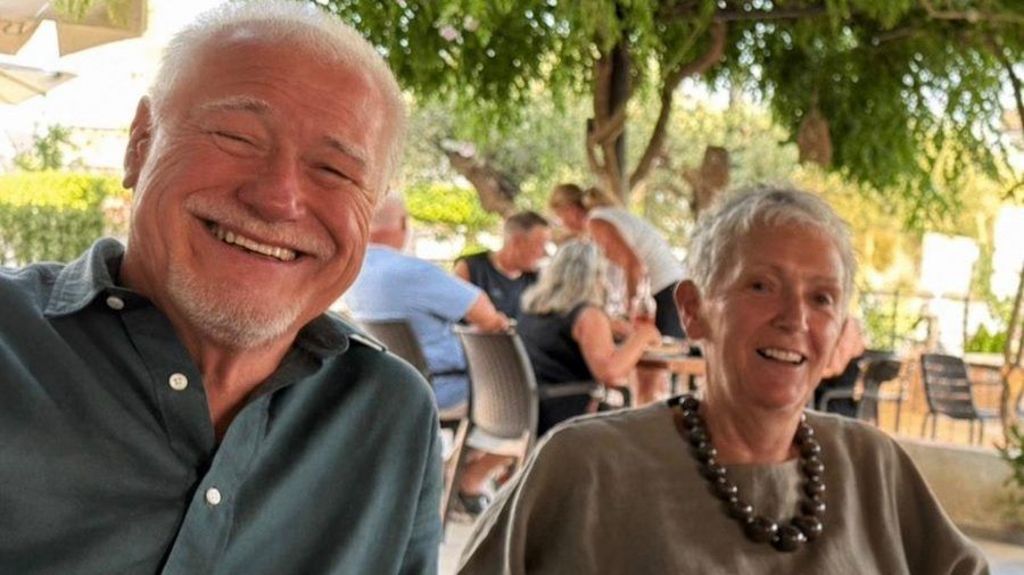
Duncan Chard, who lost his father Michael — a British expat who built his dream retirement home in Bédar, which he called Casa Micas — and his father’s partner Christine, stated that a timely emergency warning would almost certainly have saved both lives. Michael Chard, who used a walking stick due to two artificial knee replacements, fled the property with Christine as soon as they spotted the approaching flames, leaving their phones and passports behind, only to find their intended escape road completely blocked. Chard described the regional government’s refusal to allow a public inquiry as an “outrage, an injustice, an absolute insult” to grieving families, arguing that the ongoing criminal investigation — which regional authorities claim will provide all necessary answers — is narrowly focused on determining the cause of the fire, not on auditing the failures of the emergency response. Initial official statements from the Guardia Civil suggested the blaze, also known as the Los Gallardos fire after the adjacent town where it ignited, was sparked by a fallen power line, but that preliminary finding has since been widely disputed by affected families.
Multiple relatives shared harrowing accounts of the moments leading up to the fatal blaze. Belgian virologist Thomas-Wolf Verdonckt, who was on a phone call with his 63-year-old father Stanislas as the flames closed in, confirmed that no formal evacuation guidance or structured public warning was ever issued to residents. The only official contact in the final minutes before the fire engulfed residential areas was a single police car driving past with sirens blaring, with no verbal announcements or door-to-door warnings to alert families of the imminent danger. Danni Gillam-Kirton, an assistant headteacher from Nottinghamshire who lost both her parents Pete and Fran — longstanding Bédar residents who had moved to the village in 2018 and were active local community volunteers — recounted that her mother texted her at around 7pm to say the couple had packed their belongings ready to evacuate, but were left waiting for official instructions that never arrived. The pair ultimately perished on the residential stretch known locally as English Hill.
Families have also reported that their grief has been compounded by deeply insensitive and unprofessional handling of victims’ remains and personal effects by local law enforcement. Danni Gillam-Kirton was initially told by the Guardia Civil that her parents’ burnt-out vehicle had been thoroughly forensically searched, and that no human remains or personal possessions had survived the fire. However, when she and her husband visited the site a month after the disaster in August, they discovered partial human skeletal fragments — which a forensic anthropologist who worked on the Grenfell Tower fire investigation later assessed as likely human — alongside her parents’ intact mobile phones, jewellery, house keys and cash. Regional police later sent the bone fragments to Madrid for DNA testing, then notified the family that no usable genetic material was recovered and the fragments were animal remains, a conclusion Gillam-Kirton and her family strongly dispute. She also noted that her formal complaint to the Guardia Civil received a dismissive response that only offered condolences for the death of “your relative” in the singular, despite her having lost both of her parents.
Regional authorities have also refused a formal information request from opposition Socialist Party MPs — the party of Spanish Prime Minister Pedro Sánchez — for all official internal reports documenting the emergency response to the Bédar fire, including records explaining why the mobile alert system was never deployed. The documents are being withheld under Spain’s secreto de sumario regulation, a court order that seals case files during ongoing criminal investigations. Bereaved families point out that the narrow scope of the criminal probe, which focuses exclusively on the origin of the fire, will not examine the failures of the emergency response unless families raise tens of thousands of euros in private legal fees to submit additional evidence to the court.
Relatives from the UK, Belgium and other affected countries have formed cross-border support groups, launched a dedicated information and advocacy website helpbedar.com, and initiated a fundraising campaign targeting €100,000 to cover collective legal costs, raising roughly €11,000 to date through events held in both Spain and the United Kingdom. They describe their campaign for a full public, transparent inquiry as a David-and-Goliath battle against the well-resourced Andalusian regional government, and state their core goal is not only to get formal acknowledgement and accountability for the failures that led to the 15 preventable deaths, but to implement concrete lessons that will stop future communities from enduring the same devastating loss.
A wildfire killed their loved ones in Spain. These British families demand to know why