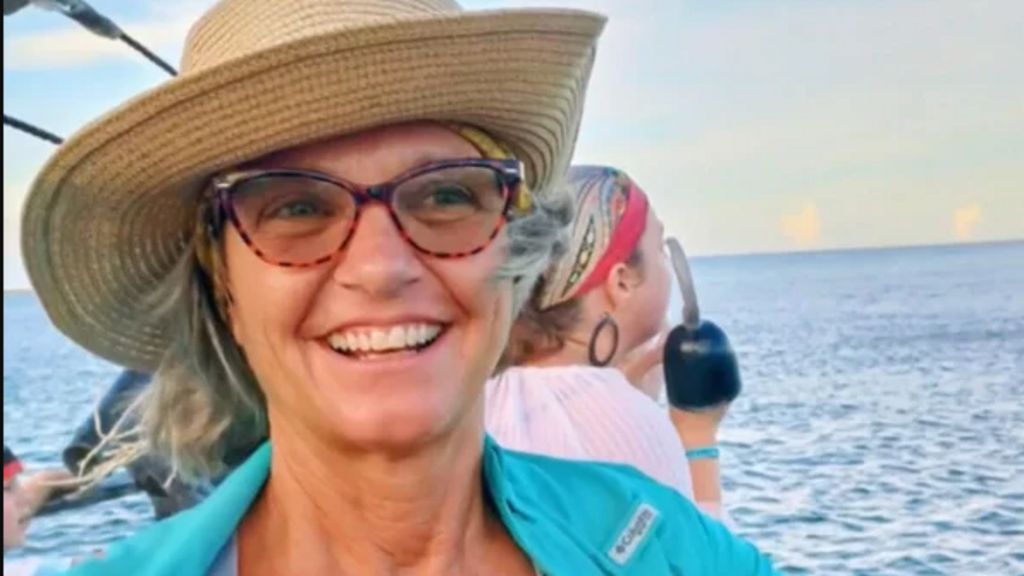
A months-long missing person case that has captured transatlantic attention has taken a new turn, as Brian Hooker, the Michigan man detained by Bahamian law enforcement after his wife Lynette disappeared during a sailing trip, has been released from custody — and he remains firm in his commitment to finding her, insisting he believes she is still alive.
The incident unfolded on the evening of April 4, when the Hookers, both experienced sailors who regularly shared their nautical adventures on social media, were out exploring Bahamian waters on an 8-foot hard-bottom dinghy, separate from their larger main sailing vessel. According to Brian Hooker’s account, Lynette fell overboard alongside the dinghy’s keys, and strong ocean currents quickly swept her away before he could reach her. The 59-year-old has repeatedly denied any involvement in his wife’s disappearance, calling all suggestions of foul play unfounded.
Four days after Lynette went missing, on April 8, Brian Hooker was taken into Bahamian police custody for questioning. During that detention period, he even joined search efforts while handcuffed, and ended up needing rescue himself after falling overboard in rough, choppy sea conditions, according to local reports. Last week, Bahamian authorities announced that their initial search and rescue operation had been reclassified as a recovery mission, a shift that signaled growing pessimism about finding Lynette alive.
But following his release on the evening of Monday, Brian Hooker told CBS News — the U.S. partner of the BBC — that he has no intention of abandoning his search. “I won’t be able to stop looking,” he said. When asked if he believed Lynette could still be alive more than a week after her disappearance, Hooker responded: “I want to.” He went on to note that there are documented cases of people surviving for days or even weeks after going overboard in Bahamian waters, pointing to the region’s hundreds of small islands, sandbars, and isolated atolls that could offer shelter to a stranded person. “There are so many islands, there are so many sandbars, little atolls and spits of land. Of course you think about alternatives to that, but I’m not really capable of just turning away from this,” he added.
Hooker’s attorney, Terrel Butler, told NBC News that her client needs time to decompress after what she described as an incredibly traumatic experience. During his detention, Butler noted, Hooker was completely devastated by the disappearance and distraught at being kept from continuing his own search for Lynette. The BBC has reached out to Butler for additional comment following Hooker’s release, and has not yet received a response.
The case is already marked by significant family division: Lynette’s daughter, Karli Aylesworth, who is Brian Hooker’s stepdaughter, has publicly said she does not accept his account of the incident. Aylesworth emphasized that her mother is an experienced sailor and strong swimmer, casting doubt on the version of events Brian has presented.
A formal criminal investigation into Lynette’s disappearance remains open, led jointly by U.S. and Bahamian authorities. A U.S. Coast Guard representative confirmed the investigation’s existence to the BBC but declined to share any further details, including information about potential persons of interest in the case.