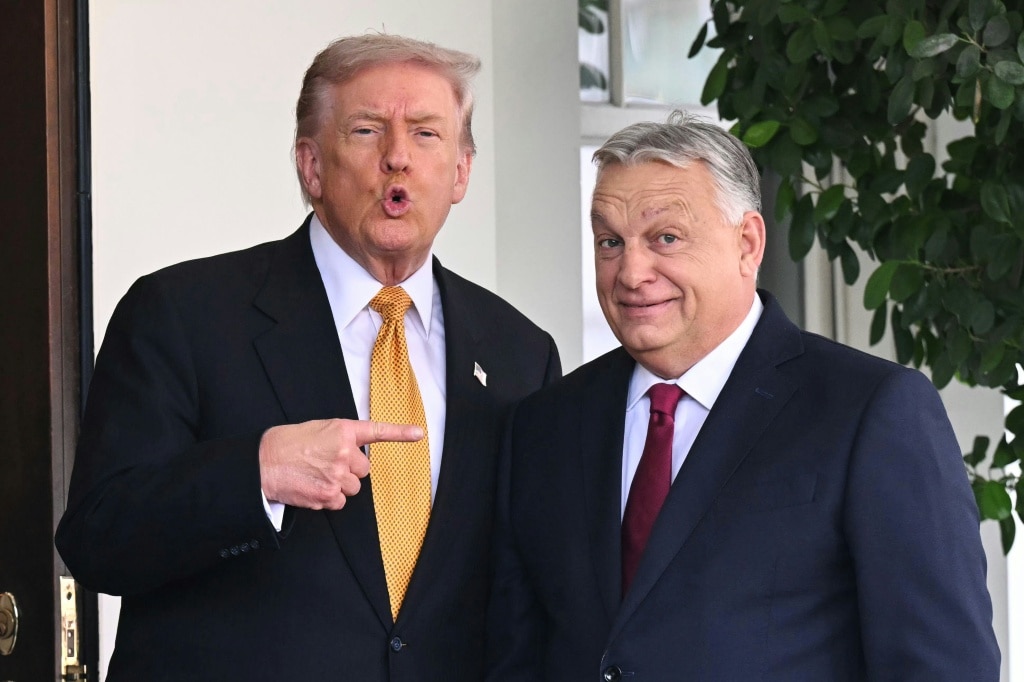
As Hungary prepares for its pivotal April 12 general election, widespread public anger over systemic corruption and mounting economic hardship has put an end to 16 years of Prime Minister Viktor Orban’s rule within reach, with voters increasingly rejecting the elite wealth accumulation that has defined his administration. On paper, Orban’s publicly declared assets are remarkably modest: a small cache of personal savings and a shared villa in the Hungarian capital Budapest. But a growing share of the electorate in the European Union’s most corrupt member state, per Transparency International’s latest Corruption Perceptions Index, is convinced that the prime minister and his inner circle have built an opaque network of illicit wealth siphoned from public coffers.
While Orban himself maintains a facade of humble living, multiple members of his inner circle and close family have amassed extraordinary fortunes since he returned to power in 2010. His 85-year-old father, Gyozo Orban, owns multiple construction material businesses and the historic Hatvanpuszta estate, which he has renovated into a sprawling luxury manor estimated to be worth hundreds of millions of dollars. Drone footage from independent Hungarian media reveals the walled compound, located near Orban’s childhood home, boasts two swimming pools, a private wildlife park, and dozens of outbuildings. Leading Hungarian anti-corruption advocate and independent lawmaker Akos Hadhazy argues that Gyozo Orban acts merely as a front for his son’s hidden interests.
Other close associates have also skyrocketed to wealth through public contracts, many of which receive partial funding from the EU. Orban’s son-in-law, Istvan Tiborcz, rose to prominence as one of Hungary’s most powerful entrepreneurs through his former company Elios, which secured billions in public lighting contracts across the country. The EU’s anti-fraud office OLAF eventually uncovered serious procedural irregularities in the deals, prompting Tiborcz to pivot his investments to the real estate and tourism sectors. Even more striking is the rise of Lorinc Meszaros, Orban’s childhood friend and a former plumber, who is now Hungary’s wealthiest individual with a net worth of $4.8 billion, per Forbes. Meszaros now controls a vast cross-sector empire spanning construction, energy, banking, and media, all built on a steady stream of government public contracts.
Systemic corruption has drained an estimated 2.84 billion euros ($3.27 billion) from Hungarian public finances every year since 2016, Hadhazy told AFP, adding that graft is not a collection of isolated incidents but the core operating model of Orban’s administration. This graft has come at a steep cost for ordinary Hungarians, who have struggled for years with stagnant economic growth, sky-high inflation, and rapidly declining quality of public services. Gabor Szebenyi, an 81-year-old retired history teacher who attended a recent opposition rally, compared the current system to feudalism, saying: “It’s our money, not theirs. But they are spending it as if they were the sole owners.”
A veteran construction contractor with 30 years of experience in the industry, who spoke to AFP on condition of anonymity, confirmed that public procurement contracts are predetermined before bids are even submitted, despite nominal competition on paper. “Those at the bottom of the chain do the work and get paid last — sometimes months later,” he explained, adding that he is now preparing to exit the industry and sell his equipment out of frustration. “I’m so angry. While those in power lead luxurious lives and travel by private jets, small businesses are struggling to survive.”
The corruption crisis has already had tangible diplomatic and financial consequences for Hungary. Transparency International ranks the country as the EU’s most corrupt, tied with Bulgaria, highlighting systemic risks in public procurement and limited competition for large contracts that account for 5% of Hungary’s total GDP. The Hungarian government has rejected the ranking and insists its procurement rules fully comply with EU standards, but the EU has frozen 19 billion euros ($22 billion) in allocated development funds over persistent concerns about corruption and erosion of the rule of law.
Orban’s main challenger in the upcoming election, opposition leader Peter Magyar, has centered his campaign on tackling graft, vowing to unblock the frozen EU funds and launch full investigations into the wealth accumulation by Orban and his inner circle if he wins office. Political analyst Zoltan Ranschburg, from the Budapest-based Republikon think tank, noted that Orban’s powerful state propaganda machine has been able to deflect criticism for years, but it has lost credibility as economic conditions have worsened. For millions of Hungarians fed up with systemic graft and elite impunity, the upcoming election represents a rare chance to end more than a decade and a half of Orban’s rule.