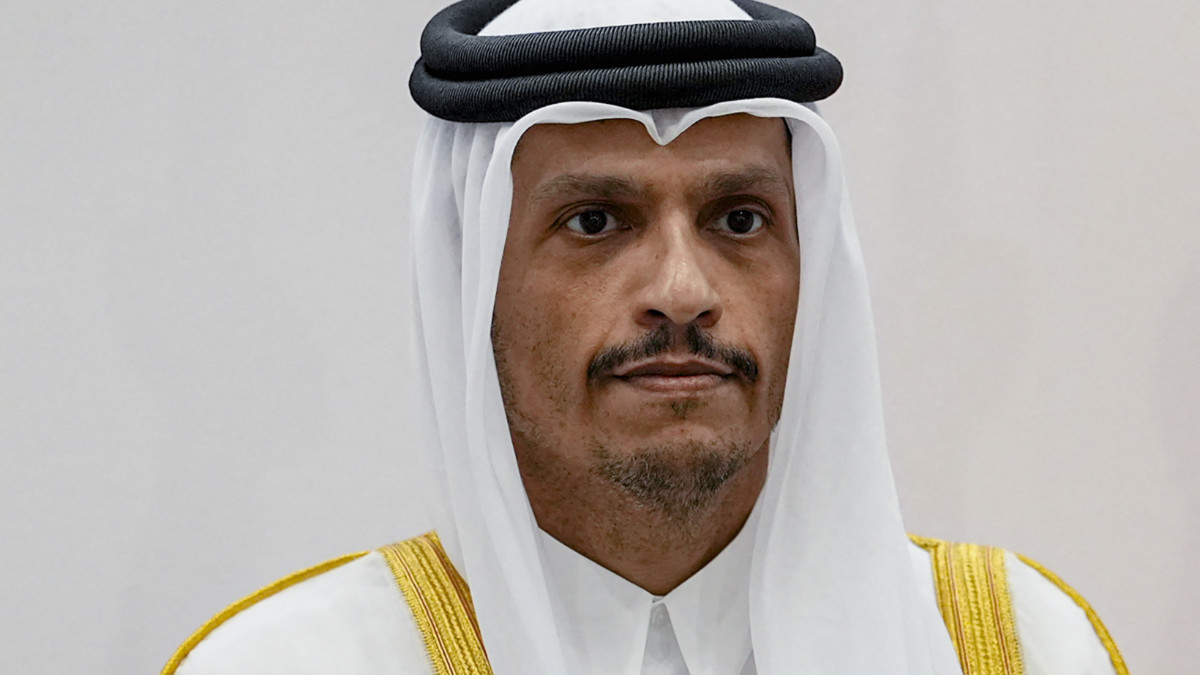
As six months of open conflict between the United States, Israel and Iran have thrown the Middle East into chaos and disrupted global energy supplies, Qatar’s top leader has issued a urgent call for a transformative, inclusive new regional security architecture that directly includes the Islamic Republic.
Speaking at the Qatar Economic Forum held in New York on Sunday, Qatari Prime Minister Mohammed bin Abdulrahman Al Thani framed the ongoing full-scale war as a critical wake-up call for all regional states to reset decades of fractured relations. “Iran is our neighbour,” Al Thani emphasized. “We have to act together responsibly as a region and to make sure that we are having good relations with Iran. We are hoping this war is a wake-up call for everyone.”
Al Thani’s landmark remarks came just hours after unconfirmed regional reports emerged that Washington was preparing to resume large-scale direct military strikes against Iran, ending months of relatively muted offensive action amid the ongoing conflict. The announcement coincided with a series of unusual developments in Washington: US President Donald Trump cut short a scheduled weekend retreat at Camp David with no formal public explanation, while the US State Department issued a urgent blanket security alert for all American citizens currently residing or traveling across the Middle East.
In comments to Fox News, Trump teased imminent major developments in the region, telling reporters that “very big things are going to be happening in the not-so-distant future.” The president laid out the three broad options his administration is currently weighing: “wiping Iran out, letting them rot economically or making a deal.”
The conflict, which began more than six months ago when the US and Israel launched open military action against Iran, has hit Gulf Arab states the hardest, as Iran has launched repeated retaliatory strikes across the region. Multiple Iranian attacks on US military bases stationed in Gulf nations have caused widespread infrastructure damage, photos obtained by Middle East Eye confirm, though the Trump administration has so far refused to publicly disclose the full scale of damage sustained.
Beyond the human and security costs, the war has inflicted severe damage on the global economy, particularly after Iran moved to close the Strait of Hormuz — the world’s most critical chokepoint for global energy trade. Preliminary ship-tracking data compiled by energy analytics firm Kpler shows that traffic through the strategic waterway has plummeted, with just 12 commercial commodity vessels making the crossing over the most recent weekend.
Al Thani’s call for inclusive dialogue was echoed earlier on Sunday by Anwar Gargash, senior diplomatic advisor to the President of the United Arab Emirates, who told a separate event that the region must adopt a “new mindset” to resolve the crisis. Gargash added that any negotiations to end the conflict must include a dedicated Iranian-Arab negotiating track to address longstanding regional grievances.
For Qatar and its Gulf neighbors, the ongoing closure of the strait has evolved from a regional crisis to an immediate existential threat to their national economies. Almost all Gulf states — including Qatar, Kuwait, Bahrain, Iraq and the UAE — rely almost exclusively on the Strait of Hormuz for energy exports and critical import shipments. For Qatar, the disruption is already derailing long-planned strategic expansion of its liquefied natural gas (LNG) sector, the backbone of the country’s economy. Earlier this month, Qatar extended a force majeure declaration for LNG shipments through early November, triggered by the effective maritime blockade of the strait.
Recent weeks have also laid bare the extreme vulnerability of any alternative routes that bypass the Strait of Hormuz. Saudi Arabia’s critical East-West Pipeline, which was designed to allow the kingdom to route oil exports around the strait to the Red Sea port of Yanbu, was disabled last month in a drone attack that Saudi officials blame on Iraqi militias. The attack came amid a sweeping territorial offensive by Yemen’s Houthi movement, which has now seized full control of Yemen’s entire Red Sea coastline. The Houthis have imposed their own blockade on commercial shipping bound for Saudi Arabia, and launched a fresh drone attack on Riyadh’s main international airport over the weekend.
Before the attack, the East-West Pipeline allowed Saudi Arabia to export roughly 4 million barrels of crude per day — around two-thirds of its pre-war production volume — around the strait. Last week, however, Saudi Arabia canceled all scheduled oil loadings at the Yanbu port and notified European refining customers that it would not be able to fulfill its contracted crude allocation commitments for October.
While the UAE has emerged as one of the most vocal supporters of accelerating investment in alternative bypass pipelines to render the Strait of Hormuz less strategically critical, many smaller Gulf producers have far fewer alternative options. Speaking alongside the prime minister at Sunday’s forum, Qatari Energy Minister Saad al-Kaabi pushed back against US claims that new pipeline investments could eliminate the strait’s strategic importance within just two years, calling the assertion “completely wrong.”
“I mean, maybe this is his view. I think this is completely wrong,” Kaabi said. “We have decided not to do pipelines, and I think the decision in Qatar was based on commercial and technical [reasons], and we are only going to be using the straits,” he added, ruling out any future investments in large-scale alternative gas pipeline projects.