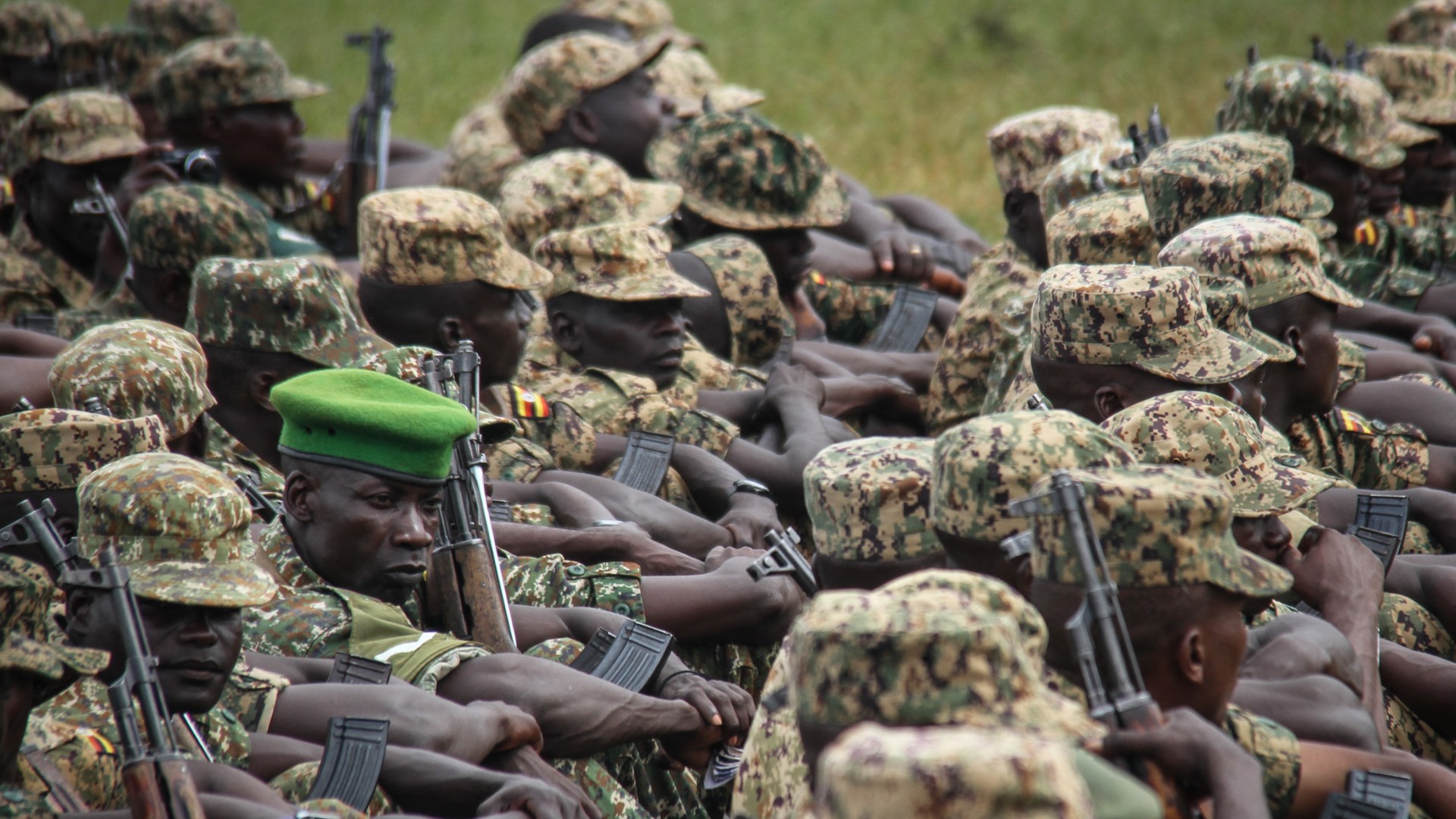
In a sudden move that grabbed international headlines, the Uganda People’s Defence Forces (UPDF) announced Saturday an immediate suspension of all defense and military cooperation with Turkey. While Ugandan local media initially tied the decision to anti-Turkey demonstrations staged outside the Turkish embassy in Kampala by supporters of the Patriotic League of Uganda (PLU) – a group led by Uganda’s top military general Muhoozi Kainerugaba – multiple insiders close to the situation tell a different story to Middle East Eye.
The protests, which centered on a demand that Turkey extradite exiled Ugandan political commentator Fred Lumbuye (who has resided in Turkey since 2013), are nothing more than a convenient public pretext, according to sources. The real root of the rift lies in deep-seated disagreements over the future of Uganda’s long-standing military deployment in Somalia, and Ankara’s rapidly expanding influence over the East African nation’s security landscape.
Uganda currently deploys approximately 4,500 troops to Somalia as part of the African Union Support and Stabilisation Mission in Somalia (Aussom), the primary multinational security force backing the Somali national army. An additional 2,000 Ugandan troops are stationed in the country under a separate bilateral agreement, a military source confirmed to Agence France-Presse. For years, this deployment has generated steady, significant revenue for Kampala: insiders report Uganda receives at least $1,000 per deployed soldier each month, a payment stream that underpins a large portion of its military budget for overseas operations.
But that revenue stream is now at severe risk. The entire future of the Aussom mission was thrown into uncertainty back in July, when the United States notified the African Union that it would cut all funding to the UN Support Office in Somalia by the end of 2024. That office provides critical logistical backing for the entire AU mission, and its loss of funding has left the mission’s long-term viability and funding structure up in the air – and put pressure on troop-contributing countries like Uganda to reconsider their deployments.
Compounding this uncertainty, sources tell MEE that the Somali federal government has formally requested Uganda withdraw its military forces, pointing directly to the growing strength of Turkish-trained Somali security units. Over the past decade, Turkey has emerged as the primary external trainer for Somali military personnel: it has trained roughly 25,000 Somali soldiers at facilities in Mogadishu, and an additional 10,000 elite commandos at training bases within Turkey’s own borders. As these trained forces have matured, Somali authorities have increasingly argued they are capable of shouldering the burden of domestic security.
For Kampala, a full withdrawal from Somalia would carry a massive financial cost. Insiders estimate that Uganda stands to lose between $5 million and $6 million per month, or $60 million to $72 million annually, if the AU mission ends and all troops are pulled out. Facing this steep loss, Uganda has opted to pressure Turkey – which Kampala views as the main powerbroker shaping Somalia’s new security order – to intervene and resolve the looming crisis, sources explained.
Tunc Demirtas, a security researcher at the Ankara-based think tank Seta, confirmed that the shifting security landscape in Somalia makes a reduced international presence inevitable. “Somalia’s government is now capable of providing its own security for its capital and surrounding regions and as its state capacity is built up, it requires less support from abroad,” Demirtas told MEE, adding that the long-standing foreign military presence in Somalia has spawned a war economy that has benefited foreign troop contributors including Uganda.
For its part, Turkey is actively working behind the scenes to de-escalate the dispute, according to sources. Ankara is concerned that the breakdown in defense ties could spill over to impact major Turkish commercial projects in Uganda, including large-scale infrastructure and transport contracts. Agence France-Presse reports that Kampala is considering canceling a $3 billion railway contract awarded to leading Turkish construction firm Yapi Merkezi, and could even order the expulsion of Turkish nationals from Ugandan territory – moves that would cause significant economic and diplomatic damage to Ankara.