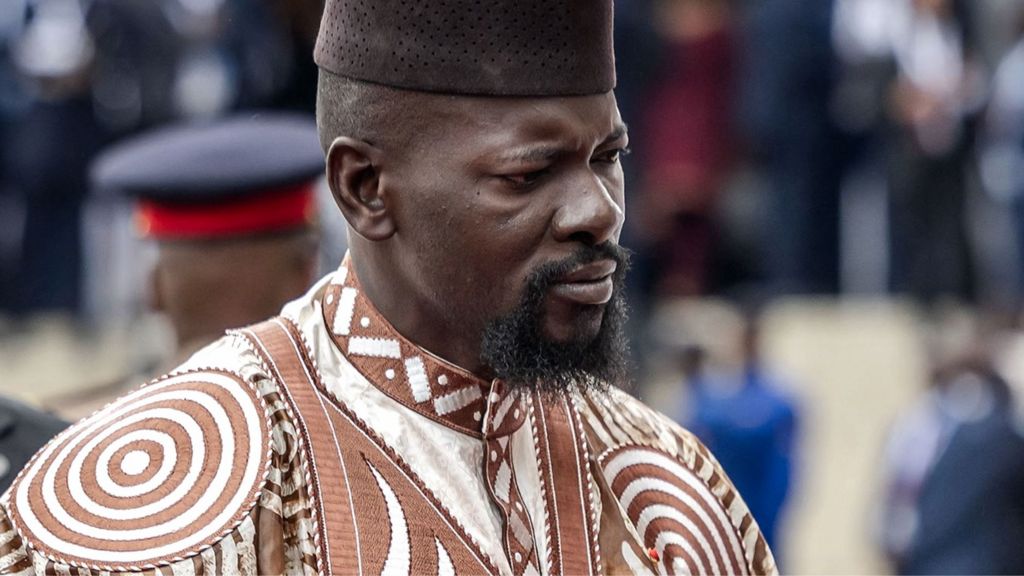
Four years after storming into power via a military coup and nine months after securing a controversial landslide presidential election victory, 41-year-old Guinean leader Mamady Doumbouya has removed more than 170 military personnel from service over allegations of desertion. Among those sacked is Colonel Michel Lamah, a one-time close ally who played a high-profile role in the 2021 overthrow of former president Alpha Condé.
Lamah was a fellow member of the Special Forces Group (GFS), the elite army unit that Doumbouya commanded before his seizure of power. He gained widespread public attention immediately after the September 2021 coup, when he was photographed in the transport vehicle carrying the deposed Condé after special forces troops stormed the presidential palace to place the former leader under arrest.
Condé’s third term in office, which began after 2020 controversial elections, had already sparked widespread mass protests across the West African nation, creating the political opening that allowed Doumbouya’s junta to seize control. At the time of the coup, Doumbouya publicly pledged that he would not run for elected office, and would quickly transition the country back to full civilian rule. That promise was never honored: Doumbouya went back on his word to stand in the December 2024 presidential election, which he won with a reported 87% of the vote amid widespread opposition exclusion.
The mass dismissals were formally announced in a presidential decree read out on state television on Monday by Amara Camara, the head of Guinea’s armed forces and presidential spokesperson. While the decree named 173 dismissed troops drawn from multiple branches of the Guinean military, no further details were provided about the specific circumstances of the alleged desertions for any of the personnel removed.
Political analysts broadly view the move as part of a deliberate, ongoing campaign by Doumbouya to consolidate his hold on the presidency and eliminate potential sources of internal opposition from within the military, the very institution that brought him to power.
Since Doumbouya’s 2021 coup, Guinea has seen a broad rollback of civil liberties across the country. Independent media outlets have been forced to cease operations, public protests are formally banned, dozens of opposition and civil society figures have been arrested or forced into exile, and multiple political parties have had their official operating status suspended. Two of the nation’s largest opposition parties, RPG Arc en Ciel and UFDG, were completely blocked from participating in last year’s presidential election, clearing the path for Doumbouya’s landslide result.
Beyond his domestic political consolidation, Doumbouya has centered his policy agenda on leveraging Guinea’s vast mineral wealth to reposition the country’s economy. Over his tenure, he has pushed for policy shifts designed to move Guinea beyond its historic role as a raw material exporter, aiming to develop the nation into a regional industrial processing hub for its natural resources.