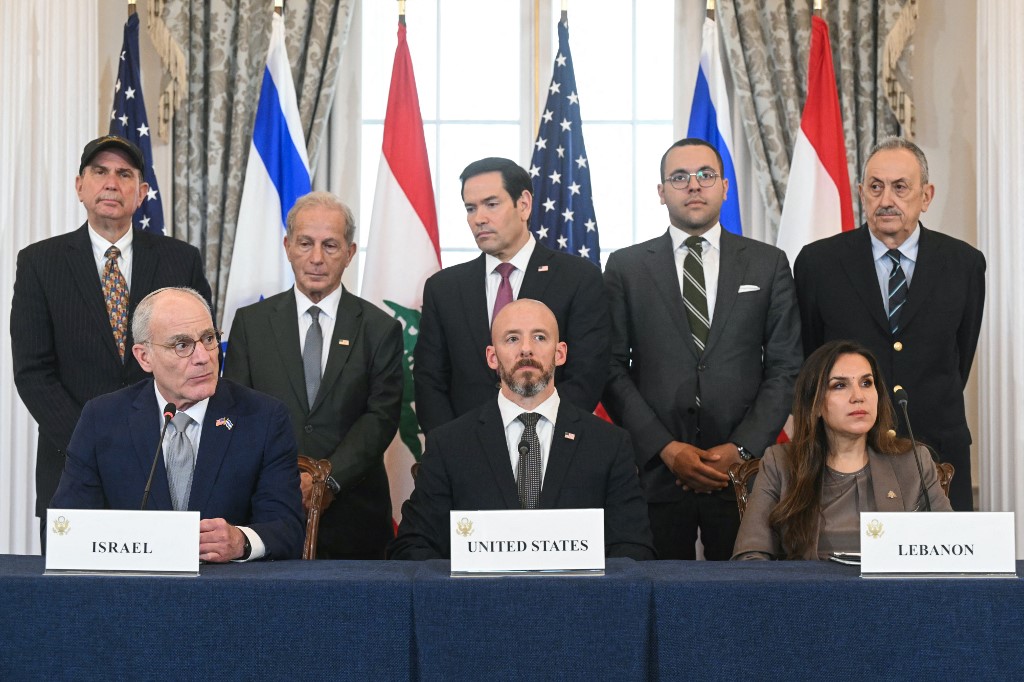
On June 26, a US-mediated framework agreement between Lebanon and Israel signed in Washington has ignited a firestorm of political pushback across Lebanon, with critics raising urgent questions over national sovereignty, governmental accountability, and the lopsided distribution of obligations between the two neighboring states. The backlash grew sharper after Israeli Prime Minister Benjamin Netanyahu framed the deal as a clear victory for Israel, reinforcing critics’ claims that Beirut made sweeping concessions without securing either an immediate ceasefire or a binding timeline for a full Israeli military withdrawal from Lebanese territory.
Under the terms of the agreed framework, the Lebanese military will take control of specially designated “pilot zones” along the border, dismantle military infrastructure belonging to non-state armed groups, and verify their disarmament before Israeli forces carry out a gradual redeployment from occupied areas. Lebanese President Joseph Aoun and Prime Minister Nawaf Salam have publicly defended the agreement, positioning it as the opening step of a process that will ultimately restore full Lebanese state sovereignty and compel a complete Israeli exit.
Despite this official framing, the political reaction has laid bare a stark divide between the government’s narrative and the interpretations held by most of Lebanon’s major political factions. Hezbollah Secretary-General Naim Qassem denounced the deal as “a humiliation, a disgrace and a surrender of sovereignty,” declaring it effectively invalid from Lebanon’s perspective. The Higher Islamic Shia Council labeled it an “agreement of submission” forced through under American pressure, drawing parallels to the failed 1983 May 17 agreement with Israel and warning it would deepen intractable internal divisions.
Parliament Speaker Nabih Berri, who also leads the Amal movement, described the framework as fundamentally unbalanced, saying it cementes status quos that benefit Israel at Lebanon’s expense. He warned the deal carries severe risks to Lebanese politics and national sovereignty, and cannot serve as a foundation for a just agreement that upholds Lebanese rights and state institutions.
Former Progressive Socialist Party leader Walid Jumblatt criticized the negotiating team for sidelining Lebanon’s 1949 armistice agreement with Israel, a document that has been referenced in the 1989 Taif Agreement, President Aoun’s inaugural address, and the current government’s ministerial statement. The Free Patriotic Movement, Lebanon’s largest Christian political party, said it supports a comprehensive, lasting peace but argued such an outcome cannot be achieved by surrendering to Israeli demands or sacrificing Lebanese national rights. The party reaffirmed its support for placing all weapons and authority over war and peace exclusively in the hands of the Lebanese state, while warning against pursuing this goal through internal conflict. The left-wing pan-Arab Popular Nasserist Organisation also rejected the agreement, saying it threatens Lebanese sovereignty and imposes unfair conditions that undermine what the party calls the right of resistance.
What makes this opposition particularly politically significant is its breadth: it stretches far beyond Hezbollah and its traditional ally Amal to include Jumblatt, the Free Patriotic Movement, and other factions that do not regularly align with Hezbollah. To date, support for the agreement remains limited to a small bloc of parties largely within the Christian right, including the Lebanese Forces, Kataeb Party, National Liberal Party, and a handful of independent members of parliament.
This widespread dissent makes it impossible for the Lebanese presidency and government to dismiss all criticism as simply an Iranian-backed campaign against the Lebanese state, a framing the presidency has previously leaned on. The deal also faces a major hurdle in domestic ratification, as it will eventually require approval from either parliament or the sitting government.
Despite the intensity of the opposition, the dispute has so far remained limited to public statements and political positioning, with no escalation into open conflict. A Lebanese presidential source told Middle East Eye that communication has been ongoing with deal opponents to prevent the crisis from escalating into internal confrontation. Even with the sharp rejectionist stances from many factions, “there is an understanding with all the objecting parties not to blow up the situation internally,” the source confirmed.
According to the source, an influential Arab regional actor has intervened to de-escalate tensions, and received a positive response from all major parties, particularly Amal, Hezbollah’s closest political partner. “There is work under way to control the post-agreement phase internally,” the source added.
This deliberate restraint reflects a cross-faction understanding that any open confrontation over the status of Hezbollah’s weapons would worsen Lebanon’s existing sectarian and political fragmentation, creating conditions that work solely to Israel’s benefit. The Lebanese presidency has framed the Washington negotiations as an assertion of Lebanese independence from Iranian influence, a core strategic goal for the new administration.
As the presidential source explained, one of the central objectives of the agreement was to demonstrate that Lebanon is not merely a bargaining chip in Tehran’s negotiations with Washington. “The Lebanese state wanted to say that it is not a card in Iran’s hands, that it has a different path, and that we are the decision-makers, not Iran,” the source said. The source added that this outcome was also sought by friendly Arab states and the United States. Even so, the framework creates a core contradiction in the sovereignty narrative advanced by the presidency: Lebanon’s obligations around disarmament, security control, and dismantling non-state military infrastructure are explicit and measurable, while Israel’s withdrawal remains vague, gradual, and conditional on Lebanese compliance.
The presidential source noted that Lebanon received American guarantees that implementation in the pilot zones will be supervised directly by Washington, eliminating the need for direct coordination between the Lebanese and Israeli militaries. They added that the recent visit of the head of US Central Command to Beirut was intended to strengthen this oversight mechanism, and the pilot zone model could be expanded to more areas if the initial rollout succeeds.
According to the source, Lebanon requested that the security annex of the agreement remain confidential; after the US State Department asked both sides to weigh in on secrecy, both Lebanon and Israel agreed to keep the document out of public view. Another controversial provision requires both Lebanon and Israel to halt all hostile or adverse activity against one another in international political and legal forums.
Critics argue this clause could strip Lebanon of its ability to pursue accountability for alleged Israeli violations of international law, and prevent the state from supporting Lebanese civilian victims of Israeli strikes seeking justice through global institutions. Thousands of Lebanese civilians have been killed in Israeli strikes since March, as well as in earlier phases of the ongoing conflict between Israel and Hezbollah. The presidential source defended the negotiating team’s position on this point, arguing that Israel would actually benefit more from international litigation because Hezbollah initiated the current conflict by firing the first rockets. The clause would not block private individuals, non-governmental organizations, or unofficial associations from pursuing independent legal action against Israel, the source added.
Opponents push back on this justification, arguing that civilian victims and independent NGOs cannot replace the legal authority, access to evidence, and diplomatic weight that only the Lebanese state can bring to these claims.
For the moment, Lebanon has entered a period of contained political confrontation: widespread rejection of the agreement is paired with a shared cross-faction reluctance to allow the dispute to escalate into violence. Part of this restraint stems from de-escalation efforts by Arab and American mediators, but it also reflects a widespread belief that the Washington framework will never be implemented in its current form. The ultimate fate of the deal may depend far less on the text signed in Washington than on parallel negotiations between Iran and the United States happening in Switzerland, where the Lebanese war, a permanent ceasefire, and an Israeli withdrawal are all tied to a broader regional settlement.
Lebanon is now navigating an deeply sensitive political crisis, but major political factions appear unified in their commitment to containing tensions while they wait to see whether the agreement will be implemented, renegotiated, or overtaken by developments on the US-Iran negotiation track.