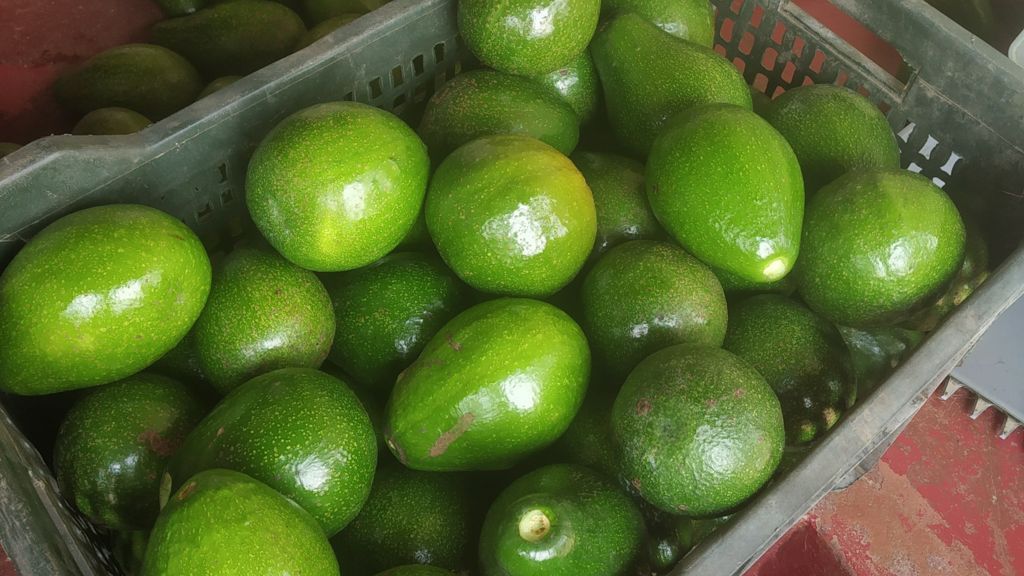
Fifteen years ago, avocados were an afterthought in India, left to rot on branches or be eaten by feral dogs—earning them the unflattering local nickname “dog fruit.” Today, the once-overlooked fruit sits at the center of a fast-growing agricultural revolution, as surging consumer demand transforms how Indian farmers, entrepreneurs, and researchers approach avocado cultivation.
Sunil Bopaiah, a 26-year veteran of India’s plantation industry and current group manager at Kerala-based Cottanad Plantations, has witnessed this shift firsthand. For decades, his operation, which grows cocoa, rubber, coffee, and spices in the hills of Wayanad, used avocados solely as shade trees for coffee crops. No one imagined the fruit would become a profitable standalone venture. That changed around 2011, when Bollywood icon Shilpa Shetty publicly cited avocados as a core part of her skincare routine. The celebrity endorsement triggered an immediate market shift: avocado prices doubled overnight, and they have continued climbing steadily in the years since.
To meet rising demand, Cottanad Plantations has dedicated 40 acres exclusively to avocado cultivation, harvesting between 10 and 15 tonnes of fruit annually. The operation projects output will jump to 40–50 tonnes within the next three to four years, as the team adapts growing practices to suit the crop’s unique needs. Drawing on guidance from South African agricultural experts, the plantation completely redesigned its cultivation approach, switching to raised planting beds and wider tree spacing to protect avocado roots, which are extremely susceptible to fungal disease.
Industry analysts estimate massive untapped potential for Indian avocado production, driven by a yawning gap between domestic supply and consumer demand. Manilal Palliyath, who works to expand India’s avocado sector, notes that India currently produces just 8,000 to 9,000 tonnes of avocados annually, while importing roughly 15,000 tonnes to meet total demand. For many farmers, shifting to avocados also offers a critical buffer against climate volatility that has hurt traditional staple crops. “Coffee and pepper have suffered because of changing climatic conditions, making diversification essential for farmers,” Palliyath explains.
As demand grows, India’s hospitality sector has echoed the call for consistent, high-quality local avocados. Hussain Shahzad, executive chef at Mumbai-based Hunger Inc. Hospitality—which operates popular venues including The Bombay Canteen and Veronica’s—says the group currently relies on imported avocados to meet kitchen needs. While local growers have made great strides in improving cultivation, Shahzad notes that domestic produce still struggles with inconsistent quality, flavor, and availability across seasons and regions. “Imported ones currently offer the consistency we need in terms of flavour, texture, size, and ripening,” he says, adding that the group is eager to shift to local sourcing as the industry matures: “Supporting Indian agriculture and working with indigenous ingredients is central to how we approach food.”
A new generation of Indian entrepreneurs is working to close the quality gap by bringing advanced cultivation techniques and popular foreign varieties to domestic farms. Harshit Godha, founder of the Indo-Israel Avocado Nursery in Bhopal, Madhya Pradesh, launched his business in 2021 after completing a month-long training program on avocado production in Israel. Today, his operation is thriving: over the past five years, he has supplied roughly 18,000 saplings of high-demand international varieties including Hass and Pinkerton to farmers across the country.
Godha notes that Israel’s arid climate has pushed the country to develop the world’s most advanced water-efficient avocado growing technology, making it an ideal model for parts of India facing water scarcity. But scaling commercial production requires a complete shift from traditional Indian growing practices, where avocados were interspersed among other crops as shade trees. Commercial production requires grafting high-yield fruit varieties onto rootstocks bred to tolerate local conditions, rather than growing trees from seed. Producers also must implement aggressive pruning to keep tree heights manageable for harvesting, and plant a precise mix of two avocado varieties to enable cross-pollination—one of the most common mistakes that derails new orchards, Godha explains. “If a farmer gets this planting ratio wrong, the trees will fail to produce fruit, no matter how advanced the irrigation tech is,” he says. “This single botanical detail is what separates a highly profitable, high-yielding orchard from one that looks great on paper but fails in reality.”
Alongside the adoption of foreign varieties, Indian agricultural researchers are working to develop standardized, high-yield domestic avocado varieties adapted to local growing conditions. Dr Ganeshan Karunakaran, principal scientist at the ICAR-Indian Institute of Horticultural Research (IIHR) in Bengaluru, has spent 25 years leading a breeding project that has already released two improved domestic varieties, including Arka Supreme.
Karunakaran explains that the biggest barrier to a consistent domestic avocado market has been genetic variation: most existing backyard avocado trees in India are genetically distinct, leading to inconsistent fruit quality across the supply chain. “Our objective is to provide farmers with uniform, high-yielding, good-quality planting material rather than thousands of different unnamed trees,” he says. He also warns of risks from unregulated nurseries that sell unlabeled or diseased saplings, which can look healthy for years before suddenly dying, leaving farmers with devastating financial losses.
Despite the growing pains, early adopter farmers remain optimistic about avocados’ long-term potential in India. Shiju Sebastian, who planted his first two-acre avocado orchard in Wayanad, Kerala, eight years ago, is already harvesting 3,500 kilograms of fruit annually that sells out entirely in Bengaluru. He now plans to expand his avocado cultivation by another three acres. “Avocado will never fail you. It’s such a loving and lovable fruit. I have fallen in love with this fruit now,” he says, adding that the biggest need for new growers is consistent technical guidance and guaranteed access to retail markets.