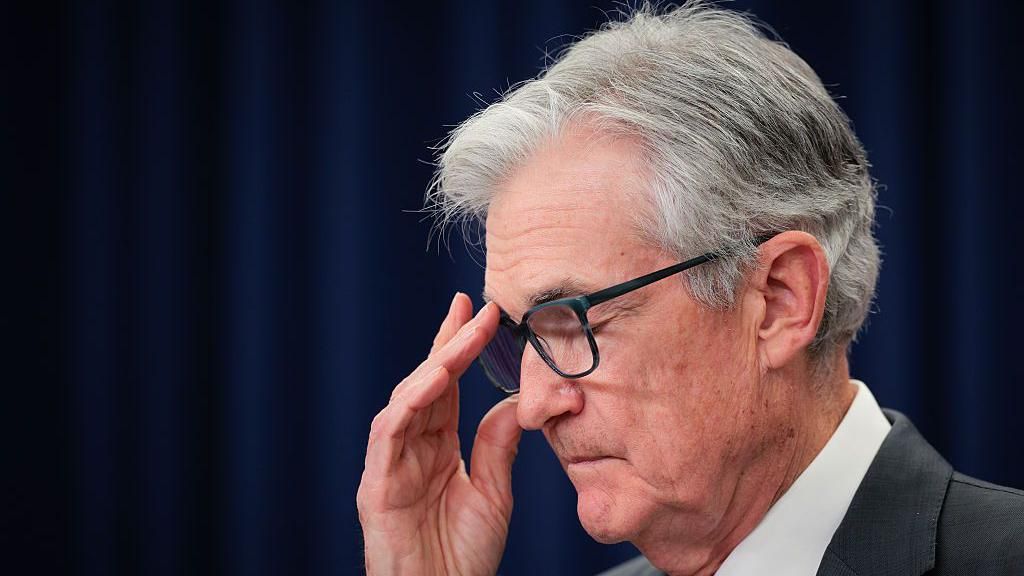
In a widely anticipated final policy meeting as Federal Reserve Chair, Jerome Powell has announced the central bank will keep benchmark U.S. interest rates unchanged within a target range of 3.5% to 3.75%. The announcement comes just hours after his expected successor, Kevin Warsh, secured approval from the Senate Banking Committee, clearing a critical legislative hurdle ahead of his expected confirmation next month.
This decision to hold rates steady comes amid sustained public and political pressure from former President (current President-elect, depending on context) Donald Trump, who has repeatedly pushed the Fed to slash borrowing costs throughout his tenure in office, and openly criticized Powell’s leadership for years. While Warsh is expected to face identical pressure once he assumes the top role, the nominee has publicly committed to protecting the long-held independence of the U.S. central bank from political interference.
Four major key takeaways emerged from Wednesday’s landmark policy session, a turning point for the future of U.S. monetary policy. First, the Fed has maintained its cautious “wait-and-see” stance amid mounting economic uncertainty triggered by the ongoing Middle East conflict between the U.S. and Iran linked to the Israel war. The conflict has already driven global energy prices sharply higher, passing higher costs onto consumers at gasoline pumps and grocery store checkout lines. Against this volatile backdrop, Fed policymakers concluded holding rates steady was the optimal move until clearer details emerge on how long the conflict will persist and the full scope of its economic fallout.
Hopes for an imminent interest rate cut were also dampened by newly released inflation data: March’s annual inflation rose unexpectedly to 3.3%, the highest reading recorded since May 2024. Despite the upside surprise, the Fed’s post-meeting statement signaled a rate cut remains on the table for the next policy session. That timeline could shift, however, according to Samuel Tombs, chief U.S. economist at Pantheon Macroeconomics. Tombs noted that Wednesday’s fresh jump in oil prices, driven by expectations that the U.S. will maintain its long-term blockade of Iranian ports, could push any rate cut back into 2026.
For context, central banks typically adjust interest rates to balance inflation and growth: higher rates curb consumer spending to cool rising prices, while lower rates stimulate spending and investment to support job creation and economic expansion during slowdowns.
Third, while this was Powell’s final policy meeting as chair, his tenure as a member of the Fed’s Board of Governors does not expire until 2028. Powell confirmed Wednesday he will remain on the central bank’s board until the Trump administration’s investigation into him and the Fed is “well and truly over.” Though U.S. Attorney for the District of Columbia Jeanine Pirro has stated the probe will be closed, Powell noted he expects Pirro “would not hesitate to restart the investigation” if circumstances allow. “I’ve said that I will not leave the board until this investigation is well and truly over with transparency and finality, and I stand by that,” Powell added.
The decision to stay on is almost certain to disappointing the sitting president, who has clashed repeatedly with Powell throughout his term. Powell’s continued presence on the board could lead to heightened scrutiny of future decisions and public comments from Warsh, but Powell has pledged to maintain a low profile and ruled out any attempt to act as a de facto “shadow chair.” “That is something I would never do,” he emphasized.
Powell also issued a stark warning that the Trump administration’s “legal assaults” on the central bank go far beyond verbal criticism, and pose a serious threat to the institution’s core function. The outgoing chair argued that the administration’s legal actions against him are “battering the institution and putting at risk the thing that really matters to the public: the ability to conduct monetary policy without taking into consideration political factors.” He added that the legal attacks are “unprecedented in our 113-year history, and there are ongoing threats of additional such actions.”
The final development centers on Warsh’s confirmation path. After the Department of Justice announced it would drop the probe into Powell, top Republican Senator Thom Tillis lifted his hold on Warsh’s appointment, which he had threatened to stall for weeks. On Wednesday, Tillis joined other Republican members of the Senate Banking Committee to advance Warsh’s nomination to a full Senate vote.
With Republicans holding a majority in the full Senate, final confirmation is widely viewed as a procedural formality. The only open question is whether the vote will be held in time for Warsh to take office by the end of Powell’s official term as chair on May 15. If confirmed as expected, Warsh will lead his first policy meeting as Fed chair in June.
Carl Tobias, a chair at the University of Richmond School of Law, told the BBC that both Tillis and Powell deserve credit for defending the central bank’s independence against political pressure from the White House. For his part, Powell offered a warm congratulations to his expected successor Wednesday, wishing Warsh well through the final stage of the confirmation process.