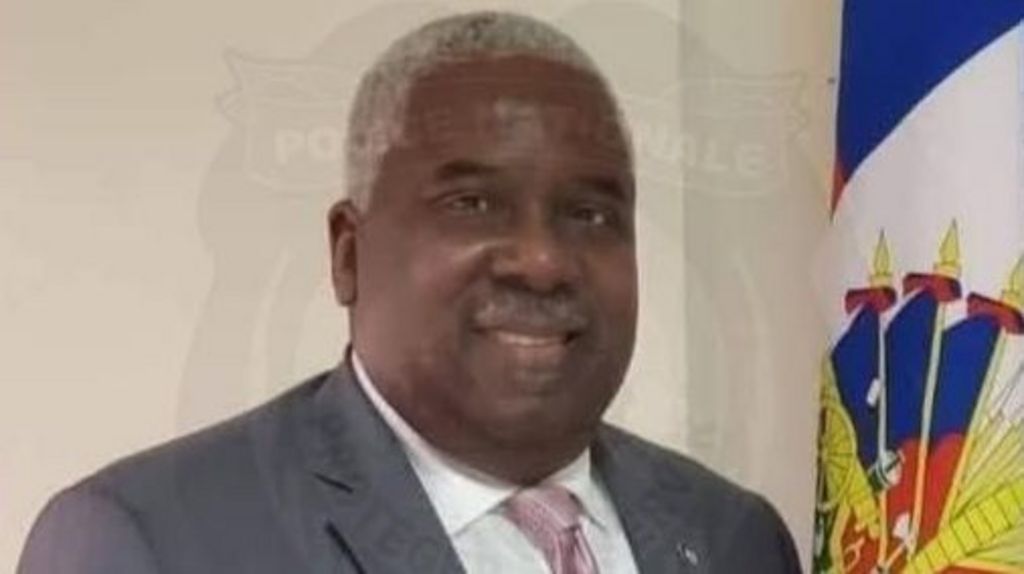
In a landmark ruling delivered Wednesday at the federal courthouse in Miami, 67-year-old dual U.S.-Haitian national and Florida-based pastor Christian Emmanuel Sanon was found unanimously guilty on all eight criminal counts tied to the 2021 brazen assassination of Haitian head of state Jovenel Moïse. The conviction marks a major milestone in U.S. law enforcement’s multi-year investigation into the sprawling transnational conspiracy that plunged the already fragile Caribbean nation into unprecedented political and humanitarian chaos.
Prosecutors laid out a detailed timeline of the plot during the eight-week trial, documenting that Sanon, who harbored explicit ambitions to seize the Haitian presidency for himself, convened a series of secret meetings with co-conspirators in April 2021. His stated plan, court documents revealed, was to forcibly oust Moïse in an armed raid on the Port-au-Prince presidential palace, after which he would award highly lucrative public works and security service contracts to Florida-based private security firms Counter Terrorist Unit Federal Academy and Counter Terrorist Unit Security (collectively known as CTU) in exchange for their financial and operational backing for the coup.
Investigators confirmed that the scheme quickly evolved beyond a simple forced removal of the sitting president to a premeditated assassination, after co-conspirators realized Sanon lacked both the required constitutional eligibility to hold Haiti’s highest office and meaningful popular support among the Haitian public. The plotters pivoted to recruiting 26 Colombian mercenaries, who breached the presidential residence in the early hours of 6 July 2021 and gunned down Moïse in a hail of gunfire. First Lady Martine Moïse, who was severely wounded in the same attack, later testified that the assailants had riddled her husband’s body with bullets.
The fallout from the murder has reverberated across Haiti for more than four years: the sudden power vacuum left no legitimate central governing authority, allowing armed gangs to seize control of more than 80% of the capital Port-au-Prince. United Nations data released last month shows that more than 5,700 people were killed or maimed by gang-related violence in the 12 months leading up to 11 September 2024, even after the deployment of a UN-backed multinational support force that has struggled to make inroads into gang-held territories. The impoverished nation, already the poorest in the Western Hemisphere, has seen public services collapse entirely for most of its population in the wake of Moïse’s killing.
Dozens of suspects have been apprehended in connection with the transnational conspiracy, which involved coordinated smuggling of weapons, funding and foreign mercenaries into Haitian territory. Haitian authorities initially arrested Sanon alongside a group of other co-conspirators shortly after the attack, while three of the Colombian mercenaries were killed in a shootout with local police. A total of 18 suspects were extradited to the United States in September 2021 to face federal charges in Florida, where four defendants including the two heads of CTU were convicted for their roles in the plot earlier this year. Sanon’s trial had previously been scheduled to run alongside theirs, but was delayed for extended months due to documented health complications.
A naturalized U.S. citizen who relocated from Haiti to the U.S. as a teenager, Sanon testified during proceedings that he had spent decades working as a pastor serving Haitian immigrant diaspora communities across multiple U.S. states, with a base of operations in Florida. His legal counsel released a public statement following the verdict confirming that Sanon continues to maintain his full innocence of all charges, and that the legal team will be filing a formal appeal of the conviction in the coming weeks. The 67-year-old now faces a mandatory maximum sentence of life in federal prison when he appears for his formal sentencing hearing at a later date.
The ruling comes as Haiti prepares for its first scheduled national presidential election in nearly a decade, slated to take place in 2025. Martine Moïse, the former first lady who survived the 2021 assassination attempt, announced earlier this week that she will be running as a candidate in the upcoming vote, in a bid to restore stable democratic governance to the crisis-stricken nation.