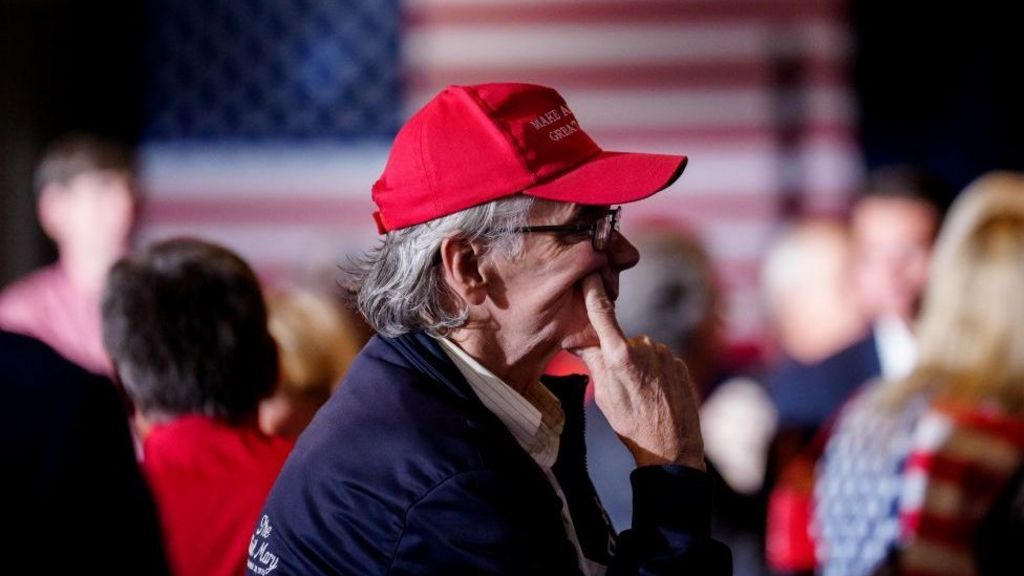
The 2026 United States midterm elections have delivered a landmark upset, with the Democratic party sweeping to full control of Congress in a result widely framed as a resounding public rejection of former and incumbent president Donald Trump’s first two years back in the White House. Defying longstanding historical trends where the sitting president’s party almost always suffers significant losses in midterm cycles, the scale of the Republican defeat has stunned political analysts across the country. Five interconnected core factors drove the historic rout, from widespread economic anxiety to deep discontent over overseas military action, misaligned campaign strategy, and dramatic demographic shifts in voter loyalty. Across every region of the country, working and middle-class voters voiced seething frustration over skyrocketing costs for daily essentials, a sentiment that translated directly to ballot box swings in dozens of competitive races. A North Carolina voter who told the BBC she had abandoned her longstanding Republican voting habit summed up the pervasive mood, noting, “Gas prices, grocery prices, everything’s going up.” Official federal economic data confirms consumer prices rose 3.7% in the 12 months leading to September, driven largely by surging fuel and energy costs; average retail diesel prices in early October hovered just below the all-time $6.52 per gallon record set the previous month. National exit polling underscored the depth of this economic pain: 79% of respondents reported that inflation had inflicted moderate or severe financial hardship on their households over the prior year, and 62% directly attributed those elevated price tags to policy choices made by the Trump administration. A major trigger for the energy price spike was the controversial military campaign the U.S. and Israel launched against Iran in February of that year. In retaliation, Tehran moved to effectively close the Strait of Hormuz, the global chokepoint that carries roughly a third of the world’s seaborne oil and liquefied natural gas supplies, sending global fuel costs spiraling overnight. The war proved deeply unpopular with the American public at large, and represented a bitter broken promise for Trump’s loyal MAGA base, who had voted for his “America First” platform on the explicit pledge to avoid new foreign military conflicts. A full 63% of surveyed voters said the U.S. had made the wrong choice to intervene militarily in Iran, and 74% identified the conflict as either a crucial or major factor in their congressional voting decision. The morning after the election, Trump acknowledged during a Fox News interview that the war had contributed to his party’s losses, but defended his choice to launch the operation as a necessary step to prevent Iran from acquiring nuclear weapons. The Democratic wave was amplified by a slate of carefully selected, hyper-authentic candidates who ran disciplined, voter-centric campaigns even in deep-red traditional Republican strongholds. In Texas, former public school teacher James Talarico wove personal discussions of his faith into his platform to connect with culturally conservative local voters, while in Kansas, pastor Adam Hamilton leveraged his community ties to deliver an unexpected win. In South Carolina, former pediatrician Annie Andrews scored a shocking upset by centering her campaign on healthcare affordability, an issue that resonated deeply in a state where millions of residents describe the U.S. medical system as fundamentally broken. In Michigan, former public health official Abdul El-Sayed cruised to victory on a populist slogan of getting “money out of politics, money in your pocket.” In Georgia, 39-year-old incumbent Democratic Senator Jon Ossoff secured a comfortable re-election win in a state Trump carried twice, a result that has already fueled widespread speculation about a potential 2028 presidential run. Even Trump himself offered rare praise for the opposing party, telling Fox News that the Democrats “did a good job” on election night. By contrast, several high-profile Republican nominees, including Texas Attorney General Ken Paxton, faced widespread criticism for running poorly organized campaigns that failed to center the cost-of-living and national security concerns top of mind for most voters. Trump’s choice to center his own personal brand as the core of Republican midterm messaging backfired spectacularly, as polling in the months leading up to the election showed a majority of voters wanted the president to focus on household economic struggles rather than personal vanity projects. In his final pre-election rally in Washington D.C., Trump spent extended segments of his speech detailing his controversial renovation plan for the National Mall’s Reflecting Pool, drawing widespread mockery from voters who were struggling to pay their monthly bills. The most dramatic shift of the cycle came from longstanding demographic groups that had moved toward the Republican party during Trump’s 2024 presidential victory. Democratic candidates swept all three U.S. House seats in the majority-Hispanic districts along the Texas-Mexico border, and a New York Times analysis found that majority-Hispanic counties swung more than 22 percentage points away from Republican Senate candidates compared to 2024, the largest pro-Democrat shift of any demographic group in the country. The change was driven in large part by widespread public anger over harsh Trump administration immigration policies, with 56% of all Americans telling Pew Research Center they hold an unfavorable view of federal immigration enforcement agency ICE. Majority-Black counties also posted significant swings toward Democratic Senate candidates, leaving the Mississippi Senate race on a razor-thin edge; if Democratic nominee Scott Colom prevails, he will become the first Democrat elected to the U.S. Senate from Mississippi since 1982. Taken together, the results make clear that after more than a decade as the defining figure of American conservative politics, Trump’s once-unassailable political brand is losing its luster with broad swathes of the electorate.