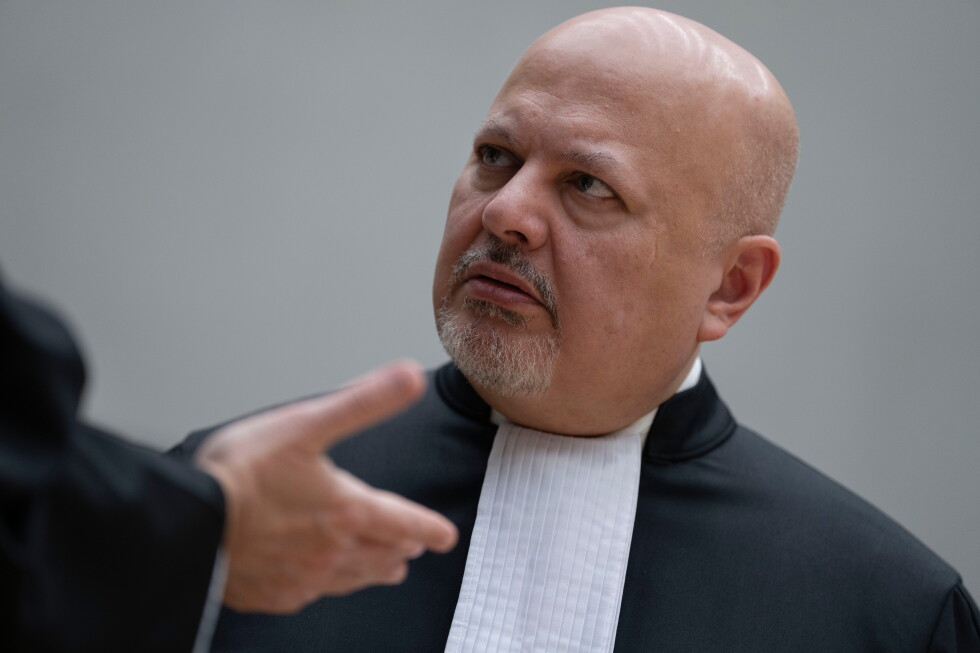
Diplomats from 125 member nations of the International Criminal Court (ICC) will convene at United Nations headquarters in New York this Friday for an unprecedented vote that will determine whether Karim Khan, the court’s embattled chief prosecutor, is permanently removed from his post. The two-year-long scandal surrounding Khan has thrown the already strained 24-year-old global tribunal into deeper crisis, at a moment when the institution faces coordinated external attacks designed to undermine its legitimacy.
The core of the controversy stems from sexual misconduct allegations brought against the 56-year-old British barrister by a female former aide, which were first detailed in a series of reports by The Associated Press. Khan has repeatedly and vehemently denied all claims against him. In June, the ICC’s oversight executive committee concluded in a formal ruling, documented in materials reviewed by AP, that Khan had committed “serious breach of duty and serious misconduct” by engaging in a gradually escalating sexual relationship with the subordinate and subsequently attempting to interfere with her ability to file official complaints. Khan rejects the validity of these findings entirely.
The upcoming special session of the Assembly of States Parties (ASP), the ICC’s governing body, will close with a secret majority vote on the removal resolution, a historic first for the court. Khan will not attend the closed-door proceedings: the United States imposed sanctions on him during the Trump administration over the ICC’s Gaza war investigation, barring him from entering the country. His legal team has decried his absence as a fundamental violation of procedural fairness. “We know of no court or tribunal in any proper and fair legal system that bars a person facing the gravest professional sanction from being heard,” lawyers Tayab Ali and Sareta Ashraph wrote in a letter to the ASP obtained by AP. Khan also remains suspended from practicing law in his home country of the United Kingdom, where the British Bar Standards Board has launched its own independent investigation into the allegations.
To date, the Netherlands—the ICC’s host nation—is the only country to publicly confirm its position. Foreign minister Tom Berendsen confirmed in a letter to Dutch parliament that the country will vote in favor of removing Khan. The overall outcome of the vote remains uncertain, as most member states have not publicly disclosed their voting intentions.
The controversy around Khan has become deeply intertwined with the ICC’s high-stakes investigation into alleged war crimes and crimes against humanity committed during the ongoing Gaza conflict. In 2024, the court issued historic arrest warrants for Israeli Prime Minister Benjamin Netanyahu and former Defense Minister Yoav Gallant on charges of crimes against humanity, triggering fierce backlash from Western allies of Israel, including the United States which had already levied sanctions against Khan over the probe earlier.
Iva Vukusic, an international courts researcher at Utrecht University who has closely followed the disciplinary process, told AP that political considerations have become inextricably tied to the removal vote. “Political considerations have been folded into this, especially as it is the first time a prosecutor has pursued warrants against a western ally,” Vukusic explained.
The drawn-out saga has exposed deep internal divisions within the ICC at a time when the institution already faces existential pressure. Earlier this month, the United States—one of the ICC’s most longstanding critics—launched an explicit campaign to dismantle the court entirely. Inside the institution, leadership splintering has worsened amid the scandal. In April, a cohort of prosecutor’s office staff sent an open letter to the ASP warning that Khan’s return to office would be untenable, noting his “leadership has been materially diminished.” On the other side, a coalition of Palestinian human rights organizations issued a public statement last week raising alarms that the disciplinary process has been tainted by “unwarranted political interference” that risks undermining the Gaza investigation.
Khan’s office is currently being managed on an interim basis by his two deputy prosecutors. If the removal resolution passes, member states will launch a new process to elect a permanent replacement. Analysts warn that regardless of the vote’s outcome, the ICC will emerge from the crisis significantly weakened. Vukusic noted that “the court is going to walk away bruised and battered and wounded and less able to face the greater threats” already aligned against it.