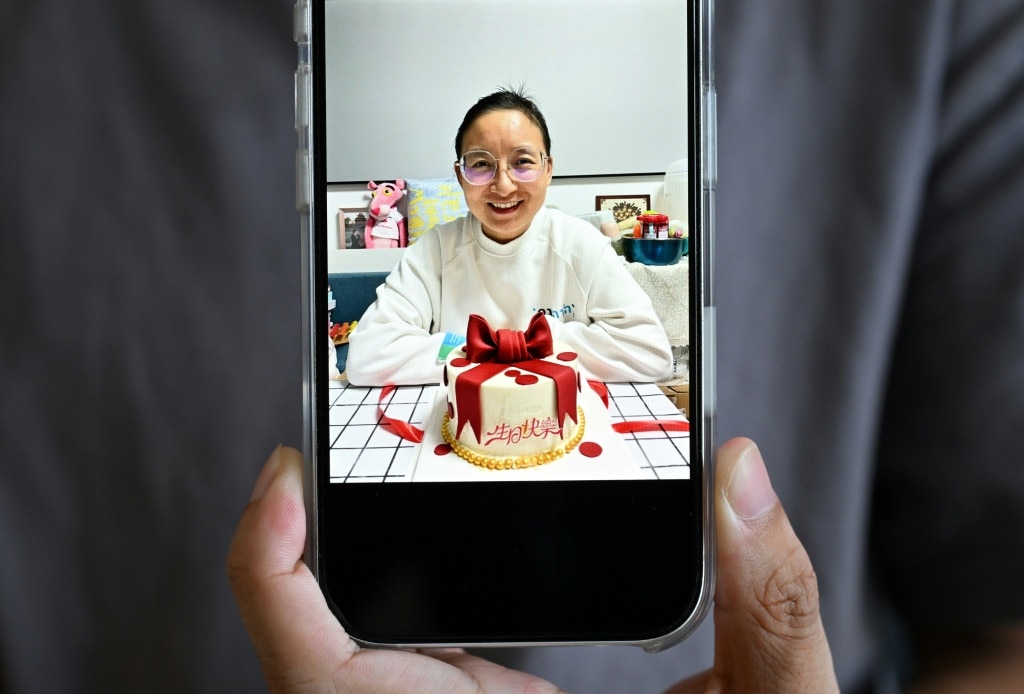
Four-year-old Huanle clasps her small hands together each night, whispering a quiet prayer for the mother she has not seen in nearly a year. It has been 12 months since Chinese security forces raided the family’s home, arresting her mother Wang Cong, a pastor with the unregistered Zion Church — one of China’s largest unofficial Christian congregations — in a nationwide crackdown on unapproved religious groups. Since that night, Wang and seven other detained Zion Church members have remained in custody, their cases entangled in a legal limbo that has left their loved ones clinging to faith amid mounting uncertainty.
Wang was among more than 20 Zion Church members taken into custody during coordinated raids last October, a sweep that targeted one of the most prominent of China’s so-called “underground churches”. Millions of Chinese Christians opt to worship in these unregistered communities rather than attend the government-approved Protestant and Catholic associations the ruling Chinese Communist Party (CCP) formally recognizes. The CCP requires all its members to be atheist and has long viewed unregulated organized religious activity as a potential challenge to its authority, despite a constitutional provision that guarantees Chinese citizens freedom of religious belief.
For believers who choose unregistered congregations, official oversight of state-sanctioned churches is too extensive, granting the government unacceptable control over church leadership, service content, and religious doctrine. Since Xi Jinping took office as China’s president, nationwide scrutiny of unapproved religious groups has intensified, even as enforcement levels shift across regions. Zion Church was first forced to shut down its physical gathering spaces in 2018, but the congregation grew rapidly by moving online during the COVID-19 pandemic lockdowns that forced most social activity digital.
Ezra Jin, Zion’s founding pastor, was also detained in last October’s crackdown, but was released from custody this July — just weeks after then-U.S. President Donald Trump raised Jin’s case during talks with Xi. Jin has since reunited with his family, who relocated to the U.S. in 2018 as pressure on the church mounted. But for Wang and the seven other remaining detainees, their legal process has only moved forward. Their trials, originally scheduled for mid-August in Beihai, the southern coastal Chinese city where Jin previously resided, have been postponed, and authorities have formally indicted the group on charges of fraud and operating an unlicensed business.
Ren Zhong, Wang’s husband and himself a preacher with the church, described the night of the raid to AFP in an interview at his temporary Beihai home. Seven unidentified officers forced their way into the family’s then-Beijing residence, he said, pinning him to the floor as four-year-old Huanle watched from her mother’s arms, before officers tore the child away and led Wang away. A full year later, the family has still not been allowed to speak to her directly. Ren initially held out hope that Jin’s release would pave the way for his wife’s freedom, but the opposite happened: authorities moved to indict the group just two weeks after Jin left China to join his family in the U.S.
“After I heard the news of Jin’s release, I was shocked and afraid to believe it,” Ren, 36, told reporters. “But after joy came worry, worry for my wife, because she was still inside, suffering.”
According to legal documents reviewed by Ren, the core of the prosecution’s case hinges on the collection of church offerings by Wang and other leaders. Because Zion Church is not registered with the government, authorities argue the collection of roughly 660,000 yuan ($98,000) in donations between 2019 and 2024 counts as fraudulent activity. Ren rejects this framing entirely, noting that the collection of tithes from congregants to pay pastor salaries and cover church costs is a core tenet of Christian practice worldwide. “If it’s because of this that my wife has been charged with fraud, then I think this is actually not an accusation against my wife,” he said. “It is a denial of the Christian faith as a whole.”
Relatives of the other detainees say the legal outcome makes little sense after Jin’s release. Gao Guangjun, 76, whose son Gao Yingjia is among the detained pastors, argues that it is unjust for senior church leadership to be released while lower-profile members remain in custody. “It shouldn’t be that the head pastor is fine, but people below him… are in trouble,” Gao said. “It’s a little hard to justify.”
From his new home in the United States, Jin said he carries deep guilt over his freedom while his former colleagues remain detained. “I am deeply conflicted, truly torn. I am free, yet in reality, I am not,” the 57-year-old pastor told AFP. He recently drafted a message through his legal team urging the eight detainees to hold fast to their beliefs, writing, “I hope that one day their children will understand that their parents’ separation from them — and their current detention — is a source of honour. For the sake of a higher conviction, they are paying a price.”
Back in Beihai, Ren has given up his full-time work to care for Huanle and advocate for his wife, sharing updates about the case on his X account, which has just a few hundred followers. To outside observers, the young girl appears largely carefree — dancing around the small apartment to imagined music — but Ren says the trauma of the raid still lingers. There are nights, he says, when Huanle refuses to sleep, telling him she is scared and misses her mother.
When asked for comment on the detentions, China’s foreign ministry stated that Beijing “manages religious affairs in accordance with the law”. AFP reached out to the Beihai Public Security Bureau and local detention facilities for additional comment, but officials declined to accept interviews.
Ren says he faces the real possibility that Wang could be convicted and sentenced to up to 10 years in prison on the fraud charge, but over the past year, his worry has given way to quiet conviction. “I believe God is just,” he said. “I know God has not forgotten about these eight people.” Gao, also a Christian, echoed that quiet faith, acknowledging that the final outcome rests entirely in the hands of Chinese authorities. “It’s for leaders to decide,” he said. “It’s not something ordinary citizens can influence.”