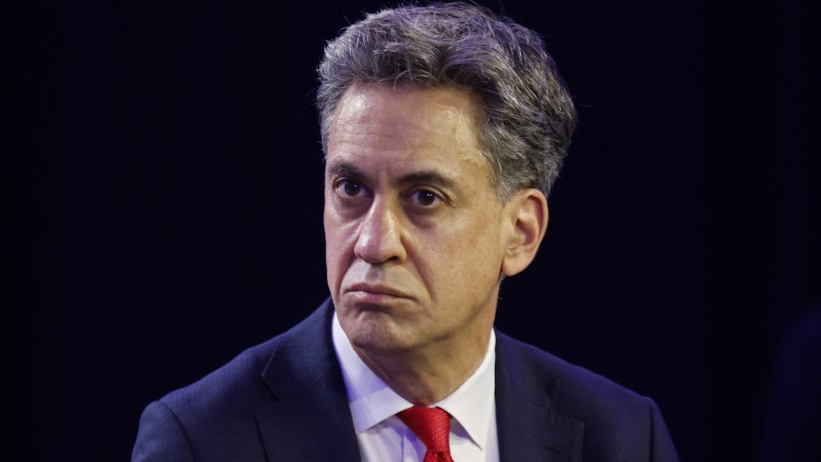
Senior UK government and Labour Party insiders have privately reaffirmed that the British administration will forge ahead with its planned punitive measures targeting entities linked to illegal Israeli settlements, no matter the final results of Israel’s recent deadlocked national elections. Even if long-serving hardline leader Benjamin Netanyahu fails to retain his prime ministerial post, the ruling Labour ministry remains committed to rolling out sweeping restrictions that will target firms providing construction, real estate, and related operational services to expand unauthorized settlement sites in occupied Palestinian territory. The full rollout of the sanctions framework is projected to take up to nine months, a timeline complicated by persistent internal frictions within Whitehall. Multiple government and party sources speaking to Middle East Eye have revealed that a faction of civil servants has erected procedural blockages and pushed to dilute the scope of the planned rules. Within the Foreign, Commonwealth & Development Office (FCDO), a cohort of officials has advocated for limiting sanctions exclusively to Israeli firms complicit in settlement activity, deliberately excluding British corporations that also profit from operations in the occupied West Bank. These officials have further argued that firms with primary operations inside Israel’s pre-1967 borders, even those that run secondary branches in occupied territories, should be fully exempt from restrictions — a carve-out that would drastically water down the original proposals unveiled by Foreign Secretary Ed Miliband in September. Miliband’s initial announcement laid out a regime focused solely on entities whose core business operates within illegal settlements, but critical details remain unclarified, including the undefined “appropriate religious exemptions” he referenced in parliamentary remarks, whose scope has never been publicly disclosed. Tensions surrounding the sanctions intensified in August, when the UK Charity Commission launched a formal investigation after Labour MP Melanie Ward documented that at least 32 charities registered in England and Wales had transferred over £28 million in funds to Israeli settlement institutions. FCDO staff have expressed widespread anxiety that pro-Israel advocacy groups will launch costly legal challenges to derail the policy, a concern that has driven much of the bureaucratic caution around implementation. Adding to internal resistance, the British embassy in Tel Aviv is reported to have opposed the entire sanctions framework from its earliest drafting stages. Despite these headwinds, Miliband has made clear he will not allow the policy to be gutted, repeatedly emphasizing when he first announced the measures on 8 September in parliament that the rules were never intended to interfere in Israeli domestic elections, and that the UK’s dispute lies not with the Israeli public, but with the Netanyahu administration’s settlement expansion policies. Diplomatic relations between London and the Netanyahu government have plummeted in the past two months: Israel retaliated against the planned sanctions by forcing the UK to downgrade its longstanding consulate in occupied East Jerusalem to a lower-status diplomatic mission, prompting the British government to formally suspend all bilateral cooperation under the 2030 strategic partnership roadmap that the previous Conservative administration signed with Israel in 2023. In their full, unaltered form, the sanctions will mandate that British banks, pension funds, and asset managers fully divest from firms operating in illegal settlements, and bar UK financial institutions from issuing mortgages, insurance policies, or other financial services that support settlement construction and maintenance. The Burnham administration’s accelerated timeline for announcing the rules was driven in large part by urgent concerns over Israel’s proposed E1 settlement expansion plan, which would build thousands of new housing units on a corridor between Jerusalem and the existing West Bank settlement of Maale Adumim, 7 kilometers east of the city. If completed, the E1 development would geographically bisect the West Bank, rendering any future contiguous Palestinian state functionally unviable. Though critics initially dismissed the UK’s sanctions proposal as performative gesture politics, the policy has already yielded tangible impact inside Israel: days after Miliband’s announcement, Israel’s attorney general ordered a postponement of the public release of winning construction bids for the E1 project, delaying the move until after the recent national elections. Those elections concluded in a dramatic deadlock, with Netanyahu’s right-wing bloc and the opposing faction failing to secure a clear governing majority. Palestinian-led political parties have offered to back a minority opposition government to block Netanyahu’s return to power, but key opposition leaders have rejected the prospect of forming a governing coalition with Arab political parties. Negotiations are now underway to form a cross-partisan national unity government with a power-sharing arrangement between Netanyahu and leading opposition figures. Gadi Eisenkot, leader of the centrist opposition Yashar party, has publicly come out against the E1 expansion plan, but continues to broadly support settlement activity in East Jerusalem and the broader West Bank, all territories deemed illegal under international law. UK cabinet ministers maintain that even if the next Israeli government scraps the E1 proposal entirely, the full sanctions regime must remain in place to align British policy with longstanding international legal norms. For now, however, the final shape of the policy, and whether it will match the robust framework Miliband first laid out in September, remains an open question.
Exclusive: Miliband set on sanctions regardless of Israel election outcome as officials try to weaken measures