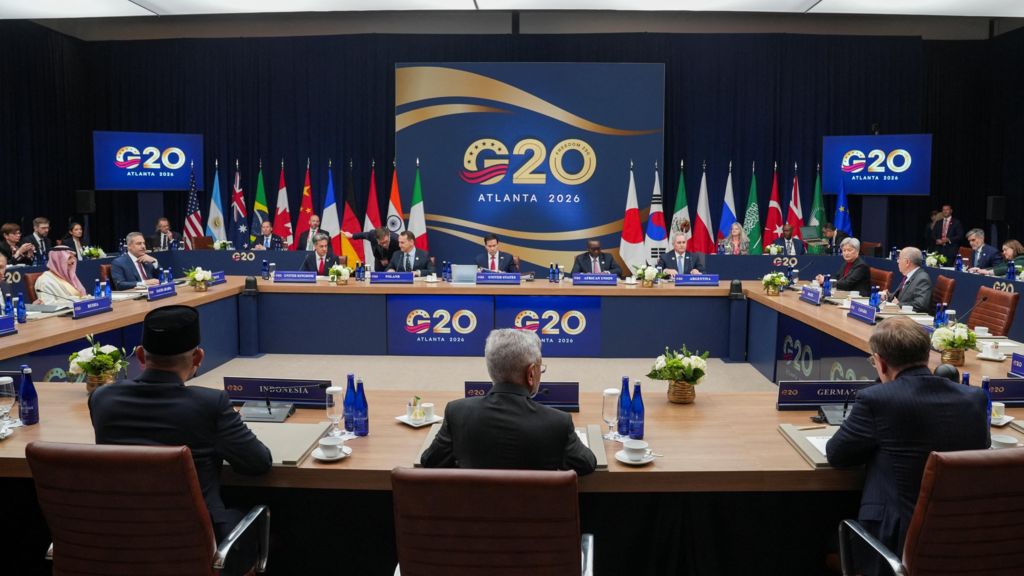
High-stakes diplomatic tensions spilled into the public spotlight at the ongoing G20 Foreign Ministers’ gathering in Atlanta, where U.S. host authorities officially canceled the customary all-delegates “family photo” scheduled for Friday morning after a bloc of European diplomats refused to pose alongside Russian top envoy Sergei Lavrov. Two independent diplomatic insiders confirmed the last-minute cancellation to BBC reporters, marking a rare break from the longstanding tradition of group portraits that typically unites all G20 participating nation representatives at such summits.
Hosted by U.S. Secretary of State Marco Rubio, the summit brings together the top diplomatic representatives of the world’s 20 largest advanced and emerging economies. A diplomatic source confirmed that the United Kingdom, represented at the meeting by Foreign Secretary Ed Miliband, is among the nations that opted out of the planned group photo. A senior British official emphasized that the decision aligns with London’s unbroken policy implemented in the wake of Russia’s 2022 full-scale invasion of Ukraine, which prohibits direct bilateral engagement with Russian cabinet-level ministers, a stance the UK has no intention of revisiting.
Notably, Ukraine, which has been extended guest invitations to prior G20 ministerial gatherings despite not holding formal group membership, was not included in the attendee list for this Atlanta summit. The exclusion comes amid a sharp, month-long diplomatic standoff between Kyiv and Washington, sparked by disputes over Ukrainian military strikes targeting Russian energy infrastructure. This rift stands in stark contrast to a recent partial thaw in U.S.-Russia relations, orchestrated by the administration of U.S. President Donald Trump: the White House has waived a subset of longstanding sanctions on Russia and struck a landmark agreement to import Russian diesel for the U.S. domestic market.
The policy shift is widely viewed as a calculated move by Trump to bring down soaring domestic fuel prices ahead of the U.S. mid-term elections scheduled for early November, after months of economic and political fallout stemming from the ongoing Iran conflict. The deal has drawn fierce backlash from Ukraine and its European allies, who argue it emboldens Moscow to continue its nearly three-year invasion. Ukrainian President Volodymyr Zelensky publicly derided the arrangement as an unearned “gift” to Russian President Vladimir Putin, arguing it constitutes a reckless investment that prolongs, rather than ends, the devastating conflict.
Trump has defended his suspension of select Russian sanctions as a strategic step to keep Moscow seated at the negotiating table to broker a formal ceasefire to the Ukraine war. For his part, Putin has signaled Russia’s willingness to supply crude oil and refined petroleum products to both the U.S. and global markets, after imposing a unilateral ban on diesel exports earlier this year. Amid these diplomatic maneuverings, Russia maintains control of roughly one-fifth of Ukraine’s sovereign territory, and in recent weeks has escalated its relentless, lethal campaign of missile and drone strikes targeting Kyiv and other populated Ukrainian urban centers.