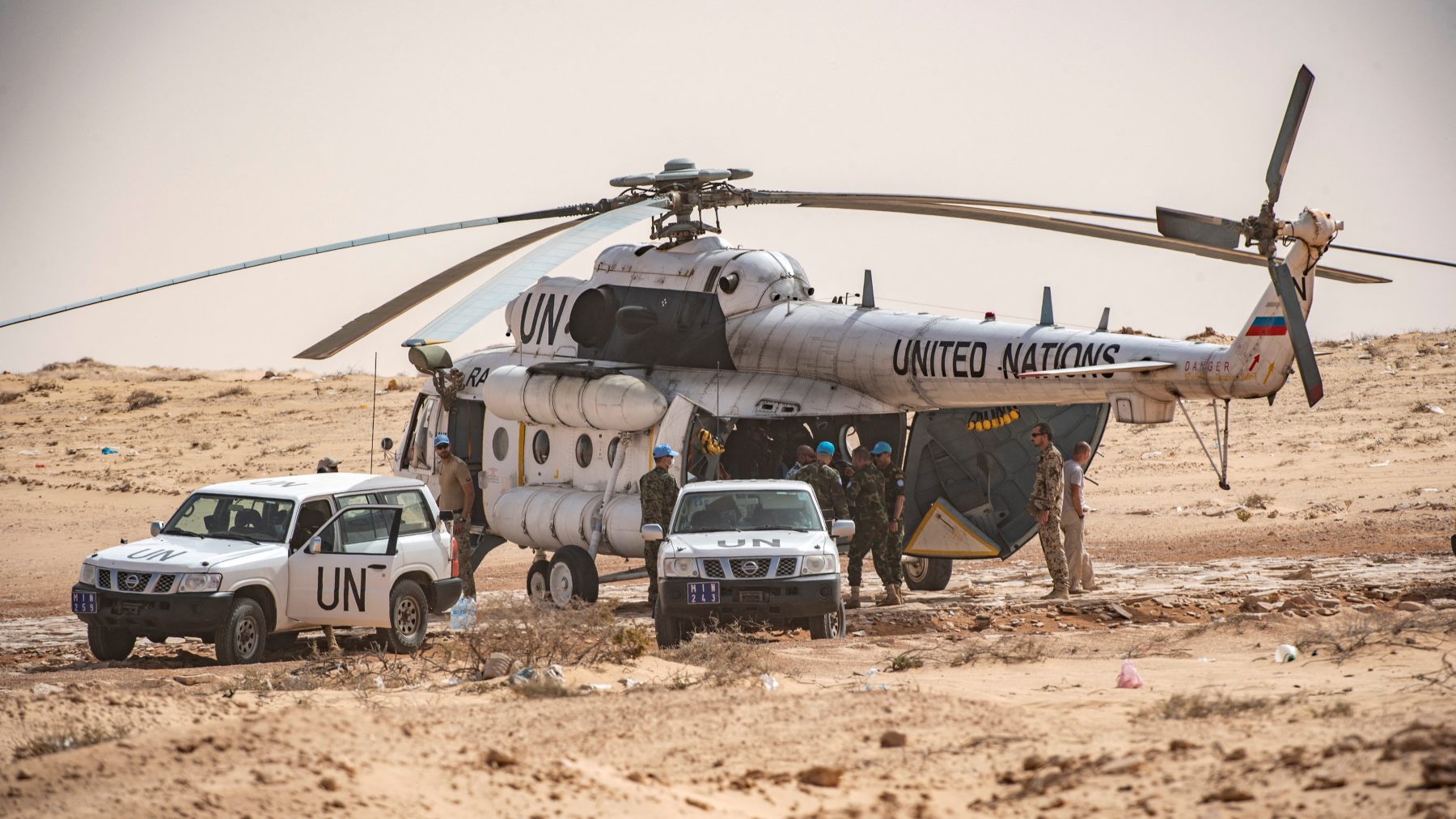
A historic breakdown in routine UN Security Council proceedings has left the long-running Western Sahara peacekeeping operation entirely without an active mandate, after competing draft resolutions from Russia and the United States were both vetoed in a rare head-to-head clash between the two permanent Security Council powers. The impasse centers on decades of competing territorial claims in the mineral-rich North African territory, which was abandoned by former colonial ruler Spain in 1976. Morocco has long asserted historical sovereignty over the region, referring to it as its “southern provinces” and pouring billions of dollars into local infrastructure, education, and public service upgrades to integrate the territory into its national system. Opposing Rabat’s claim is the Algeria-based Polisario Front, a pro-independence movement that has waged a decades-long campaign for a fully sovereign Sahrawi state, with tens of thousands of its supporters residing in isolated refugee camps across the Algerian border. For nearly 30 years, the UN peacekeeping mission formally known as the United Nations Mission for the Referendum in Western Sahara (MINURSO) has operated with a routinely renewed annual mandate, tasked with overseeing a UN-brokered ceasefire and organizing a long-promised independence referendum for the Sahrawi people. But the 2024 renewal process devolved into unprecedented confrontation after Washington tabled a draft resolution designed to elevate Morocco’s 2000s-era autonomy proposal to the sole official basis for all future negotiation talks. The U.S.-backed text also would have trimmed MINURSO’s military personnel contingent, stripped the word “referendum” from the mission’s official name to reflect decades of intractable disputes over voter eligibility that have made a popular vote functionally unworkable, and directed the UN refugee agency to conduct a full census of Polisario-run refugee populations in Algeria. The United Kingdom and France, the Security Council’s other two permanent European members, openly endorsed the U.S. draft and threw their support behind Morocco’s autonomy framework, which the Security Council had already partially backed as a negotiation foundation in the previous year’s mandate renewal. Speaking after the vote, U.S. UN Ambassador Michael Waltz emphasized that UN operational staff had confirmed for 30 consecutive years that the logistical and political barriers to holding a fair, agreed-upon referendum were insurmountable. “Some council members have chosen to wield their veto just to preserve the letter R for referendum in the mission’s title, even though the UN has not taken any concrete steps to organize that vote for decades,” Waltz stated. Russian representatives, however, pushed back fiercely against the U.S. draft, arguing that the text unacceptably pre-judged the final sovereign status of Western Sahara in violation of longstanding UN neutrality protocols. “The Security Council has no authority to pre-determine sovereignty disputes unilaterally, and we cannot endorse this lopsided, one-sided approach,” Russian UN Ambassador Vassily Nebenzia told the chamber, explaining his country’s decision to veto the U.S. resolution. After the U.S. draft failed, Russia tabled its own competing text, a straightforward 12-month mandate extension that would have left all existing MINURSO operating rules and the mission’s original name fully unchanged. The U.S. immediately vetoed this Russian draft, which garnered only 2 supportive votes out of 15 Security Council members, prompting Nebenzia to denounce the U.S. move as a “political murder of the peacekeeping mission.” At the time of the vote, MINURSO deployed 155 uniformed military personnel across the territory, with a projected annual operating budget of $62 million for the fiscal cycle that launched in June. Humanitarian advocacy organization Oxfam issued a stark public warning in the aftermath of the dual veto, noting that the sudden collapse of the mission’s mandate would eliminate critical ceasefire monitoring and de-escalation capabilities that have kept armed conflict at bay for decades. The group cautioned that the power vacuum would put ordinary Sahrawi civilians at severe risk, erode fragile regional stability, and effectively destroy remaining pathways to a negotiated, peaceful end to the 48-year-old territorial dispute. Roughly the vast majority of Sahrawi citizens reside in the portion of Western Sahara administered by Morocco, while an estimated 170,000 remain in Polisario-managed refugee camps in southern Algeria.