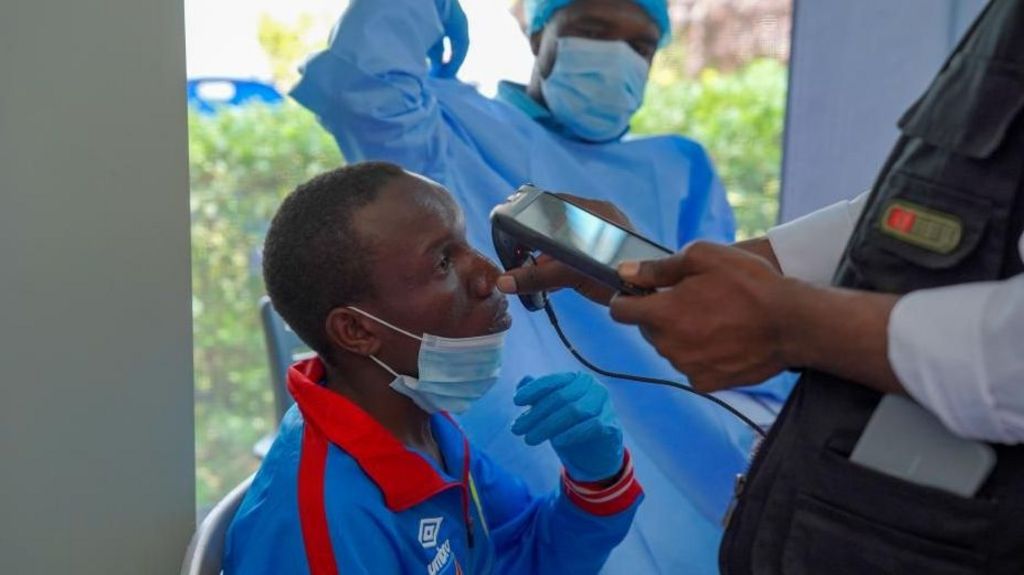
Official data released by the Democratic Republic of Congo’s (DRC) national health authorities confirms that the ongoing Ebola outbreak has claimed more than 5,000 lives, marking the deadliest Ebola emergency ever recorded in the country’s history. First detected in May, the outbreak had already outstripped the 2018–2020 Ebola crisis that killed 2,299 people by August this year, with a current case fatality rate standing at 48.6% across 10,300 confirmed cases distributed in 8 of the country’s 26 provinces.
The epicentre of the crisis remains in north-eastern Ituri province, a long-running active conflict zone where restricted movement and fragmented access to communities have severely hindered standard virus containment efforts. Compounding these operational barriers, widespread misinformation among local populations has triggered a wave of violent attacks against frontline responders: earlier this week, a nurse was killed and a second health worker sustained critical injuries while responding to an Ebola alert, after local youth falsely accused medical teams of contaminating local water supplies and deliberately spreading the virus. Last month, a local politician was beaten to death by crowds for advocating evidence-based Ebola prevention measures, and the Red Cross documented 11 separate violent incidents in the outbreak’s first 100 days that left volunteers injured and an emergency ambulance burned to the ground.
This 17th recorded Ebola outbreak in DRC’s history is classified as the second largest global Ebola emergency on record, trailing only the catastrophic 2014–2016 West African outbreak that killed over 11,325 people and spread as far as Europe and the United States. United Nations officials warn that the current DRC outbreak is claiming lives at a far accelerated pace compared to prior large-scale events. The pathogen driving the current crisis is the Bundibugyo Ebola species, for which no pre-approved vaccine or targeted therapeutic treatment is currently available, though multiple candidate vaccines are now in active clinical trial phases alongside expanded diagnostic testing and supportive care rollouts.
Cross-border transmission has already been documented across the region: Uganda recorded 20 confirmed cases and 2 fatalities in the early months of the outbreak, with no new cases reported since August, though targeted travel screening and entry restrictions remain in place for all travellers arriving from DRC. Kenya has confirmed 9 cases and 2 deaths linked to the outbreak, while Nigeria’s national disease control agency announced two new suspected cases over the weekend that are now in isolation and undergoing diagnostic testing, following a confirmed Ebola case in October that was medically evacuated to Switzerland for advanced care. Public health authorities have sought to calm global concern, with the European Centre for Disease Prevention and Control stating that the risk of infection for populations across the European region remains extremely low.
The World Health Organization’s Africa regional office has issued an urgent call for scaled-up core public health interventions, unimpeded humanitarian access to conflict-affected communities, and expanded trusted community outreach initiatives to counter misinformation and bring the outbreak under control. Ebola is a rare, highly virulent viral disease that causes sudden onset of severe symptoms including fever, vomiting, diarrhoea, and in some cases internal and external bleeding, often progressing rapidly to organ failure, and spreads exclusively via direct contact with the bodily fluids of infected individuals.
More than 5,000 die from Ebola in DR Congo’s deadliest outbreak