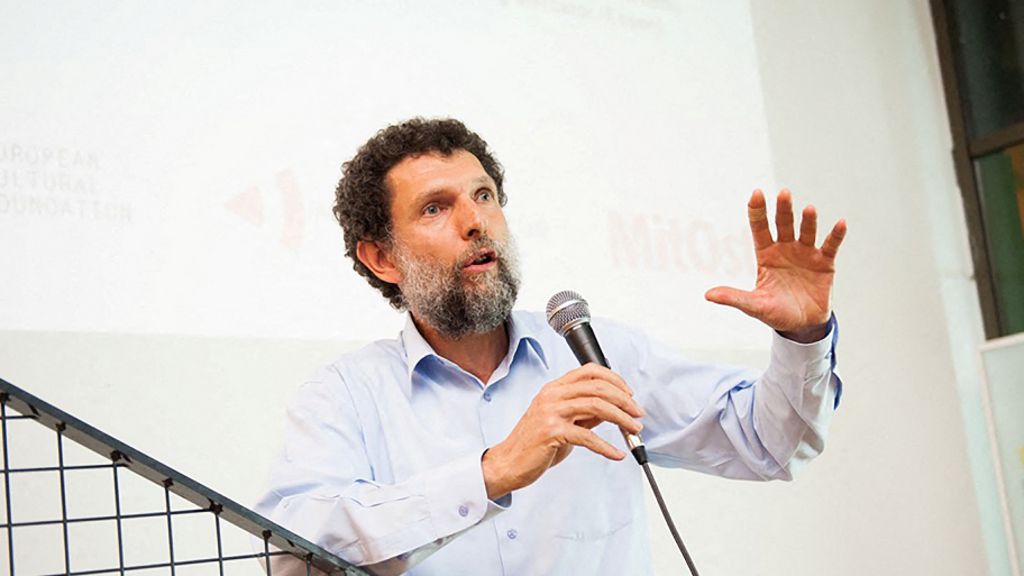
In a landmark ruling that has deepened the long-running rift between Turkey and Europe’s human rights oversight body, the European Court of Human Rights (ECHR) has ordered Turkish authorities to immediately free 68-year-old activist and philanthropist Osman Kavala, who has spent nearly a decade in pre-trial and post-conviction detention. The court’s scathing judgment not only invalidates Kavala’s 2022 life sentence but also accuses Turkey of systemic failures in its handling of political dissent, raising urgent questions about Ankara’s commitment to upholding the rule of law.
Kavala first entered custody in October 2017, accused of orchestrating and funding the 2013 Gezi Park nationwide protests – a series of demonstrations that began as a local campaign against urban development in central Istanbul and grew into the most significant challenge to then-Prime Minister Recep Tayyip Erdogan’s authority. He was later hit with additional charges linked to the failed 2016 military coup against Erdogan’s government. After an initial acquittal in 2020, he was rearrested within hours on fresh coup-related charges. His acquittal was overturned in 2021, and he was ultimately sentenced to life in prison in April 2022, a conviction the ECHR has now ruled null and void.
Since his first arrest, Kavala and global human rights organizations have consistently argued that all charges against him are politically motivated, designed to silence a prominent critic of the Erdogan administration. The ECHR echoed these claims in its Tuesday ruling, finding that the legal actions taken against Kavala were primarily driven by an ulterior goal: to punish him for his role in the Gezi Park protests and his work as a human rights advocate, and to muzzle his dissenting voice. The court further determined that Kavala’s aggravated life sentence constitutes inhuman and degrading treatment, violating his fundamental rights to a fair trial, freedom of expression, and freedom of association.
Beyond the specifics of Kavala’s case, the ECHR emphasized that the legal proceedings exposed a far broader systemic problem within Turkey: the pattern of arbitrary detention and prosecution of political opponents, human rights defenders, and independent journalists. The ruling pointed to structural shortcomings in the Turkish judiciary that undermine guarantees of judicial independence and impartiality – a claim the Turkish government has long rejected, maintaining that its national courts operate free of political interference.
Opposition figures and rights advocates have repeatedly alleged that Erdogan’s government has increasingly weaponized the country’s judicial system to target political rivals and critics over the past decade. Erdogan himself has previously leveled unsubstantiated claims that Kavala acts as an agent for Hungarian-American billionaire George Soros, echoing a common conspiracy theory pushed by populist leaders targeting civil society groups.
This latest ruling marks the third time the ECHR has ordered Kavala’s release. The court first demanded his immediate release in 2019, labeling his detention arbitrary and politically motivated, but Ankara refused to comply with the judgment. Now, as the Council of Europe – the body that oversees implementation of ECHR rulings across its 46 member states – prepares to discuss the case at its upcoming Committee of Ministers meeting in mid-September, uncertainty looms over whether Turkey will comply with the court’s binding order this time.
The Council of Europe holds the power to impose serious consequences for non-compliance, including freezing a country’s membership or suspending its voting rights if it is found to have systematically violated the rule of law. While Turkey is a founding member of the organization and has not severed ties despite previous non-compliance with key ECHR rulings, the Kavala case remains one of the most volatile flashpoints in relations between Ankara and the ECHR’s base in Strasbourg. It remains unclear whether the September meeting will open the door to harsh punitive measures against Turkey if it again refuses to release Kavala.
Global rights groups have thrown their weight behind the ECHR’s ruling, calling for an immediate end to what they describe as obstruction of justice. “This obstruction of justice must end. Turkey’s authorities, including judicial and prosecutorial, must act to free Osman Kavala immediately and unconditionally,” said Eve Geddie of Amnesty International, the leading human rights organization that has long documented the case, noting that prosecutors originally made false claims that the Gezi Park protests amounted to an attempted government overthrow.