BRUSSELS — After years of gridlock and mounting public anger fueled by the ongoing humanitarian catastrophe in Gaza, the 27-member European Union has struck a historic unanimous political deal to impose fresh sanctions on senior Hamas leaders and extremist actors within the Israeli settler movement, top EU diplomatic officials confirmed Monday.
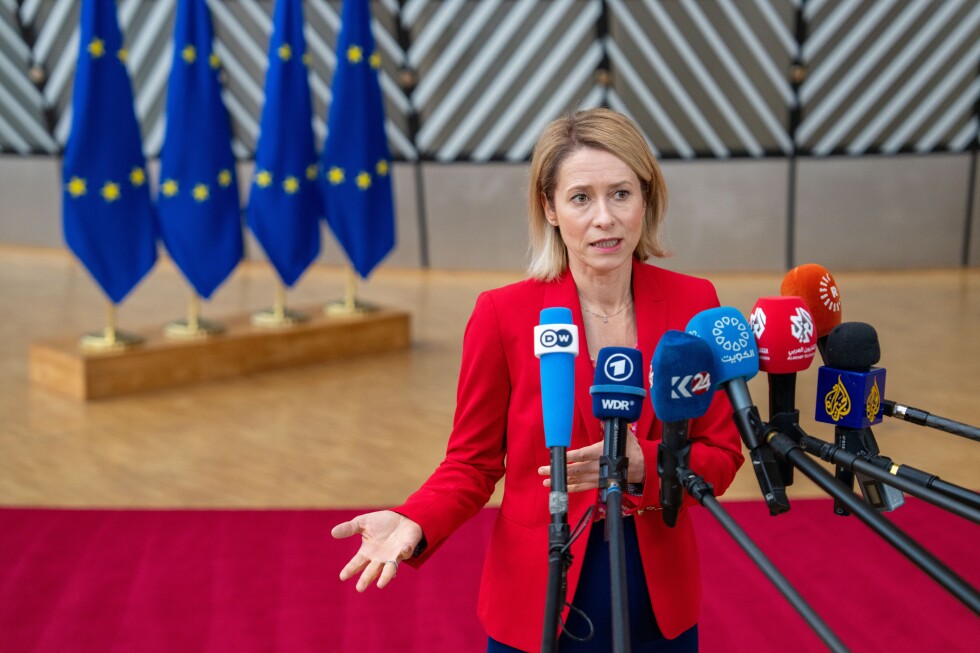
The breakthrough came during a meeting of EU foreign ministers in the Belgian capital, where EU High Representative for Foreign Affairs and Security Policy Kaja Kallas hailed the agreement as a long-overdue shift from stalemate to action. “Extremism and violence should carry consequences,” Kallas wrote in a social media statement following the vote. “It was high time we move from deadlock to delivery.”
While the bloc ultimately rejected bolder penalties pushed by a cohort of progressive European governments and has not yet published the full text of the new sanctions framework, French Foreign Minister Jean-Noël Barrot outlined the scope of the agreed measures: sanctions will target top Hamas commanders, as well as leading figures and key organizations tied to the Israeli settler movement operating in the occupied West Bank.
“The European Union is sanctioning today the main Israeli organizations guilty of supporting the extremist and violent colonization of the West Bank, as well as their leaders,” Barrot wrote in his own social media post Monday. “These most serious and intolerable acts must cease without delay.”
Addressing the targeting of Hamas leaders, Barrot added: “It is sanctioning the main leaders of Hamas, responsible for the worst antisemitic massacre in our history since the Shoah during which 51 French people lost their lives, a terrorist movement that must imperatively be disarmed and excluded from any participation in the future of Palestine.”
The push for new sanctions against West Bank settler groups comes amid growing international alarm over a sharp surge in settler violence against Palestinian communities in the occupied territory. Palestinian authorities, human rights organizations and international monitors have repeatedly warned that routine attacks by settlers — including arson, property vandalism, the displacement of agricultural communities, and lethal violence against civilians — are worsening at an alarming rate. Data from the United Nations Office for the Coordination of Humanitarian Affairs shows that at least 40 Palestinians have been killed in the West Bank since the start of 2026, with a record 11 of those deaths at the hands of Israeli settlers — two more fatalities than were recorded in all of 2025.
Diplomatic analysts widely attribute the sudden breakthrough on sanctions to the recent electoral ouster of former Hungarian Prime Minister Viktor Orbán, who stepped down last month after 16 consecutive years in power. A steadfast ally of Israeli Prime Minister Benjamin Netanyahu, Orbán had single-handedly blocked all previous EU attempts to impose sanctions on Israeli settlers for years, leaving the bloc unable to act despite widespread support among other member states.
Orbán was defeated in April’s general election by opposition leader Péter Magyar, who was sworn in as Hungary’s new prime minister just days before Monday’s vote. Martin Konečný, head of the Brussels-based European Middle East Project, noted that the successful approval of the sanctions package confirms long-held assessments that Orbán was the sole barrier to action. “This validates the notion that Orbán was blocking them single-handedly,” Konečný said.
Many foreign policy observers say the new sanctions could mark a pivotal shift in the EU’s long-standing approach to Israel. For months, a growing bloc of European governments led by Spain, Ireland and the Netherlands has pushed for punitive measures over the Israeli government’s military campaign in Gaza, as well as its expanding settlement activity and rising violence in the West Bank, and escalating cross-border conflicts in Lebanon, Syria and Iran.
Ahead of Monday’s meeting, Luxembourg Foreign Minister Xavier Bettel summed up the growing pressure to act: “You can’t just turn a blind eye.”
Even with the historic agreement, the EU fell short of adopting the more sweeping measures that many activists and progressive governments had called for. Diplomats failed to reach consensus on harsher economic measures, such as a bloc-wide ban on goods produced in Israeli settlements in the West Bank or the suspension of a key bilateral trade agreement between the EU and Israel.
Hugh Lovatt, a senior fellow at the European Council on Foreign Relations, criticized the bloc’s limited scope of action. “There’s so much that you can and should be doing, and so to get stuck in this question of adding a few more settlers is missing the big picture,” Lovatt said. “The EU’s narrowed the scope of action now to individuals and to a few entities, and in doing that it’s ignoring the far more systemic issues at play.”
Claudio Francavilla, associate EU director at Human Rights Watch, called the sanctions a tentative step forward but said far more action is required to bring the bloc into compliance with international law. The measures are “a step in the right direction, but so many more needed for the EU to comply with international law,” Francavilla said.
Italy, one of the more prominent EU member states skeptical of harsher measures, has already signaled it is not ready to back a French-Swedish proposal that would cut West Bank settlers off from EU markets. Ahead of Monday’s meeting, Italian Foreign Minister Antonio Tajani said his government needed additional time to review the plan, withholding its support despite growing public pressure across the continent for tougher action.
Dutch Foreign Minister Tom Berendsen noted that individual EU member states retain the right to implement national bans on settlement goods if bloc-wide negotiations stall in Brussels. The next meeting of the EU Foreign Affairs Council, scheduled for later this May, will focus specifically on trade policy related to the region.
Spanish Foreign Minister José Manuel Albares Bueno pushed for swift action on broader measures in comments to reporters in Brussels Monday. “We have been talking about measures for too long,” he said. “Let’s move on to a vote and stop saying that there is no qualified majority for it. Let’s see how many of us are in agreement and who is not.”