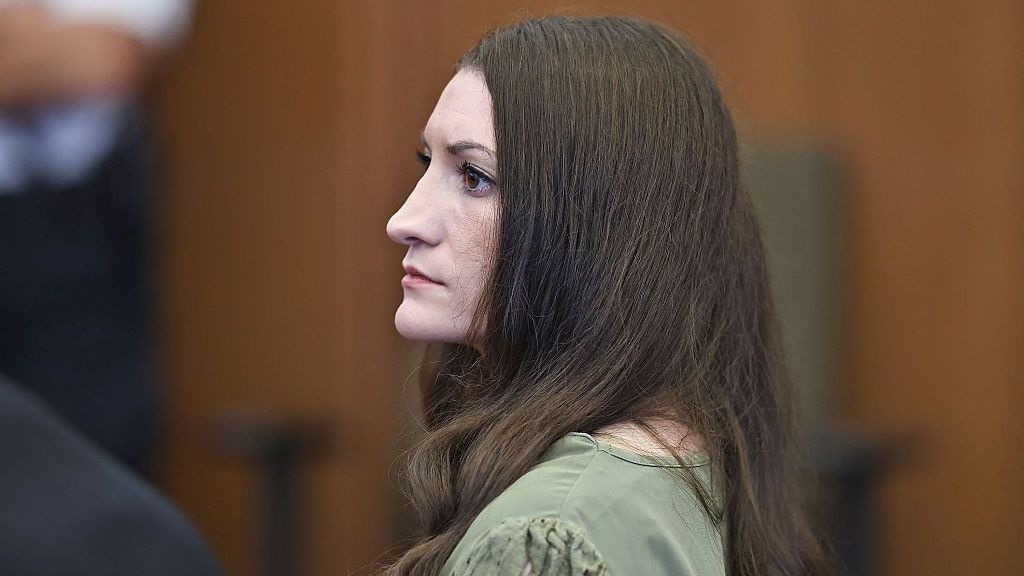
In the wake of a high-profile mistrial that left the Lindsay Clancy case hanging in legal limbo, three members of the 12-person jury have stepped forward to share unprecedented details of the tense, emotionally fraught deliberations that ended with no verdict. The three women, one of whom served as the jury’s foreperson, opened up about their experience in an exclusive interview with NBC, speaking publicly for the first time since Judge William Sullivan formally declared a mistrial late last week.
Clancy, a Massachusetts woman charged with the murder of her three young children, has never denied taking their lives in the basement of the family home. Her defense team has centered its entire case on the argument that she was suffering from severe, untreated postpartum psychosis at the time of the killings, and thus lacked the criminal responsibility to be found guilty. Prosecutors, by contrast, have pushed the narrative that the killings were a premeditated, calculated act, calling more than a dozen expert witnesses including multiple medical professionals to bolster their claim. After nearly 40 hours of deliberations spread across seven days, marked by repeated notifications to the court that the jury was deadlocked, Sullivan officially called a mistrial.
The three female jurors confirmed what court observers had speculated: the panel was just one vote away from a unanimous verdict of not guilty by reason of insanity. The foreperson, a retired fifth-grade grade teacher who acts as the official representative for the jury in U.S. judicial proceedings, described the days of deliberation as an unrelenting emotional roller coaster that left many jurors in tears. “We had lots of crying, lots of tears, and then hugging each other to get through it,” she shared. “I was so sad we couldn’t reach a verdict for Lindsay. It was absolutely heartbreaking. It’s just awful that it ended this way.”
She detailed a moment of false hope that quickly turned to disappointment: the lone male holdout had already admitted he held reasonable doubt about Clancy’s criminal responsibility, a standard that under Massachusetts law requires a not guilty verdict. As the foreperson began filling out the official verdict forms, excited that the process was wrapping up, the holdout reversed course. He told the panel he still would not vote to acquit on the grounds of insanity, despite acknowledging he could not find beyond a reasonable doubt that Clancy was criminally culpable. The holdout has not come forward publicly to respond to the jurors’ claims.
The second juror, an employee at a government defense contractor, explained that the holdout’s objection centered on questions about the medication Clancy was taking at the time of the killings. Even after the panel, which included multiple practicing nurses, walked through the clear toxicology reports that confirmed the exact dosage of Clancy’s medication, the juror refused to accept the evidence, she said. The third juror, a chef at a local senior center, added that she found the prosecution’s approach unnecessarily harsh, noting that prosecutors never called a single witness to testify that Clancy had been an abusive or unfit mother before the killings.
As the foreperson clarified, the jury never debated whether Clancy had caused the deaths of her children, as she had already admitted that fact. Their task, under Massachusetts law, was only to determine whether she understood right from wrong at the time of the act — a standard for criminal responsibility that puts the burden of proof on the prosecution, not the defendant, to prove beyond reasonable doubt that she was criminally culpable. The three jurors all said they found the prosecution’s argument unconvincing, saying all available evidence pointed to Clancy having snapped from her postpartum psychosis, unable to understand her actions.
Deliberations grew so contentious that arguments and shouting could be heard through the jury room walls, the jurors confirmed. At one point, the panel notified the court that the holdout was refusing to follow the judge’s instructions on the legal standard of reasonable doubt, leading Clancy’s defense team to request that the juror be removed from the case. That request was immediately denied by the judge, and the stalemate continued until a mistrial was declared.
All jury members have remained anonymous per court order, which banned any photography or filming of the panel during the trial to protect their privacy. Under U.S. law, however, jurors are free to speak publicly about their deliberations once a case concludes, a common practice in high-profile cases like this one. The BBC, which had a reporter in the courthouse throughout the trial, has confirmed that the three women who spoke to NBC were indeed seated on the Clancy jury.
The mistrial has left Clancy’s future and the trajectory of the case completely uncertain. Prosecutors are currently weighing whether to empanel a new jury and hold a second trial. Clancy’s lead defense attorney, Kevin Reddington, has already stated he hopes to negotiate a plea agreement with prosecutors to avoid a second proceeding. The three jurors who spoke to NBC echoed that hope, saying they oppose a new trial — and if one is ultimately held, all three plan to attend in open court to show their support for Clancy.