In an overnight statement released by the Democratic Republic of Congo’s Ministry of Health, confirmed cases of the ongoing Ebola outbreak in the country’s eastern region have climbed to 3,262 — a figure that puts it nearly on par with the 2018-2020 outbreak, the second-largest Ebola event recorded in Congo’s history. Of the total confirmed cases, 1,437 patients have already succumbed to the virus, marking the fastest-moving Ebola outbreak the country has ever faced, with transmission heavily concentrated in Ituri province. To contextualize the scale of the current crisis, the 2018-2020 outbreak, which spread across Congo and into neighboring Uganda, unfolded over roughly 24 months, ultimately recording just over 3,400 cases and more than 2,200 deaths, per data from the U.S. Centers for Disease Control and Prevention. Globally, the deadliest Ebola outbreak on record remains the 2014-2016 West African epidemic, which claimed more than 11,000 lives among 28,000 confirmed cases.
The alarming speed of the current outbreak, which was first declared on May 15, stems from a cascade of overlapping challenges that have hampered containment efforts. Unlike most previous Ebola events, this outbreak is driven by the Bundibugyo virus, a strain for which no specifically approved vaccines or targeted treatments currently exist. Beyond the lack of medical countermeasures, response teams have been forced to operate amid widespread instability: rebel violence in eastern Congo, delayed wage payments that have triggered strikes among frontline health workers, and safety concerns that have left many high-risk communities either entirely cut off from care or abandoned by responders. Attacks by armed groups and disgruntled local residents have further disrupted efforts to reach vulnerable populations.
Adding to the complexity of containment, public health officials have yet to identify patient zero, the initial case that sparked the outbreak. Large-scale population displacement caused by ongoing armed conflict, combined with the presence of unregulated illegal mining operations in the region, has made contact tracing for thousands of people exposed to the virus nearly impossible to complete. As a result, the virus has continued to outpace the ability of health teams to track and isolate new cases, even as international and local response efforts have expanded.
“In just 10 weeks, we have reached nearly the same number of cases recorded over an almost two-year outbreak. This is alarming and should stop us in our tracks,” Onesphore Bangenza, Mercy Corps’ response team lead based in Bunia, the capital of Ituri province, told reporters Tuesday. “There is no doubt that the virus is moving faster than we can contain it.”
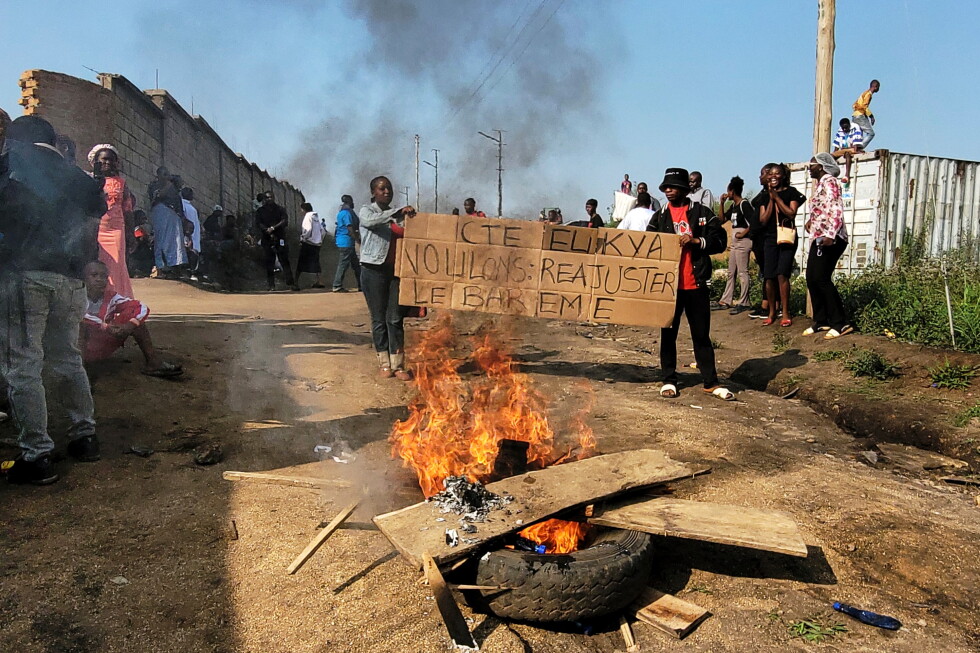
Despite the grim trajectory of the outbreak, small signs of progress have begun to emerge in recent days. Early in the crisis, deep distrust between local communities and health workers fueled resistance to response efforts, but that tension has softened in some of the hardest-hit areas. In Mongbwalu, a major mining town at the epicenter of the outbreak where residents burned down multiple Ebola treatment centers earlier this year, community leaders now say they are ready to collaborate with response teams.
“We can never again wage war against the Ebola teams. We have lost members of our families. As a community, we have a vested interest in fighting Ebola to return to normal life,” said Fabrice Mumbesa, a long-time resident of Mongbwalu.