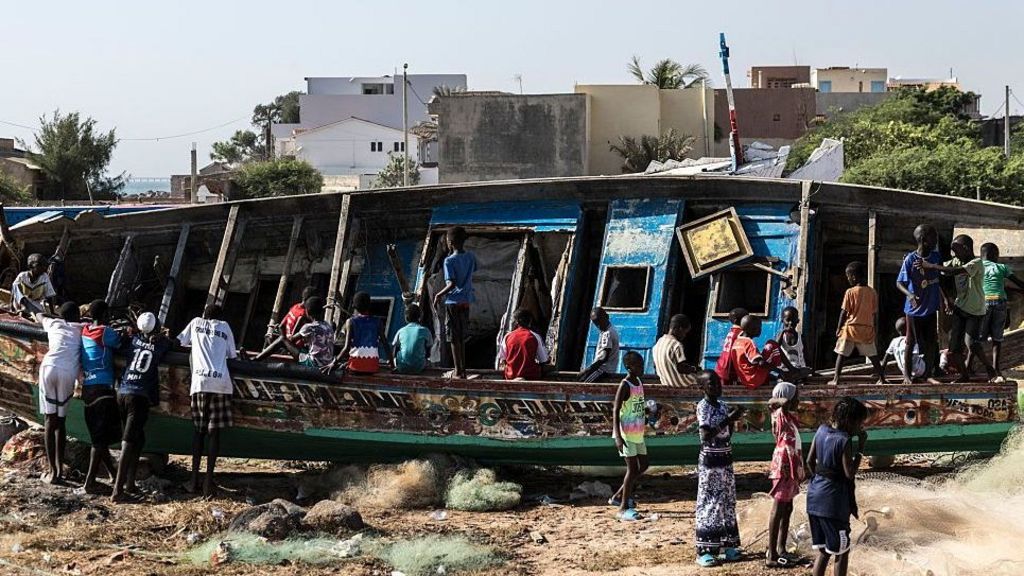
Senegalese maritime and local law enforcement teams have sustained round-the-clock search efforts since a migrant overloaded pirogue capsized in coastal waters off the town of Yenne, a disaster that unfolded just 12 days after one of the nation’s deadliest recorded migrant shipwrecks claimed at least 39 lives near the northwestern community of Thieppe.
Eyewitness accounts from village representatives confirm the small vessel carrying roughly 100 irregular migrants capsized at approximately 2 a.m. local time, with panicked cries from the distressed craft clearly audible to residents gathered on nearby shorelines in the pre-dawn darkness. While initial official briefings confirmed a single fatality, local media on the ground have verified recovery of at least four human remains to date, with scores of passengers still unaccounted for as of Thursday morning. The waterlogged, badly damaged hull of the capsized craft later washed onto Senegalese shore, where responding officers recovered a trove of personal effects including national identity papers, multiple mobile devices, and a school supply item believed to belong to a teenage high school student, indicating minors were among the group attempting the transatlantic crossing to reach European shores.
During a Wednesday cabinet session, Senegalese President Bassirou Diomaye Faye publicly flagged his deep alarm over a sharp, recent resurgence in high-risk irregular migrant departures from national coastlines. He issued a formal directive to the Ministry of Interior to draft a comprehensive evidence-based report mapping the root socioeconomic and security drivers pushing West African travelers to undertake these perilous sea voyages, paired with targeted actionable policy interventions to curb preventable loss of life. This directive follows a public appeal Faye issued less than a month prior, in the immediate aftermath of the Thieppe shipwreck, urging Senegalese citizens to avoid risking their lives on unregulated, overcrowded migrant vessels.
The International Organization for Migration, the United Nations lead agency on migration affairs, released updated figures last month documenting a minimum of 454 confirmed deaths and disappearances along the West African Atlantic migration route in the current calendar year alone. Agency officials have repeatedly cautioned that this official tally is almost certainly a significant undercount, as dozens of unregistered migrant vessels vanish entirely without leaving survivors or any verifiable trace for authorities to document. For decades, tens of thousands of West African migrants have embarked on these dangerous sea journeys to escape entrenched poverty, localized conflict, and repressive authoritarian governance across the region.
Dozens missing after boat carrying 100 migrants sinks off Senegal