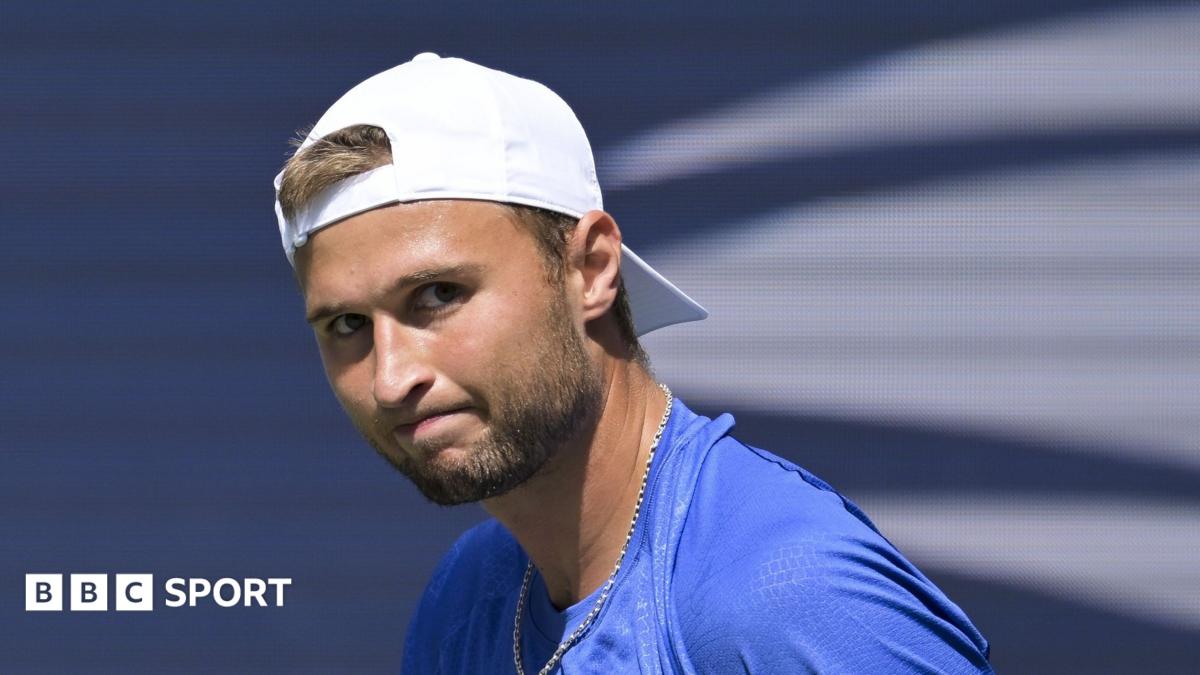
In an exclusive, candid interview with BBC Sport tennis correspondent Jonathan Jurejko, 24-year-old Swiss professional tennis player Leandro Riedi, currently ranked world No. 137 at the height of his 18-month battle with crippling panic attacks and long-buried chronic anxiety, has publicly shared his previously undisclosed story of surviving a suicide attempt just days before 2024 Wimbledon qualifying kicked off. For years, the Zurich-raised athlete, who first picked up a racket at age 3, carried a persistent inner narrative that he was never good enough, that every performance demanded absolute perfection, a quiet mental torment that escalated into unmanageable panic episodes between February 2023 and November 2024 that left him feeling completely powerless over his own mind. The few people who witnessed his uncharacteristically somber, unsmiling reaction after winning a 2024 Wimbledon qualifying match, a milestone that would typically spark wild celebration for a player outside the top 100, had no context for the profound pain he was concealing: only his coach knew of his recent suicide attempt, and even those closest to him were unaware of the full extent of his suffering. Against his coach’s initial advice to return home to rest, Riedi chose to stay and compete, clinging to the tennis court as the only safe space where he could temporarily escape his spiraling thoughts; he later admitted he barely remembers competing that week, retreating straight to his hotel room after wins, too overwhelmed to speak to anyone, and credits his on-call psychologist who stayed up until 3 a.m. with him in his hotel room to prevent further self-harm as the person who saved his life. After exiting the third round of Wimbledon qualifying, Riedi spent two weeks too terrified to leave his hotel room, venturing out only to collect food deliveries from the lobby, chasing the temporary relief of competing at subsequent tournaments including a stop in Gstaad before realizing tennis was only acting as a short-term placebo for his unaddressed mental wounds. The turning point came when the first major knee injury of his career forced surgery shortly after the 2024 US Open, stripping him of the distraction of competitive play he had leaned on for so long: instead of resisting his mental health struggles, he finally committed to working through them with professional support, rather than fighting to hide them to avoid appearing weak on tour. After months of dedicated therapy, he has eliminated suicidal thoughts entirely, his crippling panic attacks have ceased, and he now has robust coping strategies to manage his residual anxiety rather than letting it derail his life. When he chose to share his story publicly via social media earlier this year, he made clear he was not seeking sympathy, but aimed to deliver a powerful message to other people grappling with invisible mental health battles that recovery is possible. The response has been overwhelmingly positive, with messages of gratitude pouring in from across the globe, including a note from a fan in India who told Riedi his story gave them the strength to keep going through their own crisis. Riedi has also emerged as a vocal advocate for expanding mental health support across the ATP men’s tennis tour, noting that while the tour already offers confidential in-house psychology services and protected ranking provisions for players sidelined by mental health conditions for six months or longer, there remains a persistent cultural stigma that frames seeking mental health support as a sign of weakness, a double standard that would never be applied to a player seeking treatment for a physical knee injury. Since prioritizing his mental well-being, Riedi has posted the strongest results of his professional career, highlighted by a run to the 2025 US Open men’s singles round of 16 and a new career-high world ranking of 116. In a deeply emotional full-circle moment in June 2025, exactly one year after his suicide attempt, he returned to the same London hotel where he had stayed during his darkest days, choosing to confront his trauma and make peace with his past rather than avoid the location. A recent torn wrist tendon injury has sidelined him for six months, leading some peers to suggest he retire from the sport, but Riedi remains determined to make his comeback at the start of 2027, using his protected injury ranking to enter 2027 Australian Open qualifying. He says he now fully embraces life, no longer living in fear of his own mind, and hopes his story will encourage athletes and people from all walks of life to speak up about their mental health struggles without shame. The report notes that support resources are available via BBC Action Line for anyone affected by the themes of self-harm and suicide raised in the interview.