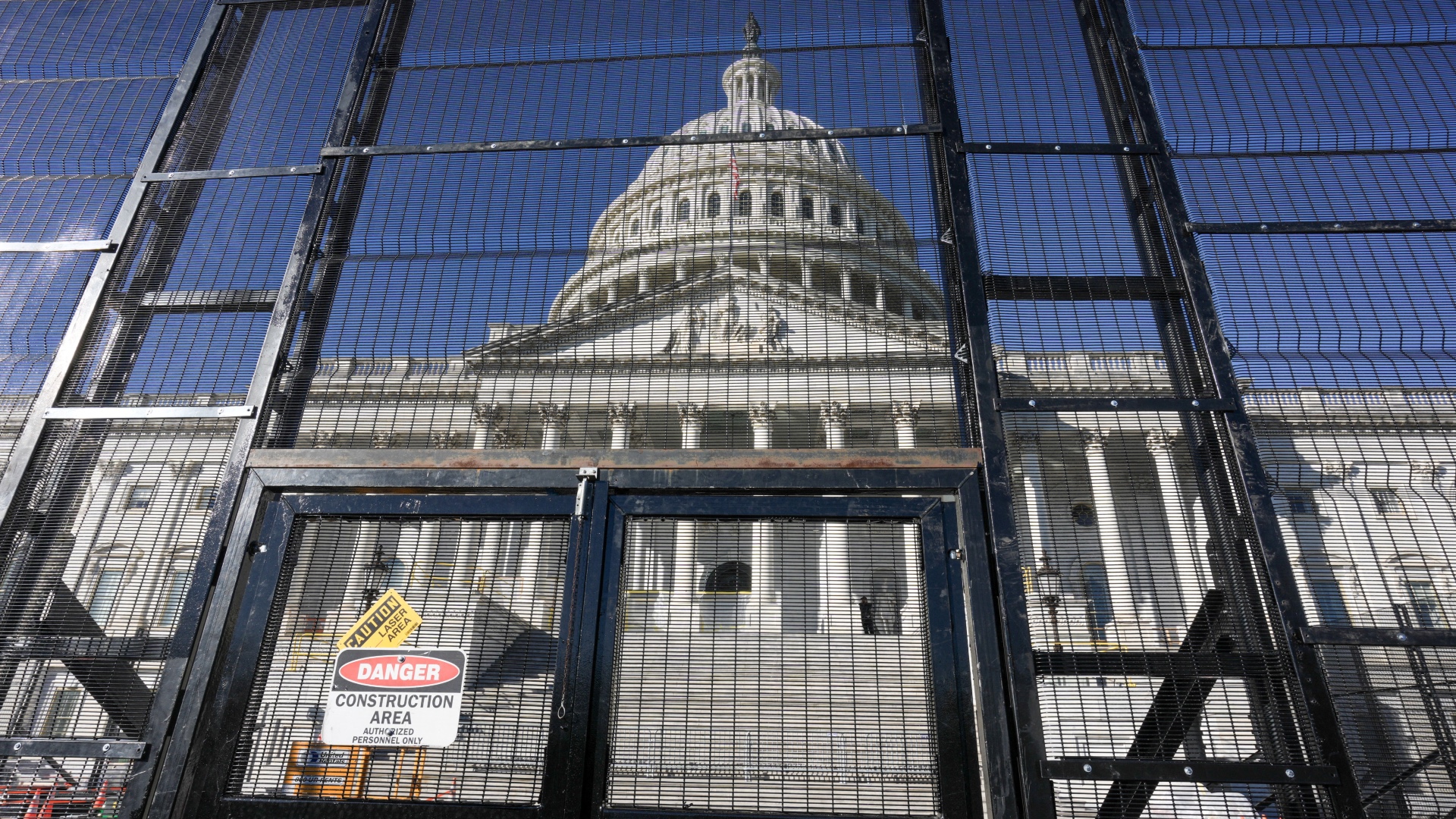
In the 15th legislative push of 2026 by the U.S. Senate to restrict President Donald Trump’s unilateral warmaking authority related to Iran, the chamber fell short of passing the latest war powers resolution in a Thursday vote that closed at 51 yeas to 48 nays. Two identical prior attempts in May and June of this year had successfully cleared the Senate, only for Trump to openly disregard both bipartisan-passed measures that explicitly reaffirmed Congress’s exclusive constitutional power to declare and fund formal U.S. military conflicts. The vote breakdown saw a unified bloc of 50 Republican senators and Democratic Senator John Fetterman cast their ballots against the resolution, while support came from 43 present Democratic lawmakers, two independent senators, and three breakaway Republican legislators: Rand Paul, Lisa Murkowski, and Susan Collins. Republican Senator Thom Tillis, who had previously aligned with Democratic colleagues on earlier war powers votes, voiced frustration with the repetitive cycle of failed and ignored resolutions on Thursday, telling assembled reporters that the repeated procedural votes were yielding no tangible results, and that policymakers should redirect their focus to resolving the core structural gaps in congressional oversight of executive military action. A recent high-profile political shakeup looms over this dynamic: Tillis opted not to seek re-election in the November midterms after a wave of public attacks targeting him from Trump last year, and will be succeeded by North Carolina’s senator-elect, former Democratic governor Roy Cooper. The broader midterm election outcome represented a clear public rejection of the Trump administration’s domestic and foreign policy agenda, a reality that Vice President JD Vance publicly acknowledged the day after vote tallies were finalized. The White House’s official response to the successful June 23 war powers resolution, which passed 50-48 at the time, dismissed the congressional mandate entirely, claiming “there are no present hostilities from which to remove U.S. Armed Forces” on the grounds that the Iran-related military operations launched on February 28, 2026 via a joint U.S.-Israel strike had formally ended under a presidential ceasefire order issued April 7, 2026. That purported ceasefire has remained fragile at best: the U.S. has continued to carry out sporadic aerial bombing campaigns across the region, critical maritime chokepoints including the Strait of Hormuz and Bab al-Mandab remain almost entirely blockaded, and full-scale open fighting has erupted between Houthi forces in Yemen and Saudi Arabian military units. This latest failed vote is widely expected to be the final congressional attempt of 2026 to invoke the 1973 War Powers Resolution, ahead of the swearing-in of the 120th U.S. Congress on January 3, which will see Democrats hold a commanding majority in the House of Representatives and a 56-44 partisan edge in the Senate. Lawmakers have already signaled that Trump will face multiple formal congressional investigations in the new session focused on his unauthorized execution of the ongoing Iran military campaign. At the core of the partisan and institutional clash is the U.S. Constitution’s Declare War Clause, which Democratic and a small group of Republican legislators argue Trump has openly violated, by launching and sustaining a large-scale foreign military operation without formal congressional authorization. While the constitutional text clearly assigns war declaration power exclusively to the legislative branch, this provision has largely devolved into a procedural formality in recent decades, as successive U.S. administrations have launched simultaneous military operations, including extrajudicial targeted killings, across multiple sovereign nations without formal congressional war declarations. The 2001 Authorization for Use of Military Force, passed by Congress in the immediate aftermath of the September 11, 2001 terror attacks, laid the legal groundwork for decades of expansive, often troop-free military interventions across the globe, while the executive branch has long held sweeping, historically unchallenged authority over most U.S. foreign policy decisions. Constitutional scholar Chris Edelson of the University of Massachusetts Amherst emphasized the clarity of the founders’ original intent in a prior interview with Middle East Eye, noting, “There are some things about the Constitution that are not clear, but this point is crystal, crystal clear. The framers of the Constitution debated war power. They gave Congress the power to declare war. The one exception was if the United States is attacked, the president could act to defend the country… and of course that’s not what happened here.” Edelson also noted that while the 1973 War Powers Resolution does carve out a 60-day window for the president to launch unprompted military action, with an optional 30-day extension requiring congressional notification, the law is ambiguously worded and cannot override the explicit war powers framework laid out in the U.S. Constitution itself.