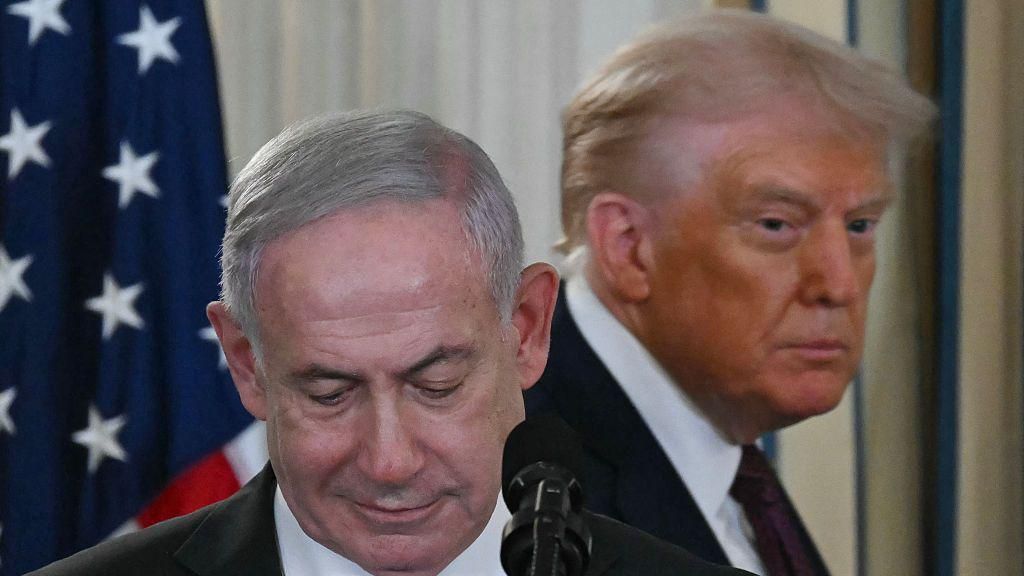
A high-profile rift between U.S. President Donald Trump and Israeli Prime Minister Benjamin Netanyahu has rocked Washington’s diplomatic efforts with Iran, marking the latest chapter in a long history of friction between Israeli leaders and sitting U.S. presidents.
The conflict erupted following an Israeli strike on Lebanese territory that triggered a sharp backlash from Tehran, which threatened to walk away from ongoing talks with the U.S. The development represents a major setback to Trump’s core goal of exiting the unpopular U.S.-Iran conflict, while also putting the future of the Strait of Hormuz — a critical global shipping artery — at risk as the U.S. works to broker a extended ceasefire and open negotiations over Iran’s nuclear program.
When pressed by reporters about an Axios report claiming he called Netanyahu “effing crazy” and accused the prime minister of ingratitude during a tense Monday phone call, Trump did not deny the outburst. Speaking to the *Pod Force One* podcast in an interview that aired Wednesday, Trump clarified: “I wouldn’t say angry. I was a little bit perturbed at his constantly fighting with Lebanon, you know.” He quickly added that he holds affection for Netanyahu, saying “I like Bibi a lot. And I work very well with him.”
Netanyahu downplayed the tensions, framing the disagreement as a routine difference common between close allies. “Sometimes we have, as in the best of families, you have these tactical disagreements,” he told CNBC in a Wednesday interview. “We always find a way to work them out, and we do so as great friends. We can disagree in the morning and be in agreement by afternoon.” Despite the repeated public disagreements between the two leaders, Netanyahu has long called Trump the “greatest friend” Israel has ever had in the White House.
Regional and foreign policy experts warn the public clash reflects deeper misalignment between U.S. and Israeli priorities, nearly 100 days after the two nations launched joint strikes on Iranian targets in late February. Brett Bruen, a former U.S. diplomat and president of crisis communications firm the Global Situation Room, told the BBC that Netanyahu has a well-documented pattern of pursuing his own agenda regardless of input from Washington. “Trump… decided to take the plunge with him, and is now learning a really hard lesson about what happens when you get into war with a pretty mercurial leader that has an agenda which doesn’t always align with your own priorities,” Bruen explained.
While both leaders share the core goal of blocking Iran from developing a nuclear weapon, their priorities diverge sharply on Lebanon. Israel has pledged to continue targeting the Iran-backed Hezbollah militia even as U.S.-Iran talks progress, while Iran has made a full ceasefire that includes Lebanon a non-negotiable condition for continued negotiations.
The friction comes as public opinion in the U.S. has shifted sharply against longstanding American support for Israel. A Pew Research Center poll published in April found that 60% of U.S. adults now hold a negative view of Israel, up from just 42% before the 2023 Hamas war began. Even prominent conservative figures have broken ranks, with some publicly claiming that Israeli lobbying pushed Trump into launching the war with Iran — a claim both the White House and Netanyahu’s office deny.
Joe Kent, former director of the National Counterterrorism Center, resigned in March over the issue, saying “we started this war due to pressure from Israel and its powerful American lobby.” In response, leading pro-Israel lobbying group the American Israel Public Affairs Committee accused Kent of pushing “old antisemitic tropes.”
Some analysts argue that Trump has political incentives to distance himself from Netanyahu to appeal to growing anti-war and critical voices among the U.S. electorate. “I think there is a political necessity now to create daylight between Israel and the US,” Bruen noted. “Whether it’s in Lebanon or in Gaza, there are things that Netanyahu has chosen to do which are politically problematic even for Trump or the Republicans.”
Trump’s current frustration with Netanyahu is far from unprecedented: the Israeli prime minister has a decades-long track record of clashing with sitting U.S. presidents from both parties. He had a well-documented public fight with Bill Clinton over implementing the Oslo Peace Accords, and his relationship with Barack Obama collapsed entirely after he delivered a 2015 speech to Congress criticizing Obama’s Iran policy without coordinating with the White House first. His relationship with former president Joe Biden also soured after Netanyahu publicly claimed the U.S. was withholding military ammunition, drawing sharp criticism from White House officials who called the comments “vexing” and “deeply disappointing.”
Natan Sacks, a U.S.-Israel relations expert at the Washington-based Middle East Institute, told reporters that Netanyahu has a long history of tense negotiations with U.S. leaders. “He is a very difficult negotiator, not just in terms of being tough, but in terms of being very suspicious,” Sacks said. Even so, Sacks noted that Trump and Netanyahu have largely enjoyed a warm relationship: Trump broke longstanding diplomatic norms on Middle East policy, a shift that aligned closely with Netanyahu’s goal of rewriting regional rules to more aggressively confront Iran and its allied militias.
It remains unclear whether this latest public disagreement will cause lasting damage to the bilateral relationship between the two leaders. “It’s potentially significant. We don’t know if it was a one-time event or a harbinger of broader things,” Sacks said. “I would not rule that out. The president has changed his mind about many people in the past.” As thousands of civilians flee southern Beirut and traffic grinds to a halt across the region, the rift has left the future of the ceasefire, nuclear talks and global energy security hanging in the balance.