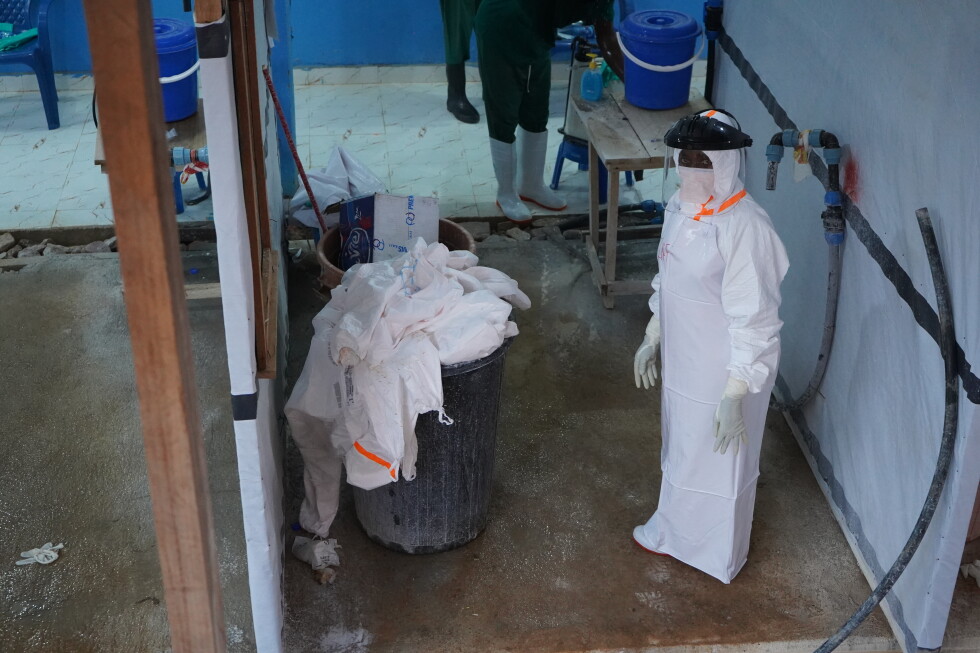
BUNIA, Democratic Republic of Congo – A catastrophic Ebola outbreak sweeping through eastern Congo has crossed a devastating threshold, with official data released overnight Wednesday confirming at least 999 fatalities from the fastest-spreading Ebola event ever recorded by global health authorities.
Updated figures from Congo’s Ministry of Health, current as of Monday, put the total number of confirmed and probable cases at 2,473, with 737 patients currently receiving care in isolation facilities and hospitals across the affected regions. First declared a public health emergency on May 15, this outbreak differs dramatically from most previous Ebola events in one critical detail: it is driven by the Bundibugyo strain of the virus, for which no specifically approved vaccines or targeted treatments currently exist.
Its speed of transmission has already outpaced every outbreak in recorded history, even outstripping the devastating 2013–2016 West African outbreak that remains the worst on record. That event, which killed more than 11,000 people across 28,000 confirmed cases, took roughly eight months to reach the 1,000-death mark. The current outbreak is on track to cross that threshold in a fraction of that time.
Ebola, though rare globally, is an extremely contagious pathogen that spreads through direct contact with bodily fluids including blood, vomit, and semen. It causes severe acute illness that is fatal in a large majority of untreated cases.
Health officials have issued urgent warnings that 80% of all new cases are being traced to unknown transmission chains, a clear indicator that the virus is spreading faster than response teams can track and contain it. This gap has persisted even as authorities have ramped up emergency response operations in Ituri province, the outbreak’s epicenter, as well as four additional affected provinces across the country.
Compounding the crisis, repeated attacks on health facilities and frontline response teams have forced aid groups and medical workers to withdraw from hard-hit areas. In other locations, local health workers have launched strikes over unpaid wages, a longstanding issue that has gone unaddressed since the outbreak was first declared.
Speaking Tuesday at the African Health Summit held in Accra, Ghana, Dr. Jean Kaseya, Director-General of the Africa Centres for Disease Control and Prevention (Africa CDC), called on global and regional bodies to dramatically scale up intervention efforts to slow the outbreak’s advance. “If we do not stop this outbreak today, it could become one of the worst Ebola outbreaks the world has ever documented,” Kaseya warned.