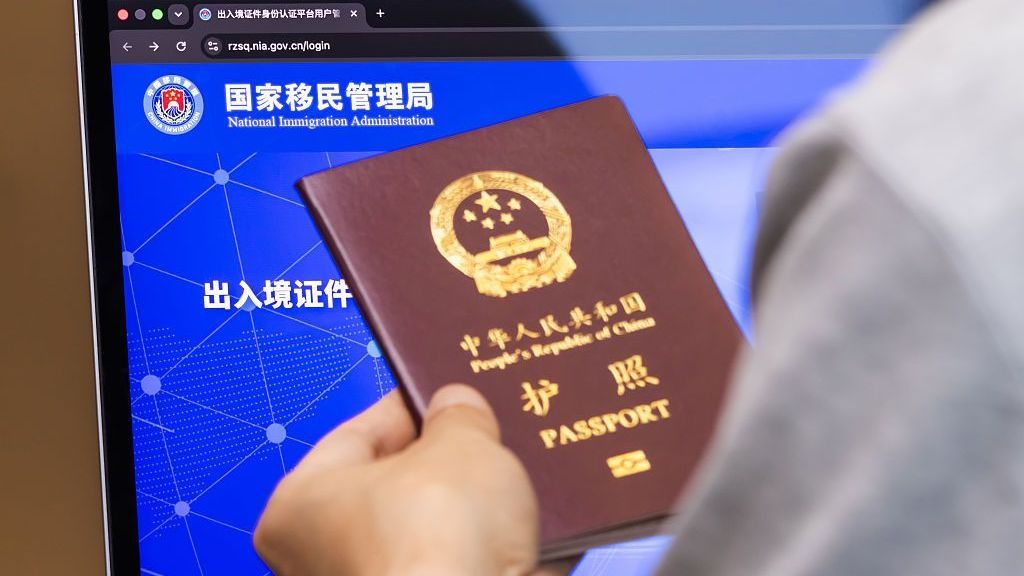
In a significant expansion of government oversight over citizen mobility, China has implemented far-reaching new regulations that authorize border officials to bar certain citizens from leaving the country for up to three years. The new rules apply to individuals found to have engaged in activities that endanger national security, and have been extended to cover those deemed threats to the nation’s industrial and technological sectors at a time when global tech competition between China and the United States continues to intensify.
The inclusion of industrial and technological security comes as China maintains strict scrutiny of high-stakes sectors such as artificial intelligence and semiconductors. Precedent for this targeted approach already exists: in March of this year, co-founders of Manus, an AI startup acquired by Meta, were reportedly blocked from exiting the country, an early indicator of the formalized restrictions now in place.
Beyond granting authority for new exit bans, the updated regulations also require border officials to formally advise Chinese citizens against traveling to countries and regions classified as “high-risk”. While this codification is new, informal travel restrictions have been expanding across different groups of Chinese citizens for years. Civil servants were the first cohort to face these controls, with requirements to surrender passports to employers and obtain pre-approval for any overseas travel, before restrictions were later extended to employees of state-owned enterprises and eventually ordinary citizens.
A retired grassroots civil servant based in the eastern province of Anhui, speaking to BBC Chinese on condition of anonymity, described the longstanding implementation of these controls. He explained that starting around 2018, his workplace required all employees to turn over their passports, and even after his retirement last year, his former employer still retains his document. To travel abroad, employees must submit a formal application detailing the purpose of their trip, and not all requests receive approval. According to the retired civil servant, trips to visit family are more likely to be approved than pure leisure travel, and the stated goals of the policy are to prevent corrupt officials from fleeing the country and moving assets overseas, as well as to stop the disclosure of state secrets by senior officials.
A 32-year-old employee identified only by the pseudonym Xiao Wang, who works at a state-owned financial institution in Beijing, confirmed that similar restrictions have been in place for staff at his workplace for a long time. He added that management has verbally informed staff that travel to “sensitive countries” such as Japan is strictly off-limits.
The expansion of formal exit bans has drawn sharp criticism from foreign policy analysts. Professor Tom Kellogg, Executive Director of the Center for Asian Law at Georgetown University, called the growing scope of travel restrictions “deeply concerning”. In comments to BBC Chinese, Kellogg argued that the new rules reflect expanding ideological control under China’s leader Xi Jinping, echoing conditions seen during the era of Mao Zedong, when China was largely cut off from the rest of the world and international travel was not a common reality for most citizens until the 1990s, following decades of reform and opening up. Kellogg noted that the current wave of restrictions brings back memories of that closed-off period.
Kellogg added that the new regulations also give authorities another tool to control citizens active in human rights and advocacy work, saying “this is another tool designed to control what Chinese citizens do and say overseas.” He explained that in some cases, state security authorities reject passport applications specifically to prevent individuals from criticizing the Chinese government while abroad or to punish them for human rights advocacy activities.
One case that illustrates this impact is that of Pipi, a 26-year-old Chinese citizen who asked to only be identified by his pseudonym. Pipi told BBC Chinese that his 2023 passport application was rejected, and he believes the denial is a direct result of his participation in the 2019 pro-democracy protests in Hong Kong, where he was interviewed by international media outlets. After returning to mainland China, Pipi was questioned by state security police, and an immigration official informally told him his application was denied “because of the Hong Kong issue” — no official written explanation for the denial was ever provided. Pipi says he has no idea if he will ever be allowed to leave China.
Chinese authorities have pushed back against criticism of the new rules. Piyao, China’s official government-run rumor-correction platform, released a statement last week asserting that the new regulations do not restrict travel for ordinary law-abiding citizens. Instead, the platform framed the rules as a preventative measure targeting high-risk destinations and individuals with unusual travel patterns, noting that the rules were put in place to address specific problems including people being tricked into leaving the country to participate in illegal gambling and transnational scam operations overseas.
One key feature of China’s exit ban system that creates uncertainty for citizens is that there is currently no public process for individuals to check if they are subject to an exit ban on their own. Most people only discover that they are barred from leaving when they attempt to cross the border or apply for travel documents, unless they receive direct official written or verbal notification. Neither China’s Ministry of Foreign Affairs nor its national immigration authorities responded to requests for comment from BBC Chinese for this report.
Data compiled by human rights group Safeguard Defenders and shared with the BBC shows that exit bans have increased drastically in China over the past decade. China’s Supreme People’s Court database recorded just 89 court references to exit bans in 2016, but that number skyrocketed to nearly 189,000 last year. The share of civil court verdicts that involve exit bans also surged more than 30-fold between 2019 and 2025, rising from approximately 0.23% to 7.3%. Analysts note that the actual number of exit ban cases is almost certainly even higher than these official numbers indicate, as a growing number of court judgments related to exit bans are not made publicly available.