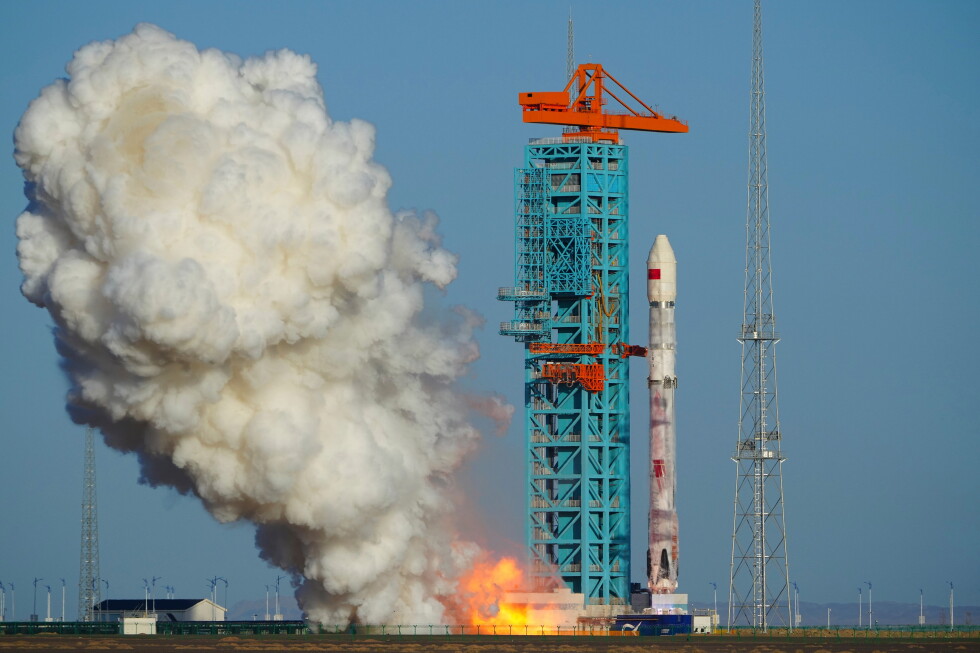
The global push for cost-effective reusable rocket technology hit a new milestone this week, as China announced its first successful touchdown and recovery of a rocket first stage on dry land. The breakthrough, confirmed by Chinese state media on Wednesday, marks another key step forward for the country’s ambitious expansion of its domestic space exploration program.
This successful landing is not China’s first experience recovering reusable rocket hardware: it followed a successful sea-based recovery of a rocket stage carried out on an offshore platform back in July. The latest mission involved the Zhuque-3 reusable rocket, which lifted off Wednesday morning, with its first stage making a controlled return to the ground intact after completing its role in the launch, Xinhua News Agency reported.
Unlike the July sea recovery, which relied on a net-capture system for the Long March-10B rocket first stage, Wednesday’s mission marked China’s first successful deployment of deployable landing legs to bring the rocket stage back to Earth. Xinhua characterized the achievement as “a major breakthrough” for the country’s reusable rocket development program, a milestone that paves the way for broader adoption of reusable launch technology in China’s space sector.
The development of reusable rocket technology is not unique to China. Private U.S. aerospace firms led by Elon Musk’s SpaceX and Jeff Bezos’ Blue Origin have been successfully recovering and reusing rocket first stages since 2015. This innovation has radically transformed the global space industry, cutting launch costs dramatically by eliminating the waste of discarding expensive rocket hardware after a single use, and opening up more frequent, affordable access to low-Earth orbit for commercial and scientific payloads.
The recent milestones from China also come alongside parallel progress from other regional space powers. Just one day after China’s July sea recovery, Japan carried out the first test flight of its own experimental reusable rocket, which completed a successful vertical takeoff and landing. Like China, Japan is working to master the reusable rocket technology needed to lower its own launch costs and remain competitive in the fast-growing global commercial space launch market.
Experts note that the spread of reusable rocket expertise across multiple nations and programs signals a broader shift in the global space ecosystem, moving toward more sustainable and accessible space access that could accelerate satellite deployment, scientific research, and future deep space exploration efforts.