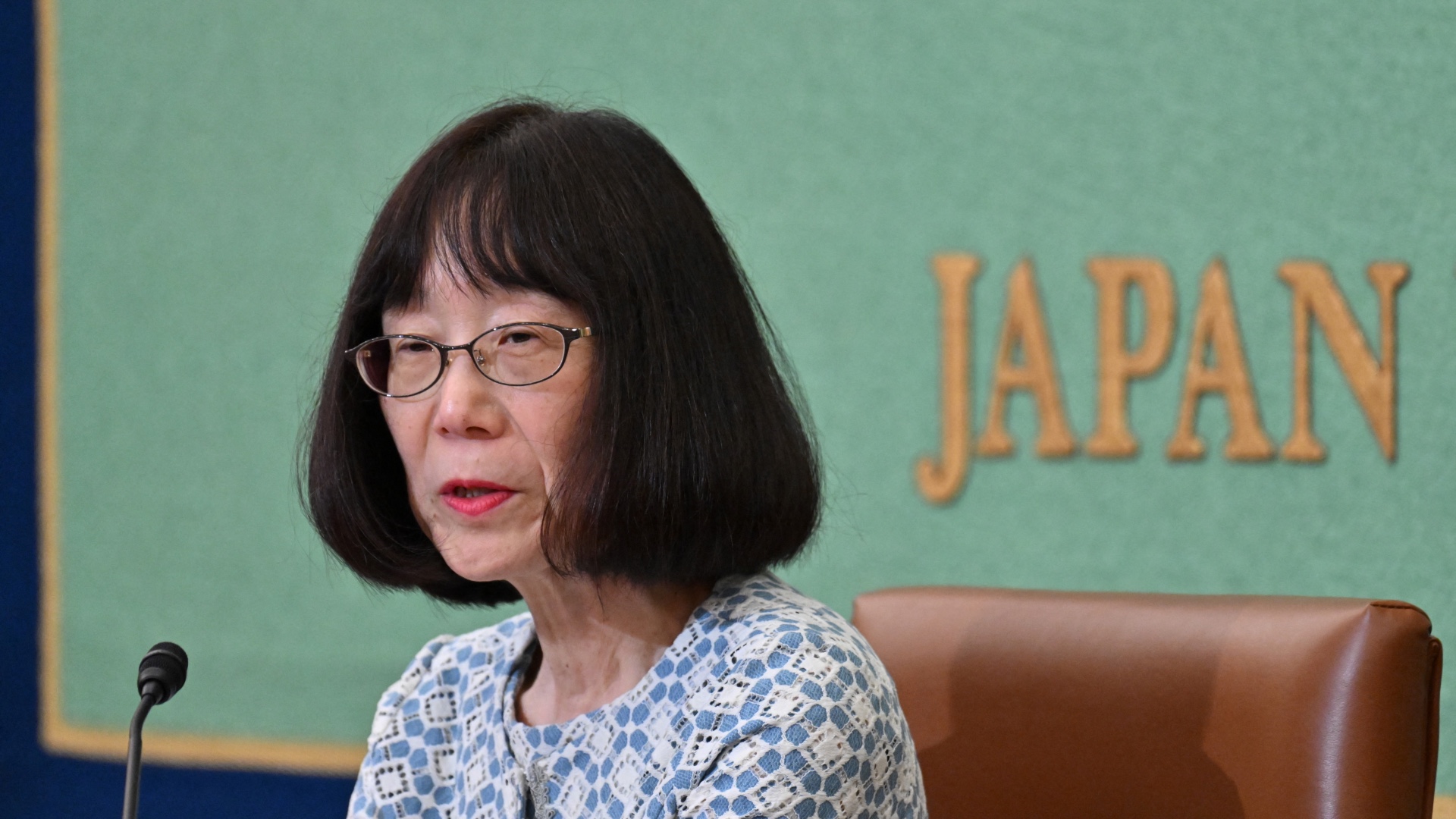
In a sharp escalation of its campaign to disable the International Criminal Court (ICC) over ongoing war crime investigations targeting Israeli and U.S. officials, the second Trump administration announced Tuesday that it has imposed new sanctions on two top ICC personnel: the court’s Japanese president Tomoko Akane and Senegalese senior trial lawyer Abdoulaye Seye.
This latest action is part of a broader, long-stated White House goal to systematically dismantle the ICC, which launched probes into alleged war crimes committed by both Israeli and American personnel in conflict zones. Neither the U.S. nor Israel are signatories to the 2002 Rome Statute, the treaty that established the international tribunal. Despite the two countries’ non-membership, 125 nations around the world participate in the court, many of which have been affected by unregulated military operations carried out by U.S. and Israeli forces.
In an official statement announcing the new sanctions, U.S. Secretary of State Marco Rubio laid out the administration’s uncompromising stance, framing the ICC as a corrupted institution deeply compromised by political bias. “The Trump Administration has been clear: the ICC is a corrupt and fatally politicized supranational court that has maliciously abused its authority and exceeded its mandate. We will not tolerate its assault on state sovereignty,” Rubio said.
Rubio added that Akane and Seye were targeted because they “have directly engaged in efforts by the ICC to investigate, arrest, detain, or prosecute officials whose government has not consented to ICC jurisdiction… This sets a dangerous precedent for all nations.” Under the terms of the sanctions, all assets held by the two officials within U.S. jurisdiction are frozen, they are barred from entering the U.S., and they are cut off from the global banking system, which relies heavily on U.S. financial infrastructure.
This round of sanctions is the second major expansion of punitive measures against the ICC since Trump returned to office in January 2025. Just days after his inauguration, the president signed an executive order authorizing sweeping sanctions against the court over its investigations into senior Israeli officials. At that time, then-ICC chief prosecutor Karim Khan, a British barrister, was the highest-profile individual targeted. Khan was subsequently removed from his post via a vote of ICC member states, following allegations of sexual misconduct that he has repeatedly denied.
The first round of sanctions also targeted three ICC judges, two of Khan’s deputy prosecutors, the United Nations special rapporteur for the occupied Palestinian territories, and three leading Palestinian human rights organizations. The three sanctioned judges have since launched a legal challenge against the Trump administration over the measures.
The executive order targeting the ICC came immediately after a visit to the White House by Israeli Prime Minister Benjamin Netanyahu, who faces an ICC arrest warrant over allegations of war crimes and crimes against humanity committed during Israel’s military campaign in Gaza that began in October 2023. In November 2024, the court issued arrest warrants for Netanyahu, his then-defense minister Yoav Gallant, and three senior Hamas leaders—all three of the Hamas leaders have since been killed by Israeli forces.
Under the terms of the original executive order, any non-U.S. individual or their family members who provide assistance to ICC probes targeting U.S. citizens or U.S. allies are eligible for sanctions. Rubio reiterated Tuesday that the administration is prepared to take further action to achieve its end goal. “The Trump Administration stands ready to take additional measures, if necessary, to systematically dismantle the ICC until it is incapable of threatening American sovereignty,” he said.
The administration’s expanding sanctions campaign has already sparked multiple legal challenges from U.S. advocacy and rights groups. Last week, four prominent U.S.-based human rights organizations filed a lawsuit against the Trump administration, arguing that the sanctions regime is blatantly unlawful under U.S. law. The groups—American Friends Service Committee, the Center for Constitutional Rights, Human Rights Watch, and the Open Society Institute—argue the sanctions force them to cut back on core human rights and legal work, violating their First and Fifth Amendment rights under the U.S. Constitution, as well as the Religious Freedom Restoration Act. Any individual or group that maintains even loose ties to ICC investigations or personnel now faces the risk of legal retaliation, the groups noted.
This legal challenge follows a similar lawsuit filed in July by Palestinian rights advocates in a New York federal court, which asks the court to issue an injunction blocking the administration from enforcing sanctions against groups and individuals that cooperate with the ICC. The plaintiffs in that case include Democracy for the Arab World Now, an organization founded by the late journalist Jamal Khashoggi, who was assassinated by Saudi agents in 2018, and the Taxpayer Alliance Against Genocide. The groups said they moved forward with legal action after Rubio wrote an opinion piece confirming the administration’s intent to dismantle the ICC “brick by brick.”
The escalating confrontation between the U.S. and the ICC comes alongside new explosive allegations from a former top ICC official about improper Israeli pressure to halt the Palestine war crimes probe. Earlier this year, former ICC chief prosecutor Fatou Bensouda, who held the role from 2012 to 2021, revealed that the former head of Israel’s Mossad intelligence agency repeatedly pressured her to drop the investigation into alleged war crimes in the occupied Palestinian territories. In an interview with Al Jazeera published Sunday, Bensouda added that after she opened a preliminary examination into the situation in Palestine in 2015, unidentified men visited her private home in The Hague.
“They came directly to my house,” Bensouda told the outlet. “I got the message that they’re sending.” The men left her an envelope containing $500, claiming it was a gift from someone she had previously assisted. Bensouda said she later concluded the visit was an intentional intimidation tactic, designed to make clear that those opposed to the investigation knew where she lived.