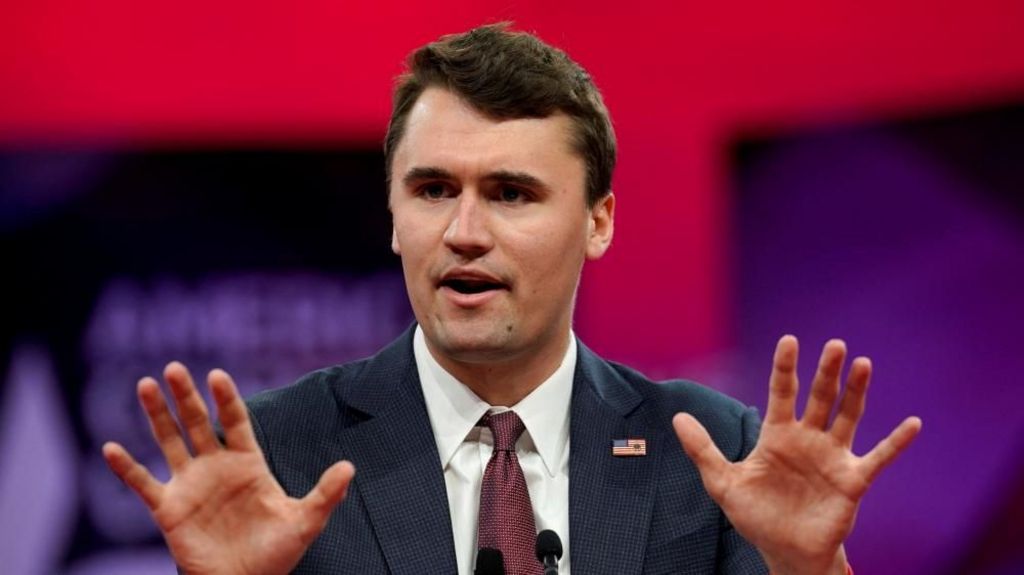
On Tuesday, 23-year-old Utah native Tyler Robinson formally entered a plea of not guilty to charges of aggravated murder in the 2025 fatal shooting of prominent conservative activist and Turning Point USA co-founder Charlie Kirk, as a Utah judge upheld the prosecution’s right to pursue the death penalty in the high-profile case.
Kirk, 31, who was widely credited with mobilizing young conservative voters in support of former President Donald Trump, was shot in the neck while delivering a speech at a public campus event hosted by Utah Valley University in Orem, Utah on September 10, 2025. Beyond the top charge of aggravated murder — a capital offense under Utah state law — Robinson also faces six additional criminal charges connected to the shooting, all of which he has denied.
Robinson, dressed in a neutral grey suit, appeared before the court in Provo on Tuesday, conferring periodically with his legal team. Kirk’s immediate family — including his widow Erika, mother of the couple’s two young children, and his parents Robert and Kathryn Kirk — were all present for the pivotal arraignment hearing.
Tuesday’s proceedings followed a nearly week-long preliminary hearing held in July, during which prosecutors laid out their full body of evidence to establish probable cause for the case to go to trial. Prosecutors laid out four core pillars of evidence linking Robinson to the crime: DNA evidence tying him to the murder weapon and other items recovered at the shooting scene, alleged confessions to family members, a taped video statement from his roommate and romantic partner Lance Twiggs, and surveillance video showing Robinson on campus the day of the shooting.
“There is a mountain of evidence that proves that he is the shooter,” lead prosecutor Ryan McBride told the court Tuesday, noting that surveillance footage captured Robinson “dressed to kill” ahead of the attack. Prosecutors also outlined the state’s alleged motive: Robinson reportedly viewed Kirk’s conservative political positions — particularly his stances on transgender issues — as “repugnant.”
During Tuesday’s arguments over the eligibility of the death penalty, prosecutors detailed aggravating circumstances they say warrant a capital trial. Defense attorneys had initially pushed to remove the death penalty from consideration, but prosecutors argued that Robinson’s decision to fire at Kirk while surrounded by a crowd that included children created extreme risk to innocent bystanders. Prosecutor Chad Grunander described Robinson’s actions as “ballistic roulette,” saying the defendant “gambled with the lives of others” when he opened fire. The prosecution also confirmed Robinson repeatedly scouted the Utah Valley University campus on the day of the shooting, even interacting with Turning Point USA members and eating at a campus Chick-fil-A before changing into a new outfit. Prosecutors say the outfit included long pants intentionally chosen to conceal the rifle Robinson carried onto campus.
Prosecutors further detailed that Robinson’s DNA was recovered from his grandfather’s hunting rifle, which was hidden in a wooded area near the campus after the shooting, as well as from the towel used to wrap the weapon and a screwdriver left at the scene. Casings recovered at the shooting carried engravings that match a Dremel tool found in the home Robinson shared with Twiggs, prosecutors added. During the July preliminary hearing, Twiggs’ recorded interview was played for the court, in which he testified that Robinson had confessed to the shooting, cried, and said he regretted the act. Robinson surrendered to law enforcement the day after the killing, accompanied by his family and a neighbor.
Robinson’s defense team has sought to undermine the prosecution’s case, raising questions about evidence handling procedures and the expert credentials of prosecution witnesses during the July hearing. The defense also pushed back against the prosecution’s framing of aggravating factors, arguing that no bystanders were struck by gunfire, with Kirk being the only victim.
A long-running point of contention in the case has been the defense’s repeated objections to allowing cameras to livestream court proceedings, amid widespread public interest and rampant online conspiracy theories surrounding Kirk’s killing. On Tuesday morning, Judge Michael Graf held a sealed hearing to revisit the issue, ultimately ruling in favor of court transparency, allowing broadcast access.
The next hearing in the case is scheduled for October 23, 2026, when a formal trial date is expected to be set.