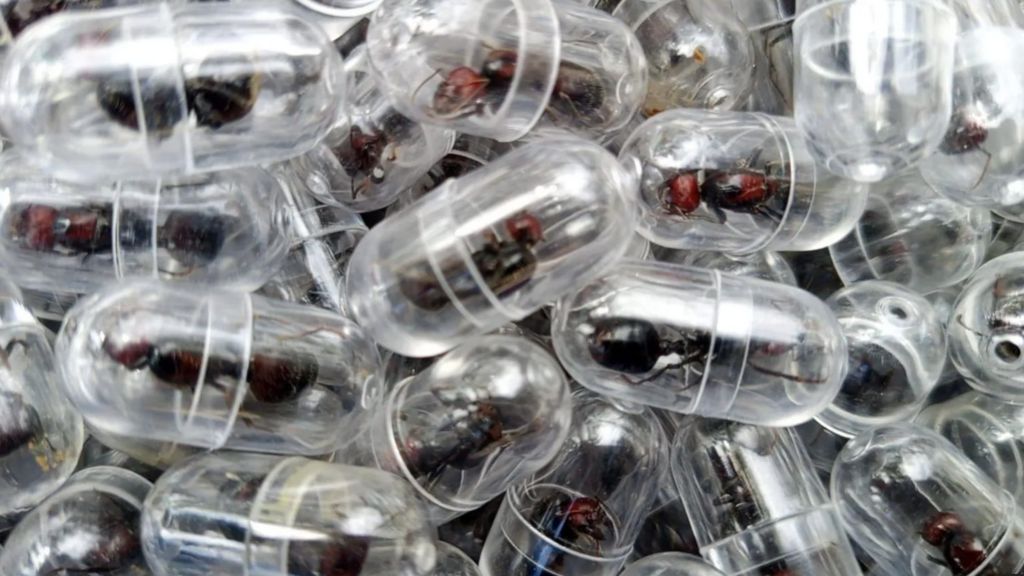
In a significant wildlife enforcement operation, Kenyan authorities have apprehended two individuals for attempting to smuggle over 2,000 live queen garden ants from the country. Zhang Kequn, a Chinese national, was intercepted at Nairobi’s Jomo Kenyatta International Airport last week after customs officials discovered the insects concealed in his luggage—each specimen individually packaged in test tubes or tissue paper.
The subsequent investigation revealed that Zhang had acquired the ants from his Kenyan associate, Charles Mwangi, at a rate of 10,000 Kenyan shillings ($77) per 100 ants. Both men now face multiple charges including illegal dealing in wildlife species and conspiracy to commit a felony. During their court appearance on Tuesday, prosecutors presented evidence of their operation while both defendants entered not guilty pleas.
This case highlights a growing concern among Kenyan conservation authorities about international demand for exotic insects. While not explicitly confirmed in this instance, wildlife officials have noted increasing interest from collectors in Europe and Asia who keep ants as exotic pets. Zhang’s luggage was reportedly destined for China when intercepted.
The defendants’ attorney, David Lusweti, argued that his clients were unaware they were violating wildlife protection laws, stating they merely identified what they believed to be a legitimate economic opportunity. Despite these claims, both men remain in custody pending their next court hearing scheduled for March 27th.
Kenya Wildlife Service officials indicate this investigation is expanding, with additional arrests anticipated as authorities probe suspected ant harvesting operations in other regions. This case follows a similar incident in May 2023 where four individuals received prison sentences and substantial fines for attempting to smuggle thousands of queen ants overseas, reportedly destined for collectors in Europe and Asia.