分类: world

  • Israeli forces kill Palestinian teen in West Bank raid

    Israeli forces kill Palestinian teen in West Bank raid

    A fresh wave of Israeli military operations in the occupied West Bank has left two Palestinians dead, including a 16-year-old teenager, amid a documented sharp escalation in civilian casualties and forced displacement that has reached levels not seen since the 1967 occupation, United Nations data confirms.

    The most recent fatal incident unfolded Wednesday evening in the al-Hawooz neighborhood of Hebron, where Israeli forces launched a large-scale raid into the densely populated urban area. Medical sources confirm 16-year-old Ibrahim al-Khayyat sustained a critical gunshot wound to the abdomen during the operation, which saw Israeli troops deploy dozens of military vehicles, block major thoroughfares, and order local shop owners to close their businesses mid-day.

    During the incursion, troops opened live fire and launched tear gas canisters directly at local residents, leaving two people injured. Both casualties were transported to the local Red Crescent hospital for emergency care, where al-Khayyat was pronounced dead shortly after arrival. In addition to the fatality, Israeli forces took at least one Palestinian into custody during the raid, which also targeted the headquarters of a local charitable association.

    The Hebron killing came hours after a separate Israeli incursion in Silwad, a town located northeast of Ramallah, that left another Palestinian, Abd el-Halim Hammad, dead. These two deaths are part of a consistent, daily pattern of Israeli search-and-arraid operations across the occupied West Bank that regularly involve the use of live ammunition against Palestinian civilians.

    UN data compiled on the ongoing crisis shows that Palestinian fatalities at the hands of Israeli forces in the West Bank have spiked dramatically since October 2023. Since that time, at least 1,080 Palestinians have been killed, with at least 35 additional deaths recorded already this year. Thousands more have sustained injuries from military activity in the region.

    Parallel to the increase in military operations, UN officials also record a significant surge in violence carried out by Israeli settlers against Palestinian communities. The data shows an average of 140 settler attacks per month, nearly twice the frequency recorded before October 2023. These attacks have grown increasingly organized, with a clear goal of forcing Palestinian communities out of Area C — a section of the West Bank that makes up roughly 60% of the total territory, and remains under full Israeli military and administrative control.

    According to latest UN displacement figures, approximately 40,000 Palestinians have been forcibly removed from their homes in the West Bank since January 2023. More than 3,000 of these displacements are directly tied to targeted attacks by settlers. UN officials note that the current scale of forced displacement is the worst it has been since Israel occupied the West Bank in 1967.

  • First direct US-Venezuela flight in years arrives in Caracas

    First direct US-Venezuela flight in years arrives in Caracas

    After nearly a decade of severed air connectivity and strained diplomatic ties, the first direct commercial flight between the United States and Venezuela touched down in Caracas on Thursday, marking the most visible milestone yet in the rapid normalization of relations between the two nations following Washington’s removal of former leftist leader Nicolás Maduro.

    The inaugural American Airlines service departed Miami International Airport at 10:26 a.m. local time (1426 GMT), touching down at Simón Bolívar International Airport less than three hours after takeoff. A second Envoy Air flight followed shortly after the American Airlines arrival, launching the resumption of regular direct air links that were completely halted in 2019 amid spiraling bilateral tensions.

    Notably, the flight manifest included senior U.S. officials traveling to Caracas for high-level government meetings — a development that would have been considered unimaginable just six months ago, according to diplomatic sources on the ground.

    For frequent transnational travelers with ties to both countries, the resumption of direct flights eliminates years of logistical hassle and extended travel times. Claudia Varesano, a 44-year-old traveler who maintains family and business operations in Venezuela, has long commuted between the two nations but was forced to rely on connecting routes through third countries that stretched short trips into all-day journeys. “A three-hour flight would become an eight-hour flight. I’m celebrating today because I’m a frequent traveler. I can go, have breakfast and come back,” Varesano told reporters ahead of arrival.

    Isabel Parra, a Venezuela-born travel agent who had not returned to her home country since 2018, echoed that excitement, saying she felt “super excited” to step back on Venezuelan soil after years of traveling via layovers in Curaçao, the Dominican Republic, or Bogotá. “For years we had to go through those intermediate stops, so having this direct flight is a real pleasure,” Parra said. She added that the inaugural flight carried a steep $3,000 price tag, but expects ticket costs to drop sharply once American Airlines launches a second daily round-trip route on May 21, increasing service capacity.

    To mark the historic occasion, American Airlines outfitted the flight with a specialty Venezuelan-themed menu, featuring local favorites including cachapas (traditional sweet corn pancakes) and Venezuelan-style chicken salad. Greeting passengers upon departure from Miami — a major hub for the Latin American diaspora and a long-recognized gateway to the region — were city representatives and Félix Plasencia, Venezuela’s ambassador to Washington.

    The resumption of direct flights comes as the two nations rapidly rebuild economic and diplomatic ties after years of estrangement. Roughly 1.2 million Venezuelans currently reside in the United States, many of whom split time between the two countries or send regular remittances back to family. Analysts widely expect the thaw in relations, paired with restored air links, to draw increased U.S. business investment into Venezuela, which holds the world’s largest proven crude oil reserves.

    Despite the progress on normalization, significant complexities remain in the bilateral relationship. U.S. President Donald Trump has simultaneously pushed aggressive deportation policies targeting Venezuelan migrants, terminating a humanitarian protection program that shielded thousands of migrants from deportation back to the country’s high-crime areas.

    The diplomatic shift traces back to a January 3 U.S. special forces raid in Caracas that resulted in the capture of Maduro, a longstanding U.S. antagonist, who was extradited to New York to face federal drug trafficking charges that he and his supporters deny. Maduro was succeeded by his former vice president Delcy Rodríguez, who has moved to cooperate extensively with Washington despite her historical ideological alignment with Maduro’s leftist government. Trump has publicly praised Rodríguez’s policy opening to U.S. companies, and has eased broad sanctions imposed on Venezuela in recent years, including lifting personal sanctions targeting Rodríguez. In line with this opening, Venezuela has moved to fully open its critical oil and mining sectors to private international investment.

    American Airlines, a Texas-based carrier with an extensive route network across Latin America, first launched service to Venezuela in 1987 and at its peak carried more passengers between the two countries than any other airline. The carrier suspended all service in 2019, when relations collapsed after the U.S. and a bloc of Western and Latin American nations refused to recognize Maduro’s 2018 re-election, citing widespread electoral irregularities.

    Even with the resumption of flights, U.S. travel guidance retains limited warnings: the State Department still urges U.S. citizens to reconsider travel to Venezuela due to persistent widespread violent crime, but lifted its full blanket ban on all travel to the country in March.

    The launch of direct flights also comes amid a period of upheaval for the global aviation industry, which has faced severe financial pressure from a sharp spike in global oil prices following recent military escalations between the U.S., Israel, and Iran.

  • Myanmar’s Suu Kyi back in the spotlight but still out of sight

    Myanmar’s Suu Kyi back in the spotlight but still out of sight

    Nearly three years after Myanmar’s military ousted her democratically elected government in a 2021 coup, ousted leader Aung San Suu Kyi’s upcoming transfer from prison detention to a designated residence has pushed the Nobel Peace Prize laureate back into global headlines — yet her isolation from the public and supporters remains unbroken. The announcement from junta chief Min Aung Hlaing, who seized power after the coup and was sworn in as civilian president last month, has offered little clarity about where Suu Kyi will be held or how much of her combined prison sentence she still has left to serve. A party source close to the National League for Democracy (NLD) indicates the 78-year-old will likely be held in Naypyidaw, Myanmar’s sparse, purpose-built capital.

  • Syrian government confirms detention of missing German journalist

    Syrian government confirms detention of missing German journalist

    BEIRUT, Lebanon — In an official confirmation this Thursday, Syria’s new transitional government has acknowledged that a German reporter who vanished earlier this year remains in state custody, ending months of uncertainty over her fate. The confirmation comes amid ongoing efforts by Syria’s post-Assad leadership to consolidate control across war-torn territory recaptured in recent military operations.

    Thirty-six-year-old Eva Maria Michelmann was last spotted on January 18, amid a government offensive to seize the northern city of Raqqa from the Kurdish-led Syrian Democratic Forces (SDF). The Committee to Protect Journalists (CPJ), a press freedom watchdog, had earlier this week publicly raised alarms over Michelmann’s disappearance, noting that she was accompanied by her colleague Ahmed Polad—a Kurdish-Turkish journalist—when the pair was reportedly apprehended by advancing Syrian government troops. CPJ has since issued an urgent call for the immediate release of both reporters.

    In its official statement, Syria’s Information Ministry laid out the government’s account of the detainment: the two foreign nationals were discovered during a clearing operation by Interior Ministry forces in a Raqqa building that had previously served as a SDF security outpost. According to the statement, the pair “refused to disclose their true identities” and carried no official identification to confirm their citizenship or professional status. During initial interrogations, the ministry says the pair claimed to carry out humanitarian work on behalf of the United Nations, a claim investigators later confirmed was fabricated, with no mention of their journalistic work at the time.

    The government added that after making an attempt to escape custody, the pair was rearrested on suspicion of being illegal foreign fighters in Syrian territory. The statement confirmed that “the two were formally detained, and legal proceedings have been initiated in preparation for referral to the competent judicial authorities,” but gave no further details on the specific charges the pair may face.

    CPJ later confirmed that both reporters were on assignment for the Istanbul-based Etkin News Agency (ETHA) and Özgür TV, a broadcaster that operates across multiple European cities. Frank Jasenski, a German lawyer representing Michelmann and her family, warned earlier this week that “We assume that her health is very, very poor and we demand her immediate release.” Germany’s Federal Foreign Office confirmed last week that it has been in contact with the detained journalist, but declined to share additional details citing privacy protection regulations.

    Raqqa, which had long been held by the SDF, fell to Syrian government forces in a January offensive launched after the ouster of former President Bashar Assad in December 2024. Following the capture of the city, the new Syrian administration and the SDF reached a ceasefire agreement that laid out terms for the SDF to integrate into Syria’s national army. That ceasefire has held to date, and the integration process is proceeding gradually.

    Since overthrowing Assad’s decades-long government late last year, Syria’s new transitional leaders have faced the steep challenge of reestablishing full central authority across a country fractured by nearly 14 years of devastating civil conflict.

  • Ukraine expands oil strikes on Russia as Putin proposes brief ceasefire

    Ukraine expands oil strikes on Russia as Putin proposes brief ceasefire

    In a significant escalation of cross-border strikes amid the ongoing four-year full-scale invasion of Ukraine, Ukrainian drones have targeted a major Lukoil oil pumping and refining complex near Perm, a city in central Russia more than 1,500 kilometers from the active front line, triggering a massive smoke plume that was captured in dramatic social media footage.

    Ukraine’s Security Service (SBU) confirmed it carried out the attack on the facility, one of Russia’s largest oil refining hubs. Visuals shared across online platforms showed towering columns of black smoke and visible flames billowing from the site, and an initial chemical emergency alert was issued for multiple districts of Perm. Local city officials later walked back the alert, framing it as a routine safety test, a move aligned with a broader pattern of Russian authorities downplaying the impact of Ukrainian strikes on domestic infrastructure.

    This Perm strike is the second attack on critical Russian energy infrastructure in the same region within a single week. Earlier this week, the SBU announced it had disabled a key strategic hub for Russia’s national oil pipeline network, also located in Perm. Further north along the Black Sea coast, multiple strikes on oil facilities in Tuapse earlier this month caused extensive oil contamination, with local residents sharing images on Telegram of oil slicks spreading across coastal waters, black petroleum puddles on local roads, and wild animals coated in sticky oil residue.

    The increasing frequency of deep-penetration drone attacks on Russian territory has become an unavoidable source of concern for the Kremlin, even as official statements continue to minimize their strategic impact. This mounting security threat has already forced tangible policy changes: on Wednesday, the Kremlin announced it would scale back its annual May 9 Victory Day military parade, the iconic holiday marking the defeat of Nazi Germany in World War II, explicitly citing “terrorist threats” originating from Ukraine.

    Later that same day, Russian President Vladimir Putin held a 90-minute phone call with former U.S. President Donald Trump, during which Putin put forward a proposal for a one-day ceasefire to coincide with the Victory Day holiday. Yuri Ushakov, Putin’s senior diplomatic advisor, confirmed that Trump had expressed active support for the initiative, noting that the holiday represents a shared victory over Nazi Germany between the two countries.

    Ukrainian President Volodymyr Zelensky responded cautiously to the offer, saying Kyiv would seek additional clarification from U.S. officials on the details of the proposal. “We will clarify what exactly this is about — a few hours of security for a parade in Moscow, or something more,” Zelensky said, adding that Ukraine remains committed to its original proposal for a long-term ceasefire and a lasting, sovereign peace.

    This proposed temporary truce follows a long pattern of limited, short-lived ceasefires that have been implemented since the full-scale invasion began in 2022. Most of these prior truces have been tied to major holidays, restricted solely to energy infrastructure, or limited to the Black Sea grain initiative. Ukraine has repeatedly pushed for a comprehensive permanent peace agreement, while Russia has refused to enter into such talks unless Kyiv agrees to cede control of occupied sovereign Ukrainian territories to Moscow.

    During the call, Ushakov said Trump asked Putin to share his assessment of frontline conditions in Ukraine. Putin claimed to the former U.S. president that Russian forces maintain the strategic initiative and are continuing to push back Ukrainian positions. This characterization directly contradicts independent assessments from military analysts and recent on-the-ground developments.

    Over the past several months, Ukrainian forces have retaken portions of occupied Russian territory, capitalizing on technological advances in long-range strike capabilities and slowed Russian recruitment efforts that have stretched Moscow’s frontline forces thin. The U.S.-based Institute for the Study of War (ISW) noted in a recent analysis that Kyiv’s military operations are inflicting mounting casualties and operational costs on Russian troops. The ISW added that the Kremlin is likely overstating its progress to frame the conflict as nearing a Russian victory, in an effort to mitigate growing international and domestic pressure over the mounting costs of the war.

    The background of this latest strike is rooted in Russia’s ongoing regular aerial bombardment of Ukrainian civilian areas. Just on Wednesday night, a new Russian airstrike on Ukrainian population centers killed at least three civilians and injured 79 more, including one child, continuing a pattern of attacks that has killed thousands of Ukrainian civilians and displaced millions more since the full-scale invasion began.

  • ‘How are we going to get back home?’ Islamist group tightens blockade on Mali capital

    ‘How are we going to get back home?’ Islamist group tightens blockade on Mali capital

    For over a decade, Mali’s national military has waged a persistent, bloody conflict against Islamist insurgent groups across the West African nation. Now, that conflict has tightened its grip on the heart of the country: Bamako, the bustling capital and key regional hub home to more than 3 million residents, is currently under a rolling partial blockade by Jama’at Nusrat al-Islam wal-Muslimin (JNIM), one of the country’s most active Islamist militant factions. The blockade comes just days after a high-profile assassination of Mali’s defense minister within the city’s borders, deepening the sense of crisis gripping the nation.

    Stranded motorists and travelers on the Bamako-Kéniéba highway, one of the capital’s primary arterial routes, have described days of uncertainty and fear. One mother of two, who traveled outside the city to visit aging parents, told the BBC she has been barred from re-entering Bamako for nearly 24 hours. “Our army isn’t capable of protecting us, how are we going to get back home?” she asked, echoing the anxiety shared by hundreds of other stranded people along major inbound routes. JNIM fighters issued an explicit public warning Wednesday that “no-one will be allowed in any more” to the capital, a sharp escalation of tactics the group has used to pressure the ruling military junta.

    This tightening blockade marks a significant escalation from the group’s 2025 fuel blockade, which crippled supply chains, caused widespread fuel shortages, and sent prices for essential goods soaring across Bamako. Today, eyewitnesses confirm that at least three of the six main access roads leading into the capital are closed for hours at a time, as militants rotate positions across different routes to avoid counterattacks. During gaps between militant presence, small numbers of civilian vehicles are able to sneak through, but movement remains severely restricted and unpredictable.

    The current crisis follows a coordinated nationwide offensive launched last weekend by a newly formed alliance of jihadist fighters and separatist rebels from the Azawad Liberation Front (FLA), whose stated goal is to overthrow the military regime led by General Assimi Goïta. Goïta seized control of Mali in a 2020 coup and has since shifted the country’s foreign security alliances dramatically, expelling French counterterrorism forces that had supported the government for nearly a decade and turning instead to the Russia-aligned Africa Corps, a paramilitary force that emerged from the remnants of the Wagner Group following the death of its founder Yevgeny Prigozhin.

    Despite this new partnership, the insurgent offensive has already scored major gains. The FLA alliance forced African Corps and Malian government troops to withdraw from the key northern city of Kidal, which is now fully under separatist control. Following the capture of Kidal, FLA leaders have announced plans to advance on other northern population centers and issued an ultimatum demanding the full withdrawal of all Africa Corps forces from Malian territory.

    The Kremlin has repeatedly reaffirmed its commitment to maintaining a presence in the country. “Russian forces will remain in Mali to combat extremism, terrorism and other harmful phenomena and will continue to provide assistance to the current government,” a Kremlin spokesperson stated Thursday, pushing back against claims that the withdrawal from Kidal signals weakening Russian commitment to the junta.

    For ordinary civilians caught in the crossfire, the situation has grown increasingly desperate. A long-haul lorry driver who has worked Malian trade routes for decades told the BBC he had never experienced a crisis of this scale. “I’m stuck here and it sounds dangerous. I would rather run away to save my life than fight for the goods I have to deliver. I’ve never thought like this before,” he said. Just 50 miles from Bamako, the regional town of Ségou is already under a full insurgent blockade, where hundreds of commercial trucks, passenger buses, and private cars have been trapped for days. A local reporter confirmed that stranded passengers, including whole families and small-scale traders, are already facing critical shortages of clean drinking water and food.

    Mali’s junta leadership has responded with vows of harsh retribution. Following an emergency meeting of the country’s security council Wednesday, state media quoted Goïta saying that Malian armed and security forces have already inflicted “heavy losses” on insurgent forces and would continue to ramp up counteroffensives to restore order.

    Independent security analysts warn that the current offensive exposes deep vulnerabilities in the junta’s grip on power. “Those moves show that the regime is weak and can’t restore security,” explained Alain Antil, director of the Sub-Saharan Africa Centre at Ifri, a leading French foreign affairs think tank. Antil noted that the current trajectory echoes 2013, when a similar alliance of jihadists and Tuareg separatists advanced on Bamako, prompting a large-scale French military intervention that pushed insurgents back but failed to fully resolve the country’s instability. Despite Goïta’s decision to oust French forces and align with Russia, the security situation has continued to deteriorate, culminating in last weekend’s coordinated offensive.

    International governments have already begun issuing warnings to their citizens. France, Canada, and the United Kingdom have all issued formal advisories urging their nationals to leave Mali immediately, while the United States recommends that all U.S. citizens in the country stay in secure locations and avoid non-essential travel. Even amid the warnings, some long-term foreign residents have refused to flee, pointing to deep personal ties to the country. “I won’t leave,” one Frenchwoman who has lived in Mali since 2002 told the BBC. “I love Mali. It has become a part of me since I came here in 2002. We’ll stay with my family. We know things will be OK.”

  • Gaza flotilla organisers say 211 activists ‘kidnapped’ by Israel

    Gaza flotilla organisers say 211 activists ‘kidnapped’ by Israel

    A major diplomatic and humanitarian controversy has erupted after Israeli military forces intercepted a flotilla of pro-Palestinian aid vessels heading to the blockaded Gaza Strip in international waters off the Greek island of Crete, with organizers and Israeli officials clashing sharply on the scope and legality of the operation.

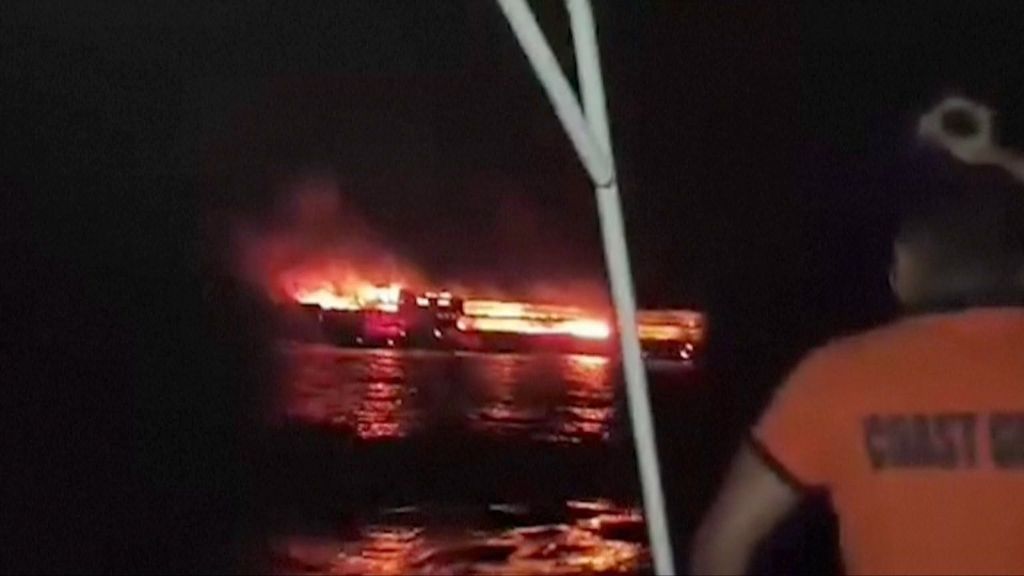
    Organizers with the Global Sumud Flotilla, a coalition of 48 national delegations that launched the voyage from ports in France, Spain and Italy over recent weeks, announced Thursday that Israeli commandos had stormed at least 22 of the coalition’s 58 vessels in an operation that took place hundreds of kilometers from Israeli shores — a distance organizers described as unprecedented. In a graphic account of the raid, the group detailed that Israeli military speedboats approached the unarmed aid vessels, pointing laser weapons and semi-automatic assault weapons at activists, ordering crew members to crawl to the fronts of their boats with their hands and knees on the deck. The operation also included jamming of the flotilla’s communications systems, prompting activists to issue an emergency SOS distress call.

    Per the coalition’s accounts, a total of 211 activists have been taken into Israeli custody, an outcome organizers frame as an arbitrary kidnapping in violation of international law. Among the detainees are Paris Communist municipal councillor Raphaelle Primet and 10 other French citizens, with crew members representing all 48 participating national delegations believed to be held. Helene Coron, a spokesperson for Global Sumud France, confirmed the details of the interception during an online news conference, noting that the operation occurred far closer to Crete than to Israeli territorial waters. Yasmine Scola, an activist still aboard one of the remaining flotilla vessels anchored near Crete, echoed the organizers’ claim that the detained activists had been kidnapped by Israeli forces.

    Israeli officials have offered a conflicting account of the operation. The Israeli foreign ministry put the number of detainees at 175, and derisively labeled the initiative a “condom flotilla” — a reference to prophylactics found in a previous aid convoy — adding that 20 of the intercepted vessels were already traveling peacefully to Israeli ports. Activists counter that their vessels were carrying only civilian humanitarian aid, including school supplies and food for Gazan residents who have faced catastrophic shortages of basic goods for decades.

    A spokesperson for the Greek coast guard confirmed to Agence France-Presse that authorities responded to the flotilla’s SOS distress signal, but once a Greek patrol boat reached the interception zone, crews were told no further assistance was needed. As of Thursday, the 36 remaining vessels from the original flotilla remain anchored off the coast of Crete, and organizers have not yet announced what next steps the remaining crews will take.

    This interception marks the second high-profile voyage by the Global Sumud Flotilla targeting Israel’s blockade of Gaza. The coalition’s first voyage in the summer and autumn of 2025 also drew global attention after Israeli forces intercepted the flotilla off the coasts of Egypt and Gaza in early October of that year. That operation, which Amnesty International and organizers labeled a violation of international law, sparked widespread international condemnation after high-profile participants including climate activist Greta Thunberg were arrested and expelled by Israeli authorities.

    The confrontation comes against a long-running backdrop of humanitarian crisis in Gaza. Israel has controlled all land, air and sea entry points to Gaza since 2007, when the territory came under the governance of Hamas. The United Nations and leading international non-governmental organizations have repeatedly accused Israel of strangling the flow of goods into Gaza, a crisis that deepened dramatically after the outbreak of war between Israel and Hamas in October 2023. According to official Israeli figures compiled by AFP, Hamas’s cross-border attack on October 7, 2023 killed 1,221 people, most of them civilians. Retaliatory Israeli military operations in Gaza have killed more than 72,000 people in the territory, the majority of them civilians, per data from the Gaza Ministry of Health. A fragile ceasefire has been in place since October 2025, ending two years of devastating armed conflict, but severe shortages of food, clean water, medicine and fuel continue to plague the 2 million residents of Gaza.

  • Zelenskyy says he’s seeking details of Putin’s May 9 ceasefire proposal

    Zelenskyy says he’s seeking details of Putin’s May 9 ceasefire proposal

    Diplomatic developments have intersected with continuing frontline violence in Ukraine this week, after Russian President Vladimir Putin floated a short-term ceasefire proposal to former U.S. President Donald Trump during a Wednesday phone call, drawing a cautious request for details from Ukrainian President Volodymyr Zelenskyy.

    According to the Kremlin, Putin suggested the ceasefire would align with Russia’s May 9 Victory Day, the national holiday marking the Soviet Union’s defeat of Nazi Germany in World War II. While senior Putin aide Yuri Ushakov confirmed the ceasefire was discussed during the call, Kremlin spokesperson Dmitry Peskov clarified Thursday that no final agreement or concrete terms have been finalized, with all final decisions remaining with Putin.

    In a public Telegram post Thursday, Zelenskyy announced that Ukrainian diplomatic representatives had been ordered to reach out to Trump’s team to pin down the specifics of the proposal. The Ukrainian leader cast doubt on the plan’s purpose, suggesting it could merely be a temporary security measure for a Moscow parade rather than a meaningful step toward de-escalation, and reiterated Ukraine’s preference for a far longer ceasefire to reduce civilian harm.

    Parallel to these diplomatic negotiations, active hostilities have continued unabated across the region. Overnight Russian airstrikes targeted two major Ukrainian cities: in the central city of Dnipro, a drone strike killed one civilian and injured five others, damaging a local shop, residential apartment blocks and parked vehicles, Dnipropetrovsk regional governor Oleksandr Hanzha confirmed. In the southern Black Sea port of Odesa, waves of Russian drone strikes left 20 people wounded. Though Ukrainian air defense forces intercepted a large share of the incoming drones, falling debris and direct hits damaged civilian sites including residential buildings, a hotel, a kindergarten and an administrative building, sparking multiple fires that emergency crews have since contained.

    For a second consecutive day, Ukraine has carried out retaliatory drone strikes on industrial infrastructure deep inside Russian territory. A senior Ukrainian security official confirmed Thursday that the country’s Security Service (SBU) targeted the Lukoil-Permnefteorgsintez oil refinery in Perm, a region in the Ural Mountains more than 1,500 kilometers from the Ukrainian border, disrupting operations at the facility. Russian regional governor Dmitry Makhonin acknowledged an industrial site was hit but downplayed damage and reported no casualties. Farther west, in the Krasnodar region, authorities said a two-day fire at the Tuapse Black Sea oil refinery—ignited by a Ukrainian drone strike—has been extinguished, though crude oil products spilled onto local city streets during the blaze.

    Ukraine’s Navy also announced a separate overnight strike in the Kerch Strait, which connects the Black Sea and Sea of Azov adjacent to the 2018 Crimean Bridge linking illegally annexed Crimea to mainland Russia. The service said sea drones damaged two Russian vessels: a patrol boat named *Sobol* and a smaller craft named *Grachonok*.

    In a separate diplomatic win for Kyiv, a vessel accused of carrying grain stolen by Russia from occupied Ukrainian territories departed Israel’s Haifa Port early Thursday without unloading its cargo, after a week of escalating tension between the two countries. The ship had been anchored off Haifa for several days, but Israel’s largest grain import firm refused to accept the shipment over its disputed origin, the Israel Grain Importers Association confirmed, forcing the Russian supplier to seek an alternative port to unload.

    Zelenskyy had threatened to impose sanctions on Israel earlier this week if the vessel offloaded the stolen grain, and Israeli Foreign Minister Gideon Saar noted the country’s tax authority had launched a formal investigation into the shipment. Ukrainian Foreign Minister Andrii Sybiha hailed the outcome, saying it proved the effectiveness of Kyiv’s legal and diplomatic efforts to block the trade of stolen Ukrainian agricultural goods.

  • Israel intercepts Gaza flotilla near Crete and detains 175 activists

    Israel intercepts Gaza flotilla near Crete and detains 175 activists

    A months-long standoff over Israel’s naval blockade of Gaza has escalated into a new international dispute, after Israeli security forces intercepted at least 22 vessels from the pro-Palestinian Global Sumud Flotilla (GSF) carrying humanitarian intent to the blockaded enclave in international waters off Greece’s Crete. Organizers of the aid mission have decried the operation as outright piracy, while Israeli officials frame the action as a legitimate response to what they call a provocative publicity stunt.

    The 58-vessel flotilla launched two weeks prior from ports across Spain, France, and Italy, with the explicit goal of breaking the years-long Israeli naval blockade that has restricted movement and goods access in and out of Gaza since the outbreak of the current conflict. GSF organizers confirmed that the interceptions took place roughly 965 kilometers (600 miles) from Gaza’s shores, far outside of Israel’s recognized territorial boundaries. In a formal statement released Thursday at 04:30 GMT, the group accused Israeli naval commandos of storming the intercepted vessels in open violation of international maritime law.

    An earlier GSF statement detailed aggressive tactics during the operation: Israeli forces jammed all onboard communications, including dedicated emergency distress channels, before forcibly detaining all civilians on the seized ships. “This is piracy. This is the unlawful seizure of human beings on the open sea near Crete, an assertion that Israel can operate with total impunity, far beyond its own borders, with no consequences,” the GSF said in its official remarks. As of the latest update, GSF tracking data shows the 36 remaining flotilla vessels are holding position off Crete’s southwestern coast, having avoided interception so far.

    Israeli officials have pushed back against the organizers’ claims, asserting that all actions taken comply with international law. The Israeli foreign ministry confirmed that roughly 175 activists from more than 20 intercepted boats have been taken into custody and are being transported to Israeli territory. The ministry dismissed the entire flotilla mission as nothing more than a calculated provocation, claiming no actual humanitarian aid was being carried aboard the vessels. In a pre-interception statement Wednesday, Israeli officials went further, alleging that the militant group Hamas is the driving force behind the flotilla, working in tandem with professional protest provocateurs. The goal of the action, the ministry claimed, is to sabotage the second phase of U.S. President Donald Trump’s proposed Gaza peace plan and shift public attention away from Hamas’s ongoing refusal to disarm.

    Israeli media reports add that naval forces issued multiple warnings for the flotilla vessels to change course and retreat before moving in to seize the ships that refused to comply. The Israeli foreign ministry also released its own video footage of the aftermath, which it says shows detained activists moving peacefully onto Israeli naval vessels for transport. This is not the first time Israel has intercepted a GSF mission bound for Gaza: in October of last year, the Israeli military stopped an earlier flotilla before it could reach the enclave, arresting and later deporting more than 470 onboard activists, including high-profile Swedish climate campaigner Greta Thunberg.

    The interception has already sparked new debate over the legality of Israeli military operations far beyond its own territorial waters, as well as renewed international scrutiny of the years-long blockade of Gaza that has severely limited the entry of food, medicine, and other essential supplies into the enclave.

  • The first direct US-Venezuela commercial flight in 7 years is to land in Caracas

    The first direct US-Venezuela commercial flight in 7 years is to land in Caracas

    After a seven-year indefinite suspension ordered by U.S. authorities over unsubstantiated security concerns, the first direct commercial flight connecting the United States and Venezuela is set to touch down in Caracas, Venezuela’s capital, on Thursday, marking a historic turning point in bilateral relations between the two nations.

    This long-awaited resumption of direct air links comes on the heels of a series of rapid diplomatic breakthroughs. Just months ago, the U.S. announced the formal reopening of its embassy in Caracas, a move that followed the restoration of full diplomatic relations between Washington and the South American country after years of severed ties.

    The inaugural flight, numbered AA3599 and operated by Envoy Air, a regional subsidiary of American Airlines, was scheduled to depart Miami International Airport at 10:16 a.m. local Florida time, with a planned three-hour flight time before arriving in Caracas. The aircraft is scheduled to make the return trip to Miami later the same afternoon. Per earlier announcements from the airline, a second daily nonstop flight between Miami and Caracas will launch on May 21 to meet growing travel demand.

    Direct commercial air travel between the U.S. and Venezuela has been frozen since 2019, when American Airlines — the last remaining U.S. carrier serving the country — suspended its routes between Miami, Caracas, and Venezuela’s key oil hub Maracaibo. Larger U.S. carriers Delta Air Lines and United Airlines had already exited the Venezuelan market two years earlier in 2017, amid a deepening political and economic crisis that drove millions of Venezuelans to seek refuge abroad. Over the past seven years, travelers between the two nations have been forced to rely on indirect connecting routes through neighboring Latin American countries, adding significant time and cost to cross-border journeys.

    In a late January statement, U.S. President Donald Trump announced he had notified Venezuela’s acting President Delcy Rodríguez that the U.S. would fully open commercial air access to Venezuela, clearing the way for U.S. citizens to travel to the country. “American citizens will be very shortly able to go to Venezuela, and they’ll be safe there,” Trump told reporters at the time. When American Airlines first announced the flight resumption plan in January, the carrier emphasized that the restored routes would create new opportunities for separated family members to reunite, while also opening new doors for cross-border commercial and economic activity.