分类: world

  • Landmines destroy limbs and lives on Bangladesh-Myanmar border

    Landmines destroy limbs and lives on Bangladesh-Myanmar border

    Along the densely forested Bangladesh-Myanmar frontier, civilian populations face an escalating humanitarian crisis as landmine explosions inflict life-altering injuries and economic devastation. This volatile border region has become a deadly contamination zone where villagers routinely fall victim to explosive remnants of foreign conflicts.

    The human toll is embodied by individuals like Ali Hossain, a 40-year-old who lost his leg to a landmine explosion while gathering firewood in early 2025. His account of the traumatic incident—the sudden blast, severed limb, and desperate race to medical care—represents countless similar tragedies occurring throughout the Bandarban district. Despite receiving prosthetic assistance, Hossain remains unable to resume his rubber plantation work, forcing his young sons into the same dangerous wood-collecting activities that cost him his limb.

    Medical infrastructure struggles to address the complex needs of blast survivors. Mohammad Abu Taleb, 47, described how his accidental crossing into Myanmar territory resulted in catastrophic injury and subsequent financial ruin. With prosthetic maintenance costing approximately $80 per visit—an insurmountable expense for families surviving on minimal income—many victims face impossible choices between medical care and basic subsistence.

    International monitoring organizations classify Myanmar as the world’s most perilous nation for landmine casualties. The International Campaign to Ban Landmines documented over 2,000 incidents during 2024 alone, representing a doubling from previous years. Their Landmine Monitor report specifically highlighted intensified weapon deployment throughout 2024-2025, with particular concentration along the Bangladeshi border region.

    Bangladeshi authorities attribute mine placement to both Myanmar’s military junta and opposition armed factions, including the guerrilla Arakan Army that controls substantial border jungle territories. The situation compounds existing humanitarian challenges, including the presence of over one million Rohingya refugees in border zones caught between conflicting military forces.

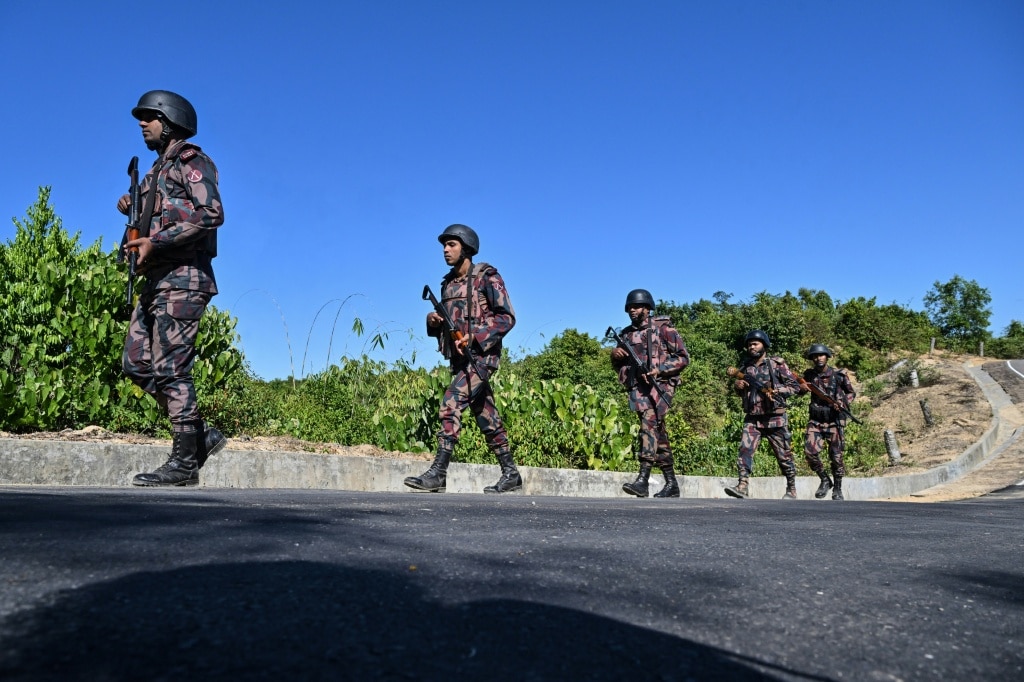
    Border Guard Bangladesh has implemented warning systems and demining operations, but Lieutenant Colonel Kafil Uddin Kayes acknowledges the fundamental injustice of the situation: ‘This cruelty cannot be legitimized.’ The November 2025 death of a border guard who lost both legs to mine explosion underscores the persistent danger.

    Local communities emphasize that survival necessities override safety concerns. As farmer Dudu Mia, 42, explains, ‘The population is increasing, and people are moving closer to the border, as we have farmlands there.’ This tragic reality leaves Bangladeshi civilians paying the ultimate price for a conflict beyond their control, with limited solutions visible on the horizon.

  • Strong earthquake hits western Japan but no risk of tsunami

    Strong earthquake hits western Japan but no risk of tsunami

    A substantial seismic event registering a preliminary magnitude of 6.2 rattled the Shimane prefecture in northwestern Japan on Tuesday, according to official reports from the Japan Meteorological Agency. The inland tremor, originating at a depth of approximately 10 kilometers (6.2 miles), prompted significant shaking across the region’s urban centers, most notably in the prefectural capital of Matsue and surrounding municipalities extending into adjacent Tottori prefecture.

    Authorities swiftly confirmed the absence of tsunami risk following the seismic activity, providing immediate reassurance to coastal communities. Initial assessments conducted by emergency response teams indicated no immediate reports of structural damage or injuries resulting from the earthquake.

    In a critical safety update, Japan’s Nuclear Regulation Authority verified that comprehensive monitoring systems detected no abnormalities at the Shimane nuclear power facility and its associated installations within the affected zone. This announcement came as particular relief given Japan’s heightened seismic awareness following previous nuclear incidents.

    The seismic occurrence highlights Japan’s ongoing vulnerability to tectonic activity as a nation situated along the seismically active Pacific Ring of Fire—a geographic zone renowned for concentrated volcanic and earthquake activity spanning the Pacific Ocean basin. Japan’s advanced early warning systems and robust infrastructure protocols were effectively demonstrated through this event, showcasing the nation’s preparedness for such geological phenomena.

  • The Middle East’s new year is as unhappy and fractured as ever

    The Middle East’s new year is as unhappy and fractured as ever

    Historical precedents never suggested that achieving lasting stability in the Middle East would be straightforward. Yet the rapid deterioration of the Israel-Hamas ceasefire agreement brokered by President Donald Trump just three months ago presents a sobering reality check. What was hailed as a diplomatic breakthrough has given way to renewed violence and political fragmentation across the region.

    The Gaza ceasefire, which required Hamas to disarm, has proven predictably unworkable. Approximately 400 casualties have been recorded since the agreement took effect, as the militant group maintains its arsenal while facing continued Israeli military operations. The absence of any new security authority or governance structure has left a vacuum filled by ongoing violence. Israel’s recent ban on 37 humanitarian organizations from operating in Gaza, citing non-compliance with new regulations, has further exacerbated tensions.

    More concerning still is the emerging rift between key Arab powers. Saudi Arabia and the United Arab Emirates, traditionally aligned Gulf partners, now support opposing factions in Yemen and Sudan’s civil conflicts—both of which have proven deadlier than the Gaza hostilities. The December 30th bombing of an Emirati weapons shipment by Saudi forces in Yemen demonstrates how regional cooperation has unraveled. This fragmentation threatens any prospect of unified Arab support for Palestinian statehood.

    Iran presents a complex picture of internal unrest amid external aggression. Widespread protests against economic deterioration and government repression have weakened the regime, which continues to fuel conflicts through proxy groups across the region. Though diminished by strikes on its nuclear facilities and proxy defeats, Iran maintains financial channels through weapons sales to Russia. President Trump’s threatened intervention to support Iranian protesters adds another layer of uncertainty to regional dynamics.

    European nations that recently recognized Palestinian statehood now bear responsibility for advancing concrete plans for its realization. Countries including Britain, France, Spain and Ireland must leverage their diplomatic influence at the United Nations and with regional partners to push for viable solutions. While the Trump administration maintains primary influence, European diplomacy could play a crucial role in mediating Arab differences and balancing unconditional support for Israel.

    The path forward requires concerted pressure on all parties—from Gulf states to Israel and Hamas—to transform fragile ceasefires into durable political solutions. Though the challenges remain formidable, coordinated international engagement represents the only alternative to perpetual conflict.

  • Mock house, CIA assets, special forces: Inside US operation to capture Venezuela’s Maduro

    Mock house, CIA assets, special forces: Inside US operation to capture Venezuela’s Maduro

    In a meticulously orchestrated covert operation dubbed ‘Absolute Resolve,’ United States forces successfully captured Venezuelan President Nicolas Maduro and his wife in a daring predawn raid on Caracas. The mission, approved personally by President Donald Trump from his Mar-a-Lago estate, culminated months of strategic planning involving elite military units and intelligence assets.

    The operation’s foundation was laid through extensive CIA groundwork beginning in August, with agents establishing surveillance patterns and placing an asset within Maduro’s inner circle to monitor his movements. Simultaneously, elite Delta Force troops constructed an exact replica of Maduro’s fortified residence to conduct precision rehearsals for the assault.

    Execution began with coordinated airstrikes targeting Venezuelan air defense systems around Caracas, involving over 150 aircraft launched from 20 bases across the Western Hemisphere. The aerial assault included F-35 and F-22 jets, B-1 bombers, and specialized electronic warfare aircraft that had been quietly deployed to the region under the guise of anti-drug operations.

    As air operations neutralized defenses, specially equipped Special Forces teams penetrated Maduro’s compound despite coming under direct fire. Using specialized equipment including blowtorches to breach reinforced steel doors, the teams secured the residence within minutes. Maduro attempted to reach a secure room but was apprehended before he could seal himself inside.

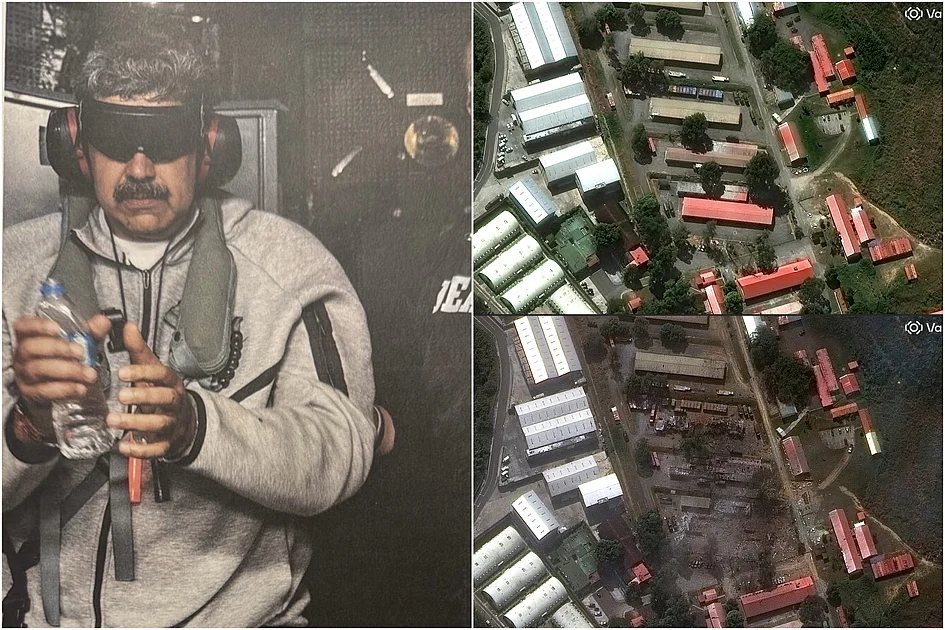
    The captured leader was transported via helicopter to the USS Iwo Jima amphibious assault ship, with the operation concluding successfully despite engagement in ‘multiple self-defense engagements’ during extraction. President Trump announced the mission’s success on his Truth Social platform, later sharing an image of the blindfolded, handcuffed Maduro aboard the US vessel.

    The operation represents one of the most complex US military actions in recent memory, involving coordination between the Pentagon, CIA, State Department, and White House over several months of preparation.

  • Iran and China denounce US kidnapping of Maduro

    Iran and China denounce US kidnapping of Maduro

    A coordinated US military operation to apprehend Venezuelan President Nicolas Maduro has triggered international condemnation and raised serious questions about violations of international law. According to reports, US special forces conducted a raid in Caracas early Saturday, capturing Maduro while American fighter jets targeted key Venezuelan military installations.

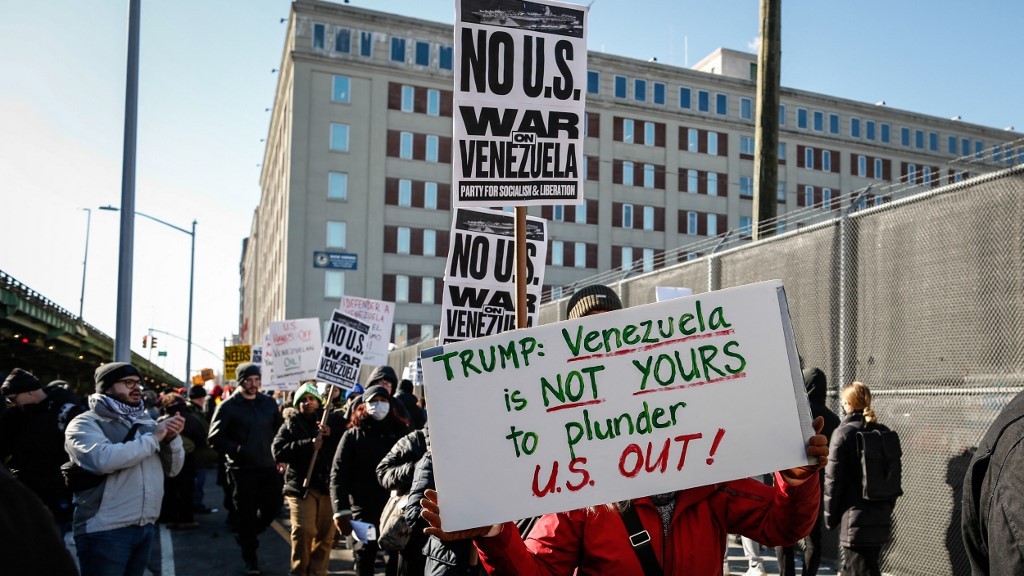
    US authorities announced that President Maduro would face drug trafficking charges in American courts. President Donald Trump declared the United States would assume control over Venezuela’s governance for the foreseeable future, promising American corporations would gain access to the country’s vast oil reserves. “We’re going to be taking out a tremendous amount of wealth out of the ground,” Trump told reporters, echoing previous statements made in 2023 about Venezuela’s oil resources.

    The operation has drawn sharp criticism from Venezuela’s allies and beyond. Iran’s Foreign Ministry spokesperson Esmail Baghaei condemned the action as “illegal” during a weekly press conference, stating that “claims that another country can run Venezuela are unacceptable to any nation” and represent “a return to colonial-era thinking.” Baghaei further suggested that oil interests rather than democratic principles motivated the intervention.

    China, which had just hours before the operation hosted a delegation meeting with Maduro in Caracas, demanded immediate release of the Venezuelan leader and characterized the incursion as a violation of international law. The US assault has received mixed reactions globally, with most South American nations including Brazil, Colombia and Chile condemning the action, while some European countries welcomed Maduro’s removal despite questioning its legality.

    Domestically, US Democratic lawmakers joined in criticizing the attack as “illegal.” The situation has additional implications for Iran, where Trump issued simultaneous threats regarding ongoing anti-government demonstrations, warning that Iran would be hit “very hard” if protesters are killed.

  • Israel says ban on Gaza media access should stay: Court document

    Israel says ban on Gaza media access should stay: Court document

    Israeli authorities have formally advocated for the continuation of a ban prohibiting international media from independently entering Gaza, according to a government submission to the Supreme Court. The document, filed by the public prosecutor and obtained by AFP, argues that unrestricted journalist access poses unacceptable security risks, a stance supported by the nation’s defense establishment.

    The policy, instituted following the October 2023 outbreak of war triggered by a Hamas attack on Israel, has prevented foreign reporters from freely documenting conditions within the devastated territory. Currently, Israel permits only a limited number of journalists to enter on a strictly case-by-case basis, requiring them to be embedded with military escorts.

    This access restriction prompted legal challenge from the Foreign Press Association (FPA), which represents hundreds of international journalists operating in Israel and the Palestinian territories. The FPA filed a petition in 2024 demanding immediate and unhindered media access to Gaza. The Supreme Court has granted multiple extensions for the government to formulate a plan, with a final deadline set for January 4 after a hearing last month.

    In its Sunday filing, the government contended that the precarious security situation justifies the ongoing ban. Officials highlighted that the ceasefire, enacted on October 10, remains fragile and is regularly threatened. Supporting this claim, Gaza’s health ministry reports that at least 420 Palestinians have been killed by Israeli forces since the truce began. Conversely, the Israeli military states that three of its soldiers have been killed by militants in the same period.

    A further complication cited is the ongoing operation to recover the remains of Ran Gvili, the last hostage still in Gaza. Gvili was killed during the initial Hamas attack, and his body was taken into the territory. While all other 250 hostages seized that day have been returned, the government submission suggests that allowing journalists free movement could potentially disrupt the sensitive search operation.

    The Supreme Court is now expected to deliberate on the matter, though a timeline for its final ruling remains uncertain.

  • Anne Frank’s step-sister and Holocaust survivor Eva Schloss dies

    Anne Frank’s step-sister and Holocaust survivor Eva Schloss dies

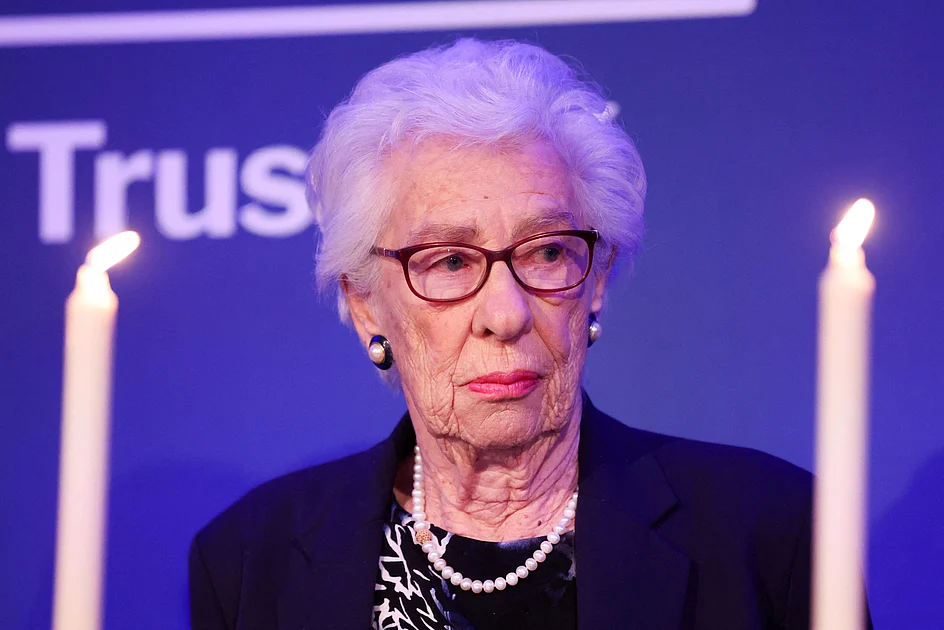
    Eva Schloss, the esteemed Auschwitz survivor who became Anne Frank’s step-sister and dedicated her life to Holocaust education, has passed away at age 96. Her foundation confirmed her peaceful death in London on January 3rd.

    Born Eva Geiringer in Austria in 1929, Schloss experienced the Nazi annexation of her homeland as a child. Her Jewish family fled successively to Belgium and eventually Amsterdam, where they settled opposite the Frank family residence. She and Anne Frank, being the same age, frequently played together during their childhood.

    In 1942, both families were forced into hiding to escape Nazi persecution. Tragically, Schloss’s family was betrayed by a Nazi sympathizer two years later. On her fifteenth birthday, she was arrested alongside her mother Elfriede, father Erich, and brother Heinz. They were transported to the Auschwitz extermination camp in May 1944.

    While imprisoned, Schloss maintained contact with her mother but was permanently separated from her father and brother, both of whom perished in the camps. Anne Frank similarly died in the Bergen-Belsen concentration camp in 1945.

    Following Auschwitz’s liberation by Soviet forces in 1945, Schloss and her mother returned to the Netherlands. There they encountered Otto Frank, Anne’s father and a widower after his own Auschwitz imprisonment. Otto encouraged Schloss to pursue photography, leading her to study in London where she met future husband Zvi Schloss.

    In a significant familial development, Eva’s mother Elfriede married Otto Frank in 1953, formally making Eva Anne Frank’s step-sister. Eva and Zvi obtained British citizenship and raised three daughters together. Remarkably, Schloss reclaimed her Austrian citizenship in 2021 at age 92.

    Schloss co-founded the Anne Frank Trust UK in 1990, through which she tirelessly combated prejudice and educated generations about Holocaust atrocities. Her extraordinary commitment earned her Membership of the Order of the British Empire (MBE) in 2013.

    British royalty expressed profound condolences, with King Charles III and Queen Camilla noting they were “greatly saddened” and describing themselves as “privileged and proud to have known her.” Gillian Walnes, vice president of the Anne Frank Trust UK, highlighted Schloss’s relentless advocacy: “Into her 90s, she spoke with tireless passion, often giving several talks a day, including in prisons and schools.”

    Schloss authored several books and shared her testimony worldwide, ensuring the lessons of history remain vividly alive for future generations.

  • ‘I can’t walk anymore’: Afghans freeze to death on route to Iran

    ‘I can’t walk anymore’: Afghans freeze to death on route to Iran

    A severe humanitarian catastrophe is unfolding along Afghanistan’s mountainous border with Iran, where subzero temperatures are claiming the lives of desperate migrants attempting illegal crossings in search of economic survival. The International Organization for Migration reports that Iran and Pakistan have collectively repatriated approximately five million Afghan nationals since September 2023, abruptly increasing Afghanistan’s population by 10% and exacerbating an already critical resource shortage.

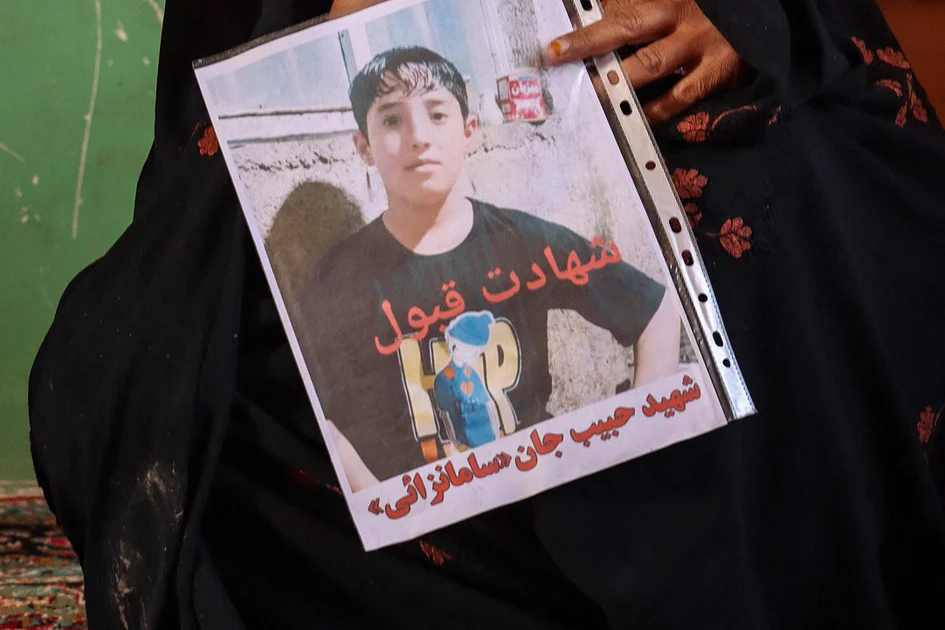
    Tragic evidence of this crisis emerged last month when at least 18 Afghan migrants perished during attempted border crossings from Herat province, where temperatures hovered around -3°C (27°F). Among the victims was 15-year-old Habibullah, whose family described his desperate circumstances before his fatal journey. “He was forced to go, to bring food for the family,” explained his mother Mah Jan, clutching her son’s photograph in their Ghunjan village home lacking electricity, water, and adequate heating.

    The UN estimates approximately half of Afghanistan’s population will require humanitarian assistance this year, with earthquakes, drought, and economic collapse creating unbearable conditions. Despite the known dangers, migrants continue to risk illegal routes through “very dangerous” crossing points, according to Mutya Izora Maskun, IOM’s deputy head in Afghanistan, who cited “economy, job insecurity, food insecurity, constrained access to services” as primary drivers.

    Iranian border guard commander Majid Shoja confirmed that approximately 1,600 Afghan migrants were rescued from mountain areas in recent days, while Afghan authorities reported 347 individuals were apprehended attempting illegal crossings during December’s final week. The Taliban government claims to have implemented “serious steps to fight the smugglers,” according to interior ministry spokesman Abdul Mateen Qani, but the flow of desperate migrants continues unabated.

    Survivors recount harrowing journeys through treacherous conditions. Yunus, who accompanied his stepbrother Abdul Majeed Haidari on a mid-December crossing attempt, described how the 25-year-old father succumbed to exhaustion while seeking medication for his one-year-old son’s heart condition. “I can’t walk anymore,” were Haidari’s final words before his death, despite efforts by fellow travelers and eventual transportation to an Iranian hospital.

    With legal migration channels severely limited despite shared language and greater employment opportunities in Iran, Afghanistan’s deputy labor minister Abdul Manan Omari acknowledged the necessity to “do more” in facilitating work permits for migrants, as families face impossible choices between starvation and lethal border crossings.

  • Misleading videos claim to show celebrations inside Venezuela

    Misleading videos claim to show celebrations inside Venezuela

    A series of misleading videos circulating on social media platforms have been definitively exposed as fraudulent by BBC Verify. These videos falsely purported to show Venezuelan citizens celebrating the potential U.S. seizure of their controversial president, Nicolás Maduro.

    The investigation revealed that the clips were not recent recordings from Venezuela but were, in fact, repurposed and decontextualized footage from unrelated events. One video, which allegedly showed jubilant crowds, was actually archival content from a public celebration following a national soccer victory. Another clip, presented as evidence of anti-Maduro sentiment, was traced back to a completely different country’s political rally that occurred years prior.

    This disinformation campaign appears strategically timed to exploit existing geopolitical tensions between the United States and Venezuela. By fabricating a narrative of popular support for foreign intervention, the creators aimed to influence international perception and domestic morale. BBC Verify’s forensic analysis, including reverse image searches, metadata examination, and geographical verification, provided irrefutable evidence of manipulation.

    The dissemination of such fabricated content highlights the ongoing challenges in combating digital misinformation, particularly concerning nations subject to intense international scrutiny and economic sanctions. The incident underscores the critical importance of media literacy and verification processes in the contemporary information landscape.

  • Over 200 Filipinos burn US flags, condemn capture of Venezuelan President Maduro

    Over 200 Filipinos burn US flags, condemn capture of Venezuelan President Maduro

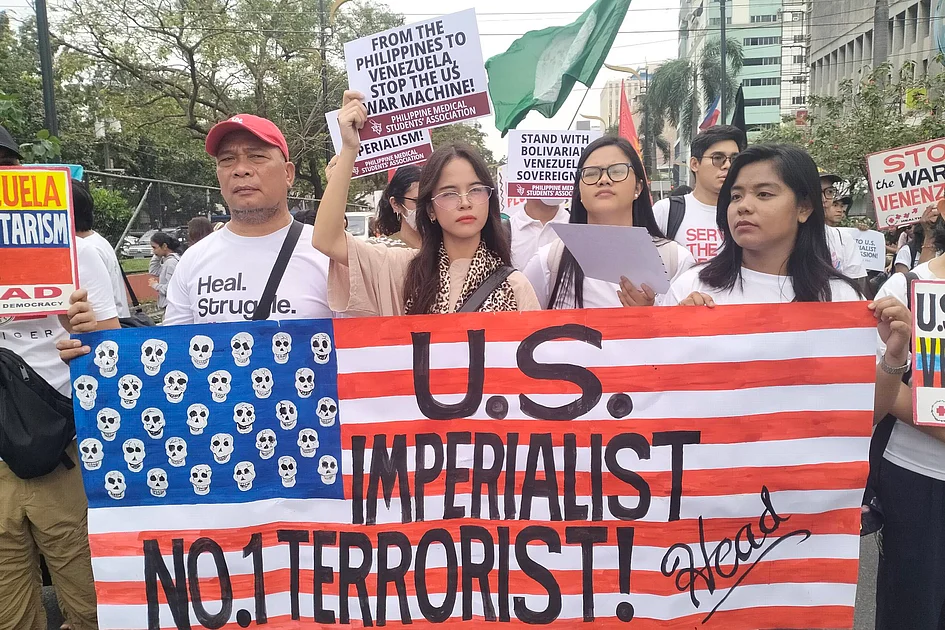
    MANILA – More than 200 activists assembled outside the US Embassy in Manila on Monday, staging a vehement protest against recent American military operations in Venezuela. The demonstration, organized by the Bagong Alyansang Makabayan alliance, featured the burning of US flags and strong condemnations of what participants labeled ‘US imperialist aggression’ and a ‘state-sponsored abduction’ of Venezuelan President Nicolás Maduro.

    Protesters carried banners reading ‘¡Manos fuera de Venezuela!’ (Hands off Venezuela!) and denounced Saturday’s US airstrikes on Venezuelan cities as violations of international law. The Philippines-Bolivarian Venezuela Friendship Association (PBVFA) characterized the military actions as ‘a show of brazen brutality by US imperialism’ that represents ‘the worst forms of oppression.’

    The rally garnered support from multiple sectors, including Gabriela, an alliance of women’s organizations that rejected US claims labeling Venezuela a terrorist state. Gabriela representatives asserted that Venezuela’s vast oil reserves—estimated at 300 billion barrels—represent the true motivation behind US aggression, stating the country ‘refuses US economic and political control.’

    Philippine political leaders joined the criticism, with Congressman Antonio Tinio leading the march and Rep. Leila de Lima warning that the US action ‘throws the global order back to a barbaric ‘might makes right’ regime.’ Cardinal Pablo Virgilio David, former president of the Catholic Bishops’ Conference, emphasized via social media that international law clearly prohibits the use of force against sovereign states, regardless of political disagreements.

    The Philippine Department of Foreign Affairs issued a separate statement urging both nations to ‘resolve disputes through peaceful means’ and exercise restraint to prevent further escalation. The Manila protest reflects growing international concern over the weekend’s military developments and their implications for global sovereignty norms.