分类: world

  • Flights to northern Ethiopia cancelled as fears mount of renewed conflict

    Flights to northern Ethiopia cancelled as fears mount of renewed conflict

    Ethiopian Airlines has abruptly suspended all passenger flights between Addis Ababa and cities in the northern Tigray region, citing “unplanned circumstances” in text messages to passengers. The suspension comes amid growing concerns about a potential return to conflict, with reports emerging of military clashes in contested territories.

    Airport staff in Mekelle, Tigray’s main city, confirmed the flight cancellations after receiving instructions not to report for work. The airline and Ethiopian government have remained silent beyond the initial cancellation notice, offering no further explanation for the sudden suspension of air services.

    The development occurs against a backdrop of deteriorating relations between the federal government and the Tigray People’s Liberation Front (TPLF), with the 2022 Pretoria Peace Agreement showing signs of unraveling. Tensions have escalated particularly around disputed territories in western Tigray, where forces from the neighboring Amhara region maintain control over fertile lands claimed by both regions.

    Recent reports indicate clashes between federal forces and Tigrayan fighters in Mai Degusha, a contested area within Tselemti district. Additional military movements have been observed in southern Tigray, raising alarms about potential renewed hostilities.

    The situation is further complicated by the upcoming June elections, from which the TPLF has been excluded following the revocation of its political license. The party, which previously dominated Ethiopian politics for two decades, has experienced internal factionalization, adding complexity to an already volatile political landscape.

    While air travel remains suspended, ground transportation via buses continues to operate between Addis Ababa and Tigray, though these services may face disruptions following the flight suspensions. The African Union, which brokered the original peace agreement, has not yet commented on the latest developments.

    The Tigray conflict, which resulted in an estimated 600,000 fatalities and widespread human rights abuses, had previously displaced approximately one million people from western Tigray. These individuals remain in makeshift camps throughout the region, with their voting status in any potential referendum uncertain.

  • Plane crash in Colombia kills 15, including lawmaker

    Plane crash in Colombia kills 15, including lawmaker

    A domestic flight operated by Colombia’s state-owned airline Satena crashed in the mountainous Catatumbo region near the Venezuelan border on Wednesday, resulting in the tragic loss of all fifteen individuals aboard. The aircraft, identified as a Beechcraft 1900 twin-propeller plane, was conducting a scheduled 23-minute hop from Cucuta to Ocana when it vanished from radar contact shortly before its anticipated noon landing.

    Colombian authorities confirmed no survivors from the devastating crash that claimed thirteen passengers and two crew members. The passenger manifest included Representative Diogenes Quintero, a 36-year-old member of Colombia’s chamber of deputies, and Carlos Salcedo, a candidate for upcoming legislative elections. Quintero’s political party memorialized him as a community-focused leader deeply connected to his conflict-ridden home region.

    Search and recovery operations faced extreme challenges due to the treacherous terrain within the Andes’ eastern range, where volatile weather patterns and dense jungle coverage complicate aerial operations. The crash site lies within territories significantly influenced by the National Liberation Army (ELN), Colombia’s largest active guerrilla group, adding security complications to the recovery efforts.

    President Gustavo Petro expressed profound condolences via social media, stating: ‘I deeply regret these deaths. All my solidarity to their families.’ As of initial reports, recovery teams had successfully retrieved seven bodies from the wreckage according to North Santander state governor William Villamizar.

    Aviation authorities have launched a comprehensive investigation to determine the causal factors behind Colombia’s latest aviation tragedy, emphasizing that preliminary findings remain inconclusive regarding technical failures or weather-related circumstances.

  • Watch: CCTV captures moment mayor hit in rocket launcher attack in the Philippines

    Watch: CCTV captures moment mayor hit in rocket launcher attack in the Philippines

    Security cameras captured a shocking assassination attempt in the Philippines as a local mayor narrowly escaped death after assailants targeted his vehicle with a rocket-propelled grenade. The brazen attack occurred in full public view, underscoring the volatile security situation facing local officials in certain regions.

    The footage shows the official’s convoy moving through an urban area when suddenly an explosion rocks the lead vehicle. Bystanders scatter in panic as smoke and debris fill the air. Security personnel immediately respond to secure the area and transport the mayor to safety.

    This incident represents one of the most audacious attacks on a public official in recent memory, demonstrating the sophisticated weaponry now being employed by attackers. Philippine authorities have launched a full-scale investigation into the attack, which they believe may be connected to ongoing political tensions or anti-drug operations that have made local officials targets for violence.

    The attack has raised serious concerns about the safety of public servants and the escalating arms race between law enforcement and criminal elements. Officials have vowed to enhance security protocols for government personnel while pursuing those responsible for this act of terrorism.

  • Russian drone attack kills 3 in southern Ukraine as further US-led peace talks approach

    Russian drone attack kills 3 in southern Ukraine as further US-led peace talks approach

    A lethal Russian drone offensive in Ukraine’s southern Zaporizhzhia region has resulted in three fatalities, with additional casualties reported in central Dnipropetrovsk, according to Ukrainian authorities. The overnight assault ignited significant fires in residential structures, necessitating extensive emergency response operations.

    Ukrainian President Volodymyr Zelenskyy has issued a grave warning regarding intelligence indicating Russia’s preparation for another massive aerial bombardment. Historical patterns reveal these coordinated attacks frequently involve hundreds of drones combined with cruise and ballistic missiles, systematically targeting Ukraine’s energy infrastructure.

    These persistent aggressions occur despite anticipated diplomatic engagements, with U.S.-mediated peace negotiations scheduled to resume this weekend. Zelenskyy emphatically stated that each Russian strike fundamentally undermines the credibility of these peace talks.

    The relentless bombardment of civilian territories behind the extensive 1,000-kilometer frontline continues unabated, despite widespread international condemnation nearly four years following Russia’s full-scale invasion.

    European leadership has expressed deepening skepticism regarding Moscow’s commitment to genuine diplomacy. EU foreign ministers convened in Brussels, with Estonian Prime Minister Kaja Kallas accusing Russia of escalating civilian attacks due to battlefield stagnation. European officials emphasize the necessity of their involvement in settlement discussions, particularly given concerns that U.S.-led negotiations might overlook European security interests.

    A recently published think tank assessment projects combined military casualties may approach two million by spring, representing the highest troop mortality rate for any major power since World War II. Ukrainian Defense Minister Mykhailo Fedorov disclosed that Russia has launched over 6,000 drones during the past month alone, continuously refining both technology and tactics, compelling Ukraine to adapt its defensive strategies accordingly.

  • UN envoy sees potential turning point for Gaza, warns of uncertainties

    UN envoy sees potential turning point for Gaza, warns of uncertainties

    UN Deputy Special Coordinator for the Middle East Peace Process Ramiz Alakbarov presented a cautiously optimistic yet deeply concerning assessment of the Gaza situation during Wednesday’s UN Security Council open debate. Addressing the Middle East conflict and Palestinian question, Alakbarov characterized the current moment as both a potential turning point and a period of significant vulnerability.

    The diplomatic landscape shows promise with the announced implementation of the second phase of former US President Donald Trump’s 20-point comprehensive plan, which Alakbarov identified as a crucial development for cementing the fragile ceasefire. However, this political progress contrasts starkly with the devastating humanitarian reality on the ground.

    Gaza’s entire population remains dependent on humanitarian assistance, with recent heavy rainfall and cold temperatures intensifying the suffering of over 1.5 million displaced Palestinians. Humanitarian operations face severe constraints including security concerns, customs clearance obstacles, Israeli restrictions on authorized partners, cargo delays at crossings, and limited internal transport routes.

    Despite the nominal ceasefire, Alakbarov reported continued Israeli military operations involving airstrikes, shelling, and gunfire across the territory. Hundreds of Palestinians, including numerous women and children, have been killed since the ceasefire began.

    The envoy also highlighted deteriorating conditions in the occupied West Bank, where September-December 2025 saw entrenched negative trends including extensive military operations, settlement expansion, settler violence, demolitions, and large-scale detentions.

    Amid these challenges, Alakbarov identified a genuine opportunity to establish foundations for regional stability, advance Palestinian governmental reunification of Gaza and the West Bank, and ultimately work toward ending the occupation through a renewed political process.

  • US says aid will resume while Somali officials deny causing disruption leading to suspension

    US says aid will resume while Somali officials deny causing disruption leading to suspension

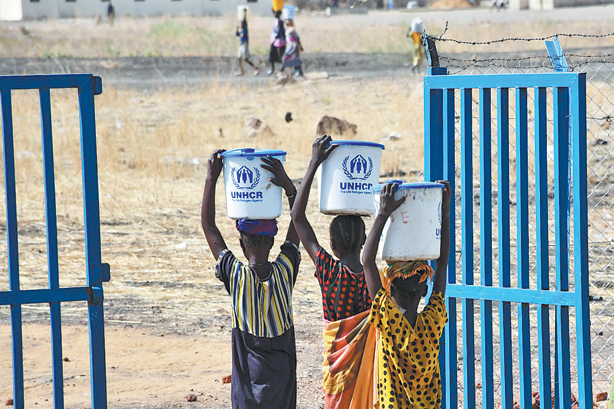
    NAIROBI, Kenya — The United States announced Wednesday the reinstatement of humanitarian assistance to Somalia’s federal government, following a temporary suspension triggered by allegations of aid operations disruption at Mogadishu’s primary port. The decision comes after American officials asserted that Somali authorities had acknowledged responsibility for incidents that compromised World Food Program (WFP) operations earlier this month.

    Despite Washington’s declaration that Somalia accepted accountability for the disturbance that led to halted aid distributions, the Somali government had not publicly confirmed this acknowledgment by Wednesday evening. Government officials remained silent when approached by The Associated Press for commentary on the development.

    The State Department’s Office of the Under Secretary for Foreign Assistance communicated through social media platform X that the United States would recommence WFP food distribution while maintaining a cautious approach toward broader assistance programs in the Horn of Africa nation. The statement emphasized the administration’s strict policy against “waste, theft, or diversion of U.S. resources.”

    The initial suspension on January 7 stemmed from claims that Somali officials demolished a U.S.-funded WFP warehouse and confiscated 75 metric tons of specialized nutritional supplies destined for malnourished children and pregnant women. While WFP confirmed the warehouse demolition, they later reported successful retrieval of the seized provisions without elaborating on recovery details.

    Somalia’s Foreign Ministry had previously rejected U.S. allegations, maintaining that port expansion activities did not compromise humanitarian aid custody or distribution mechanisms. The resumption timing for full aid deliveries remains uncertain, with WFP representatives not immediately responding to operational inquiries.

    This diplomatic episode occurs against the backdrop of heightened U.S. scrutiny toward Somali refugee and migrant communities, including fraud investigations involving childcare centers in Minnesota and intensified immigration restrictions affecting Somali nationals seeking U.S. entry or residency.

    Somalia continues to grapple with extreme poverty, prolonged civil unrest, and recurring natural disasters that have created one of the world’s most severe humanitarian crises, making international aid crucial for population survival.

  • China executes 11 linked to Myanmar scam compounds

    China executes 11 linked to Myanmar scam compounds

    In a decisive move against transnational organized crime, Chinese authorities have executed eleven individuals connected to extensive telecom fraud operations based in Myanmar. The executions, carried out on Thursday, represent Beijing’s most severe response to date in its ongoing campaign against criminal networks that have defrauded victims worldwide through sophisticated online scams.

    The executed individuals, identified as key operatives within these criminal organizations, received death sentences in September from a court in Wenzhou, eastern China. According to state media reports, their convictions included charges of intentional homicide, intentional injury, unlawful detention, fraud, and illegal casino operations. Among those executed were members of the notorious ‘Ming family criminal group,’ whose activities directly contributed to the deaths of 14 Chinese citizens and injuries to numerous others.

    These criminal enterprises, primarily operating from Myanmar’s lawless border regions, have developed into a multi-billion dollar industry targeting victims globally through romance scams and fraudulent cryptocurrency investment schemes. What began as operations focusing predominantly on Chinese-speaking targets has evolved into sophisticated multilingual fraud networks exploiting victims across continents.

    The Chinese Supreme People’s Court reviewed and approved all death sentences, confirming that evidence dating back to 2015 was ‘conclusive and sufficient’ for conviction. In addition to the executions, the September rulings included death sentences with two-year reprieves for five other individuals and prison terms ranging from five years to life imprisonment for 23 additional suspects.

    This crackdown forms part of Beijing’s broader strategy to combat transnational cybercrime through enhanced regional cooperation. Chinese authorities have intensified collaboration with Southeast Asian governments, resulting in the repatriation of thousands of suspected fraudsters to face China’s judicial system. The executions follow similar severe sentencing in November, when five individuals received death penalties for their involvement in scam operations that resulted in six Chinese fatalities.

    According to United Nations assessments, the global cyberscam industry has expanded dramatically, with hundreds of thousands of people now working in fraud centers worldwide. The UN Office on Drugs and Crime has documented the industry’s spread beyond Southeast Asia to South America, Africa, the Middle East, Europe, and various Pacific Islands, indicating the increasingly global nature of this criminal phenomenon.

  • Heavy gunfire and blasts heard near airport in Niger’s capital

    Heavy gunfire and blasts heard near airport in Niger’s capital

    Niamey, Niger – Heavy gunfire and powerful explosions rocked the vicinity of Diori Hamani International Airport in Niger’s capital during the early hours of Thursday, with air defense systems reportedly engaging unidentified projectiles. The sustained attack near the strategic aviation hub created panic among residents before subsiding approximately two hours after commencement.

    Multiple eyewitness accounts and verified video footage depicted anti-aircraft systems intercepting incoming threats in the night sky, though the origin and nature of the projectiles remain unconfirmed. While official casualty figures and damage assessments are pending, government sources indicate the situation has been stabilized without providing specific details.

    The airport complex, located merely 10 kilometers from the presidential palace, houses critical military infrastructure including an air force base. This incident occurs amid heightened tensions surrounding a substantial uranium shipment currently stranded at the facility due to ongoing legal and diplomatic disputes with France.

    A Foreign Affairs ministry official, speaking to Anadolu news agency on condition of anonymity, stated: ‘The situation is under control. There is no need to worry,’ while acknowledging investigations are underway to determine potential connections between the attack and the contested uranium cargo.

    This security breach unfolds under the military governance of General Abdourahamane Tiani, who assumed power through a 2023 coup that deposed the democratically elected government. Niger continues to confront significant security challenges, including jihadist insurgencies affecting the broader Sahel region alongside neighboring Mali and Burkina Faso.

  • What could happen if the US strikes Iran? Here are seven scenarios

    What could happen if the US strikes Iran? Here are seven scenarios

    The United States is reportedly preparing for potential military action against Iran within days, raising critical questions about possible outcomes and regional consequences. According to analysis of current geopolitical tensions, the Trump administration appears positioned to authorize targeted strikes against Iranian military infrastructure.

    Military strategists anticipate precision attacks focusing on key installations of Iran’s Islamic Revolutionary Guards Corps (IRGC) and associated Basij paramilitary units. Potential targets include ballistic missile facilities and nuclear program sites, though the ultimate political outcomes remain highly uncertain.

    Several scenarios could emerge from such military engagement. The most optimistic projection suggests the possible collapse of Iran’s already weakened regime, potentially leading to democratic transition and international reintegration. However, historical precedents in Iraq and Libya demonstrate that Western military intervention often brings chaos rather than smooth political transitions, despite removing oppressive regimes.

    An alternative ‘Venezuelan model’ scenario envisions the Islamic Republic remaining intact but compelled to moderate its policies. This would involve curtailing support for Middle Eastern militias, scaling back nuclear and missile programs, and reducing domestic suppression. Yet analysts consider this outcome unlikely given Tehran’s 47-year history of defiance and resistance to external pressure.

    The most probable outcome, according to regional experts, would see the current regime surviving through intensified repression. Iran’s extensive security apparatus has repeatedly demonstrated willingness to use unlimited force against dissent, and protest movements have historically failed to secure military defections.

    Iran has vowed severe retaliation against any U.S. attack, with officials stating their ‘finger is on the trigger.’ While outmatched by U.S. naval and air power, Iran could deploy its substantial arsenal of ballistic missiles and drones—many hidden in mountainous terrain and underground facilities—potentially targeting U.S. bases in Bahrain, Qatar, and Jordan.

    The 2019 attack on Saudi Aramco facilities, attributed to Iranian-backed militias, demonstrated Tehran’s capability to strike critical infrastructure. Gulf Arab allies remain particularly concerned about becoming collateral damage in any U.S.-Iran confrontation.

    Regional security experts highlight additional risks including possible disruption of the Strait of Hormuz, through which 20-25% of global oil exports pass. Iran has conducted mining exercises in these vital shipping lanes, and any interference could significantly impact world trade and energy markets.

    Naval warfare specialists note concerns about potential ‘swarm attacks’ using numerous drones and fast attack boats that could overwhelm even advanced U.S. naval defenses. Such scenarios, while considered unlikely, recall previous incidents like the USS Cole bombing that killed 17 sailors in 2000.

    The greatest danger identified by analysts is that military action could commence without clear objectives or exit strategy, potentially triggering widespread regional conflict, humanitarian crises, and unpredictable global repercussions as the Middle East’s most populous nation faces potential instability.

  • Man who exposed human rights abuses in China granted US asylum

    Man who exposed human rights abuses in China granted US asylum

    A United States immigration court has granted political asylum to Chinese national Guan Heng after determining he possessed legitimate grounds to fear persecution upon returning to China. The 38-year-old had clandestinely documented facilities in China’s northwestern Xinjiang region, where international human rights organizations allege over one million ethnic Uyghurs remain involuntarily detained.

    Guan’s legal journey began when he entered the US illegally in 2021 and subsequently filed for asylum. His case encountered complications when he was detained during a mass deportation initiative under the Trump administration in August. Initial plans to deport him to Uganda were abandoned in December following public outcry regarding his situation.

    During Wednesday’s judicial proceedings, Guan testified via video link from a US correctional facility that his motivation for filming was humanitarian rather than strategic. ‘I sympathized with the persecuted Uyghurs,’ he stated when questioned about whether his documentation effort was designed to support an asylum claim.

    The evidentiary footage, published primarily on YouTube after Guan’s departure from China, shows what he characterizes as ‘concentration camps’ in Xinjiang. His circuitous route to the United States included transit through Hong Kong, Ecuador, and the Bahamas before reaching Florida.

    This case unfolds against a backdrop of serious international allegations against China. Multiple nations including the United States, United Kingdom, Canada, and the Netherlands have accused China of committing crimes against humanity and potential genocide against Xinjiang’s Uyghur Muslim population. A 2018 UN human rights committee report cited credible evidence indicating China detained up to one million individuals in ‘counter-extremism centers’ within the heavily restricted region.

    China maintains consistent denial of all human rights abuse allegations, officially characterizing the facilities as ‘re-education camps’ essential for terrorism prevention and Islamist extremism eradication. Meanwhile, exiled Uyghurs continue reporting family members who have disappeared or live under constant surveillance.

    Additional evidence emerged through a 2022 BBC acquisition of police files detailing camp operations, including standard deployment of armed guards and implementation of shoot-to-kill protocols for escape attempts. Camp survivors have provided harrowing accounts of systemic physical, psychological, and sexual torture, with women reporting widespread rape and sexual abuse.

    Guan’s legal representative, Chen Chuangchuang, characterized the case as a ‘textbook example of why asylum should exist,’ emphasizing America’s ‘moral and legal responsibility’ to provide protection. The presiding judge recognized the validity of Guan’s fears, noting his family in China had already faced interrogation, thus establishing his legal eligibility for asylum. The Department of Homeland Security retains the right to appeal within a 30-day window.