A stark, bombshell assessment from a former senior Israeli intelligence leader who held a command role during the ongoing US-Israeli war on Iran has pulled back the curtain on a major gap between official allied rhetoric and on-the-ground reality: Iran’s core nuclear infrastructure remains fundamentally intact, despite months of coordinated military strikes.
Tamir Hayman, currently serving as executive director of Israel’s leading think tank the Institute for National Security Studies, occupied a senior position in Israeli military intelligence through the first two months of the bilateral conflict. His unvarnished findings were laid out in a new policy paper published Sunday, with initial reporting on the analysis first published by Israeli newspaper Haaretz.
Hayman’s analysis acknowledges that Israeli and US forces secured limited tactical gains from strikes that began in February 2025 and included a 12-day Israeli air campaign in June that targeted deep inside Iranian territory. But he confirms the war’s two central stated objectives—removing the current Islamic Republic government and eliminating Iran’s nuclear program—remain unfulfilled.
Specifically, the June 2025 Israeli offensive “failed to establish a permanent solution, and Iran demonstrated a rapid and dangerous recovery capability,” Hayman wrote. While the US carried out its first ever direct strikes on Iranian soil during the conflict, damaging three major nuclear sites, Hayman documents that Tehran has already made significant progress restoring its facilities. Key among these recovery efforts is work to rebuild the Fordow enrichment site and speed up construction of a deeply buried site near Natanz known as “Pickaxe Mountain,” which is reportedly engineered to withstand aerial bombardment.
Beyond nuclear infrastructure, Hayman adds that Iran has sustained a breakneck pace of ballistic missile production, turning out approximately 125 new missiles each month. At the outbreak of the 2025 war, the country already had an accumulated stockpile of 2,500 missiles. The former intelligence official also notes Iran has led a major rebuilding of the Lebanese militant group Hezbollah, which suffered severe casualties in its 2023–2024 conflict with Israel. Tehran has doubled Hezbollah’s operating budget and kept arms supply routes through Syria open, even after the collapse of Bashar al-Assad’s government.
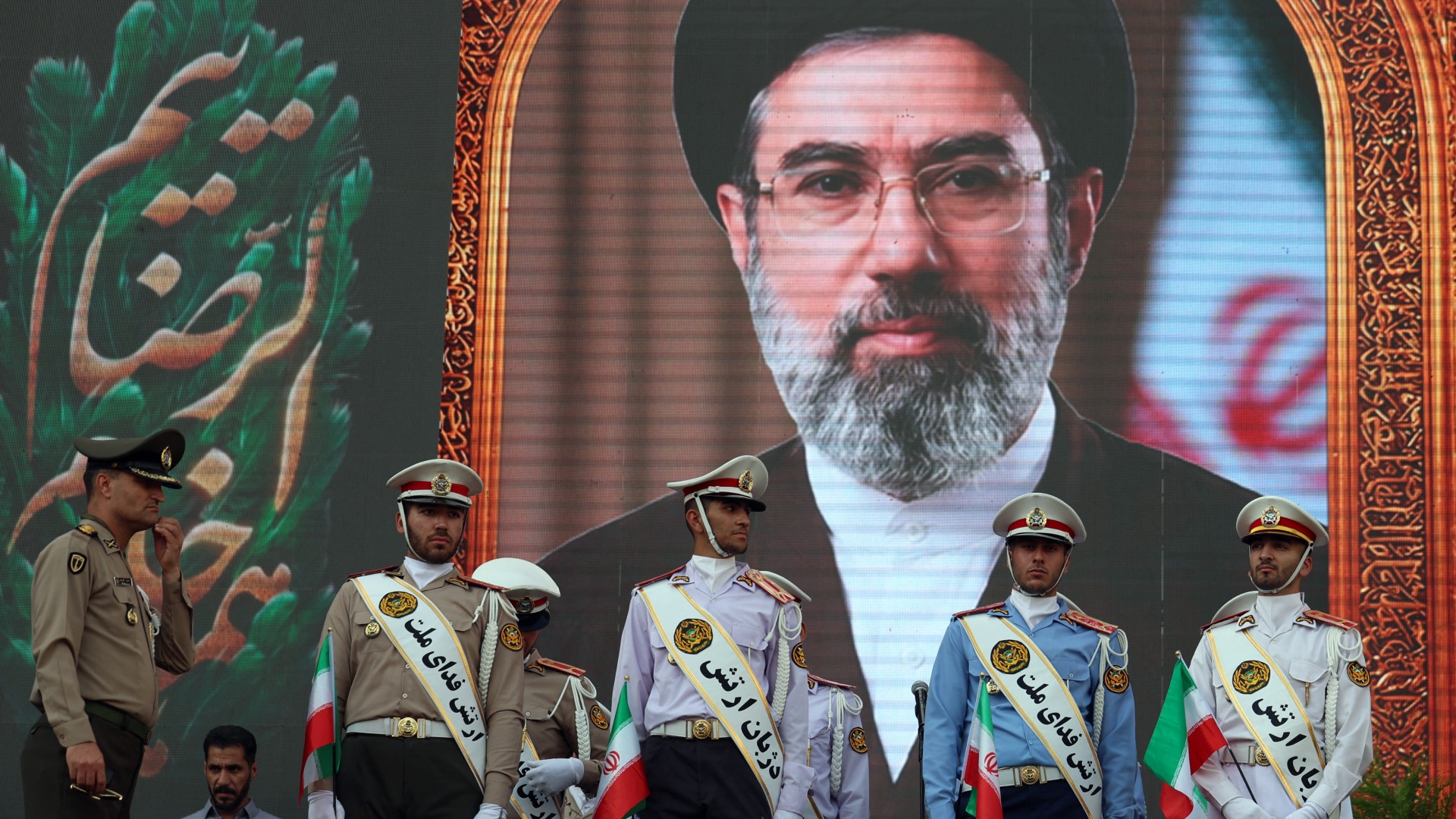
Hayman explains that Israel’s split strategic goals have been undermined by a structural shift in Iran’s leadership following the assassination of former supreme leader Ayatollah Ali Khamenei. After Mojtaba Khamenei succeeded his father, Iran’s leadership transitioned to a highly decentralized command structure that has made it far harder for allied strikes to decapitate the regime. He also points out that Tehran’s decision to close the Strait of Hormuz—a critical chokepoint through which 20% of the world’s oil and liquefied natural gas flows—gave it major global leverage, forcing the US and international community to shift their priorities to stabilizing energy markets.
The Israeli former official details that after the assassination of top Iranian leaders, the second phase of the allied campaign was meant to use an unprecedented new approach to destroy Iran’s nuclear program. “The ultimate ‘crown jewel’ – the destruction of the nuclear program – was not fully realised by the time the first lull took effect,” he wrote. Critically, Hayman adds that the new supreme leader Mojtaba Khamenei holds harder-line ideological views than his father, and does not feel bound by the elder Khamenei’s religious edict banning the development of nuclear weapons. “Iran has endured two major wars within a single year, and its leadership’s likely conclusion is that only nuclear deterrence can prevent the next war,” he argued.
Hayman’s findings do not stand alone: just one week before the release of his policy paper, The New York Times published a report based on classified US intelligence assessments that reached nearly identical conclusions. The assessments, completed earlier this month, contradict repeated public claims from the US and its allies that Iran’s military capabilities have been decimated. According to the Times’ reporting, Iran has regained operational access to 30 out of 33 missile sites located along the Strait of Hormuz, allowing it to once again threaten international commercial shipping and US naval vessels transiting the waterway.
Anonymous sources familiar with the intelligence assessment told the outlet that Tehran can already move mobile missile launchers within these sites to concealed locations, and in some cases launch missiles directly from the facility launch pads. The US intelligence document estimates that 70% of Iran’s mobile missile launchers remain operational across the country, and the country retains approximately 70% of its pre-war missile stockpile. US military analysts using satellite imagery and other surveillance tools also concluded that Iran has restored access to roughly 90% of its underground missile storage and launch facilities, most of which are now either fully or partially operational.
These findings directly contradict public statements from US President Donald Trump and other senior US administration officials, who have repeatedly claimed the offensive “decimated” Iran’s military and nuclear infrastructure. When asked to respond to The New York Times report, a White House spokesperson doubled down on the administration’s position, reiterating that Iran had been “crushed” and claiming anyone who believes Iran has rebuilt its military capabilities is either “delusional or a mouthpiece” for Iran’s Islamic Revolutionary Guards Corps.
The US and Israel launched the current conflict on February 28 with a massive opening wave of strikes across Iran. In response, Tehran launched retaliatory strikes targeting Israeli and Gulf Arab states and carried through on its threat to close the Strait of Hormuz, disrupting global energy supplies.