分类: world

  • EU envoy seeks more vessels to secure Hormuz navigation once the war in Iran ends

    EU envoy seeks more vessels to secure Hormuz navigation once the war in Iran ends

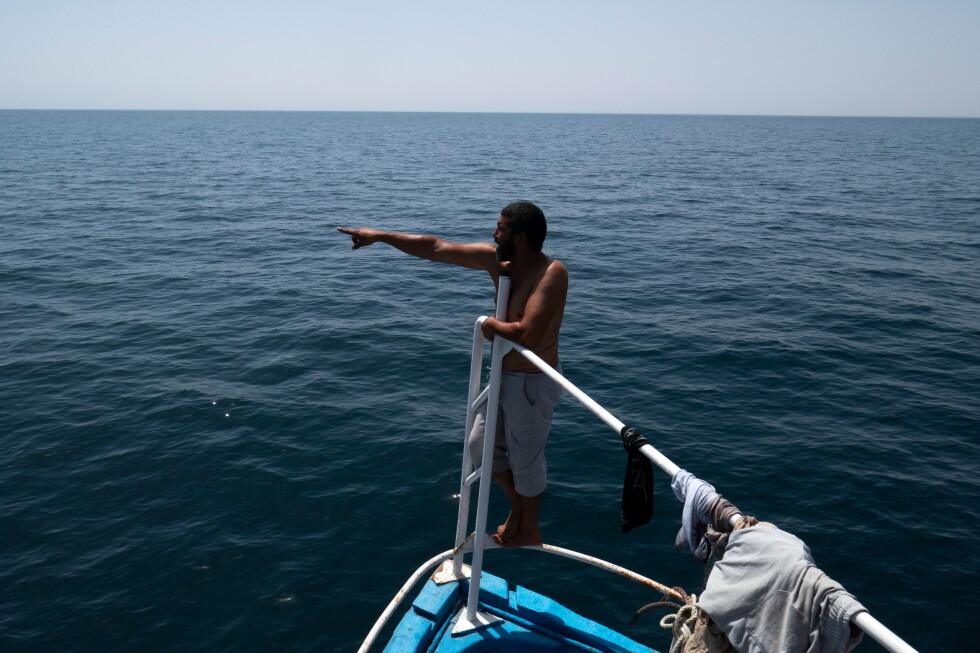
    During a gathering of European Union foreign ministers held in Limassol, Cyprus on Thursday, EU High Representative for Foreign Affairs Kaja Kallas outlined a key priority for the bloc’s maritime security strategy: securing unimpeded freedom of navigation through the Strait of Hormuz once the ongoing Iran war concludes. To meet this goal, Kallas said, the existing EU Red Sea naval mission will need a significant boost in resources, most notably a larger fleet of European vessels, alongside expanded operational scope.

    Currently, the EU maritime operation known as Aspides — a name drawn from the Greek word for “shield” — is tasked with defending commercial shipping against repeated attacks from Yemen’s Houthi rebel group. Operating with just three dedicated vessels at present, the mission is centered on Red Sea security, but the Strait of Hormuz, which sits at the southern outlet of the Red Sea, has emerged as a new critical priority for the bloc. Before the outbreak of the Iran war, the strait carried roughly 20 percent of the world’s total oil and gas supplies, making it one of the most vital global chokepoints for energy trade.

    Kallas confirmed that the bloc is weighing amendments to Aspides’ operational plans to accommodate new requirements, including the need for specialized ships capable of clearing naval mines from the waterway. When asked about the most critical need for the expanded mission, Kallas emphasized, “But it mostly needs more ships.” She also confirmed that one additional vessel will soon join the Aspides operation, though she declined to share further details on the ship’s origin or capabilities.

    This discussion comes months after the EU extended Aspides’ operating mandate until the end of February 2027, and approved an extra 15 million euros (equivalent to $17.5 million) in dedicated funding for the mission.

    Parallel to EU planning, France and the United Kingdom are also exploring the creation of their own independent naval task force to escort commercial vessels through the Strait of Hormuz after hostilities end. A senior EU official, speaking on condition of anonymity due to restrictions on discussing private negotiations, confirmed that the bloc has held early discussions about potentially merging the expanded Aspides mission with the proposed Franco-British force. However, the official noted that core logistics, particularly the question of which authority would command a combined task force, remain unresolved and require further negotiation.

    The disruption to Red Sea and Strait of Hormuz shipping triggered by the Iran war, which began on February 28, has already had significant economic impacts. Skyrocketing insurance premiums for transiting the waterway have pushed shipping costs sharply higher, to the point that it is currently cheaper for most commercial vessels to reroute around the southern tip of Africa rather than take the shorter Red Sea route. The EU official added that even after the Iran war ends, shipping costs are unlikely to return to pre-war levels for at least 12 more months. As a potential mitigation measure, EU officials are currently evaluating the option of offering state-backed insurance guarantees to shipping companies, which would help lower the elevated insurance premiums that have pushed costs so high.

    This report includes contributed reporting from Associated Press correspondent Sam McNeil in Brussels.

  • ‘Terrorist’ knife attack wounds 3 at Swiss train station: official

    ‘Terrorist’ knife attack wounds 3 at Swiss train station: official

    A chilling morning rush-hour stabbing at Switzerland’s Winterthur main railway station left three people injured on Thursday, with regional officials quickly classifying the assault as a confirmed terrorist act. The 31-year-old attacker, identified as Swiss-Turkish national Nesip Dedeler, was taken into custody by police within five minutes of the first emergency call, bringing a swift end to the incident that sparked widespread panic among commuters.

    Witnesses recount the attacker shouting the phrase “Allahu akbar” as he launched his stabbing spree in the busy transit hub, located just 25 kilometers northeast of Zurich in Switzerland’s sixth-largest city. Officials confirmed the attacker had a well-documented history of psychological instability, alongside previous connections to extremist ideology. More than a decade ago, Dedeler faced formal charges for violating Swiss laws banning the spread of Islamic State propaganda. Just two days before the attack, he had been admitted to a local psychiatric hospital after showing up at a nearby police station speaking incoherently. However, psychiatric staff cleared him for discharge on Wednesday, assessing he posed no threat to himself or the public – an assessment now confirmed to be fatally incorrect. “Why that decision was made is beyond our knowledge, but the assessment was obviously wrong,” stated Mario Fehr, the security chief for the canton of Zurich, during an immediate press briefing.

    Fehr made an explicit public designation of the incident as a terrorist attack, a position echoed by regional police commander Marius Weyermann. Weyermann told reporters that “it was clear from the scene that the motive for this act must be sought in the realm of radicalisation and extremism.”

    First responders received the initial emergency call at 8:28 a.m. local time (06:28 GMT), and officers had apprehended Dedeler by 8:33 a.m. All three of the attacker’s victims were men: aged 28, 43, and 52. The oldest victim suffered life-threatening stab wounds to the thigh and required urgent emergency surgery, while the 28-year-old sustained a leg wound and the 43-year-old was stabbed in the neck. Both younger victims have already been released from hospital, Weyermann confirmed.

    Mobile phone footage and witness accounts captured the chaotic scene that unfolded as commuters scattered for safety. The attacker, captured in distant footage wearing a black T-shirt and shorts, ran past a group of young schoolchildren on a group trip without stopping, adding to the shock of the incident. 65-year-old taxi driver Turhan Muslu, one of the first witnesses to the attack, told local Swiss daily Blick that he saw Dedeler rush down a station ramp and attempt to stab a commuter, who fought back aggressively until station security officers arrived to subdue the attacker. “It all happened so fast. If those security guards hadn’t arrived so quickly, I don’t know what would have happened,” Muslu said. Another anonymous witness told the outlet that the attacker shouted “Allahu akbar” five or six times in a visibly agitated state, sending children and bystanders fleeing across the main road in panic. “I still have goosebumps,” the witness added.

    Random targeted attacks on civilian passersby remain extremely rare in Switzerland, a fact that has amplified public shock across the small Alpine nation. Local residents and workers in Winterthur expressed widespread dismay at the violence that upended a routine Thursday morning. “This is not OK. We want peace,” Basharat Iqbal, a taxi driver who arrived at the station shortly after the attack, told AFP. “I was shocked.”

  • Israel ‘added to UN blacklist’ for sexual violence in conflict zones

    Israel ‘added to UN blacklist’ for sexual violence in conflict zones

    In a landmark and deeply controversial decision that has upended Israel-UN relations, the United Nations has placed Israel on its global blacklist for conflict-related sexual violence, Israel’s ambassador to the UN confirmed Thursday. The inclusion, which Israel has furiously condemned as politically motivated and factually baseless, comes after a wave of documented allegations from human rights groups and independent media outlets that Israeli security forces have perpetrated rape and systematic sexual abuse against Palestinian people since the outbreak of the latest Gaza conflict in October 2023.

    The Jerusalem Post, the first Israeli outlet to break news of the listing, confirmed that the Israeli Prison Service (IPS) will formally enter the 2026 iteration of the blacklist, while other Israeli state bodies remain under active review for potential inclusion in future updates. In immediate retaliation for the UN’s action, Israel has frozen all official relations with the office of UN Secretary-General António Guterres, according to the Jerusalem Post report.

    Danny Danon, Israel’s permanent representative to the United Nations, issued a scathing rebuke of the decision, framing it as an unfounded moral attack that equates Israel with notorious terrorist groups. “The UN Secretary-General has put Israel on the same blacklist as Hamas, ISIS, and the most depraved terrorist organizations in the world,” Danon told the outlet. “This is a moral disgrace and a complete collapse of any credibility left to the UN.”

    The blacklist operates as a formal annex to the UN Secretary-General’s annual report on Conflict-Related Sexual Violence (CRSV), a mechanism created to flag state and non-state actors with credible evidence of systematic patterns of rape and other sexual abuses committed during armed conflict. The annual CRSV report is customarily published each August, and entities added to the list typically remain listed for a minimum of one year. The 2025 iteration of the list already included 63 actors drawn from both state and non-state groups, including Palestinian militant group Hamas.

    The allegations against Israeli personnel stretch back months, following the mass detentions of Palestinians in the aftermath of October 2023. Multiple accounts from released detainees, independent human rights investigators, and Israeli advocacy groups have documented a pattern of severe abuses against Palestinian people held in Israeli custody, including sexual violence, torture, deliberate starvation, and cruel, degrading treatment. According to available reporting, at least 100 Palestinian detainees have died in Israeli custody since the outbreak of the conflict, with nearly half of those deaths occurring in military detention facilities and the rest in institutions run by the IPS.

    Dozens of released Palestinian detainees have provided on-the-record testimonies detailing the sexual abuse they endured during their detention. In December 2023, two detainees held in separate Israeli facilities told independent outlet Middle East Eye that they had survived violent sexual assault at the hands of Israeli personnel. One detainee recalled being dragged to a secluded room, blindfolded, and assaulted for nearly an hour, during which he was kicked, beaten, and raped with an object. The second detainee reported being raped by trained military dogs.

    These testimonies align with broader findings from official UN investigations: a UN inquiry released last year formally accused Israel of using sexualized torture and rape as a deliberate method of war, designed to “destabilize, dominate, oppress and destroy the Palestinian people.” Prominent Israeli human rights organization B’Tselem has gone further, describing the entire Israeli prison system as a “network of torture camps” where detainees face repeated sexual violence, including organized gang assaults carried out by groups of prison guards and soldiers.

  • Villas, cars and cash: Italy seizes dead Mafia mobster’s millions

    Villas, cars and cash: Italy seizes dead Mafia mobster’s millions

    In a major blow to the remnants of Sicily’s infamous Cosa Nostra syndicate, Italian anti-mafia investigators have seized cash, business holdings, and high-value assets totaling more than €200 million (£175 million) tied to the criminal network of the late mafia boss Matteo Messina Denaro. All recovered assets are confirmed to be illicit proceeds from more than 40 years of transnational drug trafficking orchestrated by Denaro, who once served as the presumed top leader of Cosa Nostra.

    The operation was announced by law enforcement officials during a press briefing in Sicily on Thursday, alongside the release of dramatic footage showing masked officers — some equipped with full riot gear — storming locked doors, climbing exterior walls, and executing raids across a string of sprawling luxury villas nestled behind palm-lined manicured lawns. The seizure caps a years-long global manhunt and investigation that followed the high-profile arrest and death of Denaro in 2023.

    Denaro evaded law enforcement for 30 years while on the run, ultimately being captured last year as he exited a private medical clinic where he was receiving treatment for late-stage cancer. He died in prison custody just months after his arrest, bringing an end to the decades-long search for one of Italy’s most wanted fugitives.

    Before his capture, Denaro had already been sentenced to life imprisonment in absentia for a litany of brutal crimes, including multiple high-profile murders. Most notoriously, he was convicted of orchestrating the 1992 assassinations of two leading anti-mafia prosecutors in separate bomb attacks carried out just weeks apart. He was also found guilty of the kidnapping and murder of a 12-year-old boy, the son of a mafia associate who turned state witness. After holding the child captive for two years, Denaro ordered the boy to be strangled to death, and his body was dissolved in acid to prevent it ever being recovered — a horrific detail that shocked the Italian public.

    The most recent asset seizure operation was built on a years-long investigation into the Cosa Nostra’s shadowy money trail, which stretched across multiple jurisdictions beyond Italy: investigators tracked illicit funds through Spain, Switzerland, and the Caribbean tax haven of the Cayman Islands. To date, three individuals with direct ties to Denaro’s network have been taken into custody, and eight commercial enterprises — most prominently several real estate firms found to be laundering illicit proceeds — have been identified for seizure and winding down. High-value luxury items confiscated include high-end sports cars such as a Porsche, alongside undeclared cash stashes hidden across the properties.

    Giovanni Melillo, head of Italy’s National Anti-Mafia Prosecutor’s Office, emphasized that the operation carries far more weight than just the value of the recovered assets, calling it “strategically significant” for Italian national security. Speaking to reporters, Melillo explained that the seizure is a critical step to stop the remaining members of Denaro’s network from rebuilding the powerful criminal organization that operated unimpeded for decades. “Seizing this wealth means continuing the disintegration process [of the criminal group] and blocking efforts to re-establish structures capable of projecting the full intimidating power and economic and social influence of the Cosa Nostra on a global scale,” he said.

    Italy’s finance police, the Guardia di Finanza, which led the on-the-ground raiding work, revealed that the investigation was first triggered by a suspicious activity report from Andorran financial authorities, who flagged an Italian woman holding extraordinary unexplained financial resources. Investigators later confirmed the woman was married to a major drug trafficker with close direct ties to both the Cosa Nostra and Denaro personally. That initial lead opened up a web of connections that spread to half a dozen other countries, requiring cross-border coordination between law enforcement agencies.

    In total, more than 150 officers were deployed across the global operation, which utilized cutting-edge investigative tools: drones and thermal imaging scanners were used to locate hidden caches of cash stashed on properties, while specialized digital forensics experts traced illicit funds stored in digital wallets and cryptocurrency accounts.

    While Italian media has dubbed the massive haul “Denaro’s drugs trove,” law enforcement officials have acknowledged that the €200 million recovered represents only a small fraction of the total illicit wealth accumulated by Denaro’s network over four decades. Much of the organization’s fortune has already been laundered and reinvested in legitimate businesses across the globe, meaning investigators will continue pursuing remaining assets for years to come.

  • Italy on red alert as heatwave bakes Europe

    Italy on red alert as heatwave bakes Europe

    An unprecedented early-season heatwave, driven by a stationary high-pressure heat dome, has engulfed Western Europe, forcing governments across the continent to activate emergency heat protocols and leaving millions of residents and visitors grappling with sweltering conditions. Italy became the latest nation to roll out urgent safety measures Thursday, when civil protection authorities issued the country’s first red heat alert of 2024 for five major urban centers, including the capital Rome, as well as Florence, Bologna, Brescia and Turin.

    The alert, the highest level of heat warning in Italy’s national system, cautions that even otherwise healthy people engaging in outdoor activity face significant risks of adverse health impacts. For tourists flocking to Rome’s iconic landmarks, the 32-degree Celsius temperatures recorded Thursday have forced drastic adjustments to sightseeing plans. Spanish visitor Nana Martinez Garcia told reporters she and her travel companion have prioritized staying hydrated and sticking to shaded routes whenever possible. “We’re sweating a lot,” Garcia explained outside the Colosseum. “We’re drinking a lot of water so we can cool down.” Her friend Maria Angeles Mellinas Tello added that the pair seek out shade at every opportunity to avoid heat exhaustion. American tourist Josh Ren shared that he restructured his entire itinerary to beat the heat, waking before dawn to explore outdoor sites, then retreating to air-conditioned museums or restaurants during the midday peak when temperatures climb highest.

    Italy had avoided the most extreme temperatures earlier in the week, but the heat dome has shifted south, bringing soaring conditions to the Italian peninsula. The heatwave first shattered long-standing temperature records across Britain and France earlier this week, with both countries logging their hottest May temperatures in recorded history. Tragically, the extreme heat has already claimed lives: authorities have linked multiple fatalities in both Britain and France to the heatwave, most occurring in drowning incidents as people sought relief from sweltering conditions in open water.

    While the most intense heat has begun to ebb in Britain, France remained in the grip of extreme temperatures Thursday. In the southwestern Landes region, extreme heat forced a local school to close early for the week, after corridor temperatures spiked to 53 degrees Celsius on Tuesday, leaving multiple students ill. Landes official Florian Deygas confirmed that several pupils experienced severe heat-related illness, including one case of fainting and vomiting. National meteorological service Meteo France maintained an orange heat alert for Paris, where forecasters predicted temperatures would hit 34 degrees Celsius following the record-breaking heat that baked the country earlier that week.

    The ongoing heat has also disrupted major sporting events underway in the French capital. At the Roland Garros French Open tennis tournament, located on the outskirts of Paris, competing players have struggled to cope with oppressive court conditions, with one athlete collapsing mid-venue after finishing a grueling, multi-hour match. Tournament maintenance staff have adopted extraordinary measures to keep the clay courts manageable, spraying water between every set and fully flooding the surface after daily play concludes to rehydrate the layered clay. “We flood the courts, we soak them, so as to replenish with water the different layers that make up the clay,” explained head maintenance worker Philippe Vaillant.

    Further south, Spain has also rolled out heat alerts for regions in the country’s northeast and north, forecasting temperatures could climb as high as 37 degrees Celsius on Friday. National weather agency Aemet noted in a social media statement that current temperatures are “extraordinarily high” for the month of May, matching the extreme heat levels normally not seen until the height of summer. The agency forecasts a noticeable drop in temperatures across the country next week as the heat dome begins to break down.

    Climate scientists have repeatedly emphasized that human-caused climate change is amplifying the frequency and intensity of extreme weather events globally, including early-season heatwaves, droughts, and catastrophic flooding, a trend that is expected to continue without dramatic reductions in greenhouse gas emissions.

  • Aid supplies reach heart of Congo’s Ebola outbreak as WHO head travels to Kinshasa

    Aid supplies reach heart of Congo’s Ebola outbreak as WHO head travels to Kinshasa

    A new shipment of life-saving medical supplies donated by the European Union has arrived in Bunia, the northeastern Congolese town at the center of an unprecedented outbreak of the rare Bundibugyo strain of Ebola, arriving as frontline medical teams battle acute equipment shortages, community distrust, and persistent violence from armed groups across the volatile region.

    A white cargo plane touched down at Bunia’s airport early Thursday, unloading pallets of masks, medical gloves, protective boots, and antiviral medications—all supplies that local health facilities have reported running critically low on for weeks. United Nations-marked forklifts moved the sealed aid crates onto waiting trucks, bound for treatment centers across Ituri province, the global epicenter of the outbreak that has already spread beyond Congo’s borders.

    On-the-ground reporting from the Associated Press reveals the stark gaps in the current response: emergency treatment centers in Bunia sit largely understaffed and under-resourced, while clinicians in the nearby town of Bambu have been forced to use expired surgical masks when caring for patients showing classic Ebola symptoms.

    At least three targeted attacks on Ebola treatment facilities have been recorded in Ituri in recent weeks, sparked by local resident protests over public health measures that conflict with traditional community burial practices. These attacks have amplified the already extreme risk facing local and international health workers deployed to contain the spread.

    Jérôme Kouachi, the lead of emergency operations for UNICEF in the Democratic Republic of Congo, confirmed to AP that this initial aid delivery is the first of multiple scheduled shipments that will roll out over the next eight days, part of a scaled-up international response to the crisis.

    World Health Organization Director-General Tedros Adhanom Ghebreyesus announced Thursday he is traveling directly to Congo to assess containment efforts on the ground. The Bundibugyo strain at the center of the outbreak has no officially approved vaccine or targeted treatment, and the WHO previously declared the event a Public Health Emergency of International Concern, the body’s highest alert level, to accelerate global aid mobilization.

    Since Congolese authorities first declared the outbreak on May 15, officials have confirmed more than 1,000 suspected cases and at least 220 deaths. But public health experts warn the virus circulated undetected for weeks before the official declaration, meaning the actual caseload is far higher than official counts. The outbreak has already spilled across Congo’s northern border into Uganda, where health officials have confirmed seven cases and one fatality. On a small positive note, Congolese authorities announced Wednesday that the first confirmed survivor of the strain has been discharged from a treatment facility after recovering.

    Congo’s Foreign Minister Thérèse Kayikwamba Wagner framed the response effort earlier this week as a high-stakes race against time: “We are trying to catch up,” she said.

    A new report from international humanitarian organizations released Thursday outlines the wide range of systemic barriers slowing the response, from customs bureaucracy that delays aid shipments, to inadequate cold storage for medical supplies, to poorly maintained rural roads and spotty telecommunications networks that leave remote communities cut off from care.

    Tedros issued an urgent appeal this week for an immediate ceasefire across all conflict zones in eastern Congo, a region that has been plagued by interlinked insurgencies and ethnic violence for decades. “We cannot build community trust or isolate the sick while bombs are falling,” he said.

    Ituri province, located in northeastern Congo just kilometers from the Ugandan border, has been overwhelmed by repeated attacks from the Allied Democratic Forces, a rebel faction affiliated with the Islamic State, as well as a coalition of ethnic militias. Just two months ago, ADF fighters killed at least 40 local residents and burned dozens of homes in a series of raids across the province.

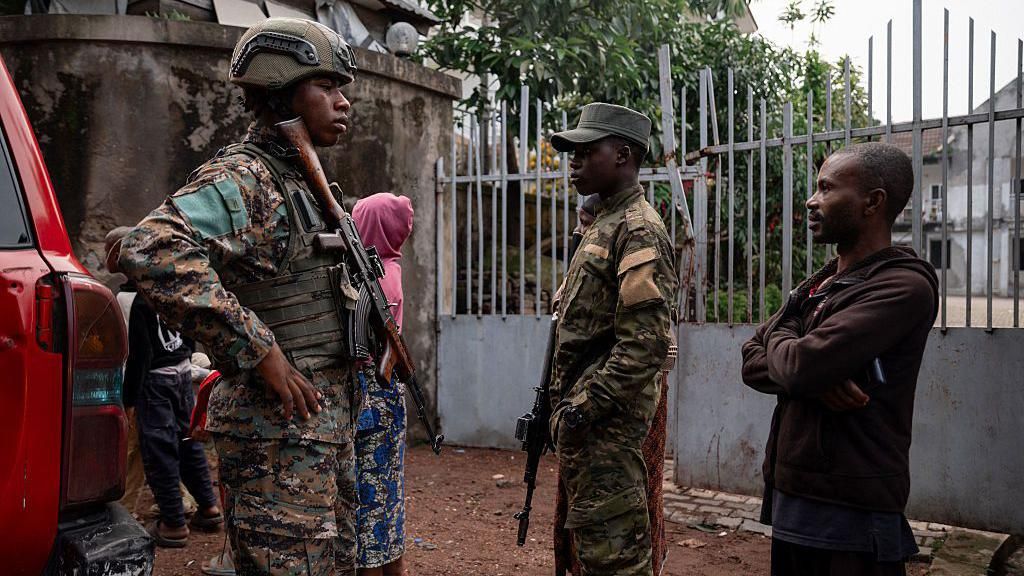
    The outbreak has now spread south from Ituri to two additional Congolese provinces, North Kivu and South Kivu, where the Rwanda-backed M23 rebel group controls major population centers including Goma and Bukavu. Rebel officials have already confirmed two Ebola cases within areas under their control. Goma’s main international airport, a critical logistics hub for all humanitarian aid entering eastern Congo, has remained closed since January 2025, when M23 forces seized control of the city.

    Decades of persistent conflict in eastern Congo have created one of the world’s worst humanitarian crises, with more than 7 million people internally displaced across the region, leaving millions more vulnerable to the spread of the virus with limited access to healthcare.

    This report was contributed by Ope Adetayo from Lagos, Nigeria.

  • Jury considers verdict for man accused of plotting Taylor Swift concert attack

    Jury considers verdict for man accused of plotting Taylor Swift concert attack

    A jury in Austria has begun closed-door deliberations to reach a verdict in the high-profile trial of two young men linked to the Islamic State (IS) terrorist group, one of whom has confessed to plotting a deadly mass attack on a 2024 Taylor Swift concert in Vienna.

    In accordance with Austria’s strict privacy regulations for criminal defendants, the primary accused, a 21-year-old Austrian national, is publicly identified only as Beran A. He has publicly admitted to two core charges: plotting the jihadist attack on the sold-out Taylor Swift shows at Vienna’s Ernst Happel Stadium, and formal membership in a designated terrorist organization. However, he has refuted additional charges connected to an alleged secondary plot targeting the Islamic holy city of Mecca in Saudi Arabia.

    Beran A stands trial alongside 21-year-old Slovakian national Arda K, who prosecutors allege was a fellow member of the same IS-aligned cell. Court records confirm Arda K was not involved in planning the Taylor Swift attack, but is accused of complicity in the broader Mecca plot.

    The plot was foiled just hours before the first of three scheduled Swift concerts, after counterterrorism authorities received a critical tip from the U.S. Central Intelligence Agency (CIA) that led to Beran A’s arrest. With the threat confirmed, event organizers canceled all three performances, disappointing nearly 200,000 ticketed fans and leaving Swift herself devastated. In a subsequent documentary about her record-breaking Eras Tour, Swift shared that she learned of the planned attack mid-flight en route to Vienna, describing the moment as a near-miss that avoided an outright “massacre situation.”

    Prosecutors laid out their case outlining how Beran A became radicalized online and swore a formal oath of allegiance to IS. Court documents show he attempted to illegally obtain weapons including a fully automatic machine gun and a hand grenade, though those efforts ultimately failed. He also allegedly attempted to build an explosive device using step-by-step instructions pulled from an IS propaganda video posted to public online platforms.

    A court-appointed psychiatric expert, Peter Hoffmann, testified during the trial that Beran A shows no clinical signs of mental illness, and told the court there is “no psychiatric explanation” for his radicalization into violent extremism.

    In closing arguments, lead prosecution counsel pushed the jury to return guilty verdicts on all charges against both defendants, noting Beran A’s own admissions of guilt for the core Taylor Swift plot charges. Prosecutors also emphasized that the two men acted as accomplices in planning multiple additional attacks across Mecca and other unnamed cities months before the Vienna plot.

    That broader plot links the two defendants to Hasan E, a former high school classmate who is currently in Saudi Arabian custody facing charges for a stabbing attack that wounded five people, including a security guard, in Mecca. Both Beran A and Arda K admit they traveled to Istanbul and Dubai respectively as part of the early plot planning, but both deny providing material support to Hasan E for his subsequent attack.

    The prosecutor told the jury the trial presented a critical opportunity to send a clear message to would-be terrorists: “anyone who prepared a terrorist attack should face consequences.”

    Beran A’s defense attorney, Anna Mair, acknowledged her client has admitted guilt to the crimes he committed, but argued he should only face penalties for the acts he actually took part in. She told the court Beran A was not the ringleader of the cell, and had been manipulated by more radicalized actors. “My client is not innocent; he has committed serious crimes. But you can only convict him for what he has done,” Mair stated.

    Both young men offered apologies to the court during the trial. Beran A expressed remorse for his actions, while Arda K also said he regretted the plot ever progressed so far, asking the jury for a chance to eventually “integrate into society” if convicted.

    If both defendants are found guilty on all charges filed against them, they face a maximum sentence of 20 years in prison.

  • Man arrested after three injured in stabbing at Swiss train station

    Man arrested after three injured in stabbing at Swiss train station

    A violent stabbing incident at a major Swiss train station has left three people hospitalized and triggered a large emergency response, with law enforcement confirming the arrest of a local suspect on Friday morning. The attack unfolded just after 8:30 a.m. local time at Winterthur train station, located roughly 15 miles northwest of Switzerland’s largest city, Zurich, according to official police statements.

    Authorities confirmed that all three victims are Swiss citizens, aged 28, 43, and 52 respectively. All three were rushed to nearby medical facilities for treatment following the assault, which was carried out with an unspecified bladed weapon. The suspect taken into custody at the scene is identified as a 31-year-old Swiss man, and police have confirmed that no other assailants are being sought as of the latest update. Investigators are still working to establish a clear motive for the attack, with no conclusions drawn as of press time.
    Multiple eyewitness accounts have shed light on the chaotic scene of the incident. A worker in an adjacent office building told local reporters that he heard the suspect shout “Allahu Akbar” — Arabic for “God is greatest” — just moments before launching the knife attack on bystanders. At the time of the assault, a group of school children was passing through the station concourse, and quick action from a school teacher prevented the children from being caught up in the violence. Local media reports note the teacher positioned themselves between the suspect and the students, shielding them from harm.
    A taxi driver who was waiting at the station told the leading Zurich-based daily *Neue Zürcher Zeitung* that the attacker moved through the station’s underground underpass, targeting multiple people as he walked. Photographs published by multiple Swiss news organizations show significant sections of the station perimeter and surrounding areas cordoned off by law enforcement in the hours after the attack, as forensics teams worked to collect evidence at the scene. No further updates on the condition of the three injured victims have been released by authorities as the investigation continues.

  • Chilean American stolen as a baby reunites with his mom and gets a second chance at family

    Chilean American stolen as a baby reunites with his mom and gets a second chance at family

    Thirty-six years after he was trafficked out of Chile for an illegal international adoption, Kyle Adler — born Marcos Antonio Navarrete — has finally stepped into the arms of the mother who never stopped wondering where her baby went. His decades-long journey of identity discovery, from a comfortable upbringing in a Chicago suburb to an emotional reunion in Chile earlier this year, shines a long-overdue spotlight on the thousands of stolen children separated from their families during Augusto Pinochet’s 17-year military dictatorship, and the ongoing fight for accountability that continues today.

    Adler was just an infant when he was taken from his birth mother, Ana Maria Navarrete, a 19-year-old single working woman living in the southern Chilean coastal city of Coronel. Unable to afford housing that would allow her to care for her newborn full-time, Navarrete arranged for a local caregiver to house the baby while she worked night shifts at a local fish shop, visiting him every time her schedule allowed. But one day, she was told the baby had been placed with an American couple by a local priest, who claimed the infant was “in need of a family.” No one has ever been held accountable for his disappearance, and a police investigator later confirmed his case was tied to a sprawling illegal adoption ring that counted adoption agencies, immigration officials, judges, medical workers and nurses among its complicit members. For decades, Navarrete grieved her lost son, eventually abandoning hope of ever seeing him again, calling the years after his abduction the worst of her life.

    Adler, for his part, was adopted by a loving American couple when he was 9 months old in 1987, and raised in an affluent Chicago suburb. He describes his adoptive parents as kind, and says he has no doubt they had no knowledge of the illegal circumstances of his adoption; the couple passed away in 2022, after initially hesitating to support Adler’s search for his biological roots. As an adult, Adler achieved professional success, but still felt a hollow lack of meaning that pushed him to pursue answers about his origins. “I knew I was adopted and at that point, I was just like, I need to find my mom,” he explained.

    His search for answers gained momentum in 2017, when a Google search for “Chilean birth mom search” led him to *Nos Buscamos*, a Chilean nonprofit that tracks cases of stolen children from the Pinochet era. Founded by Constanza Del Rio, the organization maintains a public database of thousands of stolen adoption cases, and has helped hundreds of survivors reconnect with their birth families. According to Chilean government estimates, more than 20,000 children were stolen from their families between 1973 and 1990, when Pinochet’s dictatorship ruled the country. Human rights lawyer Jimmy Lippert Thyden González, himself a survivor of illegal adoption, explains that the campaign of child theft deliberately targeted low-income and Indigenous Chilean families as part of a state-backed effort to eliminate marginalized populations.

    “It was an effort to eliminate and eradicate the poor class. It was a way of eradicating the Indigenous population, the uneducated population,” Lippert Thyden González said. Three years ago, he filed a lawsuit against the Chilean government over the stolen adoptions, and plans to take the case to the Inter-American Court of Human Rights to push for nationwide accountability. He also founded Grafting Hope, a nonprofit that educates U.S. policymakers and advocates for survivors of fraudulent adoption.

    Within three months of Adler connecting with *Nos Buscamos*, Del Rio confirmed his origins and arranged an initial virtual meeting with Navarrete. The revelation that his adoption had been illegal sent Adler into a years-long identity crisis that required intensive therapy, but it also steeled his resolve to pursue a full confirmation of his roots. Last year, he took a free DNA test provided by MyHeritage, a global genealogy company that partners with *Nos Buscamos* and another nonprofit, Connecting Roots, to provide free testing for Chilean adoption survivors. The test confirmed an immediate match with Navarrete, who now lives in Santiago.

    Connecting Roots founder Tyler Graf, himself a stolen adoptee who reunited with his own birth mother decades after his abduction, traveled with Adler to Chile for the long-awaited in-person reunion. Graf now devotes his work to reconnecting surviving stolen children and their families, saying, “Now it’s time to mend these families and bring everyone back home so they can see where they came from.”

    The emotional reunion took place in Chile on Valentine’s Day 2025, two days after Navarrete’s 56th birthday. When Adler stepped out of the international arrivals gate, tears flowed freely as Navarrete ran to embrace her son, who had grown into a 6-foot-tall man with dark hair. Both wore white to mark the joyous occasion, as Adler bent to press his face into his mother’s hair. Over the following week, the pair visited Coronel, the beach where Navarrete once dreamed of taking her son, the hospital where Adler was born, and the home where he was taken from as an infant. They recovered a copy of Adler’s original birth certificate, and Adler met three of his four biological siblings (he had already connected with one in Miami earlier). He brought Navarrete mementos from his life in the U.S.: framed copies of his college diploma, childhood photos, and the tiny baby shoes his adoptive parents had saved for decades.

    Though the joy of reunion was profound, the pain of 36 years apart lingers. Adler does not speak fluent Spanish, so the pair rely on translation help from Connecting Roots and language apps to communicate, and Adler returned to his home in Miami after the reunion. Navarrete said the week together left her grieving the loss all over again: “It took me so long to find him. And then to spend a week together only to have him leave, it’s like I found him but I’ve now lost him all over again.” Still, the pair are already planning a second reunion this December, and Adler is working to process the decades of fractured identity. For Navarrete, the reunion is just the first step: she is working with legal teams to push for criminal charges against everyone complicit in the theft of her son, saying she wants justice not just for herself, but for the life she and her son lost together.

    For Adler, the journey has brought a new sense of wholeness he never felt before. “It’s been so eye-opening to see who my people are,” he said. “I feel the love, I feel the compassion, the care — it’s nice to have a family again.” He now hopes his mother can let go of the trauma that defined her life for 36 years, telling her: “I’m not just the son that you lost, I’m the son that you found. I’m back to being your son.” The Chilean government has not yet responded to AP requests for comment on the case or broader efforts to address stolen adoption cases from the Pinochet era.

  • US, Iran trade strikes in most serious clash since truce began

    US, Iran trade strikes in most serious clash since truce began

    Four months after a fragile ceasefire paused open hostilities between the United States and Iran, a new round of mutual strikes has shattered the relative calm, triggering fresh fears of a wider regional conflict and roiling global energy markets already on edge over the future of the Strait of Hormuz.

    The escalation unfolded Thursday, marking the most serious confrontation between the two adversaries since the truce took hold in April, and came as violence surged along the Lebanon-Israel border, where Iran-backed Hezbollah has been locked in continuous low-intensity conflict with Israeli forces. The clash also drew in Kuwait, a key US ally in the Gulf, which activated its air defense systems to intercept incoming fire shortly after the exchange of attacks began.

    According to Iran’s state-run broadcaster IRIB, Iranian forces opened fire on four commercial vessels attempting to transit the Strait of Hormuz, the strategic waterway that Iran has fully blockaded since the war began in late February, when US and Israeli forces launched a coordinated attack on Iranian targets. In response, a US official confirmed that American military forces targeted an Iranian ground control station located in the port district of Bandar Abbas, Iran’s primary Gulf shipping hub.

    Minutes after the US strike, IRIB quoted Iran’s Islamic Revolutionary Guard Corps (IRGC) confirming that it had retaliated against the American air base that launched the original attack. The IRGC declined to publicly disclose the base’s location, but the confirmation of a counterstrike aligned with Kuwait’s announcement that it was responding to an incoming attack on its territory, which hosts large contingents of US military personnel.

    Iranian foreign ministry spokesman Esmaeil Baqaei issued a formal condemnation of the US action, framing the strikes as a clear violation of the April ceasefire and emphasizing that Iran would take “all necessary measures” to protect its territorial integrity and national sovereignty. The US pushed back on this framing, with an unnamed official characterizing the American strike as a purely defensive action taken to preserve the terms of the existing truce.

    The latest escalation has cast deep uncertainty over the stuttering diplomatic negotiations aimed at reaching a permanent peace deal to end the conflict that began on February 28. While neither Washington nor Tehran has signaled a willingness to return to full-scale open war, the clash has reinforced fears that the fragile truce could collapse entirely. For ordinary Iranians, that uncertainty has become a constant part of daily life. “I feel like nothing is certain yet,” said Amir, a 27-year-old software developer based in Tehran, speaking before Thursday’s strikes. “The daily question is: Will there be missile strikes tonight?”

    At the heart of the ongoing diplomatic talks is the future of the Strait of Hormuz, the waterway that carries roughly a fifth of global oil and gas supplies. The Iranian blockade has cut off that key transit route, leaving global energy markets grappling with constrained supplies and volatile pricing. Thursday’s strike news sent oil prices jumping higher, erasing most of the gains from the previous session, which had risen on growing optimism that a peace deal to reopen the strait was close.

    The diplomatic wrangling over Hormuz took a dramatic turn this week when US President Donald Trump issued an unusual threat against Oman, another Gulf nation that has served as a neutral mediator in the conflict and has itself been targeted by Iran in recent months. When asked about a proposed short-term arrangement that would let Oman and Iran jointly manage transit through the strait, Trump rejected the idea outright. “No, the strait is going to be open to everybody,” Trump said. “It’s international waters and Oman will behave just like everybody else or we’ll have to blow them up.”

    Baqaein condemned the threat against Oman, calling it “a worrying sign of the normalisation of anarchy and intimidation in international relations.” The verbal threat came one day after the US Treasury Department announced new sanctions against Iran’s Persian Gulf Strait Authority, the new Tehran-led agency established to collect transit fees from ships passing through the blockaded waterway.

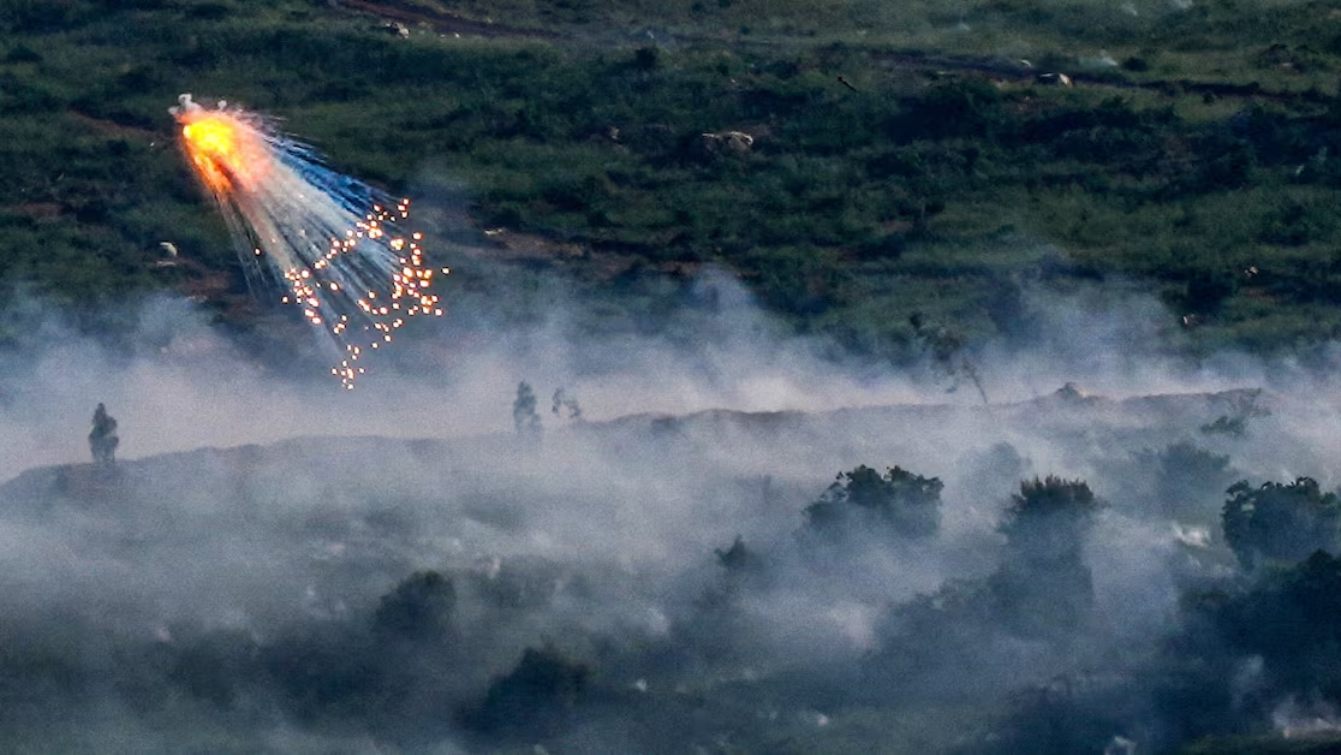
    Beyond the Gulf, the violence has also escalated sharply in Lebanon, where a separate ceasefire between Israel and Hezbollah has failed to stop continuous skirmishes that have intensified over the past week. On Thursday, the Israeli military launched new airstrikes against Hezbollah infrastructure around the southern Lebanese city of Tyre, a day after it issued a sweeping order declaring all territory south of the Zahrani River — roughly 25 miles from the Israeli border — an active combat zone and ordering all civilian residents to evacuate immediately.

    The evacuation order, the first large-scale such warning since the April 17 ceasefire between Israel and Hezbollah went into effect, interrupted Eid al-Adha celebrations for thousands of Lebanese families in the region. Lebanon’s official National News Agency reported multiple airstrikes targeting residential areas in the city of Nabatieh, causing what it described as “huge destruction” to civilian property.

    As of Wednesday, Lebanon’s health ministry reported that the total death toll from the conflict that began on March 2 stands at 3,269 people. On Thursday, the Israeli military confirmed that one additional soldier was killed in a Hezbollah drone attack along the Lebanese border the previous day, bringing the total number of Israeli troops killed in the conflict with the Iran-backed group to 24. Iranian officials have insisted that any final peace deal between Tehran and Washington must also include a permanent ceasefire and resolution for the Lebanese front.