分类: world

  • Russian drone launched against Ukraine crashes in Romania, injuring 2

    Russian drone launched against Ukraine crashes in Romania, injuring 2

    BUCHAREST, Romania — A stray Russian drone, launched as part of a wave of overnight assaults on neighboring Ukraine, has crashed into a residential apartment building in eastern Romania, leaving two people injured, Romanian national authorities confirmed in an official update Friday.

    According to a public statement released by Romania’s Defense Ministry, the unmanned aerial vehicle was tracked by national air defense radar systems after it entered Romanian sovereign airspace, before impacting the roof of the multi-story residential structure in the Danube River city of Galati. The collision triggered a large blaze that spread through sections of the building, forcing emergency responders to evacuate dozens of residents from the affected block. Two people were treated for minor injuries stemming from the incident.

    Galati, located along Romania’s eastern border, sits on the Danube just west of the junction where the borders of Moldova and Ukraine meet, making it a city within close proximity to active frontline fighting in Ukraine’s eastern and southern territories. Local law enforcement units, national emergency response teams and military officials quickly deployed to the crash site to secure the area and extinguish the fire.

    In response to the incursion, the Romanian military activated its air defense network, scrambling two F-16 fighter jets and a military helicopter, all of which received authorization to engage any airborne threats detected during the operation. Local authorities also pushed out emergency alert notifications to residents in the impact zone to advise them of safety protocols.

    The incident comes amid a sustained Russian campaign targeting Ukraine’s critical national infrastructure, with Moscow relying heavily on long-range ballistic missiles and large drone swarms to degrade Ukraine’s power grid and strike population centers across the country. Ukrainian officials have warned that they are preparing for a new round of intensifying bombardments in the coming weeks, as they continue to push Western allies for accelerated deliveries of advanced air defense systems.

    On Thursday, Ukrainian President Volodymyr Zelenskyy told reporters during an official visit to Sweden that he is putting direct pressure on the United States to speed up and expand shipments of Patriot air defense missiles, which are designed to intercept incoming long-range Russian projectiles. Zelenskyy warned that current delivery volumes are falling far short of Ukraine’s critical battlefield needs, pointing to the ongoing conflict between Israel and Iran-backed Hamas in the Middle East that has diverted U.S. military stockpiles and stretched global weapons supplies.

    “We are being very persistent, and I believe the United States must act quicker,” Zelenskyy told journalists.

    The rising risk of regional escalation has drawn urgent warning from top United Nations officials. U.N. Secretary-General António Guterres told the U.N. Security Council this week that the steady escalation and intensification of attacks in Ukraine risks spinning out of control, with potentially severe “unknown and unintended consequences” for global security. Guterres added that civilian casualty numbers in 2024 have already outpaced the same four-month period in each of the past three years of the full-scale conflict. He repeated the U.N.’s call for urgent diplomatic engagement, immediate action to de-escalate hostilities, and the implementation of a full and unconditional ceasefire to end the bloodshed.

  • US labels two Brazilian crime groups as terrorist organizations

    US labels two Brazilian crime groups as terrorist organizations

    In a move that has sparked diplomatic friction between the two Western Hemisphere nations, the United States formally added two of Brazil’s most powerful criminal factions—Comando Vermelho (Red Command, commonly known as CV) and Primeiro Comando da Capital (First Capital Command, PCC)—to its official list of designated terrorist organizations on Thursday, a step Brazilian authorities have openly rejected.

    U.S. Secretary of State Marco Rubio released an official statement defending the decision, arguing that the two syndicates rank among the most violent criminal enterprises operating in Brazil. Rubio emphasized that the groups’ sprawling illicit networks and influence do not stop at Brazil’s national borders, but stretch across the broader Latin American region and reach directly into U.S. territory. According to Rubio, CV and PCC collectively count thousands of members across their ranks, and have repeatedly planned and carried out violent, deadly attacks targeting Brazilian law enforcement officers, government officials, and innocent civilian bystanders.

    Brazilian President Luiz Inacio Lula da Silva has openly pushed back against the U.S. designation, which carries significant legal ramifications for any entities or individuals connected to the groups under U.S. law. The designation has also become a flashpoint in Brazil’s upcoming presidential election: former president and conservative frontrunner Flavio Bolsonaro, Lula’s main challenger in the October vote, has publicly backed the U.S. move. Earlier this week, Bolsonaro held a high-profile meeting with U.S. President Donald Trump during his visit to the U.S.

    The terrorist designation of transnational criminal gangs marks a continuation of a policy the Trump administration implemented immediately after taking office in January 2025. That same year, the administration applied the same terrorist label to two of Mexico’s most powerful drug cartels, the Sinaloa Cartel and Jalisco New Generation Cartel. From the Trump administration’s perspective, the terrorist classification unlocks new legal authority to expand a range of countermeasures against the groups—from enhanced law enforcement operations and expanded intelligence sharing to full counterinsurgency-style actions—targeting the syndicates, their leadership, and their global assets and financial interests.

    The U.S. designation comes on the heels of a major security crackdown by Brazilian forces against CV back in October 2025. That large-scale raid left at least 119 people dead, making it the deadliest law enforcement operation against organized crime in Brazil’s modern history. Deadly small-scale clashes between security forces and criminal factions are a regular occurrence in the country’s most violence-plagued regions.

    Since the late summer of 2025, the U.S. has also launched dozens of airstrikes targeting maritime vessels originating from Latin America that U.S. officials claim are tied to designated terrorist organizations and used for drug trafficking operations. The global debate over this policy of labeling South American and Latin American criminal groups as terrorists has split along ideological lines: center-left governments in countries like Brazil and Mexico have been vocal critics of the policy, while right-leaning administrations in Ecuador and Honduras have publicly expressed support for the designations.

    Brazil is set to hold its presidential election in October 2025, with recent public opinion polling showing incumbent Lula holding a narrow lead over Bolsonaro. As of yet, Lula has not secured enough support to avoid a second-round runoff vote, leaving the race tight as both candidates lean into transnational crime policy as a key campaign issue.

  • Trial of ‘Ulm 5’ activists: How Germany is dealing with its Palestine Action case

    Trial of ‘Ulm 5’ activists: How Germany is dealing with its Palestine Action case

    A high-profile trial of five pro-Palestinian activists in Germany has ignited fierce national debate over the treatment of political dissent, with the outcome poised to set a lasting legal precedent for future protest-related cases. Known publicly as the “Ulm 5,” the group — with citizenship spanning the UK, Spain, Ireland, and Germany — has remained in pre-trial detention since September over accusations that they are members of a criminal organization and caused roughly €1 million ($1.1 million) in damage at a German facility operated by Israel’s Elbit Systems, one of the Middle Eastern nation’s largest defense contractors.

    The incident at the heart of the case dates back to September 2025, when the five activists gained unauthorized entry to Elbit Systems’ Ulm premises. Videos of the action shared to social media showed the demonstrators wearing branding for Palestine Action Germany, chanting the slogan “Germany finances, Elbit Systems produces, Israel bombs,” and spray-painting the phrase “Baby Killers” on facility walls. Prosecutors allege the group destroyed computer monitors, personal computing devices, precision measuring equipment, and other critical electronic infrastructure during the incursion. Additional charges include the use of symbols linked to Hamas, a Palestinian militant group classified as a terrorist organization under German law.

    Court proceedings are being held in a high-security courtroom at Stuttgart’s Stammheim Prison, a location with deep historical resonance: it hosted the iconic 1970s trial of violent far-left Red Army Faction militants. Defense attorneys have argued that holding the trial in this venue deliberately frames the activists as dangerous extremists, creating an implicit bias that could lead to a wrongful conviction before all evidence is heard. Prosecutors have rejected these claims, noting they never requested special detention conditions for the defendants, and that all current restrictions align with standard German legal protocols.

    The core legal dispute in the case centers on whether Palestine Action Germany qualifies as a criminal organization under Section 129 of the German Criminal Code. Prosecutors maintain that the group’s explicit mission centers on committing serious criminal acts, a legal framing that has been upheld in recent lower-court rulings for similar cases. Defense teams counter that the only substantiated offense is straightforward property damage, arguing the sweeping criminal organization charges are wildly disproportionate and have violated the defendants’ right to a fair trial.

    This specific provision of German criminal law has grown increasingly controversial in recent years, as authorities have invoked it against a range of protest movements from climate activists to pro-Palestinian organizers. Amnesty International researcher Yasmin Khuder warns that the application of Section 129 in the Ulm 5 trial carries dangerous implications. “This case creates a risk that measures actually intended to combat organised crimes are now being used against political protest,” Khuder explained, noting that the activists were simply exercising the right to freedom of expression guaranteed under Germany’s constitution.

    The German trial comes amid parallel, equally contentious developments involving Palestine Action in the United Kingdom. Earlier this month, four UK-based Palestine Action activists were convicted of criminal damage for a 2024 break-in at an Elbit Systems facility near Bristol; one defendant also received a conviction for grievous bodily harm. The UK government designated Palestine Action a terrorist organization in July 2025, a ruling that was later struck down as unlawful by the UK High Court in February. The British government has since appealed the High Court’s decision, and the ban remains in legal limbo. Khuder said that repeated references to the UK’s contested designation in German court proceedings are a major point of concern for human rights observers.

    Unlike the UK, Germany has not formally designated Palestine Action as a terrorist group, though it has ramped up monitoring of pro-Palestinian organizers since 2023, when it banned several pro-Hamas slogans and symbols. To date, most German courts have adjudicated cases involving the use of these symbols on an individual basis, as the bans do not carry full force of law in all contexts.

    After eight months in pre-trial custody, the conditions of the defendants’ detention have added further fuel to the controversy. Family members and advocacy groups argue German authorities are deliberately using harsh conditions to make an example of the five activists. Kit Tricks, sibling of defendant Crow Walt Tricks, told reporters that Crow is held in solitary confinement for 22 hours per day — a classification recognized as solitary confinement under UN guidelines — despite the fact that none of the activists have been accused of harming any person. Nicky Robertson, mother of British defendant Hannah “Zo” Hailu, one of two UK citizens on trial, said she is “absolutely disgusted and outraged” by the treatment of her daughter, particularly the requirement that she appear in court in handcuffs. “What we are looking for is a fair trial, and what we have seen so far is not very fair,” Robertson said. She has called on the UK government to intervene, having already contacted her local Member of Parliament and written to the British ambassador in Berlin. A spokesperson for the British Embassy in Berlin confirmed that it is “providing support to two British nationals detained in Germany and was in contact with the local authorities.”

    Analysts trace Germany’s stringent approach to pro-Palestinian protest back to the country’s post-Holocaust political and social identity, shaped by the “never again” doctrine that emerged after World War Two. Joel Crisetig, an analyst at the Armed Conflict Location & Event Data project, notes that former German Chancellor Angela Merkel once codified Israel’s security as Germany’s “reason of state,” a principle that has guided decades of policy toward the Middle East.

    “For these historical reasons, the pro-Palestinian movement is much weaker in Germany than countries like Britain or France,” Crisetig explained. His research shows that over the past year, Germany has hosted half the number of pro-Palestinian demonstrations as neighboring France, and far fewer than the United Kingdom. Crisetig added that property damage targeting an Israeli defense firm is particularly shocking to the German public, leading authorities to treat the Ulm incident with the same severity as a major terrorism case.

    The trial got off to a chaotic start in late April, when supporters of the defendants chanted “Free Palestine” in the courtroom, and defense attorneys refused to take their seats in protest of the court’s decision to keep defendants separated behind a glass partition. Proceedings are ongoing, and if convicted on all charges, each of the Ulm 5 faces up to five years in prison.

  • Man jailed for 15 years over plot to attack Taylor Swift concert in Vienna

    Man jailed for 15 years over plot to attack Taylor Swift concert in Vienna

    In a verdict that has drawn global attention, an Austrian court has handed down a 15-year prison sentence to a 21-year-old man convicted of planning a large-scale jihadist attack at a sold-out Taylor Swift Eras Tour concert in Vienna back in August 2024. Identified only as Beran A under Austrian privacy regulations, the defendant was also found guilty on multiple additional terrorism-related charges, in addition to the core charge of conspiracy to commit a deadly attack.

    The plot was derailed only hours before the first of three back-to-back Taylor Swift concerts scheduled at Vienna’s Ernst Happel Stadium, after US intelligence agency the Central Intelligence Agency (CIA) tipped off Austrian law enforcement about the ongoing plan. With the threat confirmed, Austrian authorities immediately moved to cancel all three scheduled performances, a decision that disappointed roughly 200,000 fans who had traveled from across Europe to attend the shows, and left Swift herself reeling from the disruption.

    During the trial held in Wiener Neustadt, a city located just south of Vienna, Beran A stood alongside a second defendant: 21-year-old Arda K, a Slovakian national who was accused of being a member of the same Islamic State (IS)-affiliated jihadist cell. Prosecutors confirmed that Arda K was not involved in planning the concert attack, but was still convicted of separate IS-linked terrorism offenses and sentenced to 12 years in prison.

    Prosecutors laid out details of the radicalization process that led Beran A to plan the attack, explaining that he had privately pledged allegiance to IS and had actively attempted to obtain illegal weapons including a fully automatic machine gun and a hand grenade. While he was unsuccessful in acquiring the lethal arsenal he sought, authorities have stressed that the plot was far advanced and posed a catastrophic risk to concertgoers. A court-appointed psychiatrist, Peter Hoffmann, told the trial that Beran A displayed no indicators of mental illness, and that there was no medical or psychiatric justification for his turn to radical Islamist ideology.

    Before the jury delivered its guilty verdict, Beran A issued a brief statement to the court saying he regretted his actions. The jury deliberated for several hours before reaching its final decision on charges and sentencing.

    In comments made shortly after the plot was uncovered, Swift opened up about the impact of the foiled attack, saying it left her with what she described as “a new sense of fear”. In a 2025 tour documentary released by the singer, she detailed that she learned about the bomb plot while en route to Vienna, adding that the Eras Tour had narrowly avoided what would have been a “massacre situation”. She also shared that the forced cancellation of the three shows left her carrying a “tremendous amount of guilt” for the disappointment her fans faced. Still, Swift emphasized her gratitude for the work of law enforcement on both sides of the Atlantic, writing on Instagram shortly after the incident: “I was also so grateful to the authorities because thanks to them, we were grieving concerts and not lives.”

  • Austrian jihadist jailed for 15 years for Taylor Swift concert attack plan

    Austrian jihadist jailed for 15 years for Taylor Swift concert attack plan

    In a landmark terrorism verdict that closed a chapter on one of 2024’s most high-profile terror plots, an Austrian court has sentenced a 21-year-old Austrian national to 15 years in prison for organizing a planned jihadist attack against Taylor Swift’s record-breaking Eras Tour stop in Vienna. The foiled conspiracy forced the pop superstar to cancel three sold-out Vienna shows last summer, leaving millions of fans disappointed and sparking global security concerns.

    The defendant, Beran A., pleaded guilty to most charges, including membership in the Islamic State (IS) terror group and plotting the attack, but denied allegations that he acted as an accomplice to attempted murder. A co-defendant, 21-year-old Arda K., received a 12-year prison sentence following the guilty verdict. Both verdicts remain open to appeal, and each defendant issued a public apology to the court during closing statements.

    Court proceedings laid bare the detailed planning behind the plot. In his testimony last month during the trial held in Wiener Neustadt, outside of Vienna, Beran A. acknowledged he had become radicalized and believed he was obligated to carry out a jihadist attack, but added he was afraid to die. He told the jury he selected the packed Ernst Happel Stadium, which was set to host Swift’s shows, as his target after identifying it as a high-impact, crowded venue. Beran A. also confirmed he obtained bomb-making instructions from an IS high-ranking operative, sought weapons guidance through encrypted chat groups, and attempted unsuccessfully to build an explosive device.

    Prosecutors allege Beran A., Arda K., and a third accomplice, Austrian national Hasan E., built a highly dangerous IS-aligned terror cell that planned multiple attacks, mostly targeting locations outside of Austria. Hasan E. is currently detained in Saudi Arabia, where he faces charges for a 2024 stabbing attack in Mecca that wounded a security official and four other bystanders. Prosecutors argue Beran A. encouraged Hasan E. to carry out the Mecca stabbing through constant, intensive contact, and had actively promoted IS propaganda and aligned himself publicly with the terror network starting in 2023, making him a core member of the cell.

    Beran A.’s defense team pushed back against the prosecution’s claims, arguing there was no concrete evidence linking their client to the Mecca stabbing incitement, and emphasized that Beran A. was neither a leader nor an ideological mastermind of the group. Prosecutors countered that the verdict offered a critical opportunity to send an unmistakeable message that terror plotting and association with violent extremist groups would not be tolerated, and that all perpetrators would face full accountability for their actions.

    The plot against Swift’s tour was ultimately foiled through a joint counterterrorism effort that included critical intelligence support from U.S. intelligence agencies. Beran A. was arrested just one day before the first scheduled Vienna concert, and had remained in detention leading up to the trial. Following the announcement of the concert cancellations last summer, Swift shared her reaction on social media, writing that the nature of the disrupted plot left her with a profound new sense of fear, as well as heavy guilt for the disappointment suffered by the thousands of fans who had arranged travel and accommodation to attend the shows.

    This is not the only conviction tied to the conspiracy. Last year, a Berlin court found a 16-year-old Syrian teenager guilty of participating in the attack planning, handing down an 18-month suspended juvenile sentence. As the verdict was read out in the Austrian court on Thursday, Beran A. displayed visible emotion: he looked around the courtroom repeatedly, sniffled loudly, and his hands and leg shook noticeably as he waited for the sentence to be announced.

  • Hamas warns Gaza ceasefire risks collapse after string of Israeli assassinations

    Hamas warns Gaza ceasefire risks collapse after string of Israeli assassinations

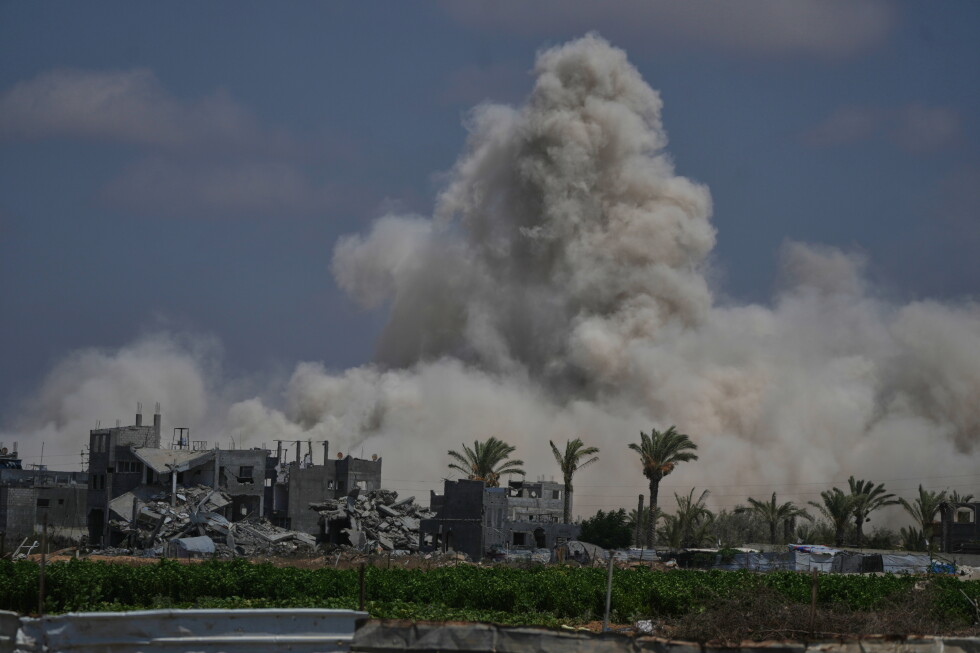
    Tensions in the Gaza Strip have spiked sharply this week, as Hamas issued an urgent warning Thursday that the already fragile ceasefire brokered between the group and Israel faces imminent collapse following a dramatic escalation of Israeli air strikes across the enclave over the past month.

    The Palestinian militant group confirmed that a new wave of intensive bombardment targeting residential neighborhoods has claimed the lives of at least 20 civilians over just 48 hours, with casualties including women and children. The latest surge in violence came amid the Muslim religious holiday of Eid al-Adha, a period traditionally marked by community gatherings and celebration across the region.

    The deadliest single incident this week unfolded Wednesday night, when an Israeli warplane struck a multi-story residential building in central Gaza City. Local Palestinian media outlets reported the strike left at least 10 people dead, among them two minors and two adult women. Israeli state media confirmed the attack was intended to assassinate two senior Hamas commanders: Ezz al-Din Beik, head of Hamas’ northern Gaza brigade, and Imad Aslim, deputy commander of the group’s Gaza City brigade. As of Thursday evening, neither Hamas leadership nor independent Palestinian sources had verified that either of the two named targets were killed or present at the site of the strike.

    This deadly raid followed a targeted assassination just one day earlier, on the eve of Eid al-Adha, when Israeli forces bombed another private residence in Gaza City that killed Mohammed Odah, the newly appointed leader of Hamas’ armed wing, alongside five civilian bystanders. Hamas officially confirmed Odah’s death earlier this week, noting he had only stepped into the top role less than a fortnight prior, after his predecessor Izz ad-Din al-Haddad was killed in a similar Israeli air strike two weeks earlier.

    In its official statement released Thursday, Hamas called on the United States and other international powers that acted as guarantors for the original ceasefire agreement to uphold their commitments. “The US administration and the countries guaranteeing the agreement must assume their responsibilities by taking a clear stance condemning the occupation’s violations,” the statement read. Hamas emphasized that urgent intervention was required to force Israeli authorities to abide by the terms of the truce, warning that “the deal is at risk of collapse due to its ongoing crimes and repeated breaches.”

    Official data from Gaza’s Palestinian Ministry of Health underscores the scale of ongoing bloodshed since the October 2024 ceasefire brokered by the U.S. To date, Israeli operations have killed at least 906 Palestinians in Gaza and injured more than 2,700 others since the ceasefire took effect. Since the start of the latest conflict in October 2023, total Palestinian fatalities from Israeli attacks have surpassed 72,800, with thousands more still missing and presumed dead beneath the rubble of destroyed buildings across the enclave. Gaza’s Government Media Office reported earlier this week that Israeli forces have already carried out more than 3,000 separate violations of the ceasefire agreement. Beyond the near-daily air strikes and fatal incursions that have intensified in recent days, these violations include persistent blockades on humanitarian aid entering the Strip, restrictions on medical patients traveling abroad for life-saving treatment, and incremental territorial expansions of Israeli occupation across Gaza.
    Israeli public broadcaster Kan reported Wednesday that the latest wave of targeted assassinations against senior Hamas leaders was explicitly approved by the so-called “Board of Peace,” a body created with U.S. backing. An anonymous source from the board stated, “We consider the elimination of senior figures in the terrorist organisation’s military wing to be part of the process of disarming Hamas.” Kan also added that board representatives have requested permission from the Israel Defense Forces to deploy personnel into the Gaza Strip, a move that could be authorized within the coming days.

  • Former Yemen President Abd Rabbuh Mansour Hadi dies in Saudi Arabia aged 80

    Former Yemen President Abd Rabbuh Mansour Hadi dies in Saudi Arabia aged 80

    Veteran Yemeni political figure Abd Rabbuh Mansour Hadi, who led the country through years of devastating civil conflict as its former president, has passed away at the age of 80 in Riyadh, the capital of his host nation Saudi Arabia. Yemeni presidential sources confirmed to Agence France-Presse that Hadi’s death followed an unexpected acute health incident.

    Hadi had lived in Saudi Arabia since 2015, when he was forced to flee Yemen after Houthi fighters seized control of large swathes of territory, including the capital Sanaa, and advanced on his government’s stronghold. The long-running Yemeni conflict pits the Saudi-backed Hadi-era government against the Iran-aligned Houthi movement, which has controlled northern Yemen’s most populous regions since 2014. Hadi formally resigned from the presidency in 2022, transferring executive authority to a newly formed Presidential Leadership Council tasked with overseeing peace negotiations and wartime governance. Multiple regional reports indicate that after stepping down, Hadi remained confined to his Riyadh residence in what amounted to de facto house arrest for the final two years of his life.

    Born in 1944 in Abyan Governorate, in what was then the British-protected South Yemen, Hadi built a decades-long career spanning military and political office across both of Yemen’s pre-unification states. He held senior posts in the Marxist-Leninist People’s Democratic Republic of Yemen (South Yemen) and the northern Yemen Arab Republic before the two states unified in 1990. Following the 1994 Yemeni civil war, Hadi was appointed vice president, serving under longtime leader Ali Abdullah Saleh for 18 years. He assumed the presidency in 2012, after mass Arab Spring uprisings forced Saleh to step down after 33 years in power.

    Escalating political tensions between Hadi’s administration and the Ansar Allah movement, more widely known as the Houthis, ultimately boiled over into full-scale conflict in 2014. The Houthis quickly captured Sanaa, prompting Hadi’s escape into exile and leading to a Saudi-led military intervention that began in March 2015. By the time Hadi left office in 2022, the nearly eight-year conflict he oversaw had killed more than 370,000 people, according to United Nations estimates, and pushed Yemen into what the UN describes as the world’s worst humanitarian crisis.

    Regional media reports confirm Hadi will be laid to rest in Riyadh on Friday. Former Yemeni Foreign Minister Abdulmalik al-Mekhlafi, who served in Hadi’s cabinet, publicly offered his condolences on the social media platform X, arguing that the former president had been treated unfairly throughout his public life. “I believe that the man was not given his due justice as he deserved, neither during his period of rule nor even before it, as an image was formed around him in the media that was often far from his true reality,” al-Mekhlafi wrote, extending prayers to Hadi’s family and the Yemeni people.

    As of Thursday, the Houthi movement has not released an official statement on Hadi’s death. However, one senior Houthi spokesperson has publicly noted that Hadi’s death occurred in what he described as “mysterious circumstances,” leaving lingering questions about the circumstances of his passing among political observers.

  • Portugal breaks hottest May day record as Europe swelters in heatwave

    Portugal breaks hottest May day record as Europe swelters in heatwave

    An unseasonably intense early heatwave has gripped Western Europe this week, bringing historic temperature highs, disrupting public services, and prompting urgent emergency preparedness assessments across multiple nations. On Wednesday, Portugal logged a new all-time May temperature record when the central town of Mora hit 40.3 degrees Celsius, surpassing the previous national May benchmark of 40C set back in 2001.

    The extraordinary heat has not been confined to Portugal. Forecasters confirm the high-pressure system driving the heat — known as a “heat dome,” which traps warm air in a stagnant block — is projected to maintain sweltering conditions across the region through the weekend. Germany, Spain, and Switzerland have already recorded temperatures far above average for this time of year, while heat alerts have been issued across populated areas of France and Italy.

    In France, 17 departments including Paris and parts of the northwest are currently under orange heat alerts, urging residents to exercise heightened vigilance against heat-related health risks. Temperatures in the capital are forecast to hit 33C on Thursday, and climb to 34C for both Saturday and Sunday. To reduce urban heat buildup and traffic congestion, Paris police have implemented temporary traffic measures: only low-emission vehicles are permitted on city roads through Saturday, speed limits have been lowered, and discounted flat-fare tickets are being offered across the entire public transport network to encourage people to leave private cars at home.

    French Prime Minister Sébastien Lecornu chaired an emergency ministerial meeting Thursday afternoon to coordinate government preparations for the extreme heat, with priorities including wildfire suppression and safeguarding drinking water supplies through the summer months. The heatwave has already forced school closures across parts of the country: a local official confirmed a primary school in Souston, in the Landes region, will remain closed Thursday and Friday after indoor temperatures hit 53C earlier this week.

    A particularly contentious issue has been the decision to proceed with the national Baccalaureate exams, France’s high-stakes secondary school leaving qualification equivalent to British A-levels. Education officials have defended the move, noting that students have spent months preparing for the exams and the rigid result timeline cannot easily be adjusted. Exam centers have been instructed to use the shadiest available rooms for testing, but education unions and teaching staff have roundly criticized the decision. A survey conducted by France’s secondary school union found that nearly 78% of schools recorded indoor temperatures above 30C this week, with reports of teachers bringing in personal fans from home and even using screwdrivers to pry open stuck windows to improve ventilation.

    The extreme heat has also impacted high-profile sports events taking place in France. At the French Open in Paris, world men’s number one tennis player Jannik Sinner was forced to withdraw from the tournament mid-match after suffering severe dizziness and lethargy brought on by the high temperatures. Though Sinner downplayed the impact of the heat after his exit, saying “It was just me today, but it happens,” the incident has drawn renewed attention to the risks of extreme heat for outdoor athletic competition.

    To the south, Italy has issued its first red heatwave alerts of the year for major cities including Rome, Florence, Bologna, Brescia and Turin. The highest alert level warns that the heat could pose negative health effects even for healthy, active people. Temperatures in Rome are projected to peak at 32C on Thursday, while Madrid will see highs climb to 35C over the weekend. Spanish meteorological officials note that while the current hot spell does not meet the official definition of a heatwave for the country, the temperatures are consistent with the peak summer conditions normally seen in July and August.

    Portugal’s meteorological service forecasts that temperatures in most parts of the country will stay above 35C through Thursday and Friday before the heat dome begins to weaken and temperatures gradually recede. While no single weather event can be definitively linked directly to human-caused climate change, climate scientists emphasize that global warming is steadily increasing the frequency and intensity of extreme heat events across the globe.

    Data from the Copernicus Climate Change Service shows that Europe has warmed at a rate of 0.56C per decade over the past 30 years, a pace that has already made extreme heat events far more severe than they were a generation ago. On Thursday, the United Nations reinforced this warning, announcing that global average temperatures are likely to remain at or near record levels this year and over the next four years. All 11 of the hottest years ever recorded globally have occurred since 2015, and the UN’s World Meteorological Organization projects this trend will continue, with a new all-time hottest global year likely to be recorded before 2031.

  • Israeli spy Jonathan Pollard suggests Egypt and Turkey are next targets for war

    Israeli spy Jonathan Pollard suggests Egypt and Turkey are next targets for war

    A controversial convicted Israeli-American intelligence operative has sent shockwaves through Middle East geopolitics with a stark warning that Israel could soon be drawn into new armed conflicts with two of its once-cordial regional neighbors, Egypt and Turkey. Jonathan Pollard, who served 30 years in U.S. federal prison for stealing classified American national security documents and passing them to Israel before relocating to the Jewish state in 2015, shared his alarming forecast during a recent podcast interview with Israeli news outlet Arutz Sheva.

    In the discussion, Pollard argued that after the current conflict with Iran, Israel must turn its military preparedness toward what he frames as inevitable future confrontations. “I’m not so sure that we will have as easy a time with the Turks as we’ve had with the Iranians,” Pollard told hosts. “We have to be prepared for the next war, which will probably be against Turkey and Egypt. The storm is coming.”

    Beyond his war warning, Pollard also cautioned Israeli leadership against permitting the Turkish-backed transitional government in southern Syria to reassert control over territories currently held by Israeli occupation forces. Allowing that transition, he argued, would place Turkish military assets directly on Israel’s northern border, a development he frames as an unacceptable security risk.

    Pollard’s background adds layers of sensitivity to his comments. After being granted Israeli citizenship upon his 2015 arrival, he has become a close ally of far-right Israeli National Security Minister Itamar Ben Gvir, and has publicly supported extreme calls for the ethnic cleansing of Palestinians from occupied territories.

    The forecast comes against a rapidly shifting backdrop of regional relations. For decades, both Egypt and Turkey maintained largely functional, at times warm, diplomatic and economic ties with Israel. Turkey made history in 1949 as the first Muslim-majority nation to formally recognize Israeli statehood, and the two partners built deep security and trade connections for most of their modern coexistence. That dynamic began to fray in 2010, when Israeli commandos raided the Mavi Marmara, a Turkish-flagged aid ship bound for Gaza, killing 10 people on board. Since that incident, Ankara has grown increasingly vocal in its condemnation of Israel’s treatment of the Palestinian people.

    A high-profile push to reset bilateral relations in September 2023, which marked the first face-to-face handshake between Turkish President Recep Tayyip Erdogan and Israeli Prime Minister Benjamin Netanyahu in years, collapsed just one month later following the October 7 Hamas attacks on Israel and the subsequent Israeli military campaign in Gaza that has drawn widespread accusations of genocide. Since the outbreak of the Gaza war, rhetorical hostilities between the two countries have escalated dramatically, with former Israeli Prime Minister Naftali Bennett already labeling Turkey as the “next Iran” in public comments earlier this year.

    For Egypt, the 1979 Camp David peace treaty has anchored stable relations with Israel for 45 years, ending a decades-long pattern of open conflict between the two states. Even so, Egyptian leadership has grown increasingly critical of Israel’s military action in Gaza, straining what was once a reliably steady bilateral partnership.

    Pollard acknowledged that he holds out hope that open war will not break out between Israel and the two states, but couched that optimism in a grim warning. He noted that “hope was the last demon out of Pandora’s Box” – suggesting optimism alone will not insulate Israel from the coming regional storm he predicts.

    This reporting is based on independent analysis of original on-the-record comments from Pollard, contextualized against documented shifts in Middle East diplomatic relations.

  • US, Iran agree deal framework but need Trump sign-off: sources

    US, Iran agree deal framework but need Trump sign-off: sources

    Just days after the most intense exchange of fire between the United States and Iran since an April truce took effect, negotiators from both sides have reached a preliminary framework for a 60-day extension of the ceasefire, multiple anonymous U.S. sources confirmed to Agence France-Presse on Thursday. The deal, which also paves the way for formal negotiations over Iran’s nuclear program, still requires final sign-off from U.S. President Donald Trump to move forward.

    The breakthrough comes amid heightened tensions that have put wider diplomatic efforts to end the three-month conflict to the test. The war began in late February when U.S. and Israeli forces launched joint strikes on Iranian targets, and the April truce had largely held until this week’s flare-up.

    On Wednesday, the U.S. carried out airstrikes on the southern Iranian port city of Bandar Abbas. In response, Iran’s Islamic Revolutionary Guard Corps (IRGC) announced it had targeted the U.S. airbase that launched the attack, though it did not specify the base’s location. Kuwait, which hosts U.S. military personnel on its territory, said its air defense systems intercepted incoming projectiles, drawing the U.S. ally directly into the clash. Kuwait’s foreign ministry quickly condemned what it called “criminal Iranian attacks” on its territory, labeling the incident a dangerous escalation.

    U.S. Central Command denounced Iran’s response as an “egregious violation” of the existing ceasefire. Separately, Iranian state media reported Thursday that Iranian forces had opened fire on four commercial ships that attempted to transit the Strait of Hormuz without authorization. Iran has blocked all commercial traffic through the strategic waterway, a critical chokepoint for global energy supplies, since the start of the war. U.S. forces confirmed they intercepted five attack drones in and around the strait, and disabled a sixth drone before it could launch from a ground control station near Bandar Abbas.

    For its part, Iran has pushed back against U.S. accusations of truce violations. Foreign ministry spokesman Esmaeil Baqaei said Iran would “take all necessary measures to defend its national sovereignty,” and called the U.S. airstrikes themselves a clear breach of the truce. A senior U.S. official countered that American actions were “measured” and carried out with the goal of preserving the existing ceasefire agreement. The IRGC issued a fresh threat Thursday, promising a “firm response” if the U.S. carries out any new attacks against Iranian territory.

    Beyond the immediate ceasefire extension, a core sticking point in the proposed deal is the reopening of the Strait of Hormuz. The closure has disrupted global oil and gas supplies, roiling international energy markets. On Thursday, oil prices rose sharply following news of the fresh clashes, erasing most of the gains from the previous day’s drop driven by growing optimism over a potential diplomatic breakthrough.

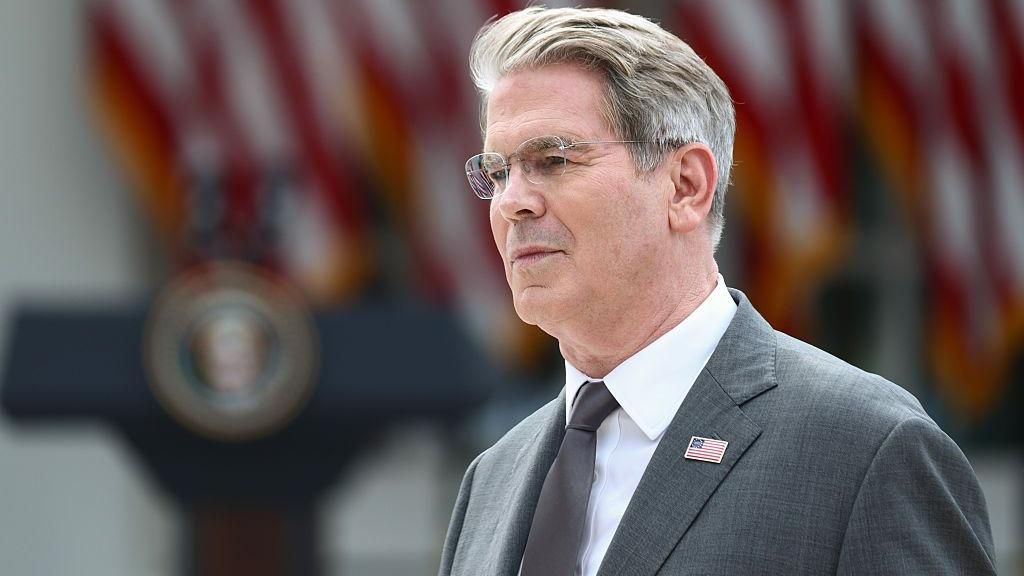
    The Trump administration has taken a hard line on any arrangement that would keep the strait restricted. When asked about a proposal that would let Oman and Iran jointly manage transit through the waterway, Trump issued an explicit threat to the U.S. ally, saying “No, the strait is going to be open to everybody. It’s international waters and Oman will behave just like everybody else or we’ll have to blow them up.” U.S. Treasury Secretary Scott Bessent echoed the threat, saying the U.S. would “aggressively target” Oman if it moved forward with plans to implement a tolling system for ships transiting the strait. Oman, which previously mediated U.S.-Iran talks in Geneva before the war broke out, has already come under attack from Tehran. Pakistan has since taken over the lead mediation role in ongoing peace efforts. Baqaei called the U.S. threats against Oman “a worrying sign of the normalisation of anarchy and intimidation in international relations.”

    The conflict also remains unresolved in neighboring Lebanon, where a separate ceasefire between Israel and Iran-backed Hezbollah has failed to stop escalating violence. Iran has insisted that any comprehensive deal to end the wider war must include a cessation of hostilities in Lebanon. On Thursday, the Israeli military carried out a targeted strike in southern Beirut, a known Hezbollah stronghold, hitting a residential apartment. Lebanese authorities reported that 14 people, including three children and one soldier, were killed in Israeli attacks across southern Lebanon on Thursday. A day earlier, Israel declared most of southern Lebanon a combat zone and ordered all civilian residents to evacuate. As of Wednesday, Lebanon’s health ministry reported that 3,269 people have been killed since fighting escalated in the country. On the Israeli side, one soldier was killed in a Hezbollah drone attack near the Lebanese border Wednesday, bringing the total Israeli death toll to 23 troops and one civilian contractor since the fighting began.

    For ordinary Iranians, uncertainty over the future remains a constant, even amid hopes for a ceasefire deal. “I feel like nothing is certain yet,” said Amir, a 27-year-old software developer based in Tehran. “The daily question is: Will there be missile strikes tonight?”