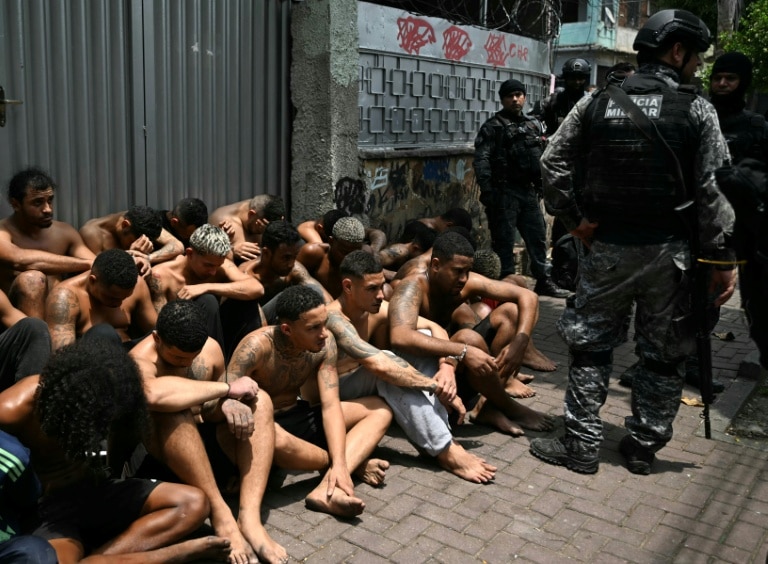
In a move that has sparked diplomatic friction between the two Western Hemisphere nations, the United States formally added two of Brazil’s most powerful criminal factions—Comando Vermelho (Red Command, commonly known as CV) and Primeiro Comando da Capital (First Capital Command, PCC)—to its official list of designated terrorist organizations on Thursday, a step Brazilian authorities have openly rejected.
U.S. Secretary of State Marco Rubio released an official statement defending the decision, arguing that the two syndicates rank among the most violent criminal enterprises operating in Brazil. Rubio emphasized that the groups’ sprawling illicit networks and influence do not stop at Brazil’s national borders, but stretch across the broader Latin American region and reach directly into U.S. territory. According to Rubio, CV and PCC collectively count thousands of members across their ranks, and have repeatedly planned and carried out violent, deadly attacks targeting Brazilian law enforcement officers, government officials, and innocent civilian bystanders.
Brazilian President Luiz Inacio Lula da Silva has openly pushed back against the U.S. designation, which carries significant legal ramifications for any entities or individuals connected to the groups under U.S. law. The designation has also become a flashpoint in Brazil’s upcoming presidential election: former president and conservative frontrunner Flavio Bolsonaro, Lula’s main challenger in the October vote, has publicly backed the U.S. move. Earlier this week, Bolsonaro held a high-profile meeting with U.S. President Donald Trump during his visit to the U.S.
The terrorist designation of transnational criminal gangs marks a continuation of a policy the Trump administration implemented immediately after taking office in January 2025. That same year, the administration applied the same terrorist label to two of Mexico’s most powerful drug cartels, the Sinaloa Cartel and Jalisco New Generation Cartel. From the Trump administration’s perspective, the terrorist classification unlocks new legal authority to expand a range of countermeasures against the groups—from enhanced law enforcement operations and expanded intelligence sharing to full counterinsurgency-style actions—targeting the syndicates, their leadership, and their global assets and financial interests.
The U.S. designation comes on the heels of a major security crackdown by Brazilian forces against CV back in October 2025. That large-scale raid left at least 119 people dead, making it the deadliest law enforcement operation against organized crime in Brazil’s modern history. Deadly small-scale clashes between security forces and criminal factions are a regular occurrence in the country’s most violence-plagued regions.
Since the late summer of 2025, the U.S. has also launched dozens of airstrikes targeting maritime vessels originating from Latin America that U.S. officials claim are tied to designated terrorist organizations and used for drug trafficking operations. The global debate over this policy of labeling South American and Latin American criminal groups as terrorists has split along ideological lines: center-left governments in countries like Brazil and Mexico have been vocal critics of the policy, while right-leaning administrations in Ecuador and Honduras have publicly expressed support for the designations.
Brazil is set to hold its presidential election in October 2025, with recent public opinion polling showing incumbent Lula holding a narrow lead over Bolsonaro. As of yet, Lula has not secured enough support to avoid a second-round runoff vote, leaving the race tight as both candidates lean into transnational crime policy as a key campaign issue.