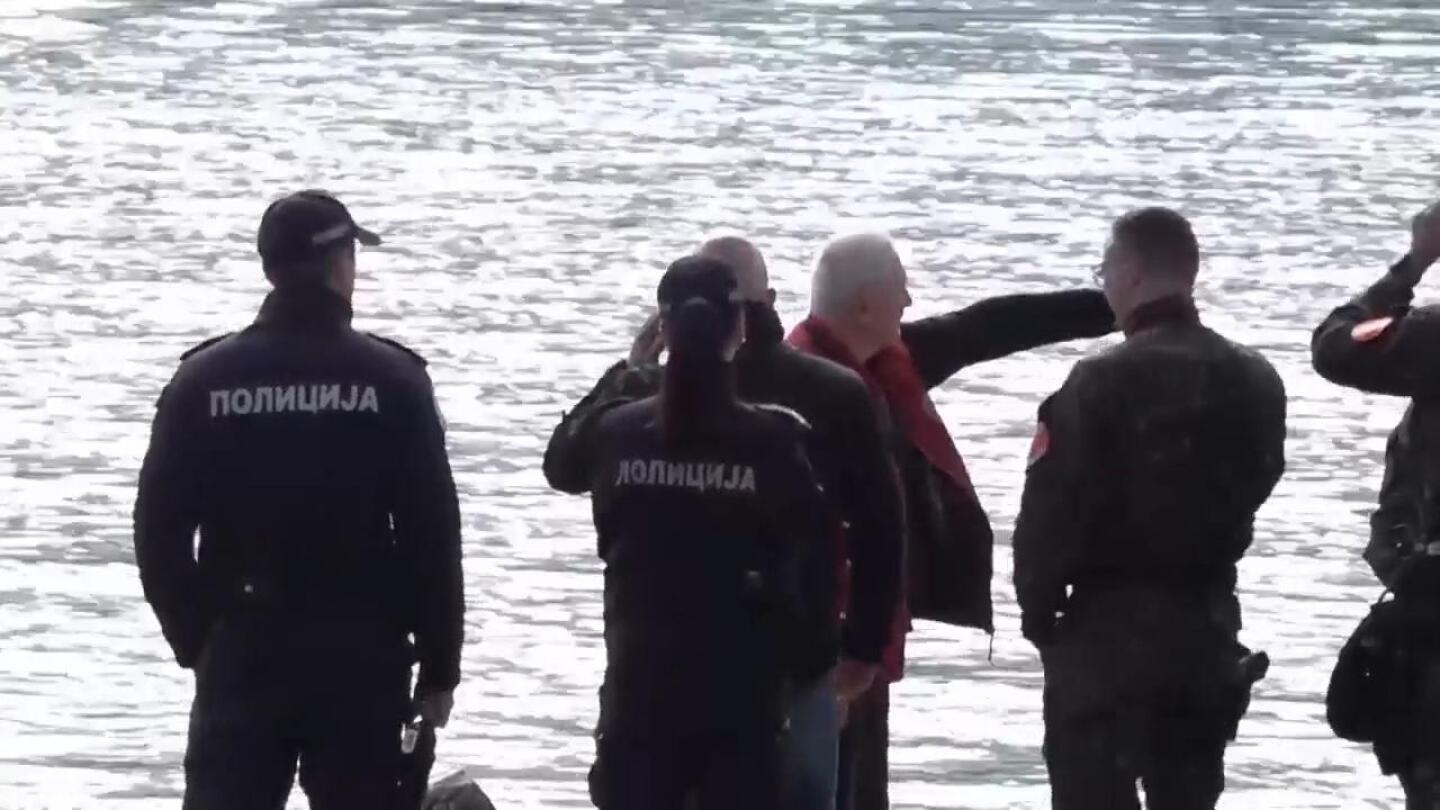
A tragic incident unfolded on the Danube River between Serbia and Croatia, resulting in the death of one individual and the rescue of several others. According to Serbian police, a boat carrying at least 10 Chinese nationals capsized late Sunday evening near the Serbian town of Backa Palanka, approximately 90 kilometers northwest of Belgrade. The victims were reportedly attempting to cross the border illegally. Serbian rescuers recovered the body of one person and successfully saved four others, all of whom are Chinese nationals. Meanwhile, teams in neighboring Croatia located three men and two women, also from China. Serbia is a key transit point on the Balkan migration route, which many migrants use to reach Western Europe. In recent years, China has significantly invested in infrastructure projects across central and eastern Europe, leading to an increase in the visibility of Chinese emigrants in these regions.
分类: world
-

India wants to lure its best minds back from the US – but it won’t be easy
The recent decision by US President Donald Trump to increase H-1B visa fees to $100,000 has ignited a significant debate in India about reversing the decades-long brain drain. Indian policymakers are actively encouraging skilled professionals to return home and contribute to the nation’s development. A senior bureaucrat close to Prime Minister Narendra Modi revealed that the government is intensifying efforts to attract overseas Indians back to the country. Meanwhile, a member of the PM’s economic advisory council argued that the H-1B visa fee hike could benefit India by making it a more attractive destination for global talent. The core idea is to capitalize on the current situation to lure back highly skilled professionals in technology, medicine, and innovation who left India over the past 30 years. However, experts caution that while anecdotal evidence suggests some Indians are considering returning, large-scale reverse migration remains a challenge. Nithin Hassan, a former Meta employee who gave up a $1 million job to return to Bengaluru, exemplifies this trend. He launched B2I (Back to India), a platform assisting NRIs in navigating the complexities of relocating. Hassan noted a surge in inquiries following Trump’s policy shifts, with queries tripling since his second term began. Other headhunters, like Shivani Desai of BDO Executive Search, reported a 30% increase in Ivy League graduates exploring return options. The rise of Global Capability Centres (GCCs) in India has also created viable opportunities for returning professionals. Yet, critics like Sanjaya Baru, former media adviser to PM Manmohan Singh, argue that the government must take more proactive steps to identify and incentivize top talent to return. Despite these efforts, India faces significant push factors, including poor infrastructure, bureaucratic hurdles, and a challenging business environment, which have driven many high-earning Indians to seek citizenship elsewhere. To truly reverse the brain drain, experts emphasize the need for comprehensive reforms, including simplified tax laws, targeted incentives, and improved R&D ecosystems.
-

Photos: Morocco sees eighth straight day of youth protests
Morocco has witnessed an unprecedented wave of youth-led protests for the eighth consecutive day, as thousands of young demonstrators took to the streets across the nation to demand significant improvements in public health and education services. The protests, organized by the online collective GenZ 212, have challenged the perception of Moroccan youth as politically apathetic and have highlighted growing discontent with social inequalities and corruption. The group, which operates primarily on the web platform Discord, has mobilized its 180,000 members to stage peaceful rallies in 14 cities, including Tetouan, Casablanca, and Rabat. Demonstrators have been chanting slogans such as ‘The people want an end to corruption’ and ‘Freedom, dignity, and social justice,’ reflecting their broader demands for systemic reforms. The protests gained momentum following reports of the deaths of eight pregnant women at a public hospital in Agadir, which activists cite as evidence of the healthcare system’s failures. While the gatherings have been largely peaceful, isolated incidents of violence have occurred, including a confrontation in the village of Lqliaa that resulted in three fatalities. GenZ 212 has emphasized its commitment to nonviolence and continues to call for the resignation of Prime Minister Aziz Akhannouch, whose term ends next year. The protests mark a significant shift in Morocco’s political landscape, as young people take a more active role in advocating for change.
-

Nearly 1,000 people trapped on Mount Everest slopes
A severe snowstorm has left nearly 1,000 individuals stranded on the eastern slopes of Mount Everest in Tibet, prompting a large-scale rescue operation. Chinese state media reported that hundreds of local villagers and rescue teams have been mobilized to clear snow obstructing access to the area, which lies at an altitude exceeding 4,900 meters (16,000 feet). The heavy snowfall, which began on Friday evening, intensified over the weekend, causing tents to collapse and leaving some hikers suffering from hypothermia. The Tibet Blue Sky Rescue team responded to distress calls, and some tourists have already been rescued. In response to the crisis, the Tingri County Tourism Company has suspended ticket sales and entry to the Everest Scenic Area. The region is currently experiencing extreme weather conditions, with neighboring Nepal also facing devastating floods and landslides that have claimed at least 47 lives. Meanwhile, Typhoon Matmo has made landfall in China, forcing the evacuation of approximately 150,000 people. Mount Everest, the world’s highest peak at over 8,849 meters, remains a perilous destination for climbers, with recent years marked by overcrowding, environmental degradation, and fatal climbing incidents.
-
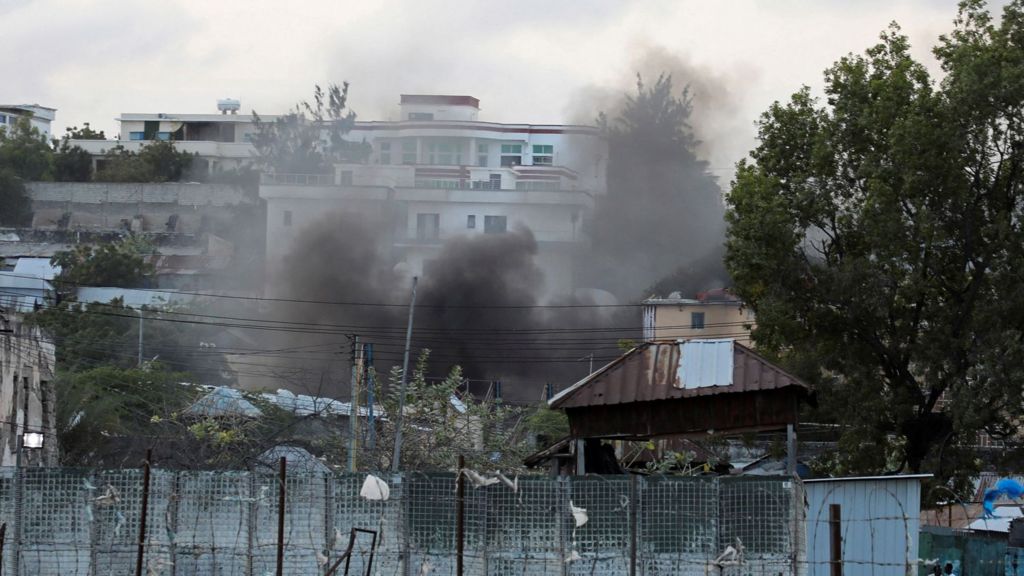
Al-Shabab militants dress as soldiers to storm Somali jail
A daring assault by seven al-Shabab militants on a high-security prison in Mogadishu, Somalia, culminated in the death of all attackers, according to the Somali government. The incident unfolded on Saturday evening at Godka Jilicow, a detention facility housing al-Shabab militants, located near the presidential palace in the heart of the capital. The attack began with a massive explosion and intense gunfire, drawing immediate attention to the area. Al-Shabab claimed responsibility, stating they had freed ‘all Muslim prisoners’ and inflicted significant casualties on the guards. The militants reportedly disguised themselves as soldiers to gain access to the prison, as reported by the government-run news agency Sonna Live. While the government did not disclose the number of security personnel killed, it expressed condolences to the families of ‘the fallen heroes.’ The attack raises serious questions about the effectiveness of security measures in one of Mogadishu’s most heavily guarded areas. Al-Shabab, an al-Qaeda-affiliated group, has been waging a violent insurgency against the Somali government for nearly two decades. The incident occurred hours after the government reopened key roads in Mogadishu, citing improved safety conditions. This attack underscores the persistent threat posed by al-Shabab and the challenges faced by Somali security forces in maintaining stability.
-
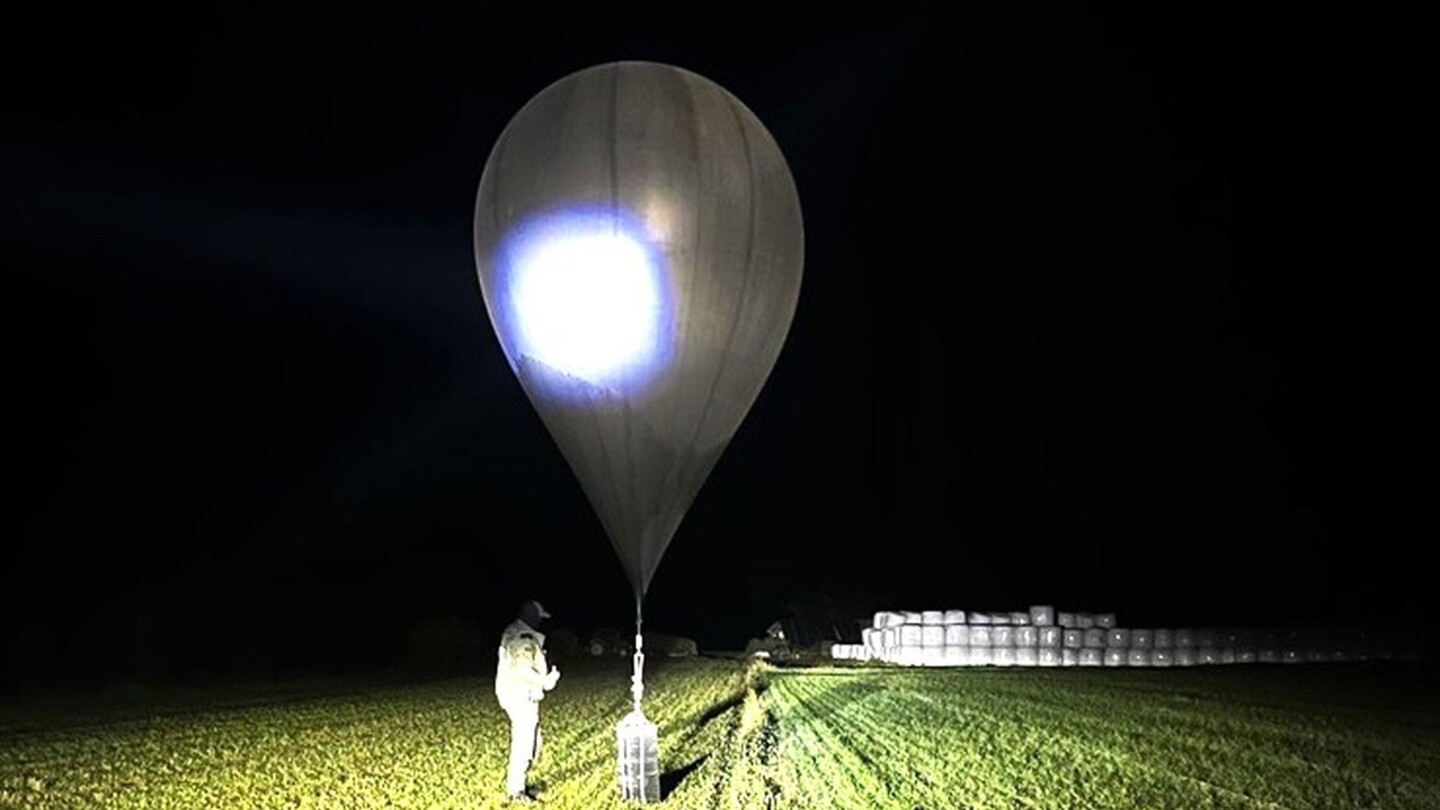
Balloons carrying smuggled cigarettes over Lithuania closed Vilnius Airport for hours
In a startling incident late Saturday, up to 25 small hot-air balloons, some confirmed to be transporting smuggled cigarettes, infiltrated Lithuanian airspace, prompting the temporary shutdown of Vilnius Airport and causing significant flight delays. The disruption affected 30 flights and approximately 6,000 passengers, according to Lithuania’s National Crisis Management Center. Operations resumed at 4:50 a.m. on Sunday. While the balloons were primarily used for smuggling, the incident has heightened concerns in Europe about airspace security, particularly in the wake of recent NATO airspace violations. Some officials have suggested these intrusions may be part of Moscow’s strategy to test NATO’s readiness. Lithuania and other Baltic states remain on edge, especially after a Russian-made drone entered Lithuanian airspace from Belarus on July 10 and crashed in Vilnius County. Another drone, carrying an explosive device, was discovered at a military training ground on July 28. In response, Lithuania’s parliament has authorized its armed forces to shoot down unauthorized drones. Border police recovered 11 balloons and approximately 18,000 packs of smuggled cigarettes, with two balloons flying directly over Vilnius Airport. Darius Buta, a spokesperson, noted that Belarusian smugglers are increasingly using balloons due to their lower cost compared to drones. Similar incidents, though on a smaller scale, were reported in August. Last year, Lithuanian authorities intercepted 966 balloons from Belarus, with 544 recorded so far this year. Buta emphasized that while smuggling balloons and drones are criminal activities, they are not acts of sabotage or provocation.
-
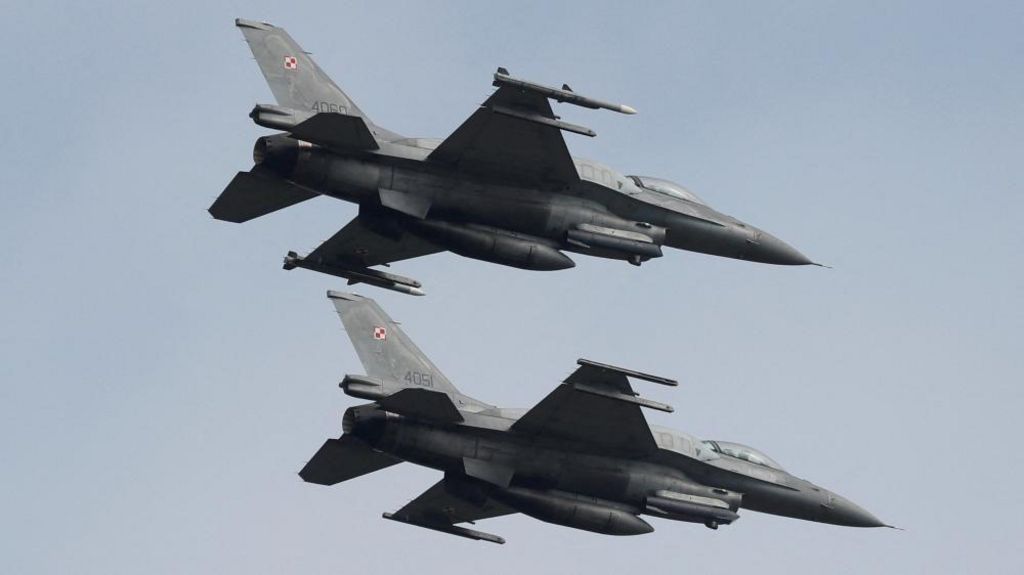
Poland scrambles jets as Russia strikes western Ukraine
In a significant escalation of hostilities, Russia launched a series of missile and drone attacks on Ukraine overnight, targeting key western cities including Lviv and Zaporizhzhia. The strikes, which occurred from Saturday into Sunday morning, prompted neighboring Poland to scramble fighter jets to safeguard its airspace, with NATO allies also deploying aircraft. Lviv’s regional head, Maksym Kozytskyi, reported two fatalities and two injuries in the region, while Zaporizhzhia’s mayor confirmed one death and widespread power outages affecting over 73,000 residents. The attacks on Ukraine’s energy infrastructure have intensified, leaving parts of Lviv without electricity and disrupting public transport. Ukrainian Air Force warnings placed the entire country under air raid alerts, with Russia’s aggression extending to the eastern Donbas region, which it has largely controlled since its 2022 invasion. Meanwhile, NATO member Lithuania briefly closed its airspace after unidentified objects were spotted, echoing recent incidents in Denmark, Norway, and Germany. The latest developments follow a statement by US Special Envoy Keith Kellogg, who affirmed US support for Ukraine’s potential deep strikes within Russian territory, signaling a potential shift in the conflict’s dynamics.
-
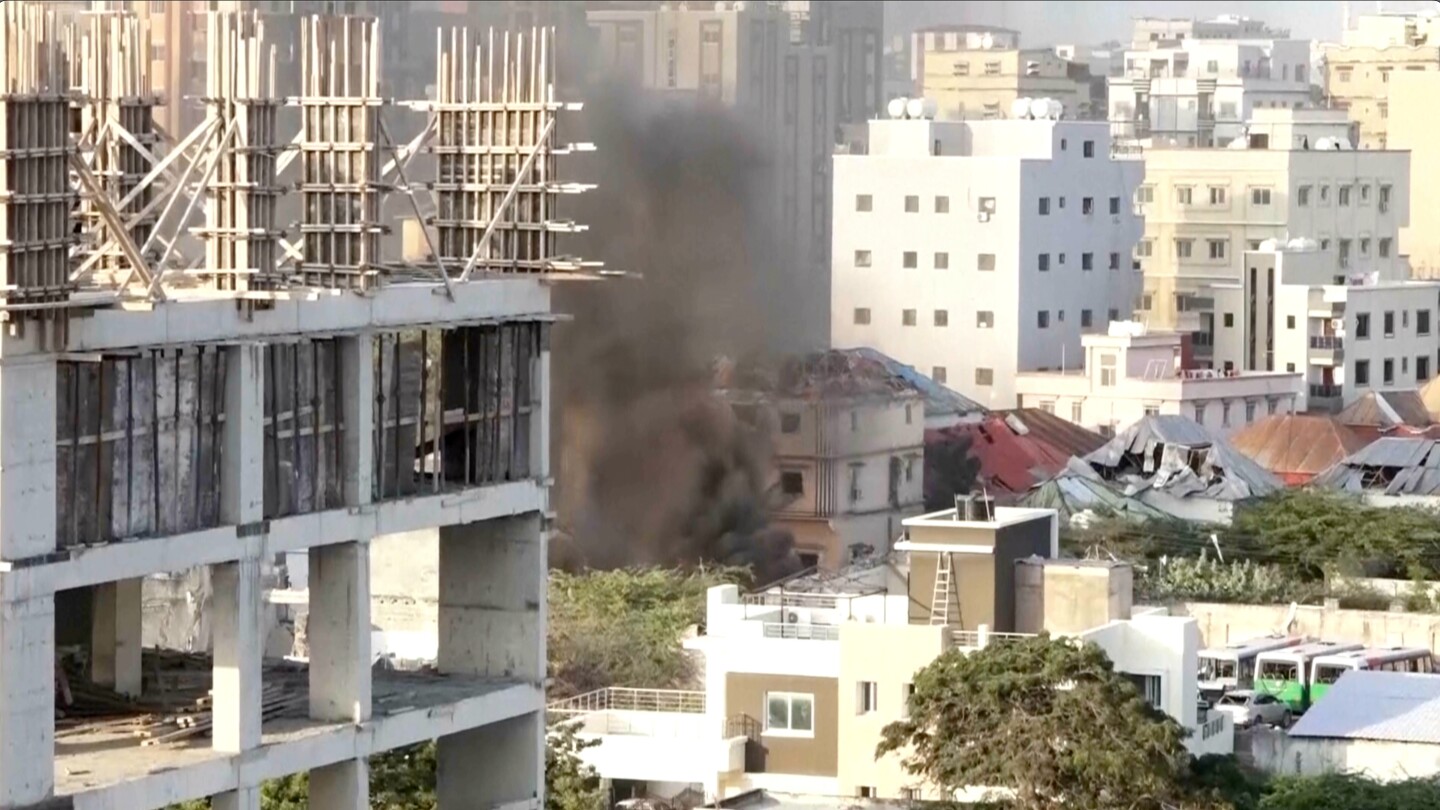
Militants attack major prison in Mogadishu hours after roadblocks lifted
Mogadishu, Somalia — A brazen assault by the al-Qaida-affiliated militant group al-Shabab targeted a high-security prison near Somalia’s presidential palace on Saturday, unleashing chaos in the capital. The attack, marked by explosions and heavy gunfire, occurred just hours after the federal government removed long-standing roadblocks in Mogadishu, a move intended to ease traffic and commerce but which may have inadvertently compromised security. Residents in the Bondhere district reported hearing blasts and witnessing thick smoke rising from the Godka Jilacow prison, which also houses the regional intelligence unit. Hibo Mohamed, a local resident, expressed widespread fear, stating, ‘The city had been calm for months, but now everyone feels anxious once more.’ Al-Shabab claimed responsibility for the attack, asserting that they had freed prisoners. Somali state media reported that the militants used a vehicle disguised as one belonging to the intelligence unit’s security forces. Government soldiers reportedly repelled the assault, killing several militants. The attack on Godka Jilacow prison is not unprecedented; in 2014, al-Shabab launched a similar assault involving a suicide car bomb and an attempted prison break, which resulted in at least a dozen fatalities. Saturday’s incident underscores the persistent threat posed by the militant group, despite recent gains by Somali forces, supported by local militias and African Union troops, in pushing al-Shabab out of central and southern regions. Security forces swiftly cordoned off the area, and ambulances rushed to the scene, though the exact number of casualties remains unclear. The timing of the attack, following the removal of roadblocks, has reignited debates about the balance between security measures and urban mobility in Mogadishu.
-
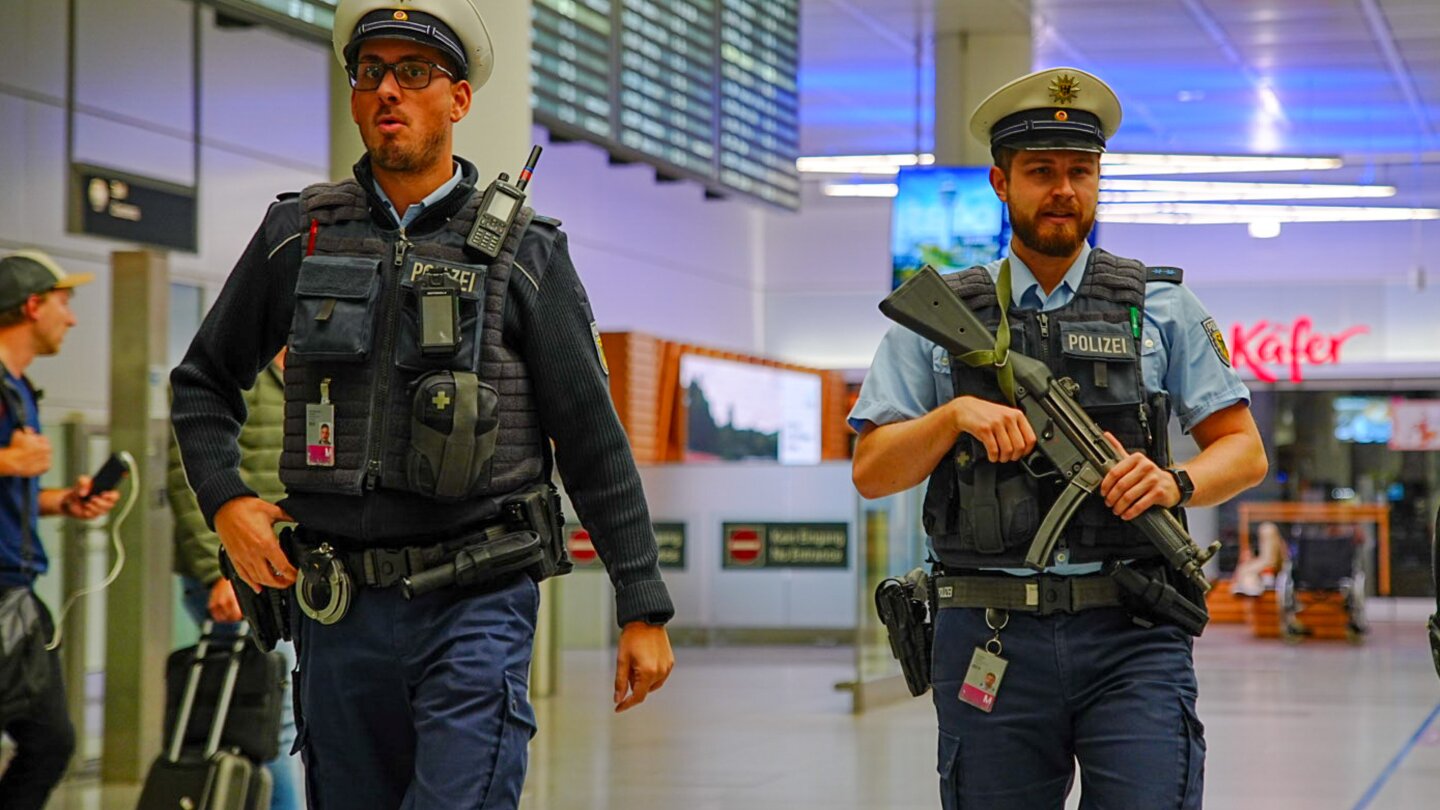
Mysterious drone flights in NATO airspace have caused alarm across Europe. Here’s what we know
Recent weeks have seen a surge in mysterious drone flights over European Union airspace, sparking widespread alarm among the public and government officials. These incursions, some attributed to Russia, have reached an unprecedented scale, raising concerns about NATO’s preparedness and response capabilities. On September 10, a swarm of Russian drones breached Poland’s airspace, prompting NATO aircraft to intercept and shoot down several devices. This marked the first direct confrontation between NATO and Russia since the latter’s full-scale invasion of Ukraine in February 2022. Days later, NATO jets escorted three Russian warplanes out of Estonia’s airspace. These incidents have led European defense ministers to agree on developing a ‘drone wall’ along their borders to enhance detection, tracking, and interception of unauthorized drones. While Russia denies any deliberate involvement, European authorities remain tight-lipped, often delaying public acknowledgment of these overflights. In Germany, Munich Airport experienced two closures within 24 hours due to drone sightings, disrupting travel for over 6,500 passengers. Similarly, Copenhagen Airport faced significant disruptions, with Danish Prime Minister Mette Frederiksen labeling it as the most serious attack on Danish critical infrastructure to date. Norway’s Oslo Airport also reported a drone sighting, prompting investigations into potential links between these incidents. Danish military sites, including the Karup Air Base, have also been targeted, with Defense Minister Troels Lund Poulsen suggesting a ‘professional’ actor was behind these systematic flights. In Germany, drones were spotted over critical infrastructure in Schleswig-Holstein, including a power plant, a university hospital, and a shipyard. Authorities are investigating these sightings, with Chief Public Prosecutor Stephanie Gropp confirming ongoing inquiries. The situation has left European countries scrambling to formulate effective responses, including whether to authorize the shooting down of drones.
-

French photojournalist killed in drone strike in Ukraine
In a tragic incident that underscores the perils faced by journalists in conflict zones, French photojournalist Antoni Lallican was killed in a Russian drone strike in eastern Ukraine. The attack, which occurred on the outskirts of Komyshuvakha in the Donetsk region, also left Ukrainian photojournalist Grigoriy Ivanchenko severely injured. This marks the first instance of a journalist being killed by a drone in Ukraine, according to the European and International Federations of Journalists (EFJ and IFJ).
Mr. Lallican, a Paris-based journalist, had been documenting the war since March 2022, just a month after Russia’s full-scale invasion began. His dedication to capturing the human cost of the conflict earned him the prestigious Victor Hugo Prize for photography in 2024. At the time of the attack, both journalists were embedded with the 4th Mechanised Brigade, approximately 15 kilometers from the frontline.
Despite wearing personal protective equipment, including bulletproof vests marked with ‘PRESS,’ the journalists were unable to hear the drone overhead due to the noise of chainsaws being used to build defensive positions. Anastasia Haletska, the brigade’s press officer who was also wounded, managed to apply tourniquets to Mr. Ivanchenko before both were transported to a hospital in Kramatorsk. Mr. Lallican was killed instantly, while Mr. Ivanchenko is in stable condition but had to undergo a leg amputation.
French President Emmanuel Macron paid tribute to Mr. Lallican, describing him as a victim of a Russian drone attack. ‘I express my sincere condolences to his family, loved ones, and all his colleagues who, risking their lives, inform us and bear witness to the reality of war,’ Macron wrote on X.
Mr. Lallican’s work, published in outlets such as Le Monde and Le Figaro, documented the war’s impact across Ukraine, from Odesa in the southwest to Kharkiv in the northeast. His photographs captured the plight of families fleeing the invasion, elderly residents refusing to abandon their homes, and soldiers on the frontline.
The EFJ and IFJ reported that 17 journalists have been killed since the invasion began. In a joint statement, they honored Mr. Lallican’s courage and demanded justice for his death. Sergiy Tomilenko, president of the National Union of Journalists of Ukraine (NUJU), accused Russia of deliberately targeting those documenting war crimes. ‘Antoni Lallican built a visual bridge between the world and Ukrainian reality. Now he himself has become part of this tragic story,’ Tomilenko said.
The Kremlin has yet to comment on the attack.