分类: world

  • Suspected militants ambush police vehicle in northwest Pakistan and kill 5 officers

    Suspected militants ambush police vehicle in northwest Pakistan and kill 5 officers

    In a brazen daylight assault on Tuesday, unidentified gunmen launched a deadly attack on a police patrol unit in Pakistan’s volatile northwestern Khyber Pakhtunkhwa province, resulting in the deaths of five law enforcement officers. The ambush occurred near an oil and gas installation in Karak district during routine security operations.

    According to local police chief Noor Wali, the assailants executed the officers before dousing their vehicle with gasoline and setting it ablaze, destroying evidence at the crime scene. Security forces immediately established perimeter control and initiated comprehensive search operations, during which eight suspects connected to the assault were eliminated in subsequent engagements.

    Senior Pakistani officials, including Interior Minister Mohsin Naqvi and Provincial Chief Minister Suhail Afridi, issued strong condemnations of the attack, vowing to bring perpetrators to justice while extending sympathies to bereaved families of the slain officers.

    While no militant organization has formally claimed responsibility, security analysts indicate the Pakistani Taliban (TTP) as primary suspects. The TTP maintains operational independence while aligning ideologically with Afghanistan’s Taliban government. This incident represents the latest escalation in cross-border tensions between Pakistan and Afghanistan, with Islamabad accusing Kabul of providing sanctuary to TTP operatives since the 2021 Taliban takeover—allegations consistently denied by Afghan authorities.

    The attack occurs amidst deteriorating bilateral relations following October’s cross-border clashes that resulted in numerous casualties before Qatar-mediated ceasefire implementation. Recent diplomatic negotiations in Istanbul concluded without substantive agreements, further complicating regional security dynamics.

  • Striking the right note to advance climate change action

    Striking the right note to advance climate change action

    Despite significant logistical hurdles, Chinese participants at the UN Climate Change Conference (COP30) in Belem, Brazil, demonstrated remarkable resilience and creativity in advancing global climate dialogue through unconventional mediums including music, gaming, and traditional art.

    The journey to COP30 proved exceptionally challenging for many Chinese delegates. Yang Yuntong, a senior sustainability official at Zhejiang Geely Holding Group, endured a 10-hour travel ordeal instead of the planned three-hour flight from Sao Paulo to Belem, resulting in missed speaking engagements. Undeterred, she delivered her climate messages via recorded videos while stranded at the airport. This experience was not isolated—many Chinese attendees faced similar travel disruptions, including flight cancellations and even a venue evacuation due to a fire incident.

    Despite these challenges, Chinese organizations made significant impacts through innovative engagement methods. The Boke Foundation introduced its SDG Hero board game, an educational tool that transforms complex sustainability concepts into engaging gameplay. The multilingual game attracted substantial attention from global educators and delegates, serving as a prominent example of China’s cultural exports addressing global issues.

    Music emerged as another powerful bridge for climate communication. The Plant Technology Alliance presented a specially composed anthem, “Love Never Ends,” featuring collaborative performances by 123 children from over 100 countries. The song’s lyrics emphasize practical climate actions while promoting global unity. Cheng Dan, the alliance’s co-founder who composed the piece, noted that the musical initiative originated from inspiration gained at COP29 in Azerbaijan.

    Traditional Chinese art also played a role in cross-cultural dialogue. Jiang Xinyu, a Tsinghua University representative, conducted well-attended workshops on classical Chinese landscape painting, using Fan Kuan’s Northern Song Dynasty masterpiece “Travelers Among Mountains and Streams” to illustrate philosophical perspectives on humanity’s relationship with nature. The sessions attracted standing-room-only crowds, demonstrating art’s ability to transcend cultural boundaries.

    Beyond cultural exchanges, the challenging journey to Belem fostered unexpected camaraderie among Chinese participants. Liu Shuo, climate director at Onewo Space-Tech Service, noted that the shared travel difficulties created strong bonds that laid groundwork for future collaborations in climate initiatives, including her company’s Zero-Carbon Partner Initiative.

    These diverse approaches collectively demonstrated China’s growing and multifaceted contribution to global climate discourse, moving beyond traditional diplomatic channels to create meaningful connections through cultural and educational exchanges.

  • US drops plan to deport Chinese national who exposed Xinjiang abuses, rights activists say

    US drops plan to deport Chinese national who exposed Xinjiang abuses, rights activists say

    In a significant reversal, the U.S. Department of Homeland Security has abandoned its effort to deport Chinese national Guan Heng, whose clandestine documentation of human rights violations in China’s Xinjiang region had placed him at grave risk. The decision, confirmed by human rights advocates on Monday, follows mounting public pressure and congressional advocacy on behalf of the 38-year-old detainee.

    Human rights attorney Rayhan Asat, who provided legal assistance in the case, revealed that Guan’s legal representatives received official correspondence from DHS indicating the withdrawal of deportation proceedings to Uganda. Asat expressed confidence that Guan’s asylum application would now ‘proceed smoothly and favorably.’ Zhou Fengsuo, executive director of Human Rights in China, simultaneously verified the administration’s policy shift, stating simply: ‘We’re really happy.’

    The case centers on Guan’s courageous actions in 2020, when he covertly filmed detention facilities in Xinjiang where activists allege up to one million ethnic minorities, predominantly Uyghurs, have been incarcerated. Beijing consistently denies these allegations, maintaining the facilities constitute vocational training centers aimed at combating extremism while teaching employable skills.

    Understanding he couldn’t safely release the evidence from within China, Guan departed the mainland in 2021, traveling through Hong Kong to Ecuador—which then permitted visa-free entry for Chinese citizens. His journey continued to the Bahamas, where he procured a small inflatable vessel before undertaking a perilous 23-hour maritime crossing to Florida’s coastline. The footage was subsequently published on YouTube, providing visual documentation of the alleged abuses.

    Following his arrival, Guan sought asylum and established residence in a quiet New York community outside Albany until his detention by Immigration and Customs Enforcement (ICE) agents in August. His plight gained national attention after human rights organizations publicized his case, generating substantial congressional support. The Tom Lantos Human Rights Commission declared on social media that Guan ‘put himself at risk to document concentration camps in Xinjiang, part of the CCP’s genocide against Uyghurs,’ adding that he ‘should be given every opportunity to stay in a place of refuge.’

    Representative Raja Krishnamoorthi (D-Ill.), ranking member of the House Select Committee on the Chinese Communist Party, personally appealed to Homeland Security leadership, arguing the U.S. bears ‘a moral responsibility to stand up for victims of human rights abuses in Xinjiang’ and those who risk their safety to expose them. Guan’s legal team is currently negotiating his release on bond from the ICE detention facility as his asylum process continues. The Department of Homeland Security did not immediately respond to requests for commentary.

  • Kurdish force shelling kills one person in Syria’s Aleppo city, state media says

    Kurdish force shelling kills one person in Syria’s Aleppo city, state media says

    A deadly exchange of fire rocked the northern Syrian city of Aleppo on Monday, December 22, 2025, resulting in civilian casualties and prompting a war of words between opposing factions. The incident underscores the fragile and volatile security situation in regions outside central government control.

    According to a report from Syria’s official state news agency, SANA, mortar and rocket shelling originating from the US-backed, Kurdish-led Syrian Democratic Forces (SDF) struck several neighborhoods within Aleppo. The agency stated that the bombardment resulted in one civilian fatality.

    In a separate communiqué, the SDF presented a contrasting narrative. While not directly acknowledging the state media’s casualty report, the force confirmed that a clash had occurred and reported that five civilians were wounded by the violence. Each side attributed the initiation of hostilities to the other, leaving the precise catalyst for the escalation unclear.

    The skirmishes are reported to have erupted in districts of Aleppo with significant Kurdish populations, areas that have historically been flashpoints amidst Syria’s complex geopolitical landscape. The SDF, which controls large territories in northeastern Syria, often finds itself in a precarious position, opposed by both the Damascus government and neighboring Turkey.

    This event highlights the ongoing tensions that persist despite a relative calmer period in the decade-long conflict, serving as a stark reminder that the Syrian civil war, though diminished in scale, continues to simmer with localized outbreaks of violence that threaten civilian lives.

  • Sri Lanka cyclone caused $4.1b in physical damage, World Bank reports

    Sri Lanka cyclone caused $4.1b in physical damage, World Bank reports

    A comprehensive assessment by the World Bank has revealed that Cyclone Ditwah inflicted approximately $4.1 billion in direct physical damage across Sri Lanka last month. The catastrophic weather event resulted in the tragic loss of over 640 lives and adversely affected more than 10% of the nation’s population through devastating floods and landslides.

    The damage estimate, equivalent to roughly 4% of Sri Lanka’s Gross Domestic Product (GDP), was detailed in the World Bank’s Global Rapid Post-Disaster Damage Estimation (GRADE) report released Monday. Critical infrastructure sustained the most significant portion of the devastation, with roads, bridges, railways, and water supply networks accounting for an estimated $1.735 billion in damages.

    Housing emerged as the second-most impacted sector with $985 million in destruction, representing 24% of the total damage. Educational institutions, healthcare facilities, and commercial enterprises located near major waterways suffered extensive damage valued at $562 million.

    The World Bank emphasized that these figures represent direct physical damage only and exclude broader economic losses related to income disruption, production declines, or comprehensive reconstruction expenses.

    The disaster struck as Sri Lanka was demonstrating signs of recovery from its severe 2022 economic crisis, which depleted foreign exchange reserves necessary for essential imports. Following a $2.9 billion International Monetary Fund (IMF) bailout approved in early 2023, the country had achieved economic stabilization prior to the cyclone.

    In response to the catastrophe, international financial institutions have mobilized support. The IMF has approved $206 million in emergency financing, while the World Bank has repurposed $120 million from an existing project to aid disaster recovery efforts.

  • NGOs fear ‘catastrophic impact’ of new Israel registration rules

    NGOs fear ‘catastrophic impact’ of new Israel registration rules

    Humanitarian organizations are issuing dire warnings that Israel’s newly implemented registration requirements for non-governmental organizations could devastate aid operations across Gaza and the West Bank. The controversial policy, which mandates all NGOs to register under a new framework by December 31, 2025, has already resulted in the rejection of at least 14 organizations including prominent groups like Save the Children and the American Friends Service Committee.

    According to Israel’s Ministry of Diaspora Affairs and Combating Antisemitism, approximately 100 registration requests had been submitted as of November 2025, with the majority either approved or under review. The government maintains that the regulations aim to prevent “hostile actors or supporters of terrorism” from operating in Palestinian territories, specifically targeting organizations involved in terrorism, antisemitism, Holocaust denial, or delegitimization of Israel.

    The policy emerges amid persistent humanitarian crises in Gaza, where basic infrastructure including running water and electricity remains unavailable despite the US-brokered October ceasefire. Current aid delivery falls dramatically short of requirements—while the ceasefire agreement stipulated 600 trucks daily, only 100-300 trucks carrying humanitarian aid actually enter the region.

    Rejected organizations now face a 60-day deadline to withdraw all international staff from Gaza, the West Bank, and Israel, while losing authorization to send humanitarian supplies across borders. This development threatens essential services for vulnerable populations, including Save the Children’s programs supporting 120,000 children with psychosocial support and education.

    The Humanitarian Country Team for the Occupied Palestinian Territory cautioned that deregistration could collapse the humanitarian response entirely, noting that currently approved NGOs represent only a fraction of required capacity. Many organizations report complying with most requirements but refusing to cross “red lines” such as providing information about Palestinian staff.

    Legal experts highlight particular concern over the vague terminology surrounding “delegitimization” of Israel, which NGOs say could encompass any criticism of Israeli policies. Israeli lawyer Yotam Ben-Hillel, representing several organizations in appeals, noted that any reporting on ground conditions could potentially justify rejection under these provisions.

    With the year-end deadline approaching, humanitarian workers fear catastrophic consequences for Gaza’s population if experienced organizations are replaced by unknown entities without established operational capacity or expertise in the region.

  • Turkey says captured senior Daesh figure on Afghan-Pakistan border

    Turkey says captured senior Daesh figure on Afghan-Pakistan border

    Turkish intelligence forces have successfully apprehended a high-ranking operative of the Daesh terrorist organization in a sophisticated cross-border operation along the Afghanistan-Pakistan frontier. The captured individual, identified as Turkish national Mehmet Goren, held a leadership position within Islamic State Khorasan Province (IS-K), the group’s regional affiliate known for its brutal attacks across South and Central Asia.

    According to detailed reports from Turkey’s state-run Anadolu Agency, Goren had been actively coordinating suicide operations targeting civilian populations across multiple regions including Afghanistan, Pakistan, Turkey, and European nations. Intelligence tracking revealed Goren’s journey from Turkey to the Afghanistan-Pakistan border region, where he ascended through Daesh’s ranks while operating from militant training camps.

    The Turkish National Intelligence Organization (MIT) conducted meticulous surveillance before executing the precise apprehension in the volatile border zone. Goren, who reportedly survived previous airstrikes targeting Daesh positions in Pakistan, was subsequently transferred to Turkish territory for detention and interrogation.

    This operation represents another strategic victory in Turkey’s intensified counterterrorism campaign against Daesh networks. Turkish authorities have particularly focused on disrupting the group’s Khorasan affiliate, which has claimed responsibility for numerous devastating attacks including the March 2024 Moscow concert hall massacre that killed over 140 people.

    Security analysts note that Goren maintained operational connections with Ozgur Altun (also known as Abu Yasir Al Turki), previously arrested and imprisoned for facilitating militant transfers from Turkey to conflict zones. The successful capture demonstrates Turkey’s growing capability to project intelligence operations beyond its immediate borders against transnational terrorist threats.

  • Warlords, sheikhs and politicians: The men at the heart of Sudan’s bloodshed

    Warlords, sheikhs and politicians: The men at the heart of Sudan’s bloodshed

    Sudan has been engulfed in a catastrophic civil war since April 2023, resulting in thousands of fatalities and displacing approximately 13 million people. The conflict pits the paramilitary Rapid Support Forces (RSF) against the Sudanese Armed Forces (SAF), with both factions facing severe allegations of war crimes and human rights violations.

    The RSF, commanded by Mohamed Hamdan ‘Hemedti’ Dagalo, stands accused of orchestrating mass killings in el-Fasher and systematic atrocities against civilians. Meanwhile, the SAF, led by General Abdel Fattah al-Burhan, has similarly been implicated in ethnic-based violence and chemical weapons usage, according to U.S. sanctions.

    This devastating conflict originated from the fractured alliance between Burhan and Hemedti, who previously collaborated to oust long-term ruler Omar al-Bashir in 2019. Their partnership dissolved in 2023 amid disputes over integrating the RSF into the national army, triggering widespread violence that has fractured the nation.

    International dimensions complicate the conflict, with the United Arab Emirates facing credible accusations of supplying advanced weaponry to the RSF despite UN arms embargoes. The Sudanese government formally charged the UAE with complicity in genocide at the International Criminal Court in April 2025, though the case was dismissed on technical grounds.

    Regional actors have aligned with the warring factions: the UAE backs the RSF while Egypt and Saudi Arabia maintain ties with the SAF. The conflict has drawn in various armed groups, including former Darfur rebels and the Sudan People’s Liberation Army-North, which has allied with the RSF.

    The humanitarian situation remains dire, with numerous ceasefire proposals rejected by both sides. International diplomatic efforts have stalled as violence continues to escalate, creating one of the world’s most severe displacement crises and drawing condemnation from human rights organizations worldwide.

  • Lebanon says 3 killed in Israeli strike on vehicle near Sidon

    Lebanon says 3 killed in Israeli strike on vehicle near Sidon

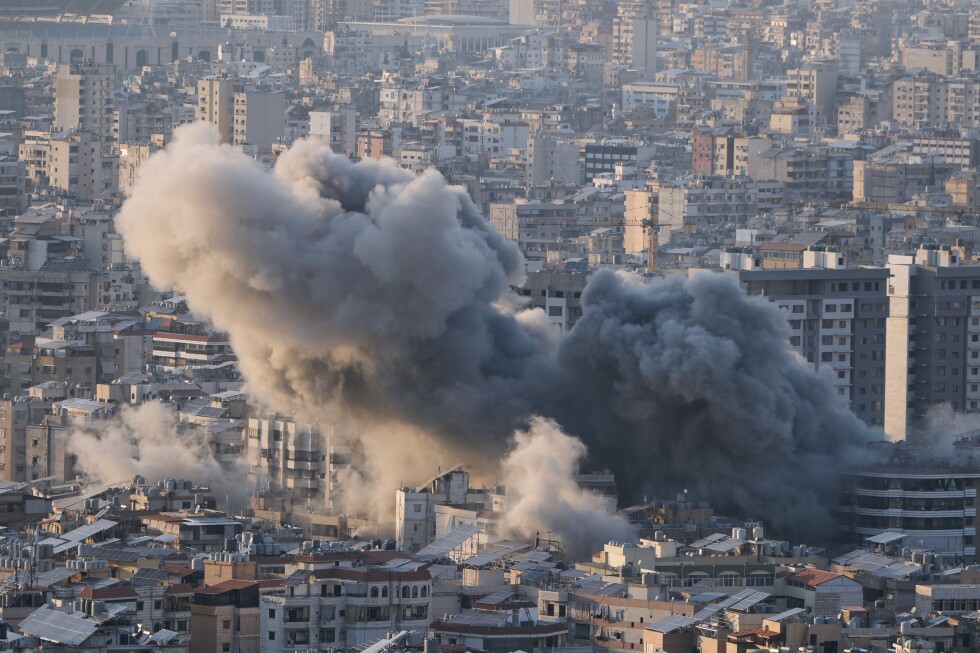
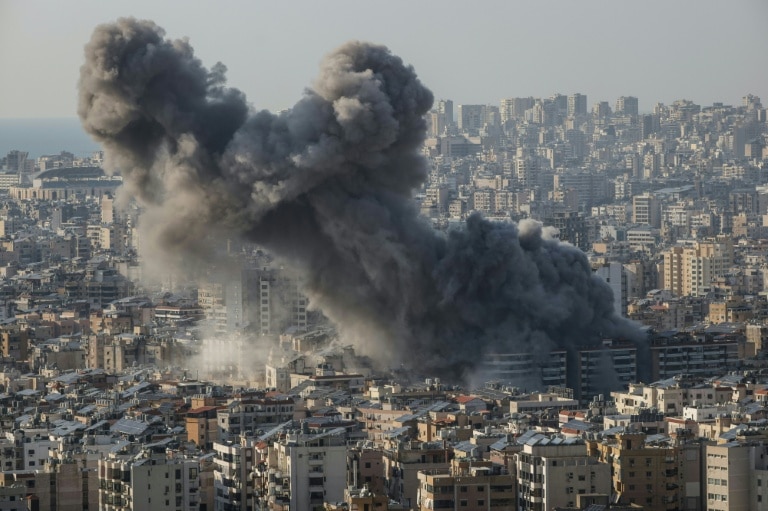
    An Israeli drone strike targeted a vehicle near the southern Lebanese city of Sidon on Monday, resulting in three fatalities according to Lebanese authorities. The attack occurred approximately 10 kilometers from the coastal city, marking one of the northernmost engagements in recent months.

    The Israeli military confirmed the operation, stating it had ‘struck several Hezbollah terrorists in the area of Sidon.’ This development comes amid mounting international pressure on Lebanon to disarm the Iran-backed militant group, particularly in southern regions bordering Israel.

    Lebanese President Joseph Aoun emphasized that ongoing negotiations aim to ‘stop the hostilities, achieve Israel’s withdrawal, return prisoners held in Israel and return southern residents to their villages.’ These diplomatic efforts include unprecedented direct talks between Lebanese and Israeli civilian representatives under the ceasefire monitoring committee’s auspices.

    Prime Minister Nawaf Salam announced that the Lebanese army’s plans for the initial phase of disarmament south of the Litani River are ‘days away from completion.’ The government has expressed readiness to proceed with subsequent phases extending north of the river based on military-prepared strategies.

    The international monitoring committee, comprising representatives from Lebanon, Israel, the United States, France, and the United Nations Interim Force in Lebanon (UNIFIL), continues to oversee these delicate proceedings. Despite a November 2024 ceasefire agreement, tensions persist with regular Israeli strikes targeting what it identifies as Hezbollah operatives.

    According to AFP tallies of Lebanese health ministry reports, Israeli military actions have resulted in over 340 fatalities in Lebanon since the ceasefire took effect. Israel maintains troops in five strategic locations in south Lebanon, citing ongoing security concerns about Hezbollah’s rearmament activities.

  • Bangladesh editors warn of ‘fight for survival’ as mob violence targets media

    Bangladesh editors warn of ‘fight for survival’ as mob violence targets media

    Media executives in Bangladesh issued urgent warnings on Monday that the nation’s press corps faces an existential threat following a wave of targeted mob violence against news organizations. The alarming escalation comes after the assassination of prominent youth activist Sharif Osman Hadi, whose death triggered widespread protests that rapidly devolved into coordinated attacks on major media institutions.

    Hadi, a 32-year-old key figure in the student-led uprising that ousted long-serving Prime Minister Sheikh Hasina last year, was fatally shot by masked assailants in Dhaka while campaigning for February’s parliamentary elections. His killing on Thursday served as the catalyst for subsequent arson and vandalism attacks targeting the offices of leading publications including The Daily Star and Prothom Alo.

    Assailants explicitly accused these media outlets of “serving the interests of India and Sheikh Hasina,” allegations that editors have vehemently denied. Hasina, who fled to India following her removal from power, remains in New Delhi despite extradition requests from Bangladeshi authorities.

    During an emergency meeting convened by the Editors’ Council and Newspaper Owners’ Association of Bangladesh, The Daily Star editor Mahfuz Anam revealed that journalists are receiving direct death threats through social media channels. “We have seen messages specifically calling for hunters to target and kill journalists from The Daily Star and Prothom Alo in their homes,” Anam stated. “This situation has moved beyond concerns about freedom of expression—it has become a fundamental struggle for the right to remain alive.”

    The crisis unfolds against Bangladesh’s troubling position at 149th out of 180 countries on the World Press Freedom Index. Human rights organizations warn that continued attacks on journalists and activists could severely constrict civic freedoms ahead of the February 12 parliamentary elections.

    Adding to the gravity of the situation, New Age editor and Editors’ Council president Nurul Kabir reported being physically assaulted while attempting to rescue colleagues during the attacks. Kabir accused the assailants of attempting to immolate journalists inside their offices.

    The interim administration led by Nobel laureate Muhammad Yunus, which currently governs Bangladesh, has characterized the violence as the work of fringe elements and promised full accountability. Yunus’ press office confirmed on Monday that police have identified 31 suspects and made nine arrests in connection with the assaults.