分类: world

  • Israeli settlers beat sheep to death and wound Palestinian farmers in Hebron attack

    Israeli settlers beat sheep to death and wound Palestinian farmers in Hebron attack

    A surge of violent attacks by Israeli settlers targeted Palestinian communities across the occupied West Bank this week, resulting in multiple casualties and significant property damage. The agricultural town of Samu, south of Hebron, witnessed particularly brutal assaults late Monday when masked settlers from the nearby Susya settlement stormed residential areas.

    The Daghameen family home was forcibly entered by settlers who physically assaulted several family members. Three injured Palestinians required medical transfer to a nearby healthcare facility for treatment. Surveillance footage documented the aftermath, revealing shattered windows, broken doors, and household items scattered in disarray.

    In a particularly disturbing development, attackers breached the family’s livestock pen where they systematically beat and shot multiple sheep to death. This incident marks the second time the Daghameen property has been targeted by settler violence. Video evidence captures settlers using long, sharp objects to batter the animals.

    This attack forms part of a broader pattern of violence across the territory. Similar incidents were reported in Aqraba and Khirbet Yanoun south of Nablus, where settlers attempted to seize Palestinian-owned land under Israeli military protection. Additional raids occurred in Beit Dajan and Beit Furik east of Nablus, where settlers used tractors to destroy extensive agricultural areas.

    The escalation occurs amid alarming statistics documenting violence against Palestinians. Over the past two years, more than 1,000 West Bank Palestinians have been killed by Israeli forces and settlers. According to the Colonisation and Wall Resistance Commission, November alone witnessed approximately 2,144 attacks against Palestinian civilians and property—1,523 perpetrated by soldiers and 621 by settlers.

    Since the beginning of Israel’s Gaza offensive, the commission estimates roughly 40,000 Israeli violations have been committed against West Bank Palestinians. Rights organizations note that recent attacks during the olive harvest season appear strategically designed to disrupt ordinary Palestinian life and force communities from their homes and farms.

  • Greater interdependence in Asia needed amid rising global conflicts

    Greater interdependence in Asia needed amid rising global conflicts

    Amid escalating global conflicts, the executive director of the Mekong Institute has issued a compelling call for strengthened regional interdependence among Asian nations. Suriyan Vichitlekarn emphasized that neighboring countries must deepen cooperative ties and economic integration as international tensions continue to rise.

    The Mekong Institute, an intergovernmental organization representing all six nations of the Greater Mekong Subregion, serves as a critical platform for regional collaboration. Member countries include Cambodia, China, Laos, Myanmar, Thailand, and Vietnam, representing one of Asia’s most economically dynamic corridors.

    Vichitlekarn’s statement comes at a time of increasing global instability, with multiple conflict zones creating ripple effects across international supply chains and diplomatic relations. The executive director positioned regional cooperation not merely as an economic advantage but as a strategic necessity in the current geopolitical climate.

    ‘The intensification of global conflicts makes it increasingly vital for neighboring countries to deepen interdependence and cooperation,’ Vichitlekarn stated, highlighting how regional solidarity can serve as a buffer against external shocks.

    The Greater Mekong Subregion has historically been a hub of economic growth and cultural exchange, with the Mekong River serving as both a geographical and symbolic connector between nations. The Institute’s work focuses on capacity building, policy dialogue, and development projects that benefit the entire region.

    This call for enhanced cooperation reflects a broader recognition among Asian leaders that regional stability and prosperity require coordinated responses to global challenges, from economic pressures to security concerns. The approach signals a shift toward more self-reliant regional frameworks in the face of international uncertainty.

  • Amsterdam-Hyderabad KLM Airlines flight gets bomb threat, lands safely

    Amsterdam-Hyderabad KLM Airlines flight gets bomb threat, lands safely

    Indian aviation authorities have responded to yet another security scare at Hyderabad’s Rajiv Gandhi International Airport after KLM Airlines Flight KL877 from Amsterdam received a bomb threat via email around midnight. The aircraft landed safely at approximately 1:00 AM local time with all passengers and crew members unharmed, according to official reports.

    Airport security personnel immediately activated established safety protocols upon notification of the threat. Comprehensive security sweeps of the aircraft were conducted, with no suspicious items or devices discovered during the inspection process.

    This incident represents the fourth such security alert at Hyderabad’s aviation facility within a three-week period. On December 6, two separate international flights—British Airways Flight 277 and Kuwait Airways Flight 373—received similar email threats. While the British Airways aircraft completed its journey successfully, the Kuwait Airways flight returned to its departure airport as a precautionary measure.

    The pattern of threats began on December 5 when Emirates Flight EK526 traveling from Dubai to Hyderabad was targeted. The previous day, an IndiGo flight from Madinah, Saudi Arabia, was diverted to Ahmedabad’s Sardar Vallabhbhai Patel International Airport following an identical threat. All affected flights in these incidents landed without incident, and thorough investigations revealed each threat to be unsubstantiated.

    Aviation security experts are increasingly concerned about the psychological and operational impacts of such repeated hoaxes, which strain emergency response resources and create unnecessary passenger anxiety. Indian authorities have launched investigations to identify the source of these threatening communications.

  • Three dead after Russia launches ‘massive’ attack across Ukraine

    Three dead after Russia launches ‘massive’ attack across Ukraine

    In a devastating pre-Christmas offensive, Russian forces unleashed what Ukrainian President Volodymyr Zelensky characterized as a ‘massive’ coordinated attack across multiple Ukrainian cities overnight Monday. The assault represents one of the most significant aerial bombardments in recent months, coming precisely as Zelensky had previously warned might occur during the holiday period.

    The human toll was immediate and tragic. Ukrainian authorities confirmed at least three civilian fatalities, including a four-year-old girl in the central Zhytomyr region who succumbed to her injuries despite emergency medical intervention. Local official Vitaly Bunechko reported five additional injuries from the same strike. Separate attacks claimed the lives of a 76-year-old woman in the Kyiv region and a 72-year-old in western Khmelnytskyy, with several others wounded across these locations.

    Military analysts noted the unprecedented scale of the drone offensive, with Ukraine reporting over 600 drones and 30 missiles deployed in the coordinated strikes. The Russian defense ministry, through state news agency Tass, acknowledged targeting energy facilities and transport infrastructure. The consequences were immediately felt across Ukraine’s power grid, with energy operator warnings of emergency shutdowns ‘in all regions’ as temperatures were forecast to drop to -7°C.

    Acting Energy Minister Artem Nekrasov revealed this marked the ninth major assault on Ukraine’s energy infrastructure this year, with the Rivne, Ternopil and Khmelnytsky regions experiencing near-total power loss. Ukrainian MP Oleksandr Merezhko warned some areas might remain without electricity ‘for days,’ creating a humanitarian crisis amid freezing conditions.

    The attack shattered a period of relative calm in Kyiv, where residents had grown unaccustomed to the ominous sound of low-flying Shahed drones. Many in the capital speculated the timing was connected to Monday’s car bomb assassination in Moscow that killed Lt Gen Fanil Sarvarov, a top Russian general, though Kyiv maintained silence on the incident.

    President Zelensky framed the Christmas-season assault as revealing ‘an extremely clear signal about Russia’s priorities’ despite ongoing peace negotiations. He noted that the United States had proposed a Christmas truce that Russia rejected, adding that ‘Putin still cannot accept that he must stop killing’ and suggesting insufficient international pressure on Moscow.

    The geographical scope of attacks appeared strategically significant, with particular focus on the southern port city of Odesa following Vladimir Putin’s recent threats to sever Ukraine’s Black Sea access. This retaliation was reportedly prompted by Ukrainian drone attacks on Russian ‘shadow fleet’ tankers evading Western sanctions.

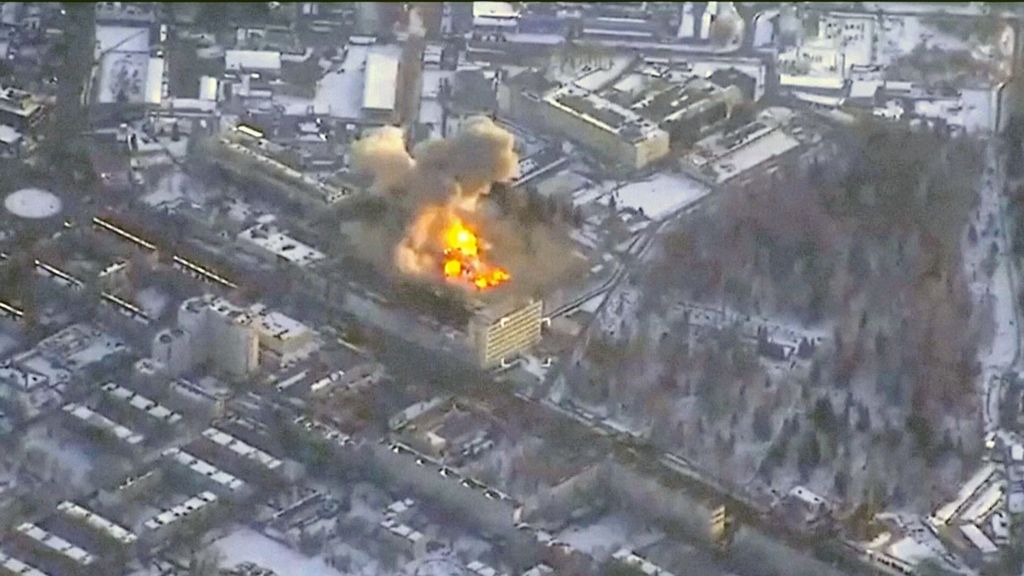
    Simultaneously, Ukraine demonstrated its capacity to strike back, reportedly hitting a petrochemical plant in Stavropol, southern Russia. Online footage showed substantial flames erupting from the facility, though regional governor Vladimir Vladimirov reported no casualties or residential damage.

    The offensive occurred against the backdrop of ongoing diplomatic efforts, with US-led talks in Miami reportedly producing ‘several draft documents’ addressing conflict resolution, security guarantees, and post-war recovery. Both Zelensky and Putin were expected to receive briefings on these developments Tuesday.

  • At least five killed after Mexican Navy plane crashes off US coast

    At least five killed after Mexican Navy plane crashes off US coast

    A Mexican Navy aircraft engaged in a humanitarian medical mission crashed into the waters off the coast of Galveston, Texas, on Monday, resulting in five fatalities and leaving one individual missing. The US Coast Guard has initiated extensive search operations for the missing person.

    The aircraft, which departed from Merida in Mexico’s Yucatan state, was transporting eight individuals. It was performing a specialized medical evacuation coordinated with a Mexican foundation dedicated to providing care for children suffering from severe burns. The flight was approaching its destination near Scholes International Airport in Galveston when the accident occurred.

    Initial reports from the Mexican Navy Secretariat confirmed two survivors and two fatalities. However, the death toll was later revised upward to five. The precise cause of the crash remains under investigation. The incident underscores the inherent risks associated with aerial medical transport missions, even those conducted by military personnel for humanitarian purposes. The international collaboration between Mexican and US authorities highlights the cross-border efforts in emergency response and tragedy management.

  • Thousands fleeing DR Congo violence facing ‘dire conditions’ in Burundi – aid agencies

    Thousands fleeing DR Congo violence facing ‘dire conditions’ in Burundi – aid agencies

    A severe humanitarian emergency is unfolding in Burundi as nearly 90,000 refugees from the eastern Democratic Republic of Congo endure catastrophic living conditions following renewed violence. Aid organizations report these displaced populations are crammed into overcrowded camps with critically insufficient access to food, clean water, and medical services.

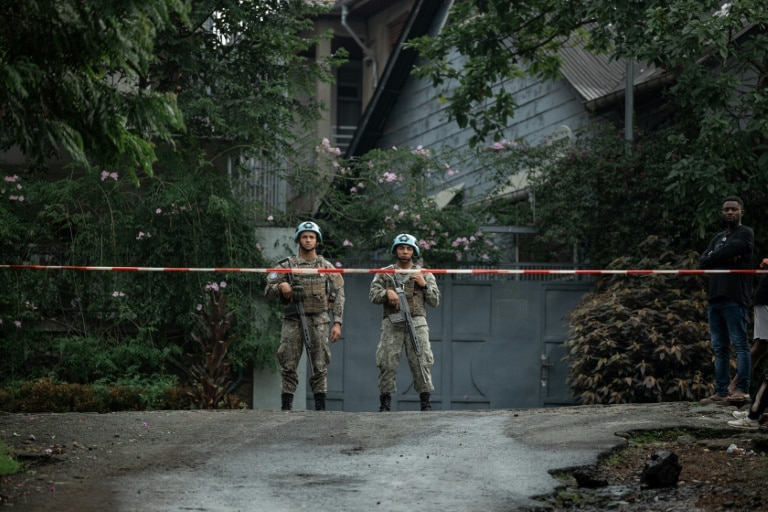
    The crisis erupted when M23 rebel forces captured the strategic border city of Uvira in early December, triggering mass displacement throughout South Kivu province. While rebels claim to have withdrawn from the area under international pressure, Congolese authorities contest these assertions, leaving the security situation volatile.

    Medical charity Médecins Sans Frontières (MSF) has been providing emergency medical care, treating approximately 200 patients daily at their facilities in northwest Burundi. Project coordinator Zakari Moluh described heartbreaking scenes: “We witness people in states of profound distress, despair and exhaustion. Our teams have assisted women who gave birth during their escape, with some delivering in our clinics.”

    The UN Refugee Agency (UNHCR) confirms particularly vulnerable groups include children, pregnant women, and nursing mothers, with many reporting days without adequate nutrition. MSF has raised alarms about potential disease outbreaks, warning of heightened risks for cholera, measles, and catastrophic increases in malaria cases among the weakened population.

    Concurrently, the World Food Programme (WFP) is scaling up life-saving assistance to reach over 210,000 of the most vulnerable displaced individuals. The agency reports approximately half a million people have been forced from their homes in South Kivu since December began. WFP is currently providing hot meals to 71,000 new Congolese arrivals in Burundian transit centers.

    The humanitarian situation is compounded by the near-collapse of essential services throughout the province. Health facilities have been systematically looted, medical supplies are unavailable, and educational institutions remain shuttered. WFP has issued urgent appeals for additional funding to sustain food assistance programs through the next quarter.

    This recent capture of Uvira represents an expansion of M23’s territorial control in eastern DRC, building upon previous seizures of major urban centers including Goma and Bukavu. The conflict continues despite US-brokered peace agreements between Congolese and Rwandan governments, with Washington accusing Kigali of supporting the rebel group—allegations Rwanda denies.

    The M23 rebels, while not signatories to the US-mediated agreement, have participated in parallel peace negotiations facilitated by Qatar, a US ally maintaining strong diplomatic ties with Rwanda.

  • Gunmen abduct 28 Muslim travellers in central Nigeria

    Gunmen abduct 28 Muslim travellers in central Nigeria

    In a troubling escalation of Nigeria’s security crisis, 28 individuals traveling to an annual Islamic gathering in central Plateau State were violently abducted by armed assailants on Sunday night, according to local sources reporting to the BBC. The victims, comprising women and children among other passengers, were ambushed while their bus traversed between rural villages.

    This latest incident occurs merely 24 hours after Nigerian authorities secured the release of 130 students and educators from a Catholic boarding school in Niger State, where they had been held captive since last month. A Plateau-based journalist confirmed that families of the newly kidnapped victims have already begun receiving ransom demands from the perpetrators, whose identities remain unknown. Official authorities have not yet issued any public statement regarding the abduction.

    Criminal factions referred to locally as ‘bandits’ have increasingly employed kidnapping-for-ransom as a primary revenue strategy throughout northern and central Nigeria. While official policy prohibits monetary payments to secure hostages’ freedom, such transactions have become the de facto resolution method in numerous cases, effectively bankrolling these criminal enterprises.

    Notably, security analysts emphasize that these bandit operations remain distinct from the protracted Islamist insurgency raging in Nigeria’s northeast, where jihadist organizations have engaged in armed conflict with government forces for over a decade.

    The persistent security challenges have drawn international scrutiny, particularly after controversial remarks from former US President Donald Trump in November threatened military intervention. Recent diplomatic engagements between Nigerian Information Minister Mohammed Idris and US officials have reportedly eased tensions, with Idris announcing that bilateral relations have been ‘largely resolved’ and strengthened.

    Concurrently, Nigeria’s federal government unveiled new security measures including the deployment of specially trained forest guards to secure remote areas and forest hideouts used by criminal organizations, augmenting existing military operations across affected regions.

  • Tanker seized off Venezuelan coast sparks international outcry

    Tanker seized off Venezuelan coast sparks international outcry

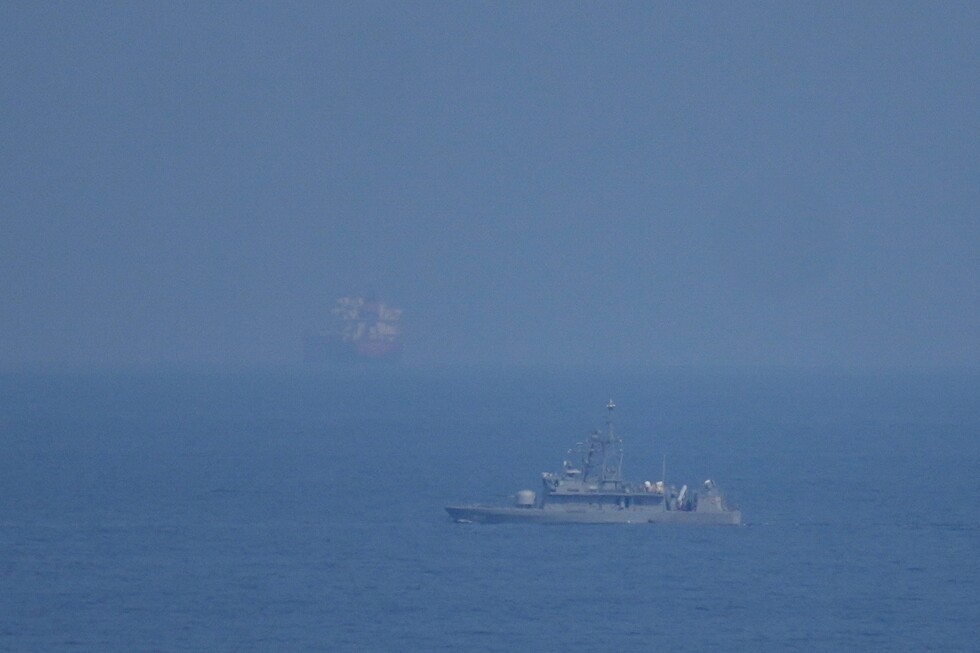
    A dramatic escalation in Caribbean waters has ignited international controversy as United States Coast Guard forces intercepted multiple oil tankers operating near Venezuela. The latest seizure occurred on Saturday when US authorities boarded a vessel in international waters, alleging it operated under false flags as part of Venezuela’s ‘shadow fleet’ transporting sanctioned oil.

    The White House justified these actions as necessary measures against what it describes as illicit oil trafficking that funds ‘narco-terrorism’ in the region. US Homeland Security Secretary Kristi Noem affirmed the administration’s commitment to continuing these interceptions, while President Donald Trump has ordered a comprehensive blockade against sanctioned vessels traveling to or from Venezuelan ports.

    China has emerged as a vocal critic of these operations, with Foreign Ministry spokesman Lin Jian condemning the seizures as violations of international law during a Monday press briefing. Beijing maintains strong opposition to unilateral sanctions lacking UN Security Council authorization and rejects actions that compromise other nations’ sovereignty and security.

    The Venezuelan government has denounced the seizures as ‘blatant theft and acts of international piracy,’ vowing that these actions will not go unpunished. Official statements from Caracas have highlighted concerns about the ‘enforced disappearance’ of crew members aboard intercepted vessels.

    Regional response has been notably critical, with Brazilian President Luiz Inacio Lula da Silva warning that armed intervention in Venezuela would create ‘a humanitarian catastrophe for the hemisphere.’ Multiple Latin American nations and regional organizations have called for diplomatic solutions through United Nations channels.

    The strategic significance of these operations is underscored by Venezuela’s status as holder of the world’s largest proven oil reserves, exporting approximately 770,000 barrels daily. Each seized tanker was reportedly carrying around one million barrels of crude oil.

    This maritime confrontation occurs against a substantial US military buildup in the Caribbean, including 15,000 personnel, 11 warships featuring the aircraft carrier USS Gerald R. Ford, and multiple support vessels. Since September, US forces have sunk over 28 vessels allegedly transporting drugs in Caribbean and eastern Pacific waters, resulting in more than 100 fatalities.

    Analysts suggest these developments represent not merely economic enforcement but potentially broader geopolitical objectives, with critics alleging the Trump administration may be using naval blockades to precipitate governmental change in Venezuela or create pretexts for military engagement.

  • Major Russian drone and missile attack on Ukraine kills at least 3 people and cuts power

    Major Russian drone and missile attack on Ukraine kills at least 3 people and cuts power

    In a devastating pre-Christmas offensive, Russian forces unleashed a massive barrage of 635 drones and 38 missiles across Ukraine, killing at least three civilians including a 4-year-old child. The large-scale attack, which began overnight and continued into daylight hours Tuesday, targeted civilian infrastructure across 13 regions, causing widespread power outages during bitter winter conditions.

    Ukrainian President Volodymyr Zelenskyy condemned the assault as a deliberate signal of Russia’s true intentions, coming just two days before Christmas and amid U.S.-led peace negotiations that he had previously described as showing ‘quite solid’ progress. The bombardment struck residential areas, energy facilities, and critical infrastructure, leaving multiple western regions without electricity and damaging over 120 homes in the Odesa region alone.

    According to Ukrainian defense reports, air interception systems successfully neutralized 587 drones and 34 missiles, though significant damage occurred to the country’s energy grid. This represents the ninth major Russian attack on Ukraine’s energy infrastructure this year, with private energy supplier DTEK reporting this as the seventh major strike on their facilities since October. The company’s thermal power plants have endured more than 220 attacks since the full-scale invasion began in February 2022, resulting in four worker fatalities and 59 injuries.

    The timing of the assault appears strategically significant, occurring alongside diplomatic efforts led by U.S. envoy Steve Witkoff, who characterized recent talks with Ukrainian and European representatives as ‘productive and constructive.’ President Zelenskyy interpreted the military escalation as Vladimir Putin’s explicit rejection of peaceful resolution, stating the attack demonstrated that Russia ‘cannot accept the fact that we must stop killing.’ Emergency services worked to restore power across affected regions as security conditions permitted, while international observers noted the stark contrast between diplomatic overtures and military actions on the ground.

  • Five dead after plane carrying child burns victim crashes in Texas

    Five dead after plane carrying child burns victim crashes in Texas

    A humanitarian medical flight operated by the Mexican Navy met with tragedy on Monday when it crashed into the waters near Galveston, Texas, under dense fog conditions, resulting in five fatalities and one individual reported missing. The aircraft was conducting a critical mission for the Michou y Mau Foundation, transporting a child with severe burns for specialized medical treatment at the time of the incident.

    According to data from Flight Radar, the last known position of the aircraft was recorded at 15:01 local time over Galveston Bay, in close proximity to Scholes International Airport. The Mexican Secretariat of the Navy confirmed that two survivors were rescued from the wreckage, while search operations for the missing person continue in coordination with the U.S. Coast Guard.

    Eyewitness accounts and video footage obtained by the Associated Press depict a harrowing rescue scene. Local yacht captain Sky Decker Jr., who assisted first responders, described discovering a severely injured woman trapped in the wreckage with merely three inches of airspace for breathing amid toxic jet fuel fumes. ‘She was really fighting for her life,’ Decker recounted, highlighting the perilous conditions faced by both victims and rescuers.

    The Michou y Mau Foundation, renowned for providing medical care to Mexican children suffering from severe burns, issued an official statement on social media platform X expressing their deepest condolences to the families affected by this devastating tragedy. The organization has temporarily suspended medical transport operations pending preliminary investigation results.

    Aviation safety authorities from both Mexico and the United States have initiated a collaborative investigation into the circumstances surrounding the crash, with particular focus on the challenging meteorological conditions that characterized the flight path. The incident represents one of the deadliest aviation accidents involving cross-border medical missions in recent years.