分类: world

  • Another 130 abducted schoolchildren released in Nigeria

    Another 130 abducted schoolchildren released in Nigeria

    Nigerian authorities have successfully secured the liberation of the remaining 130 students and staff members who were abducted during a mass kidnapping at St Mary’s Catholic boarding school in Papiri, central Nigeria. The federal government heralded this development as a “moment of triumph and relief” following one of the country’s most severe school abduction crises.

    The incident began on November 21st when armed assailants stormed the educational facility, initially seizing more than 250 children and staff members. Earlier this month, approximately 100 children were released in a preliminary breakthrough, though confusion persisted regarding the exact number of captives remaining.

    Presidential spokesperson Bayo Onanuga confirmed Sunday that the total number of freed students has reached 230. Official communications posted on government social media channels emphasized that “not a single pupil is left in captivity” from the November incident.

    The resolution of this crisis comes amidst growing security concerns across northern and central Nigeria, where educational institutions and religious centers have increasingly become targets for criminal elements. Just days before the St Mary’s abduction, similar attacks occurred at Christ Apostolic Church in Kwara state (resulting in 38 kidnappings) and Government Girls’ Secondary School in Kebbi state (where 25 Muslim students were taken). All victims from those prior incidents have since been freed.

    While government officials have not disclosed operational details regarding the rescue methodology or potential ransom payments, neighboring Nasarawa state governor Abdullahi Sule previously acknowledged the federal government’s crucial involvement in these sensitive negotiations, citing security reasons for the confidentiality.

    The Christian Association of Nigeria reported that approximately 50 students managed to escape during the initial abduction event. The recently freed students are expected to arrive in Minna, the capital of Niger state, on Monday, with official photographs already showing children smiling and waving following their release.

    President Bola Ahmed Tinubu reiterated on December 9th that his administration remains committed to collaborating with state governments to enhance school security and create safer learning environments throughout Nigeria.

  • Australia falls silent, lights candles for Bondi Beach shooting victims

    Australia falls silent, lights candles for Bondi Beach shooting victims

    Australia stood united in solemn remembrance on Sunday as citizens nationwide observed a moment of silence and illuminated candles to honor the fifteen lives lost in the devastating Bondi Beach shooting. The tragic incident, which occurred exactly one week prior during a Hanukkah celebration, represents the deadliest mass shooting the nation has witnessed in nearly three decades.

    At precisely 6:47 PM local time, the country fell silent—from vibrant urban centers to tranquil rural communities—marking the exact moment gunfire first erupted at the beachside festival. The nationwide gesture was accompanied by a powerful visual symbol as countless households placed candles on windowsills, embodying the Hanukkah theme of ‘light over darkness.’

    Approximately 20,000 mourners gathered along the Bondi foreshore as dusk descended, participating in an emotionally charged vigil where Rabbi Yehoram Ulman solemnly read the names of each victim. Among those memorialized were Matilda, a ten-year-old girl who became the youngest victim, and 87-year-old Holocaust survivor Alex Kleytman, who reportedly perished while shielding his wife from bullets.

    The alleged perpetrators—identified as Sajid Akram, an Indian national who entered Australia in 1998 and was subsequently killed by police, and Naveed, an Australian-born citizen currently hospitalized under police guard—face multiple charges including terrorism and fifteen counts of murder.

    While the ceremony emphasized unity and remembrance, underlying tensions surfaced regarding the government’s response to rising antisemitic incidents. Prime Minister Anthony Albanese faced audible dissent from portions of the crowd, with one individual shouting ‘Blood on your hands’ as he arrived at the vigil.

    Amid the tragedy, stories of extraordinary courage have emerged, including shopkeeper Ahmed al Ahmed, a Syrian immigrant and father of two, who successfully wrested a firearm from one attacker after maneuvering between vehicles. Additional accounts describe beachgoers confronting the heavily armed assailants, shielding strangers, and rushing through active gunfire to administer aid to the wounded.

  • 130 schoolchildren and staff abducted in Nigeria last month have been released, police say

    130 schoolchildren and staff abducted in Nigeria last month have been released, police say

    ABUJA, Nigeria — In a significant development following weeks of uncertainty, Nigerian authorities have confirmed the successful liberation of the remaining 130 students and staff members who were held captive since their abduction from St. Mary’s Catholic School last month. The November 21st raid by armed gunmen in Niger state’s Papiri community had initially resulted in the capture of 303 students and 12 teachers.

    The resolution came through what presidential spokesperson Bayo Onanuga described as a “military intelligence driven operation” that culminated in the hostages’ release on Sunday. According to official statements from both police and government representatives, all formerly captive individuals are scheduled to reunite with their families in Minna, the state capital, ahead of Christmas celebrations.

    This incident represents one of the most severe mass abductions in Nigeria’s ongoing security crisis, though it follows a pattern of similar attacks targeting educational institutions and houses of worship. While no group has formally claimed responsibility, local communities attribute such kidnappings to armed gangs operating predominantly in Nigeria’s northern regions, where ransom-driven abductions have become increasingly prevalent.

    The coordinated response involved multiple government agencies, with Niger State police spokesperson Wasiu Abiodun verifying the release of “the remaining batch of abducted students.” Concurrently, Sunday Dare, another presidential spokesperson, asserted that no children remain in captivity following this operation.

    This successful resolution occurs against a backdrop of international scrutiny regarding Nigeria’s handling of security challenges, particularly those affecting religious communities and educational institutions.

  • In rebel-held Myanmar, civilians face devastating air strikes and a sham election

    In rebel-held Myanmar, civilians face devastating air strikes and a sham election

    In Myanmar’s western Chin State, a humanitarian catastrophe unfolds as thousands of civilians flee intensified military operations ahead of scheduled elections. Iang Za Kim, among those displaced, describes the terror of November 26 when airstrikes targeted her village of K-Haimual. ‘We thought the junta’s planes would bomb us too,’ she recounts, her voice trembling. ‘We grabbed what we could and ran into the jungles.’

    The military junta, which seized power in February 2021, has launched its most aggressive campaign in over three years to recapture rebel-held territories. The offensive combines aerial bombardments with ground operations, disproportionately affecting civilian infrastructure. According to the Chin Human Rights Organisation, at least three schools and six churches have been targeted since mid-September, resulting in 12 fatalities including six children.

    Verified evidence confirms the October 13 bombing of Vanha village school that killed two students—seven-year-old Johan Phun Lian Cung and twelve-year-old Zing Cer Mawi—during lessons. The military government has not responded to BBC’s inquiries regarding these allegations.

    Many displaced persons have crossed into India’s Mizoram state, finding temporary shelter in makeshift facilities like a repurposed badminton court in Vaphai village. Indian locals have provided basic sustenance, but conditions remain dire. Eighty-year-old Ral Uk Thang, having endured days in jungle shelters, states: ‘We’re afraid of our own government. They are extremely cruel.’

    The upcoming elections, scheduled to begin December 28, are widely condemned as illegitimate. With Aung San Suu Kyi’s National League for Democracy barred from participation and most senior leaders imprisoned, civilians fear forced voting under threat of imprisonment and torture. ‘If we voted for a party not allied with the military, I believe they will steal our votes,’ Iang Za Kim asserts.

    Rebel groups characterize the electoral process as a sham designed to perpetuate military dictatorship. Sui Khar, Vice Chairman of the Chin National Front, notes the contradiction: ‘In Chin State, they hardly control much area, so how can they hold an election?’

    The human cost extends to combatants as well. At a rebel base hospital, eighteen-year-old Abel lies incapacitated after losing his right leg and sustaining severe hand injuries during recent fighting. Nearby, nineteen-year-old Si Si Maung, also amputated, declares: ‘I’ve lost a leg, but even if I’ve to give up my life I’m happy to make the sacrifice so that future generations have a better life.’

    Despite the overwhelming military advantage—with hundreds of soldiers supported by airstrikes, artillery, and drone units—the resistance continues its advance. Yet for elderly civilians like Ral Uk Thang, hope diminishes: ‘I don’t think I will live to see democracy restored in Myanmar. I hope my children and grandchildren can witness it some day.’

  • Sudan drone attack on Darfur market kills 10, say rescuers

    Sudan drone attack on Darfur market kills 10, say rescuers

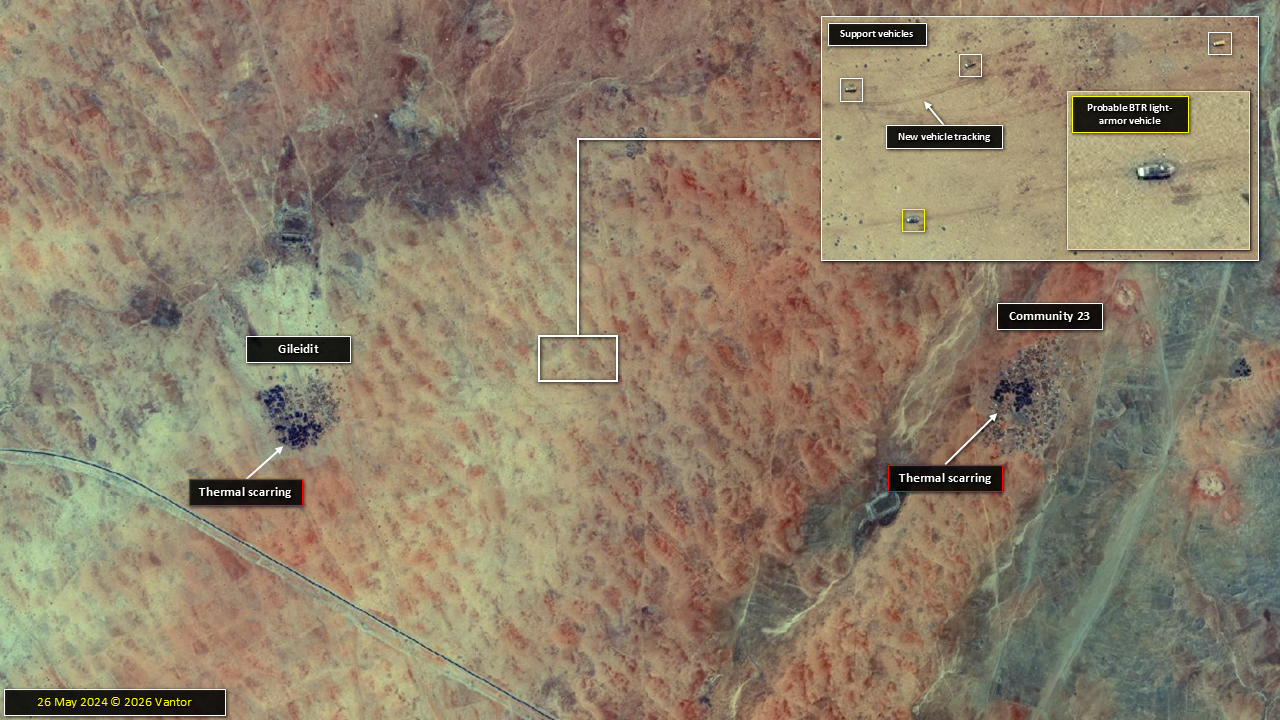
    A deadly drone strike targeted a bustling marketplace in Sudan’s North Darfur state over the weekend, resulting in at least 10 fatalities according to local emergency responders. The attack struck Al-Harra market in the paramilitary-controlled town of Malha on Saturday, igniting fires that consumed multiple shops and caused substantial property damage.

    The North Darfur Emergency Rooms Council, part of Sudan’s extensive network of volunteer aid organizations, confirmed the incident while refraining from attributing responsibility to any specific faction. Neither the Sudanese army nor the Rapid Support Forces (RSF) paramilitary group have issued statements regarding the attack.

    This violence occurs amid intensified fighting across multiple regions of Sudan, particularly in South Kordofan where the conflict’s current epicenter has emerged. The strategic city of Kadugli, already grappling with famine conditions, witnessed the complete evacuation of humanitarian workers on Sunday due to deteriorating security. This evacuation followed the United Nations’ decision to relocate its logistical hub from the besieged city.

    The ongoing civil war, which erupted in April 2023 between the national army and RSF forces, has created one of the world’s most severe humanitarian crises. The conflict has claimed tens of thousands of lives while displacing nearly 12 million people—the largest displacement crisis globally. Recent RSF advancements have shifted the battlefield toward resource-rich Kordofan, a critical junction connecting army-controlled northern territories with RSF-dominated western regions.

    Communications blackouts and widespread famine have compounded the suffering, with Kadugli residents reportedly foraging in nearby forests for sustenance. The conflict has effectively partitioned Sudan into separate zones of control, with the army maintaining authority over northern, eastern, and central areas while the RSF commands all five state capitals in Darfur and significant southern territories.

  • Israeli forces kill Palestinian teenager near Jenin

    Israeli forces kill Palestinian teenager near Jenin

    Israeli military operations in the occupied West Bank resulted in the deaths of two Palestinian youths on Saturday, marking continued violence in the region despite the ongoing ceasefire in Gaza. The incidents occurred near the city of Jenin, with both fatalities involving controversial circumstances that have drawn international scrutiny.

    In the first incident, 16-year-old Rayyan Abu Mualla was fatally shot by Israeli soldiers in Qabatiya, south of Jenin. Palestinian authorities reported that the teenager was killed at close range after allegedly throwing a stone toward military personnel. Circulating video footage appears to show the moment of the shooting as Abu Mualla approached the soldiers. The Israeli military stated in an official communiqué that their forces responded after the youth “threw a brick” in their direction.

    Medical response teams faced significant obstacles during the aftermath, with Palestinian news agency Wafa reporting that Israeli soldiers blocked ambulance crews from reaching the wounded teenager, effectively leaving him to bleed to death. In a further controversial move, Israeli forces subsequently withheld the victim’s body from being returned to his family.

    Separately, in the town of Silat al-Harithiya west of Jenin, Israeli forces conducted a raid that resulted in the death of 22-year-old Ahmad Zyoud. Military officials claimed Zyoud was shot after “hurling an explosive device” toward security personnel during the operation.

    These latest fatalities occur within a broader context of escalating violence across the West Bank since the commencement of Israel’s military campaign in Gaza two years ago. According to statistics compiled from Palestinian health ministry figures by AFP, Israeli troops or settlers have killed more than 1,000 Palestinians in the West Bank since the start of the Gaza conflict.

    Disturbingly, the Palestinian health ministry has documented that 51 Palestinian minors have lost their lives to Israeli forces in the West Bank since January alone. November witnessed particularly severe violence, with the Colonisation and Wall Resistance Commission reporting approximately 2,144 attacks by Israeli forces and settlers against Palestinian civilians and their property—1,523 perpetrated by soldiers and 621 by settlers.

  • ICC to decide by January if ex Philippine President Rodrigo Duterte is fit for trial

    ICC to decide by January if ex Philippine President Rodrigo Duterte is fit for trial

    The International Criminal Court (ICC) is poised to deliver a crucial determination regarding former Philippine President Rodrigo Duterte’s capacity to stand trial by January 2026. This development follows the completion of a comprehensive medical evaluation assessing his cognitive abilities.

    ICC assistant counsel Atty. Kristina Conti disclosed this timeline during a radio interview with Super Radyo DZBB on December 21, indicating the court’s systematic approach to addressing health concerns raised by the defense team. The medical assessment, submitted by a panel of experts by the December 5 deadline set by ICC Pre-Trial Chamber I, reportedly concluded that Duterte remains capable of meaningful participation in pre-trial proceedings.

    This evaluation directly contradicts claims presented by defense attorney Nicholas Kaufman, who asserted the 80-year-old former leader suffers from severe memory impairment affecting his recollection of events, timelines, and even family members. Kaufman had previously requested an indefinite adjournment based on these cognitive concerns.

    The impending fitness determination represents a critical juncture in the case against Duterte, who faces charges of crimes against humanity related to the violent anti-drug campaign he initiated during his tenure as Davao City mayor and later as Philippine president. Currently detained in The Hague, Netherlands, Duterte recently saw his appeal for interim release denied by the ICC Appeals Chamber on November 28.

    Conti emphasized the prosecution’s confidence in their evidence, noting that arrest warrants would not be pursued unless the case reached trial readiness. The January decision will therefore determine whether proceedings will advance or face further delays due to health considerations.

  • Civilian death toll in Cambodia rises to 19 in renewed conflict with Thailand

    Civilian death toll in Cambodia rises to 19 in renewed conflict with Thailand

    The protracted border dispute between Cambodia and Thailand has escalated dramatically, with Cambodian authorities reporting a sharp increase in civilian casualties. Defense Ministry officials confirmed the death toll has reached 19 civilians, including an infant, with 79 others sustaining injuries as of December 20, 2025.

    The conflict, which reignited on December 7 after a period of relative calm, has now entered its fifteenth consecutive day of hostilities. Lieutenant General Maly Socheata, Undersecretary of State and Defense Ministry Spokesperson, provided the updated casualty figures during a press briefing in Phnom Penh, highlighting the devastating human cost of the renewed fighting.

    According to documentation from Cambodia’s Ministry of Interior, the violence has triggered a massive humanitarian crisis, displacing approximately 510,000 residents from border communities. These individuals have been forced to abandon their homes and seek refuge in emergency shelters as aerial bombardments and ground operations continue along the contested frontier.

    Visual evidence from the Agence Kampuchea Press reveals the extensive damage inflicted on civilian infrastructure, including images of a devastated automotive garage in Poipet town, Banteay Meanchey province, following reported Thai airstrikes. The photographic documentation underscores the conflict’s impact on non-combatants and economic facilities far from the immediate border zone.

    The prolonged engagement represents the most significant escalation between the Southeast Asian neighbors in recent years, with both sides reporting military casualties alongside the growing civilian toll. International observers express increasing concern about the potential for further regional destabilization as diplomatic efforts to mediate a ceasefire continue.

  • South Africa: 10 killed, 10 others wounded in mass shooting

    South Africa: 10 killed, 10 others wounded in mass shooting

    In a devastating recurrence of violence, unidentified assailants have executed a mass shooting in the impoverished township of Bekkersdal, approximately 40 kilometers southwest of Johannesburg, resulting in ten fatalities and ten injuries. The attack occurred in the early hours near an informal tavern, marking the second such tragedy to strike South Africa within December alone.

    According to Gauteng provincial police spokesperson Brigadier Brenda Muridili, victims were struck down indiscriminately in public streets by unknown gunmen. The precise motive behind the assault remains undetermined as investigations continue. All wounded individuals have been transported to nearby medical facilities for emergency treatment.

    This incident echoes a similarly brutal attack on December 6th, when armed individuals stormed a hostel near Pretoria, killing twelve people including a three-year-old child. That shooting was also linked to an establishment illegally selling alcohol.

    The Bekkersdal community exists in close proximity to several of South Africa’s major gold mines, characterized by widespread poverty and social challenges. These events highlight the nation’s ongoing struggle with severe violent crime. With a population of 63 million, South Africa consistently reports one of the world’s highest homicide rates, presenting a persistent crisis for law enforcement and government authorities.

  • 5.5-magnitude quake hits off Japan’s Aomori Prefecture

    5.5-magnitude quake hits off Japan’s Aomori Prefecture

    A moderate earthquake registering 5.5 magnitude struck off the coast of Japan’s Aomori Prefecture on Sunday morning, according to the Japan Meteorological Agency (JMA). The seismic event occurred at 10:29 am local time, with its epicenter positioned approximately 50 kilometers beneath the Pacific Ocean floor at coordinates 40.7 degrees north latitude and 142.3 degrees east longitude.

    The tremblor registered a 4 on Japan’s seismic intensity scale, which peaks at 7, indicating noticeable shaking capable of awakening sleepers and causing objects to rattle significantly. Despite the substantial magnitude, meteorological authorities confirmed no tsunami advisory would be issued following comprehensive assessment of oceanic data.

    This seismic activity comes amid heightened geological sensitivity in the region. Just thirteen days prior to this event, a much more powerful 7.5 magnitude earthquake had rattled northern and northeastern Japan on December 8th. That significant temblor had prompted Japanese authorities to issue a week-long alert regarding potential aftershocks and subsequent seismic events, which was only lifted the previous Monday.

    JMA officials, while not issuing new alerts following Sunday’s quake, continued to emphasize the importance of earthquake preparedness and urged residents throughout the affected regions to maintain vigilance. The agency reiterated standard safety protocols, including taking cover during shaking and being aware of potential hazards even from moderate quakes.

    Northern Japan’s Pacific coastline remains one of the world’s most seismically active regions due to its position along the Pacific Ring of Fire, where several tectonic plates converge and frequently interact.