分类: world

  • Case filed against Equatorial Guinea for sending US deportees to nations where they face persecution

    Case filed against Equatorial Guinea for sending US deportees to nations where they face persecution

    DAKAR, SENEGAL — Human rights legal teams have initiated a high-stakes legal challenge against Equatorial Guinea at the African Union’s premier human rights watchdog, alleging the Central African nation has violated fundamental human rights by forcibly transferring U.S.-deported migrants onward to their home countries where they face targeted persecution.

    The complaint, filed Friday with the African Commission on Human and Peoples’ Rights (ACHPR), calls for the regional body to immediately order Equatorial Guinea to suspend all further deportations, transfers and removals of third-country deportees, overhaul inhumane detention conditions, and award financial compensation to the migrants who have already been forcibly sent to their countries of origin.

    The litigation is being advanced by a coalition of human rights organizations led by the Global Strategic Litigation Council (GSLC), acting on behalf of 14 African migrants who were deported from the United States to Equatorial Guinea between November 2025 and April 2026. Rights advocates frame the proceeding as a landmark test case for migrant rights across the continent, even though the ACHPR’s rulings are not legally binding. The commission has the authority to issue urgent measures and refer contested cases to the African Court on Human and Peoples’ Rights, and advocates say the case could build critical pressure on African governments that have accepted U.S. third-country deportations under opaque bilateral agreements.

    Beatrice Njeri, GSLC’s regional litigator for Africa, noted this is the first regional case involving migrants who held formal U.S. legal protection from removal yet were still routed through third countries to persecution zones. It follows a similar ACHPR ruling earlier this year that allowed a challenge to the unlawful prolonged detention of third-country deportees in Eswatini to proceed. One month after that ACHPR order, Eswatini’s Supreme Court ruled that four detained deportees could finally access in-person legal counsel after being denied access for nine months in a maximum-security facility.

    The case grows out of a controversial U.S. immigration policy implemented during the Trump administration: under a series of largely unpublicized bilateral deals, the administration deported thousands of asylum seekers and migrants to nearly 24 countries that are not their nations of origin, as part of a broad crackdown on unauthorized immigration. Immigration attorneys have long labeled this third-country deportation strategy a deliberate legal loophole designed to indirectly force protected asylum seekers back to the countries they fled, in violation of international refugee law. Equatorial Guinea is one of at least eight African nations that have signed such third-country deportation agreements with Washington.

    Just last week, Equatorial Guinean authorities transferred six of the U.S.-deported migrants onward to their home countries in East Africa, a move legal teams describe as “chain refoulement” — the indirect return of protected people to persecution zones, even after U.S. immigration judges barred their removal under federal law. Attorneys confirm the migrants face widespread persecution in their home countries on the basis of political affiliation, religious belief, ethnic identity and sexual orientation. Many had previously faced arrest, detention, torture and sexual violence at the hands of state security forces in their countries of origin before fleeing.

    In the aftermath of last week’s transfers, two of the six deportees have already fled again to neighboring countries and gone into hiding. A third has not been contacted since his forced return, leaving legal teams deeply concerned for his safety and well-being. The remaining three were turned away by their home country, which refused entry because it received no advance notification of their arrival and the migrants lacked valid travel documentation. Stranded, they were sent back to Equatorial Guinea, where they remain trapped in legal limbo.

    “They have effectively been rendered stateless,” said Bella Mosselmans, GSLC’s director, describing the entire process as a “cycle of hell” for vulnerable migrants.

    The controversial deportation arrangement between the U.S. and Equatorial Guinea stems from an opaque $7.5 million bilateral deal that has brought at least 32 U.S.-deported migrants to the Central African nation to date. U.S. Senator Jeanne Shaheen, the top Democratic member of the Senate Foreign Relations Committee, has publicly labeled Equatorial Guinea’s government “one of the most corrupt governments in the world.”

    The Associated Press has previously investigated the conditions facing deportees in Equatorial Guinea, gaining exclusive access to a repurposed hotel that the government of long-ruling President Teodoro Obiang Nguema Mbasogo has converted into an open-air prison for U.S.-deported asylum seekers. While Equatorial Guinea ranks among Africa’s wealthiest countries per capita due to its vast offshore oil reserves, it remains plagued by systemic corruption and widespread human rights abuses, according to senior U.S. officials and global human rights monitors.

    Critical opposition is effectively banned in the country, and the government has repeatedly been accused by rights groups and the U.S. State Department of arbitrary detention, torture and extrajudicial killing of political dissidents and opposition voices. Despite these long-documented concerns, Equatorial Guinea remains a key U.S. partner in Central Africa: U.S. energy companies are the country’s largest foreign investors, and the U.S. government provides funding and training for Equatorial Guinea’s military forces.

  • A maritime drone explodes at a Romanian Black Sea port, no one hurt

    A maritime drone explodes at a Romanian Black Sea port, no one hurt

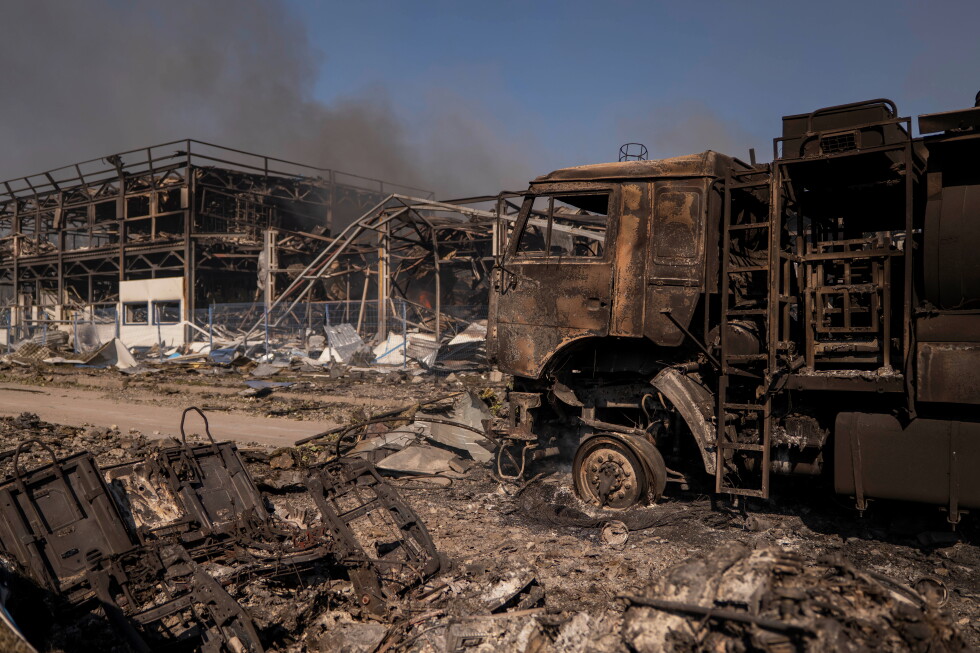
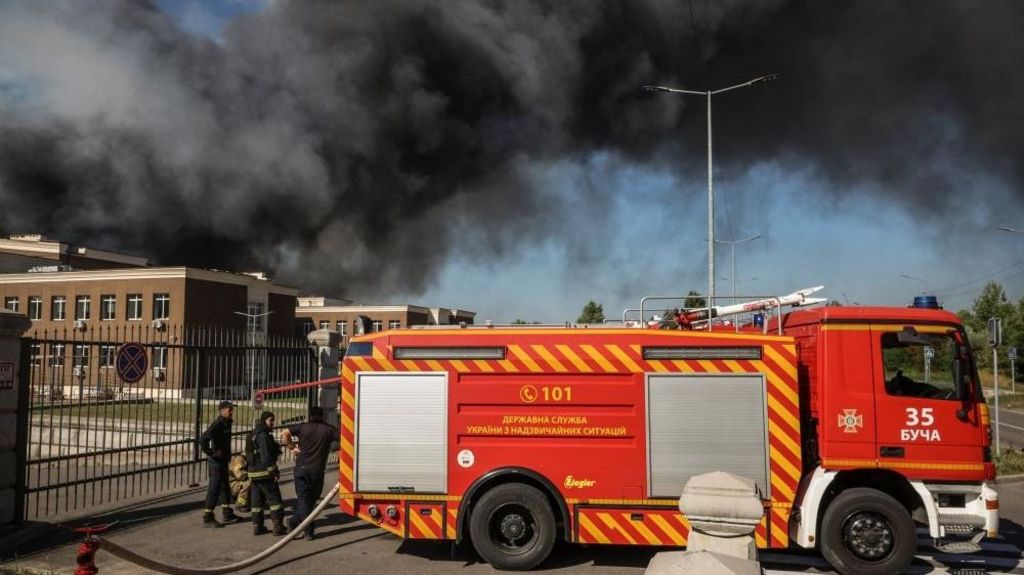
    On a Friday morning in early 2024, a stray uncrewed maritime drone linked to the ongoing war in neighboring Ukraine exploded at Romania’s pivotal Black Sea port of Constanta, marking the third major security incident to strike the NATO member in less than a month and triggering widespread emergency precautions across the country’s eastern coastline. Romania’s Ministry of National Defense confirmed in an official statement that the drone self-detonated at approximately 10:30 a.m. local time, adding that the craft was not part of the Romanian military’s arsenal and had no connection to recent military drills conducted in the Black Sea region. In the immediate aftermath of the blast, Romanian intelligence services, coast guard units and defense personnel moved quickly to secure and cordon off the affected area, and a full evacuation of the site was completed without any reports of injuries or loss of life. This latest incident comes just one week after a Russian attack drone, launched as part of a massive air assault on Ukrainian infrastructure, veered off course and slammed into an apartment building in Galati, a Danube port city in eastern Romania, leaving two people injured. As a NATO member with a direct border with war-torn Ukraine, Romania has faced a growing stream of stray military ordnance and drone incursions linked to the full-scale Russian invasion launched in February 2022, with incidents involving both Russian and Ukrainian uncrewed vessels and aircraft documented in recent months. Just two days prior to the Constanta explosion, Romanian military assets destroyed a separate stray maritime drone in international waters of the Black Sea. Since the outbreak of the war, the Romanian navy has successfully neutralized nine of the 156 drifting sea mines that have drifted into the Black Sea basin adjacent to Romanian territory, according to defense ministry data. In the wake of Friday’s detonation, emergency officials moved rapidly to secure broader coastal areas. Raed Arafat, head of Romania’s Department for Emergency Situations, told reporters that military helicopters were deployed to conduct sweeping searches for additional stray drones, and national emergency alert text messages were sent directly to residents across the affected region. “There is a possibility that there may be other drones,” Arafat told reporters, emphasizing that the sweeping measures were proactive rather than reactive. “We are not panicking. These are preventive measures. If there are other drones, we want to make sure there is not another explosion in an area where people are not evacuated.” By the end of the day, authorities confirmed that more than 1,300 people had been evacuated from multiple popular Black Sea beach resorts, and all main access routes leading to the coastal areas were temporarily blocked to keep civilians out of harm’s way. Romanian President Nicusor Dan praised the rapid, proactive response from law enforcement and national security agencies, noting that officials had acted before the detonation to mitigate risk. “With a military conflict on the border, it is obvious that the security environment we are in is a sensitive one, which is why we will maintain a high level of vigilance,” Dan said, adding that Friday’s incident was an unavoidable “direct consequence of the war of aggression unleashed by Russia against Ukraine.” The president stressed that the government’s top priority remains protecting civilian lives and critical port infrastructure, which serves as a key logistical hub for Ukrainian grain exports amid the ongoing blockade of Ukrainian Black Sea ports. The international community quickly moved to express solidarity with Romania following the incident. French President Emmanuel Macron issued a public statement of support Friday, reaffirming France’s commitment to defending NATO member territory. “We will do whatever your authorities consider as a necessity in order to protect the sovereignty of the land and the air,” Macron said. “You can count on us.” European Council President António Costa also issued a formal statement of solidarity, noting that the European Union stands firmly behind Romania in the face of repeated security incursions. “The EU condemns the repeated violations of airspace of Member States and reaffirms its unwavering commitment to the security of all Member States,” Costa wrote in a social media post Friday. “This is the third significant security incident in Romania in recent weeks. These incidents are a direct consequence of Russia’s war of aggression against Ukraine.” The report was filed by Courtney McGrath from Leamington Spa, England, with additional contributions from Sam McNeil based in Brussels.

  • Nearly 50 people die of thirst in Sahara desert after lorry breaks down

    Nearly 50 people die of thirst in Sahara desert after lorry breaks down

    A devastating tragedy has unfolded in the remote, unforgiving expanse of Niger’s northern Sahara Desert, where at least 49 people have died from dehydration after the truck they were traveling in suffered a mechanical breakdown and left them stranded without access to water, regional authorities have confirmed. The group of travelers was heading back to Niger from Mali, where they had gathered to take part in a regional Muslim festival, when their vehicle became stuck more than 80 kilometers west of Assamaka, a key border checkpoint connecting Niger and Algeria.

    In an official statement released via Facebook by the Agadez Governorate, regional officials outlined the brutal conditions the stranded group faced. “The travelers found themselves trapped in the heart of a hostile environment where extreme temperatures and lack of supply points make survival extremely difficult,” the statement read. Just two people from the first group managed to survive: after days of waiting for help, the pair undertook a dangerous cross-desert trek to reach Assamaka, where they immediately notified local authorities of the emergency.

    According to the governor’s account, the truck had departed from the Malian border town of Telhandek but drifted off its planned route into an unmonitored, isolated stretch of the desert. For several days, the driver, his apprentice, and all the passengers worked tirelessly to fix the disabled vehicle, but their attempts to repair it failed completely. Cut off from any outside sources of water, the group was left completely exposed to the desert’s extreme heat. “Dozens of lifeless bodies were found under the immobile truck and in its surroundings,” the statement added. Once rescue teams reached the site, they recovered the remains of the victims and buried them in marked mass graves.

    In a startling secondary discovery, the rescue team—made up of local emergency personnel and Nigerien military troops—stumbled on a second stranded group while returning from the first recovery mission. This second truck, carrying more than 60 passengers, had also broken down after suffering a battery failure, and the group had already been stranded without aid for three days. The vehicle had departed from Harouba, another Malian town located more than 300 kilometers from the Niger’s northern border. Rescuers immediately distributed emergency water to the exhausted and dehydrated passengers, successfully repaired the truck’s battery, and helped the group continue their journey safely.

    The Sahara Desert that spans northern Niger remains one of the most dangerous transit corridors for irregular migrants from across West Africa who are seeking to reach Europe via North Africa. Thousands of migrants attempt the crossing every year, despite well-documented risks of extreme heat, dehydration, and vehicle failure in remote areas where rescue can take days to arrive. In the wake of the tragedy, the Agadez governor emphasized that the incident highlights the extreme vulnerability of young people who engage in irregular cross-border migration and informal cross-border economic activity. Many of these travelers are forced to traverse ungoverned, high-risk desert areas out of economic necessity, as they seek to escape poverty and access better living opportunities, he added.

  • Israel strikes Lebanese village after warning to several areas

    Israel strikes Lebanese village after warning to several areas

    Escalating tensions across the Israel-Lebanon border boiled over on Friday, as the Israeli Air Force carried out an airstrike on a southern Lebanese village just hours after the military ordered mass evacuations of multiple population centers. The strike comes after Iran-aligned militant group Hezbollah rejected a conditional ceasefire agreement hammered out by Lebanese and Israeli negotiators in Washington this week, derailing a rare diplomatic push to de-escalate a conflict that has already claimed thousands of lives.

    The cross-border violence erupted on March 2, when Hezbollah launched coordinated attacks on Israeli targets to avenge the killing of Iran’s supreme leader on February 28, dragging Lebanon into the broader regional war that Israel and its key ally the United States launched against Iran. Since that opening strike, Israel has pushed into southern Lebanon with its deepest ground incursion in 20 years, steadily expanding its military operations across the border region.

    In the lead-up to Friday’s strike, Israeli military spokesman Avichay Adraee, who handles communications in Arabic, issued multiple urgent evacuation orders. First, he called on residents of three villages north of the Litani River to leave their properties immediately, before expanding the warning to six additional towns and villages, including the coastal town of Sarafand located between Tyre and Sidon. Posting on social platform X, Adraee emphasized the risk to civilian life, writing: “For your safety, you must evacuate your homes immediately and move away from the villages and towns by at least 1,000 metres into open areas. Anyone who is near Hezbollah operatives, their facilities, or their weapons endangers their life!”

    Lebanon’s state-run National News Agency confirmed that thousands of civilians fled the three villages named in the initial warning, and later verified that an airstrike had hit the village of Arqoun. Overnight strikes across southern Lebanon’s coastal city of Tyre left seven people dead, a Lebanese civil defence source confirmed to Agence France-Presse. One of those strikes hit near Jabal Amel hospital in central Tyre, killing four people, wounding seven, and causing minor damage to the medical facility. A second strike on a nearby residential neighborhood killed three more people, including two children, and wounded five others. An AFP correspondent reporting from the scene found a local bank, one of only three operating in the city, left heavily damaged by the blast.

    Hezbollah’s leader Naim Qassem explicitly rejected the Washington-brokered truce during a public address on Thursday, rejecting the conditional deal that required the group to halt all cross-border attacks on Israel. “The ceasefire must be comprehensive… without the Israeli enemy having the freedom to kill,” Qassem said, adding that he urged the Lebanese government to end “the farce and humiliation called direct talks” with Israel. The group has maintained its demand for a full, permanent ceasefire and a complete withdrawal of all Israeli military forces from southern Lebanon.

    Israeli Defense Minister Israel Katz responded by confirming that military operations would continue uninterrupted. “At this stage, [the army] will continue its fire and ground operations… without the return of the population, while continuing to dismantle terrorist infrastructure,” Katz said, adding that Israeli forces retain full authority to strike targets as far north as the Lebanese capital Beirut if Hezbollah continues attacks on Israeli civilian communities.

    The escalating airstrikes and evacuation orders have sparked a humanitarian crisis across southern Lebanon. After Israel ordered most of Tyre’s population to evacuate, hundreds of displaced residents fled to the city’s small, historic old town, which had not yet faced evacuation warnings or strikes and is home to Lebanon’s Christian community in the area. With all official shelters already filled to capacity, many displaced people have been forced to sleep in their cars or improvised tents. Earlier this week, the Israeli military claimed Hezbollah operatives were operating in the old town, threatening to order a full evacuation if the militants remain, pushing hundreds more residents to flee the area.

    Hezbollah has held a unique position in Lebanese politics since the end of the 1975-1990 civil war, as the only militant faction that refused to disarm, arguing that its arsenal was necessary to oppose Israeli occupation of southern Lebanon. After Israeli troops fully withdrew from the region in 2000, international and domestic pressure for Hezbollah to disarm grew steadily, with current Lebanese President Joseph Aoun’s administration taking the hardest line to date on the issue. The Lebanese government has formally declared Hezbollah’s independent military activities illegal, and the Lebanese Army had been working to disarm the group in areas south of the Litani River near the Israeli border prior to the outbreak of the current conflict.

    Since Hezbollah recommenced hostilities in March, joining the regional war against Israel alongside Iran, cross-border exchanges of fire have killed more than 3,500 people in Lebanon alone, according to official data from the Lebanese Ministry of Health. For civilians on both sides of the border, the collapse of the latest truce effort has erased any remaining hope of a quick end to the violence. “We can’t keep doing this,” a 60-year-old resident of Shlomi, a small town in northern Israel, told AFP. “This is not a life.”

  • Turkmenistan’s ‘heavenly’ horses at the heart of fervent state cult

    Turkmenistan’s ‘heavenly’ horses at the heart of fervent state cult

    Against the backdrop of the tightly controlled desert nation of Turkmenistan, one of the world’s most closed countries, the annual Akhal-Teke horse beauty pageant unfolds as a uniquely vivid display of national and political culture. On the arena floor of the capital Ashgabat’s modern equestrian complex, trainers in ornate traditional uniforms trimmed with white fur headgear lead stallions draped in gold ornamentation around the stage, watched by thousands of attendees and presided over by current President Serdar Berdymukhamedov, the son of former leader and self-styled ‘Father of the Nation’ Gurbanguly Berdymukhamedov.

    AFP journalists were granted rare access to the 2024 pageant, a privilege rarely extended to foreign media in the authoritarian Central Asian state. As crowds of men in identical tracksuits waved national flags and clapped in synchronized rhythm, sand-colored stallion Hankerven – adorned with gemstone jewelry and a hand-woven traditional Turkmen carpet – took home the competition’s top honor. For local breeders and citizens, the pageant is far more than a livestock event: it is a celebration of the breed that sits at the core of modern Turkmen national identity.

    “There are no beauty contests for women in Turkmenistan but there are for horses,” explained 70-year-old veteran breeder Ashir during an interview at his stud farm just outside Ashgabat. “We Turkmen are known for our carpets and horses. That is why our flag features carpet motifs and our coat of arms depicts the Akhal-Teke.”

    The fervent state-sponsored focus on Akhal-Tekes, an ancient breed on the global endangered list, is largely rooted in the lifelong passion of former president Gurbanguly Berdymukhamedov, who has built the cult of the horse alongside pervasive personality cults for himself and his son, who inherited the presidency in 2022. Political criticism of the ruling father-son dynasty is banned in Turkmenistan, an energy-rich former Soviet republic that human rights monitors rank among the most isolated nations on Earth, alongside North Korea and Afghanistan.

    Gurbanguly, an avid equestrian, has written multiple books celebrating the Akhal-Teke breed and even recorded a viral rap song dedicated to his favorite foal, Rovach. In the lyrics, he gushes: “You are like the wind at daybreak, you are like a cherished vision. You are an inspiration… more precious than gold.” Another of his personal horses holds a Guinness World Record for the fastest 10-meter dash on hind legs, completed in just 4.19 seconds.

    State-run media regularly frames Akhal-Teke conservation and breeding as a “strategic national priority” and the “unshakeable foundation of Turkmen national identity.” The country’s official 2026 motto has already been set as “Independent neutral Turkmenistan is the homeland of purposeful winged horses,” and the breed is widely known by the reverent nickname “heavenly horses,” a title drawn from an ancient myth of an Akhal-Teke outracing a falcon in a legendary contest.

    With only an estimated 4,000 to 7,000 Akhal-Tekes alive worldwide, the vast majority reside in state-run Turkmen stud farms. A senior official from the State Organisation for Turkmen Horses confirmed to AFP that the breed remains “on the brink of extinction,” but credited the ruling leadership’s intense personal interest with securing its future. A major milestone for the breed came when UNESCO added the “art of Akhal-Teke horse breeding and traditions of horses’ decoration” to its Intangible Cultural Heritage List, a win that state officials call a “major achievement of national cultural policy.”

    Widely celebrated for their athleticism adapted to Turkmenistan’s harsh desert climate, Akhal-Tekes excel in endurance riding, dressage, and show jumping. Retired 66-year-old veterinarian Sapargeldy, who spoke to AFP on condition of not sharing his surname, described the breed’s distinctive physical traits: “large size, long legs, well-developed musculature, slender and elegant head set on a long, straight neck, expressive eyes, high withers and sturdy hooves.” The breed’s most famous feature, he added, is its unique metallic sheen in sunlight, caused by fine, hollow-core hairs that reflect light differently than other equine breeds.

    The Turkmen government traces its celebration of the Akhal-Teke back to pre-colonial nomadic traditions, when tribes roamed the Central Asian desert before the Russian Empire conquered the region in the 19th century. But in modern Turkmenistan, the horse cult is deeply intertwined with the ruling regime’s politics: monuments to Akhal-Tekes dot every major city, and in 2023 Gurbanguly unveiled a 43-meter-tall golden statue depicting himself riding an Akhal-Teke in a pose modeled after Napoleon Bonaparte.

    The breed also plays a central role in Turkmenistan’s limited diplomatic engagement with the world. When rare high-level foreign dignitaries visit the isolated country, they are often gifted a purebred Akhal-Teke as a gesture of goodwill. Past recipients include former French President Francois Mitterrand, Russian President Vladimir Putin, and Chinese President Xi Jinping.

  • Uncle of ISIS bride Zeinab Ahmad denounces terror group as ‘evil’ in bail bid

    Uncle of ISIS bride Zeinab Ahmad denounces terror group as ‘evil’ in bail bid

    In a historic Australian court hearing that marks the country’s first prosecution for slavery offences including crimes against humanity linked to the Islamic State (ISIS), a Melbourne mechanic has publicly condemned the terror group in unflinching terms as he pushes to secure bail for his accused niece, offering up a $75,000 financial guarantee and a permanent home in his household.

    Self-employed tradesman Abraham Abbas took the witness stand on the second day of 31-year-old Zeinab Ahmad’s bail application at the Melbourne Magistrates Court on Friday. When asked directly about his stance on the terrorist organization, Abbas did not moderate his views. “I hate those bastards. Sorry Your Honour, I do,” he told the court. “Sorry for the language — they’re evil and they don’t represent anything we believe in Islam at all.” He confirmed he stood ready to house Ahmad and meet all bail conditions if the court granted her release.

    Ahmad and her 54-year-old mother Kawsar Ahmad made international headlines when they touched down at Melbourne Airport on May 7 after more than 12 years living abroad. Both were immediately taken into custody on slavery and crimes against humanity charges — the first time such charges have been laid against suspects in Australia. Court documents outline that the pair had been held at the Al Roj displacement camp in northern Syria, alongside several minor family members, after surrendering to Kurdish forces following the collapse of ISIS’s final territorial stronghold of Baghouz in March 2019.

    Prosecutors laid out the core allegations against the family during the opening days of the bail hearing, which began Thursday. They claim that Zeinab’s father Mohammed Ahmad, who remains detained in Iraq and has not yet been charged, purchased a 15-year-old Yazidi teenager as a slave for $10,000 in approximately June 2017. The victim was captured by ISIS as part of the terror group’s systematic ethnic and religious cleansing of the Yazidi community in northern Iraq, and was passed between 17 different ISIS fighters before being freed in 2019. In testimony before the court, Australian Federal Police (AFP) Senior Constable Marc Clendenning shared the victim’s account, which details repeated beatings, sexual assault, and forced unpaid labor at the hands of Mohammed Ahmad before she was resold to another ISIS fighter in late 2018.

    While Zeinab Ahmad is not accused of directly assaulting the victim, prosecutors allege she participated in the enslavement by mistreating the teenager, ordering her to complete household labor, and failing to intervene during sexual assaults. Clendenning added that social media posts and private communications from Ahmad to relatives in Australia demonstrate what police describe as “open support for Islamic State activities, objectives, and ideological principles.”

    Law enforcement has formally opposed bail, arguing that Ahmad poses an unacceptable risk to the Australian public, in large part because she has never publicly renounced her connection to the terror group. “The accused has never explicitly renounced or stated that she no longer supports the Islamic State since her surrender to Kurdish forces,” Clendenning told the court.

    Court records confirm that Zeinab Ahmad first traveled to Turkey separately from her family, before relocating to Syria to join ISIS alongside her parents, husband, and other relatives in January 2015. Multiple family members, including her husband Dawod Elmir and two brothers, were killed by coalition forces between 2016 and 2017, according to testimony.

    Defense lawyer Grace Morgan centered her cross-examination of Clendenning on the extreme constraints that women faced under ISIS rule, noting that Zeinab Ahmad was forced to marry three different ISIS fighters over a three-year period, a claim the officer confirmed. Morgan also pushed for details about the availability of state-backed reintegration programs and electronic monitoring that would allow for strict supervision of Ahmad if she is granted bail.

    The bail application was adjourned until June 15 to allow the defense to question AFP Detective Sergeant Greg Adams, who recorded a statement from the enslaved victim in Iraq back in September 2019. The court also confirmed that domestic intelligence agency ASIO had alerted the AFP that Ahmad may hold information about another Australian family currently connected to conflict zones in the Middle East. Kawsar Ahmad, Zeinab’s mother and co-accused, is expected to file her own bail application later this June.

  • Australian cockroach kingpin caught with 100,000 illegal insects in record bug bust

    Australian cockroach kingpin caught with 100,000 illegal insects in record bug bust

    In what Australian authorities have described as the largest seizure of prohibited exotic invertebrates in the nation’s history, more than 100,000 illegally kept live cockroaches have been confiscated from a commercial breeder in New South Wales, officials confirmed Friday. The operation, carried out in May, targeted a breeder operating in the regional city of Bathurst, taking two prohibited species off the black market: Madagascar hissing cockroaches and dubia cockroaches, with a total estimated street value of 200,000 Australian dollars, equal to roughly $142,000 US.

    Among the two species seized, the Madagascar hissing cockroach stands out for its extraordinary size: classified as one of the largest cockroach species on Earth, adult specimens grow between 2 and 3 inches long, far larger than the common native Australian cockroach which only reaches between 0.9 and 1.4 inches in length. Official government photos show the glossy brown invasive invertebrate is actually bigger than an average adult person’s finger.

    Australia is already a nation where cockroaches thrive, with its warm, subtropical climate supporting hundreds of native species across the country. But these two introduced species are banned entirely under Australian law: import, possession, breeding and commercial sale of Madagascar hissing and dubia cockroaches are all criminal offenses, regardless of how the specimens were originally obtained.

    Local Bathurst snake catcher Stefanie Lesser, who has experience dealing with exotic wildlife in the region, explained the illegal black market demand for these large insects to the Australian Broadcasting Corporation. She noted the roaches are primarily sold as a low-cost, convenient feed source for pet reptiles. Because of their large size, reptile owners require far fewer individual insects to feed their lizards and snakes, making the illegal roaches an attractive alternative to regulated feed options. In response, environmental officials are urging reptile and other exotic pet owners to turn to legal alternatives such as crickets or native wood roaches instead of purchasing prohibited invasive species.

    Australia maintains some of the strictest biosecurity border controls in the world, designed to protect its unique native wildlife, $100 billion agriculture and horticulture industries from destructive invasive pest outbreaks. Anyone caught smuggling undeclared or prohibited animal, insect or plant material into the country faces fines reaching thousands of Australian dollars, and can face criminal prosecution for repeat or large-scale offenses.

    In an official statement, the Department of Climate Change, Energy, Environment and Water emphasized that these exotic cockroach species have never undergone formal environmental risk assessment for introduction to Australia. If they were to establish wild populations, they could pose multiple threats to local ecosystems: they may carry and spread novel diseases to native invertebrate species, outcompete native cockroaches for resources, and disrupt local food chains, putting vulnerable native wildlife populations at risk. Authorities have warned that anyone found illegally possessing the prohibited invertebrates will face prosecution, though a department spokesperson confirmed no charges have been filed against the Bathurst breeder as of the announcement. All 100,000 seized cockroaches will be humanely euthanized to eliminate any risk of escape or release into the wild.

  • Pope Leo’s visiting Europe’s migration hot spots. Catholics hope he’ll ease political tensions

    Pope Leo’s visiting Europe’s migration hot spots. Catholics hope he’ll ease political tensions

    Early in his papacy, Pope Leo XIV is stepping into one of Europe’s most polarizing policy debates by planning back-to-back visits to two frontline migration hubs: Spain’s Atlantic Canary Islands next month, followed by Italy’s Mediterranean island of Lampedusa in early July. For years, these small, remote European outposts have borne the brunt of massive migration flows, with tens of thousands of mostly African migrants crossing one of the world’s deadliest migration routes to reach European shores. While overall arrival numbers have dropped this year, particularly in the Canaries, the issue continues to upend domestic politics in both Spain and Italy, two historically Catholic nations grappling with deep ideological divides over migration policy.

    Many faith leaders, aid workers and even the migrants themselves hope the papal visits will shift public conversation away from partisan fighting that has split right-wing factions and pitted them against progressive parties, and refocus the debate on human solidarity and compassionate support for new arrivals. “Stuck in the middle are the migrants,” explained Most Rev. José Mazuelos, bishop of the Canarias diocese that covers multiple islands in the archipelago. “So the church says, ‘Let’s give them a face, because we’re talking about people, not numbers.’”

    One such person is Eslim Jallow, a 27-year-old migrant who left Gambia with his younger brother in 2023, chasing the promise of a more stable, prosperous future before landing in the Canaries. After an initial difficult period of adaptation, Jallow mastered Spanish, completed professional coursework and now works full-time as a programmer and web developer based in Las Palmas de Gran Canaria. “Perhaps the pope will change the way in which people here look at immigrants,” Jallow said. “Immigrants should be treated with dignity and respect, not ignored.” Though Jallow is not Catholic, like the majority of migrants arriving in the islands, he says he believes Pope Leo will amplify the voices of migrants and remind the global community that they are people first, not political talking points.

    Advocacy for just and humane migration policy has long been a core priority for the Catholic Church, dating back to the papacy of Pope Francis. Just one year into his tenure, Pope Francis made his first pastoral trip outside of Rome to Lampedusa in 2013 to honor migrants who died at sea, and three years later brought 12 Syrian Muslim refugees back to Vatican City with him from a visit to Lesbos, Greece. Pope Leo has carried on this legacy, repeatedly calling for dignified treatment of migrants across the globe – most notably decrying mass deportation policies in his home country, the United States.

    Michele Pistone, a Villanova University professor who leads the institution’s new research center on migration, notes that staging these two visits so early in Pope Leo’s papacy sends a clear signal about how high of a priority migration is for the new pontiff. During his June 11 stop in the Canaries, Pope Leo will first visit the port of Arguineguín on Gran Canaria to hold a memorial for thousands of migrants who have died or gone missing while crossing the Atlantic. The following day, he will meet with migrants staying at a reception camp on Tenerife.

    In 2024 alone, the Canary Islands emerged as the epicenter of a major humanitarian crisis, with nearly 47,000 migrants from North and West Africa arriving on its shores, including thousands of unaccompanied minor migrants. Most Rev. Eloy Santiago, bishop of Tenerife whose diocese covers the small island of El Hierro, explained that half of all 2024 arrivals landed on El Hierro – a number nearly triple the island’s permanent resident population. Even though most migrants only stay for a few days before being transferred elsewhere, the influx pushed the island’s already limited public resources to a breaking point. “If a boat arrives, the couple of local doctors have to go out running to take care of them, and then the local residents who had their medical appointments can’t have them,” Santiago said.

    Catholic organizations and charities have been on the ground aiding migrants from the moment they step off the overcrowded, unseaworthy boats that carry them across the ocean. While stricter coastal controls along the African coast have cut arrival numbers dramatically this year, a long-term, unresolved challenge remains: supporting unaccompanied minor migrants who, after being placed in state care, are forced out into the streets with no job prospects or social support once they turn 18.

    For Jallow, this challenge hits close to home: his younger brother, who was paralyzed from the neck down in an accident shortly after arriving in the Canaries and currently lives in a Catholic hospital in Las Palmas, will turn 18 next year, and Jallow says he fears what will happen to him after that. Caya Suárez, secretary general for Caritas, the Catholic charity operating in the Canaries, has seen firsthand how this coming-of-age transition leaves young migrants disproportionately vulnerable. “That’s a very bad moment, even though they’d been waiting for it with hope, because they see they are still stuck without alternatives,” she explained. Caritas works to connect these young adults with housing and employment opportunities, and has even relocated a small number to mainland Spain, including Madrid and small rural communities in Galicia, even as many regional governments have refused to accept additional underage migrants.

    Many long-term Canary Islands residents report feeling abandoned by national and European institutions, left to manage a crisis they did not create as they struggle to stretch already limited resources to support new arrivals. Migrants themselves often come to the islands believing they will soon be able to travel to mainland Europe to build new lives, only to find themselves stuck on the outer edge of the EU, struggling to make ends meet, send money home to their families, or move onward. Compounded by the widespread perception that national and EU policymakers frame this as an “island problem” that local authorities must solve alone, the ongoing strain has eroded morale even among long-time island residents who are historically accustomed to migration flows between the Canaries and Latin America. Bishops across the islands say they hope the pope’s visit will renew energy for local residents who have poured years into supporting migrants. “The pope’s word can help so that in the middle of this fatigue, people can buck up again because they see they are supported,” said Santiago, who was born and ordained as a priest on the islands.

    At the national level, Spain’s Catholic Church has publicly thrown its support behind a new government measure that would grant temporary residency permits to more than half a million undocumented migrants currently living and working in the country, many of whom come from Latin America. The socialist government of Prime Minister Pedro Sánchez and the church both note that these undocumented migrants often fill critical labor gaps in hospitality, agriculture and elder care, boosting Spain’s overall economy.

    Pablo Simón, a political science professor at Madrid’s University Carlos III, explains that the church’s pro-migration stance has put it in direct opposition to Spain’s right-wing and far-right political parties. This has created an open rift between the Catholic Church and far-right groups such as Vox, which often frames its anti-migration rhetoric in religious language but has repeatedly criticized the church’s welcoming stance. The Rev. Fernando Redondo, who leads the migration department of the Spanish bishops’ conference, says the church’s position follows the core Christian mandate to welcome strangers, but acknowledges that the church faces an uphill battle changing perspectives among many faithful who believe migrants take native jobs and rely on public welfare. “We have a big challenge, which is raising awareness among our faithful … that from the viewpoint of faith, to welcome a migrant person is to welcome Christ himself,” Redondo said. “Then, of course, there needs to be ways, proper social and political ways, so that migration doesn’t become a total mess.”

    Across the Canaries, ordinary residents have long been on the front lines of the crisis: local fishermen who hand out fresh water to migrants on flimsy rafts, vacationing sunbathers who run into the surf to help migrants who have reached shore, and volunteers who greet new arrivals in more than a dozen languages. Residents have also seen successful integration in action: one small, depopulating mountain village saw its population, local economy and school revitalized after a reception center for 36 migrant children opened there, even reviving participation in the local church’s annual feast procession.

    It is for this reason that many on the islands are hoping Pope Leo will bring a simple, deeply needed message of reconciliation that centers the human experience of migration rather than partisan politics. “The pope doesn’t support this slogan of ‘let’s go, open doors for the whole world here.’ Nobody supports that,” Mazuelos said. “When here comes a gentleman in a wooden boat after five days in the Atlantic, what are we supposed to do, kick him back? We’ve got to find a way to welcome him.”

    This reporting was contributed by Dell’Orto from Minneapolis, and is part of Associated Press religion coverage supported through a collaboration with The Conversation US, with funding from Lilly Endowment Inc. The AP holds sole responsibility for the content of this report.

  • Nazi party records released online shatter German family myths

    Nazi party records released online shatter German family myths

    For generations, German families have grappled with an unspoken, haunting question: What role did our ancestors play under Adolf Hitler’s Nazi regime? Today, that question can be answered with a few simple keystrokes — and the truth is upending decades of carefully constructed family myth across the country.

    In March, the U.S. National Archives published fully searchable digital scans of approximately 12 million Nazi Party membership cards online. The documents, originally seized by Allied American forces from Nazi Germany following the regime’s defeat in World War II, were previously only accessible to the public via cumbersome microfilm stored at a small number of physical institutions. With the mass digitization and online release, however, secrets hidden for nearly 80 years became available to anyone with an internet connection.

    Major German outlets *Die Zeit* and *Der Spiegel* quickly built free public search tools to help users navigate the vast archive, sparking a national reckoning. Headlines across the country bluntly asked the question on everyone’s mind: “Was grandpa a Nazi?” In the weeks since the archive launched, hundreds of thousands of Germans have searched for their ancestors’ names, going into the process knowing the results may shatter the stories their families passed down for generations.

    For 60-year-old Corinna, who requested her last name be withheld to protect her family’s privacy, the discovery was particularly jarring. Her 26-year-old daughter Helena found irrefutable proof in the digitized records that Corinna’s father had joined the Nazi Party in 1935 — two full years after Hitler seized total control of the German state. Corinna had always known her father fought and was wounded in France and the Soviet Union during the war, but he never revealed his Nazi Party ties. Growing up, she was raised to believe her father, born to a working-class mining family in Germany’s western Saarland region, had been a lifelong supporter of the Social Democrats, Germany’s center-left labor party.

    This collective act of family silence is not an anomaly across modern Germany. While the German federal government has spent decades educating the public, formally atoning for Nazi atrocities including the Holocaust, and preserving memorials to the regime’s victims, many private households have long avoided confronting their own connections to the Nazi past — sometimes even actively rewriting the story.

    Historical data shows that by the end of the Third Reich in 1945, more than one in 10 Germans were registered Nazi Party members. Historian Johannes Spohr, who has spent years assisting families researching their ancestors’ Nazi ties, explains that after the war, this generation created an unspoken family rule that certain topics were off-limits. “Many ex-Nazis didn’t just stay silent, as is often assumed — they actively constructed an alternate version of history,” Spohr told reporters. Most often, this alternate story cast them as reluctant victims of the Nazi regime, or even falsely claimed they were part of the small anti-Nazi resistance.

    Spohr notes that modern public opinion polls bear out this mythmaking: between 11% and 18% of contemporary Germans believe their grandparents actively helped people persecuted by the Nazi regime. But according to up-to-date historical research, the actual share of German families with that legacy is less than 1%.

    Felix Puelm, a 42-year-old history professor currently based at Thailand’s Silpakorn University, is one of many Germans who recently uncovered an unexpected ancestor tie in the new archive. He discovered that his late grandmother had joined the Nazi Party in 1940, when she was 19 years old. By that point, Puelm explains, his grandmother had already witnessed the Nazis launch invasive wars against neighboring European countries, and could clearly see the violent direction the regime was heading. “And yet she still made the decision to join,” Puelm said. He added that while his grandparents never expressed any pro-Nazi sentiment after the war, they chose to hide their past actions from the next generations. Puelm says he now wishes he had learned the truth earlier, so he could have asked his grandmother about her choices before she died.

    Historians say the archive’s records also help add context to ancestors’ choices, shedding light on whether membership grew out of ideological commitment or opportunism. Spohr explains that joining the party before Hitler took power in 1933, particularly in the 1920s, is a strong indicator of genuine ideological conviction. After 1933, however, many new members joined for opportunistic reasons: to advance their careers, secure access to government jobs, or conform to widespread social pressure. Spohr notes that certain professional fields, particularly civil service and education, had extremely high rates of Nazi Party membership, but stresses that no one was legally forced to enroll.

    Looking forward, Puelm says the new accessibility of these records could prompt valuable reflection on the current political moment in Germany, where the far-right Alternative for Germany (AfD) now leads national opinion polls. He hopes the revelations of past family ties to extremist politics will push modern German households to examine the factors that lead people to join radical, anti-democratic parties today.

  • Mount Everest climber recounts moment he lost guide who survived alone for six days

    Mount Everest climber recounts moment he lost guide who survived alone for six days

    In an extraordinary story of survival that has stunned the global mountaineering community, a Nepali mountain guide has been found alive after six days stranded in Mount Everest’s unforgiving \”death zone\”, defying almost all expectations of making it out alive. Hillary Dawa Sherpa, the guide, went missing while descending the world’s highest peak alongside Chris Thrall, a former British soldier, following a grueling multi-day climbing expedition this season.