分类: world

  • ‘Fire came from the sky and burned them’ – life on the brink of civil war in South Sudan

    ‘Fire came from the sky and burned them’ – life on the brink of civil war in South Sudan

    South Sudan, the world’s youngest nation, faces a catastrophic return to full-scale civil war as intensified military operations in Jonglei state trigger mass displacement and civilian casualties. The conflict between government forces loyal to President Salva Kiir and opposition factions aligned with suspended First Vice-President Riek Machar has created a devastating humanitarian crisis.

    Recent fighting has displaced over 280,000 people, including Nyawan Koang, a 30-year-old mother of five who endured a two-day trek to reach the relative safety of Duk village after losing both parents in an airstrike. ‘Fire came from the sky and burned them,’ she recounted, describing how her family became trapped between warring factions.

    The current violence stems from the collapse of a fragile 2018 peace agreement that ended a civil war claiming nearly 400,000 lives. The situation deteriorated dramatically when President Kiir suspended Machar—who now faces charges of murder, treason, and crimes against humanity—and dismissed several senior government figures, including Machar’s wife, Interior Minister Angelina Teny.

    Military operations have intensified as government forces attempt to reclaim territory from the Sudan People’s Liberation Army in Opposition (SPLA-IO), which has been bolstered by White Army militants. Both sides stand accused of committing atrocities against civilians, with the UN documenting 189 civilian deaths in January alone from indiscriminate attacks, aerial bombardments, and targeted killings.

    Despite government claims of responsible conduct, evidence suggests deliberate targeting of non-combatants. In one admitted incident, government soldiers executed more than 20 civilians at close range in Ayod county during late February. Army spokesman Maj Gen Lul Ruai Koang confirmed soldiers and commanders involved have been detained and face court-martial proceedings.

    The conflict exacerbates an already dire humanitarian situation. According to the World Food Programme, 60% of Jonglei’s two million residents face acute hunger, while nationwide, 10 million South Sudanese require food assistance. Relief efforts face monumental challenges due to insecurity, inadequate infrastructure, and seasonal flooding that renders 80% of the country inaccessible during extended rainy periods.

    With peace agreements crumbling and regional instability spilling across borders—over one million refugees have fled from Sudan’s civil war—observers fear South Sudan’s fragile stability may completely collapse, dashing hopes for lasting peace in the war-weary nation.

  • Migrant workers bear brunt of Iran attacks in Gulf

    Migrant workers bear brunt of Iran attacks in Gulf

    The escalating military conflict between Iran and Gulf states has disproportionately impacted migrant worker communities, revealing a stark vulnerability within the region’s socio-economic structure. Since late February, Tehran has launched successive missile and drone attacks against Gulf countries in retaliation for US-Israeli operations, creating a dangerous environment for the area’s substantial foreign labor force.

    Among the civilian casualties documented by international agencies, a significant majority represent migrant workers from South Asian nations. These individuals typically fill essential but low-wage positions in Gulf economies, often lacking the resources or flexibility to evacuate during security crises. The human toll includes figures like Bangladeshi delivery driver Ahmad Ali, whose three-decade tenure in the UAE ended abruptly when missile debris struck his vehicle during routine water deliveries.

    The financial realities binding migrant workers to these danger zones are particularly cruel. Many have incurred substantial debt to secure their positions through recruitment agents, while simultaneously supporting entire families through remittances. This economic dependency creates an impossible choice between personal safety and financial survival.

    Current conditions in affected areas continue to generate psychological distress among resident workers. Frequent air defense interceptions and explosion sounds have become normalized background events, with workers developing various coping mechanisms. As Indian engineer Binoy noted from Mohammed Bin Zayed City, ‘We know they are interceptions, but it is still worrying.’ Similarly, healthcare workers like Filipino nurse Jane describe employing emotional detachment strategies while maintaining professional responsibilities amid the violence.

    The situation highlights concerning disparities in crisis response capabilities, with wealthier residents able to relocate while migrant communities remain exposed. This developing humanitarian aspect of the geopolitical conflict underscores the need for enhanced protective measures for vulnerable populations caught in cross-border military exchanges.

  • Multiple suicide bombers hit Nigeria’s Maiduguri city after years of calm

    Multiple suicide bombers hit Nigeria’s Maiduguri city after years of calm

    The northeastern Nigerian city of Maiduguri faced a devastating return to violence on Monday evening as multiple suspected suicide bombings ruptured years of relative calm. The coordinated assaults targeted key civilian locations including the city’s main market, the University of Maiduguri Teaching Hospital, and areas near the post office, marking a significant escalation in the region’s security situation.

    Emergency services scrambled to respond as hospitals received dozens of wounded victims following the explosions. An AFP correspondent at a city medical facility observed multiple bodies covered with sheets on hospital sidewalks, though official casualty figures remained unconfirmed as authorities worked to assess the full impact.

    The attacks occurred against the backdrop of heightened regional tensions, coming just hours after jihadist militants launched separate assaults on a military post in the Ajilari Cross district and in the Damboa local government area south of the city. According to police spokesman Nahum Kenneth Daso, security forces successfully repelled these earlier incursions, with no civilian or military casualties reported from those engagements.

    Borno State Governor Babagana Zulum condemned the bombings as ‘barbaric,’ suggesting the surge in violence connects directly to intensified military operations in the Sambisa forest—a known jihadist stronghold. The simultaneous attacks demonstrate the persistent threat posed by Boko Haram and the Islamic State West Africa Province (ISWAP), whose 16-year insurgency has claimed over 40,000 lives and displaced approximately two million people.

    The timing appears particularly significant as residents prepare to celebrate Eid al-Fitr, marking the end of Ramadan. Media aide Dauda Iliya emphasized the need for ‘increased vigilance’ during this period of heightened vulnerability.

    This devastating breach of security represents the most serious attack on Maiduguri since 2021, when mortar fire killed ten people. The city had experienced a period of relative stability in recent years as the conflict had largely shifted to rural areas, making Monday’s events particularly shocking to residents who had grown accustomed to peace.

    The violence occurs amidst increased international engagement, with the United States recently deploying technical and training support to Nigerian forces. However, the persistent security challenges underscore the complex nature of counterinsurgency operations in the region.

  • The Gulf’s expat El Dorado faces a costly recovery after the war

    The Gulf’s expat El Dorado faces a costly recovery after the war

    The gleaming metropolises of Dubai, Abu Dhabi, and Doha have long represented humanity’s closest approximation to extraterrestrial colonization—self-contained ecosystems sustained through imported labor, materials, and residents. Now, these Gulf artificialities face their most severe survival test as the escalating US-Israel-Iran conflict transforms their perceived invulnerability into profound vulnerability.

    While the United Arab Emirates, Qatar, Bahrain, and Kuwait possess distinct national identities, their demographic realities reveal extraordinary dependency on transient populations. In the UAE, Emirati citizens constitute barely 10% of the 11-million population, with expatriates and migrant workers comprising the overwhelming majority. This structural fragility becomes critical during security crises, as mobile populations can rapidly repatriate to India, Bangladesh, Philippines, or Western nations, potentially triggering economic collapse.

    The immediate casualties of this geopolitical turmoil are tourism and aviation sectors—industries built on perceptions of safety and luxury. Travelers possess abundant alternatives and will likely avoid war zones indefinitely. Historical parallels suggest prolonged recovery periods: Egypt required nearly a decade to restore tourism numbers after the 2011-14 revolutions, further delayed by pandemic complications.

    Beyond tourism, the conflict jeopardizes emerging economic diversification initiatives. Data centers designed to attract AI companies and financial services dependent on expatriate wealth now face existential threats. While hydrocarbon industries may benefit from elevated oil prices, security and insurance costs for critical infrastructure—including desalination plants and energy facilities—will skyrocket amid missile and drone attack risks.

    The region’s fundamental advantages—strategic East-West positioning, tax benefits, and discreet financial environments—retain long-term value. Dubai has historically succeeded as an offshore haven for global wealth, transitioning from European criminal hideouts to legitimate international business hub. Yet post-conflict reputation rehabilitation will demand massive investment and time, with the allure of sun-drenched security likely diminished for years.

    Ultimately, the Gulf’s artificial economies face not extinction but transformation. Their recovery trajectory will depend on conflict duration, security restoration effectiveness, and their ability to reinvent themselves amidst fundamentally altered global perceptions of regional stability.

  • War on Iran: These are the heritage sites devastated by US and Israeli attacks

    War on Iran: These are the heritage sites devastated by US and Israeli attacks

    Iran’s cultural landscape, bearing witness to millennia of civilization through conquests, artistic renewal, and master craftsmanship, now faces unprecedented threats as its World Heritage Sites become casualties of military strikes. Over the past two and a half weeks, Israeli and American operations have targeted numerous historical landmarks across multiple Iranian provinces, damaging structures that represent both pre-Islamic and Islamic architectural traditions.

    The assault on Iran’s cultural patrimony began dramatically on March 1st when Golestan Palace, Tehran’s sole UNESCO World Heritage Site, suffered significant damage from nearby missile strikes. Iranian media documented shattered windows, compromised mirror and glasswork installations, and historically significant Orsi doors damaged by blast effects. This 14th-century Safavid-era complex, later expanded during the Qajar dynasty, serves as a museum complex representing Persia’s royal heritage.

    In Isfahan, the devastation extended to multiple protected sites within the Naqsh-e Jahan Square UNESCO designation. Chehel Sotoun Palace, commissioned by Shah Abbas I in the 17th century, sustained severe interior damage with photographs showing demolished doors, fractured windows, and debris throughout its celebrated halls. Most tragically, a 17th-century fresco depicting Safavid Shah Tahmasp welcoming Mughal ruler Humayun developed a massive crack through its center.

    The adjacent Ali Qapu palace, part of the same UNESCO designation dating to 1597, suffered similar destruction with its doors and windows shattered. Meanwhile, the historic Jameh Mosque of Isfahan, with architectural elements dating to the 8th-century Abbasid era, lost numerous turquoise tiles in a March 9th blast, with photographic evidence showing smoke plumes rising behind the structure.

    Further west, the ancient Falak ol-Aflak citadel in Khorramabad, dating to the Sassanian period (3rd-7th centuries), was struck on March 8th when Israeli air strikes targeted the adjacent cultural heritage department building. While the main castle structure survived intact, the explosion damaged archaeology and anthropology museums, barracks, and regimental buildings within the complex.

    Iranian officials have characterized these attacks as a ‘declaration of war on civilization,’ noting that the targeted sites represent not just national heritage but human history. With 29 UNESCO World Heritage Sites—the tenth highest concentration globally—Iran’s cultural treasures face ongoing risks as conflicts persist. The international community, particularly UNESCO, faces mounting pressure to respond to what heritage experts describe as an unprecedented assault on global cultural patrimony.

  • Afghanistan blames Pakistan for strike on drug rehabilitation hospital, with dozens feared dead or injured

    Afghanistan blames Pakistan for strike on drug rehabilitation hospital, with dozens feared dead or injured

    A major drug rehabilitation facility in Kabul became the epicenter of escalating tensions between Afghanistan and Pakistan following a devastating aerial attack Monday evening. The strike targeted a hospital where thousands received addiction treatment, resulting in significant casualties according to Taliban government officials.

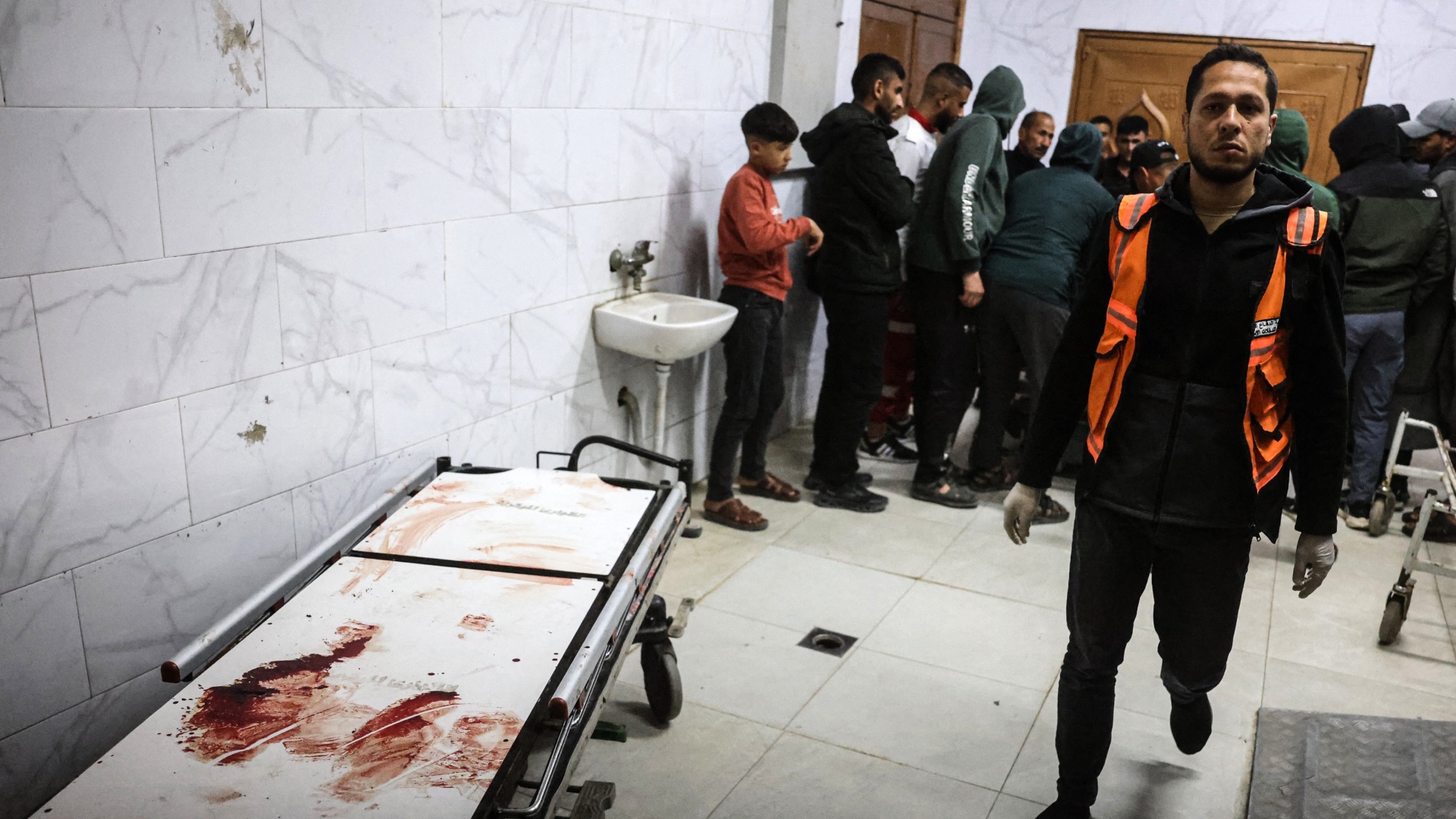
    Eyewitness accounts and BBC correspondents at the scene described chaotic conditions with sections of the medical facility still engulfed in flames hours after the incident. Rescue workers were observed transporting at least thirty fatalities on stretchers while distraught family members gathered outside seeking information about loved ones.

    The Taliban administration swiftly attributed responsibility to neighboring Pakistan, claiming the attack deliberately targeted civilian medical infrastructure. However, Pakistan’s information ministry issued a firm denial, asserting their operations exclusively targeted military installations and what they characterized as terrorist support networks in both Kabul and Nangahar province.

    Hospital administrators revealed that approximately 3,000 patients were undergoing addiction treatment at the time of the explosion. Initial estimates suggest casualty figures could reach into the hundreds given the facility’s occupancy levels and the severity of the damage.

    Afghan health ministry spokesperson Sharafat Zaman Amarkhail explicitly contradicted Pakistan’s justification, stating no military facilities exist in the hospital’s vicinity. Local residents reported hearing powerful explosions approximately at 20:50 local time, followed by aircraft activity and activated air defense systems.

    This incident represents the most severe escalation since cross-border hostilities resumed last month, ending a fragile October ceasefire agreement. The United Nations Assistance Mission in Afghanistan (UNAMA) has documented at least 75 fatalities and 193 injuries resulting from border clashes since February 26th. Pakistan maintains that Taliban-controlled Afghanistan provides sanctuary to militant organizations operating against Pakistani interests—an allegation Afghan leadership consistently denies.

  • Bombs explode in northeastern Nigeria, leaving scores killed and injured, authorities say

    Bombs explode in northeastern Nigeria, leaving scores killed and injured, authorities say

    MAIDUGURI, Nigeria — A series of devastating explosions struck multiple locations in northeastern Nigeria’s Borno state on Monday night, resulting in significant casualties and widespread panic. The coordinated blasts, suspected to be suicide bombings, targeted high-traffic areas including the entrance of the University of Maiduguri Teaching Hospital and two bustling markets known as Post Office and Monday Market.

    Emergency response teams reported scores of fatalities and injuries, though exact numbers remain unconfirmed as rescue operations continue. Sirajo Abdullahi, head of operations at Nigeria’s National Emergency Management Agency (NEMA) in Maiduguri, confirmed the incidents but emphasized that casualty figures were still being assessed.

    The attacks represent a severe escalation in violence for Maiduguri, the regional capital that has been the epicenter of Nigeria’s 17-year conflict with extremist groups. While no organization has immediately claimed responsibility, the bombings bear the hallmark of jihadi extremist factions operating in the region.

    Eyewitness accounts paint a grim picture of the aftermath. Bagoni Alkali, who witnessed the explosions, reported transporting numerous wounded victims to hospitals, noting that emergency departments were overwhelmed with approximately 200 injured patients. Mohammed Hassan, a member of a local volunteer security group, described evacuating 10 bodies from the market areas and emphasized the critical need for blood supplies at medical facilities.

    Borno State Governor Babagana Umara Zulum issued a strong condemnation of the attacks, describing them as “utterly condemnable, barbaric and inhumane” while extending condolences to victims’ families. The governor urged residents to maintain vigilance and report any suspicious activities to security agencies.

    The bombings occur against the backdrop of Nigeria’s complex security crisis, particularly in northern regions where multiple armed groups operate. While military operations had recently reduced attacks within Maiduguri proper, this incident marks one of the deadliest assaults on the city in years.

  • Watch: Reunion resident gets close to lava from erupting volcano

    Watch: Reunion resident gets close to lava from erupting volcano

    For the first time in nearly two decades, molten lava from the erupting Piton de la Fournaise volcano on France’s Réunion Island has dramatically flowed into the Indian Ocean. The extraordinary event marks a significant geological milestone for one of the world’s most active volcanoes, which began its current eruptive phase earlier this month. Spectacular footage has emerged showing a local resident cautiously approaching the mesmerizing lava flows as they steam and sizzle upon contact with ocean waters, creating plumes of acidic gas and new land formations in the process. Volcanologists have been closely monitoring this rare convergence of lava and sea, which last occurred in 2002. The phenomenon has drawn both scientific interest and public fascination, though authorities have established safety perimeters and warned about potential toxic gas emissions. The volcanic activity continues to reshape the island’s southeastern coastline while providing researchers with valuable insights into the dynamic geological processes of ocean-island volcanoes.

  • Cuba hit by total blackout as US fuel blockade bites

    Cuba hit by total blackout as US fuel blockade bites

    Cuba experienced a complete nationwide power grid collapse on Monday, plunging all 9.6 million residents into darkness amid worsening fuel shortages exacerbated by US sanctions. The state-owned electricity provider Union Nacional Electrica de Cuba (UNE) confirmed the total system failure and immediately initiated restoration efforts.

    The catastrophic blackout represents the most severe manifestation of Cuba’s ongoing energy crisis, where daily power interruptions lasting up to 20 hours have become routine across many regions. The island’s deteriorating power infrastructure, combined with critical fuel shortages, has created an unsustainable energy situation.

    This energy emergency intensified significantly following the January 9 cessation of oil imports to the island. The Trump administration’s effective oil blockade, initiated after the US ouster of Venezuela’s Nicolás Maduro, has severely constrained Cuba’s access to essential petroleum products. The fuel shortage has created cascading effects beyond the energy sector, forcing airlines to reduce flights and dealing a substantial blow to Cuba’s vital tourism industry.

    The political dimension of the crisis continues to intensify as President Donald Trump openly advocates for regime change in Havana. Meanwhile, domestic tensions are rising as Cubans face simultaneous shortages of electricity, food, and medicines. Recent weeks have seen unprecedented protests, including pot-banging demonstrations and calls for freedom, culminating in the vandalism of a provincial Communist Party office.

    President Miguel Díaz-Canel acknowledged public frustration regarding the extended blackouts through social media, condemning protest violence while recognizing legitimate grievances. The government has implemented gasoline rationing and reduced hospital services due to the fuel crisis. Díaz-Canel confirmed last week that his administration has engaged in diplomatic communications with the United States amid the escalating crisis.

    President Trump characterized the fuel blockade as a response to what he termed an ‘extraordinary threat’ from Cuba, while simultaneously suggesting potential negotiations. Aboard Air Force One, Trump indicated that a resolution might be possible following current administration priorities regarding Iran.

  • Israel army says ground assault against Hezbollah underway in Lebanon

    Israel army says ground assault against Hezbollah underway in Lebanon

    The Israeli Defense Forces confirmed the initiation of targeted ground operations within Lebanese territory on Monday, marking a significant escalation in the ongoing conflict with Hezbollah militants. Military officials described these incursions as “limited” missions focused on dismantling terrorist infrastructure in southern Lebanon’s strategic strongholds.

    This development follows two weeks of intensified hostilities that have reportedly displaced over one million Lebanese citizens, with approximately 132,000 seeking refuge in collective shelters according to Beirut’s estimates. The Lebanese National News Agency documented continuous Israeli strikes across southern regions, with official reports indicating 886 fatalities, including 111 children, since fighting commenced on March 2.

    The current confrontation originated when Hezbollah, backed by Tehran, launched attacks against Israel in retaliation for the elimination of Iranian Supreme Leader Ayatollah Ali Khamenei during joint US-Israeli operations. Israel responded with comprehensive aerial bombardments before progressing to ground maneuvers.

    Military spokesman Lieutenant Colonel Nadav Shoshani disclosed that operations target new locations where Hezbollah’s elite Radwan unit allegedly positions threats against Israeli civilians. “We understand Hezbollah is intending to expand their operations… firing hundreds of rockets daily,” Shoshani stated, emphasizing the defensive nature of these missions.

    Hezbollah countered with rocket and drone attacks on northern Israel, striking the city of Nahariya where emergency responders treated one individual for blast injuries and six others for smoke inhalation. An AFP correspondent observed smoke rising from Khiam following Israeli bombardment, where Hezbollah reports direct clashes with Israeli forces.

    International reactions have emerged strongly, with Turkey condemning the ground operation as worsening regional instability and potentially creating “another humanitarian catastrophe.” German Chancellor Friedrich Merz cautioned Israel against this path, labeling it “an error.”

    Israeli Defense Minister Israel Katz declared that displaced Lebanese would not return south of the Litani River until security guarantees for northern Israeli residents are established. Notably, Israel has not implemented evacuations in its northern territories despite the intensified conflict, diverging from previous engagement protocols.