分类: world

  • US embassy in Baghdad attacked, fire breaks out

    US embassy in Baghdad attacked, fire breaks out

    The heavily fortified US Embassy compound in Baghdad’s Green Zone came under sustained attack in the early hours of Tuesday, March 17, 2026, with multiple projectiles striking the diplomatic facility and igniting fires within the secure perimeter.

    According to security sources in the Iraqi capital, the assault began on Monday evening and continued into Tuesday morning, representing one of the most significant attacks against American diplomatic presence in recent months. The Green Zone, which houses numerous government buildings and foreign missions, was placed on high alert as emergency response teams mobilized to contain the blazes within the embassy grounds.

    The attack occurred against a backdrop of heightened regional tensions and ongoing security challenges in Iraq. While no group has immediately claimed responsibility, the methodology suggests possible militia involvement. The United States maintains a significant diplomatic presence in Iraq despite periodic security incidents targeting its facilities.

    Pentagon officials have been notified of the incident and are monitoring developments closely. The State Department has yet to issue an official statement regarding potential casualties or damage assessment. Iraqi security forces have cordoned off the area and launched an investigation into the source of the attack.

    This incident marks the latest in a series of security challenges facing diplomatic compounds in Baghdad, underscoring the persistent volatility in the region despite ongoing stabilization efforts. The attack will likely prompt renewed discussions about security protocols for foreign missions in Iraq and may influence upcoming diplomatic engagements in the region.

  • War in the Middle East: latest developments

    War in the Middle East: latest developments

    The Middle East conflict entered a dangerous new phase with significant developments across multiple fronts, escalating regional tensions and global economic concerns.

    In a dramatic escalation, Israeli media reported targeting Iranian national security chief Ali Larijani in overnight strikes, though official confirmation remains pending. This comes after Larijani’s recent high-profile appearance at a Tehran rally where he dismissed US-Israeli attacks as acts of desperation following the February strike that eliminated Supreme Leader Khamenei.

    Tehran experienced loud explosions throughout the night, with an AFP journalist reporting blasts in the city center amid heavy thunderstorms. Simultaneously, Iran’s Revolutionary Guards announced the arrest of ten foreign spies in Razavi Khorasan province, alleging four were gathering intelligence on sensitive sites while others were linked to monarchist terrorist groups.

    The conflict expanded economically as oil prices surged over 5%, with US benchmark West Texas Intermediate reaching $98.32 per barrel. This spike followed several countries resisting former President Trump’s demand for securing the Strait of Hormuz, which Iran has shut down in response to US-Israeli attacks. The critical waterway normally handles one-fifth of global crude oil shipments.

    Energy infrastructure faced repeated attacks as a new drone strike hit the Fujairah oil complex on UAE’s east coast, causing fires but no injuries. This facility, which enables exports bypassing the Strait of Hormuz, was previously targeted on Monday.

    Regional security deteriorated significantly with multiple missile incidents. Qatar intercepted missile attacks after explosions were heard in Doha, while Dubai residents received emergency alerts warning them to “immediately seek a safe place” due to potential missile threats. In Abu Dhabi, falling shrapnel from an intercepted missile killed a Pakistani national.

    Maritime security was compromised when an “unknown projectile” struck a tanker off Oman’s coast, causing minor structural damage but no injuries. Meanwhile, Israel launched widespread strikes in Tehran and began targeting Hezbollah positions in Beirut, where Lebanese media reported hits on three neighborhoods including residential buildings, wounding an Ethiopian woman.

    Iraq became increasingly embroiled in the conflict as a drone and rocket attack targeted the US embassy in Baghdad, with at least one drone crashing inside the compound. Separately, a missile strike on a Baghdad house killed four people, including two alleged Iranian advisors to Tehran-backed groups.

    Amid the escalating violence, China announced humanitarian assistance for Iran, Jordan, Lebanon, and Iraq. Foreign Ministry spokesman Lin Jian stated this aid aims to “alleviate the humanitarian plight faced by local populations,” though specific details were not provided.

  • Rescue crews dig bodies out of the ruins of a Kabul hospital hit in an airstrike blamed on Pakistan

    Rescue crews dig bodies out of the ruins of a Kabul hospital hit in an airstrike blamed on Pakistan

    KABUL, Afghanistan — Rescue operations continued through Tuesday morning at the site of a devastating airstrike that demolished a major drug rehabilitation center in the Afghan capital, with officials reporting approximately 400 fatalities and 250 injuries. The Omid Addiction Treatment Hospital, a 2,000-bed facility, was reportedly struck around 9 p.m. local time Monday, leaving large sections of the building in ruins.

    Afghan authorities have directly accused Pakistan of conducting the lethal strike, characterizing it as a deliberate attack on civilian infrastructure. Deputy government spokesperson Hamdullah Fitrat stated the death toll had ‘so far reached 400 people’ in a social media post, though official numbers remained unverified by Tuesday morning. Local media footage showed emergency personnel using flashlights to extract casualties from rubble as firefighters battled persistent flames.

    Pakistan has categorically denied targeting any medical facility, with Prime Minister Shehbaz Sharif’s spokesperson dismissing the allegations as ‘baseless.’ Information Minister Attaullah Tarar asserted that Pakistani military operations exclusively targeted ‘technical support infrastructure and ammunition storage facilities’ used by Afghan Taliban forces to support ‘terror proxies.’

    The incident marks a severe escalation in cross-border hostilities that began in late February, representing the most intense fighting between the neighboring nations in years. The conflict has continued despite international calls for de-escalation, with both sides exchanging fire along their shared border for three consecutive weeks.

    The United Nations Security Council had earlier called on Afghanistan’s Taliban administration to intensify counterterrorism efforts hours before the hospital strike. Pakistan maintains that Kabul provides sanctuary to militant groups including the Pakistani Taliban and Baloch separatist organizations, allegations Afghan authorities consistently deny.

    With Pakistan declaring itself in ‘open war’ with Afghanistan and the Taliban administration accusing Pakistan of crossing ‘red lines,’ the regional conflict has drawn concern from global observers worried about potential resurgence of other militant groups in the area, including al-Qaida and Islamic State affiliates.

  • Region urged to expel aggressors

    Region urged to expel aggressors

    The strategic Strait of Hormuz has become the focal point of an escalating security crisis in the Persian Gulf, with Iran launching a diplomatic offensive urging regional neighbors to expel American military forces. The development comes more than two weeks after initial U.S. and Israeli strikes against Iranian targets prompted retaliatory attacks on Gulf military and economic assets.

    Iranian Foreign Minister Seyed Abbas Araghchi characterized U.S. security guarantees as “full of holes” in a social media post, explicitly calling on “brotherly neighbors” to remove foreign aggressors whose primary concern he identified as Israeli interests. The rhetoric intensified as Iranian military spokesperson Ebrahim Zolfaghari designated the USS Gerald R. Ford carrier group and its support facilities in the Red Sea as legitimate targets, according to Al Jazeera reports.

    Meanwhile, the United States faces diplomatic challenges in maintaining the critical waterway’s accessibility. President Donald Trump has pressured NATO allies and regional partners for naval assistance in securing the strait, though key allies including Japan and Australia have declined escort missions. In a Financial Times interview, Trump warned of NATO’s “very bad” future should allies refuse cooperation.

    European foreign policy chief Kaja Kallas proposed adapting the Black Sea Initiative model—previously successful in facilitating Ukrainian agricultural exports during the Russia-Ukraine conflict—to ensure hydrocarbon transport through the strait. This proposal highlights growing international concern over potential disruptions to global energy supplies.

    Tehran’s diplomatic posture appears calculated to reshape regional security architecture. Iranian envoy to Saudi Arabia Alireza Enayati told Reuters that Gulf relations require “serious review” to limit external influence, emphasizing that regional nations “are neighbors, and we cannot do without each other.” His comments advocated strengthened ties within the Gulf Cooperation Council framework, including UAE, Saudi Arabia, Bahrain, Oman, Kuwait, Qatar, Iraq and Iran.

    West Asia analyst Nagapushpa Devendra of Germany’s University of Erfurt interprets Iran’s rhetoric as strategic narrative-building rather than immediate escalation. “Tehran frames the issue as external militarization of the Gulf driven by US and Israeli security priorities,” Devendra explained, noting that merely highlighting Iran’s ability to influence the critical energy corridor forces other states to treat it as an indispensable regional actor.

    The security situation remains volatile with recent drone attacks near Dubai International Airport and Fujairah industrial area causing temporary flight suspensions and fires. Simultaneous hostilities continue with missile exchanges between Iran and Israel, airstrikes in Iraq, and renewed Israeli operations against Hezbollah in southern Lebanon.

  • Police in Nigeria suspect suicide bombers in deaths of at least 23 people in Maiduguri

    Police in Nigeria suspect suicide bombers in deaths of at least 23 people in Maiduguri

    MAIDUGURI, Nigeria — A series of coordinated suicide bombings ripped through northeastern Nigeria on Monday night, killing at least 23 people and wounding 108 others in one of the deadliest attacks to strike the conflict-ravaged city of Maiduguri in recent years.

    According to Borno state police spokesperson Nahum Kenneth Daso, the explosions targeted densely populated areas including a major marketplace and the entrance to the University of Maiduguri Teaching Hospital. The attacks occurred during peak evening hours when civilians were most vulnerable.

    While no militant organization has immediately claimed responsibility, suspicion has fallen upon the Boko Haram jihadist network and its splinter factions. The group initiated its violent insurgency in 2009 to impose its extreme interpretation of Islamic law across northeastern Nigeria.

    The bombings mark a significant escalation in violence against civilian targets in Maiduguri, which had experienced relative calm in recent years despite ongoing extremist activities in surrounding rural areas. Emergency services faced overwhelming casualties, with volunteers urgently appealing for blood donations to treat the wounded.

    This tragedy occurs amid a broader pattern of intensified assaults by extremist factions against Nigerian military installations. These attacks have resulted in the deaths of numerous senior officers and soldiers while systematically depleting armory stocks across the region.

    The Islamic State West Africa Province (ISWAP), a Boko Haram splinter group with ties to the Islamic State, has emerged as particularly potent threat. Analysts note the group’s evolving tactics and growing military capabilities pose significant challenges to regional security forces.

  • Nigeria suicide attacks kill 23, wound more than 100

    Nigeria suicide attacks kill 23, wound more than 100

    A devastating series of coordinated suicide bombings has torn through the northeastern Nigerian city of Maiduguri, marking a grim escalation of violence in a region long plagued by jihadist insurgency. Local authorities confirmed that three separate explosions on Monday evening resulted in a tragic loss of at least 23 lives and left more than 108 individuals wounded with varying injuries.

    The assaults targeted critical civilian infrastructure, striking the city’s bustling main market, the entrance gate of the University of Maiduguri Teaching Hospital, and a crowded area near the Post Office flyover. The attacks occurred just one day after suspected jihadists launched a separate assault on a military outpost on the city’s outskirts, signaling a dangerous resurgence of violence in an area that had recently experienced a period of relative calm.

    Eyewitness Mala Mohammed, 31, described the chaotic scenes following the initial detonations. ‘After about two or three minutes, other people who were running along the road started shouting that it was a bomb at the market entrance,’ he recounted. ‘Unfortunately, as they were running towards Post Office, the person who had the explosive device ran into the crowd while people were still trying to escape.’

    The violence has been attributed to extremist groups Boko Haram and the Islamic State West Africa Province (ISWAP), whose 16-year campaign to establish an Islamist caliphate has already claimed over 40,000 lives and displaced approximately two million people across Nigeria’s northeast. Borno State Governor Babagana Zulum condemned the ‘barbaric’ attacks, suggesting they may be retaliation for intensified military operations against jihadist strongholds in the nearby Sambisa forest.

    Security forces have since restored order to the affected areas and implemented heightened surveillance measures throughout Maiduguri to prevent further bloodshed. The tragic events underscore the persistent threat posed by extremist factions despite governmental efforts to contain the insurgency and protect vulnerable civilian populations.

  • Kabul drug rehab clinic in ruins after Pakistan strikes on Afghanistan

    Kabul drug rehab clinic in ruins after Pakistan strikes on Afghanistan

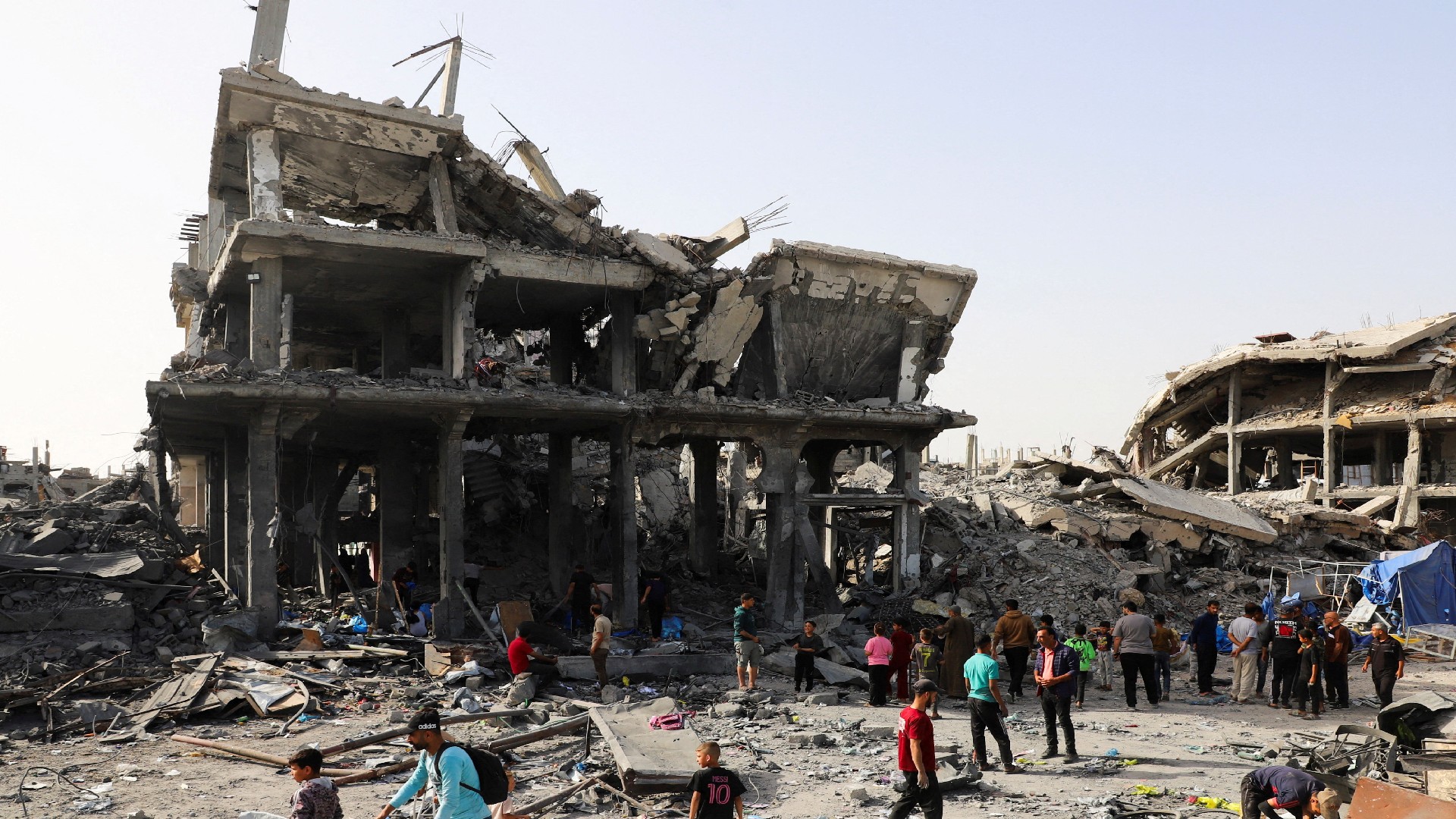
    A major humanitarian crisis is unfolding in Kabul following a devastating Pakistani airstrike that obliterated a drug rehabilitation center on Monday night. Rescue teams continue to sift through smoldering debris in a desperate search for survivors, with Taliban authorities reporting a death toll potentially numbering in the hundreds.

    AFP correspondents at the scene documented at least thirty bodies extracted from the ruins, while medical personnel scrambled to treat dozens of wounded civilians. The facility, which housed approximately 3,000 patients from across Afghanistan, was reduced to blackened wreckage containing chairs, blankets, and fragments of hospital beds amidst human remains.

    The incident has sparked frantic scenes as distraught families gathered outside the destroyed clinic seeking information about missing relatives. Baryalai Amiri, a 38-year-old mechanic searching for his brother who had been admitted 25 days earlier, expressed his anguish: “We are not given the proper information. So far, we don’t know where he is.”

    This tragedy represents a significant escalation in the ongoing border conflict between Afghanistan and Pakistan. Islamabad maintains that its operations specifically target “military installations and terrorist support infrastructure” with precision, denying allegations of striking civilian facilities. Conversely, the Taliban government rejects Pakistan’s accusations that Afghanistan harbors Islamist extremists responsible for cross-border attacks.

    The international community has expressed grave concern. UN Special Rapporteur Richard Bennett voiced dismay at reports of civilian casualties and urged immediate de-escalation, emphasizing the protection of civilians and civilian infrastructure under international law. China confirmed its special envoy has spent the past week mediating between the parties, while regional experts warn that conflict resolution appears increasingly unlikely as both sides demonstrate determination to continue military engagements.

  • Israel strikes Tehran, Beirut as Iraq pulled deeper into Mideast war

    Israel strikes Tehran, Beirut as Iraq pulled deeper into Mideast war

    The Middle East conflict escalated dramatically on Tuesday as Israeli forces launched coordinated strikes against Tehran and Beirut, simultaneously drawing Iraq deeper into a widening regional war that has triggered global economic disruption and massive civilian displacement.

    Israeli military operations targeted what officials described as ‘terror regime infrastructure’ in the Iranian capital, which has endured near-daily bombardment since the joint U.S.-Israeli initiation of hostilities on February 28. Concurrently, dawn strikes hit a residential building in Beirut’s southern suburbs, a known stronghold of the Iranian-backed Hezbollah militant group.

    The conflict, now entering its third week, has resulted in hundreds of casualties and expanded to include Iranian retaliatory strikes against Gulf nations. Lebanese authorities report over one million registered displaced persons since March 2, with approximately 130,000 seeking refuge in more than 600 collective shelters.

    Iraq’s deepening involvement became evident as drone and rocket attacks targeted the U.S. embassy complex in Baghdad’s fortified Green Zone early Tuesday. Additional strikes killed four individuals at a residence reportedly hosting Iranian advisors, highlighting the nation’s continued role as a proxy battleground between U.S. and Iranian interests.

    The economic repercussions have been severe, with global oil prices surging over 40% since the conflict’s inception. The strategic Strait of Hormuz, through which approximately one-fifth of global crude oil passes, has experienced significant traffic disruption due to repeated attacks on oil infrastructure, including major fields in the United Arab Emirates and southern Iraq.

    Australia’s central bank responded to the crisis by raising key interest rates Tuesday, citing ‘sharply higher fuel prices’ directly attributable to the conflict.

    Diplomatic tensions intensified as several nations distanced themselves from U.S. President Donald Trump’s demand for allied participation in securing the Strait of Hormuz. British Prime Minister Keir Starmer indicated London was developing alternative plans with allies but explicitly ruled out NATO involvement, a position echoed by Germany, Japan, Australia, and several European Union members.

    Western allies including Canada, France, Germany, Italy, and the United Kingdom have concurrently urged Israeli restraint in Lebanon, where limited ground operations against Hezbollah have been announced. Israeli President Isaac Herzog countered these appeals, calling for European support in ‘any effort to eradicate Hezbollah now.’

    Iranian Foreign Minister Abbas Araghchi maintained a defiant stance, asserting Tehran’s readiness to ‘continue the war wherever it may lead’ despite significant casualties and infrastructure damage. The UN refugee agency estimates up to 3.2 million people have been displaced within Iran, where security forces previously suppressed domestic protests with lethal force.

  • Israel says it killed 2 top Iranian officials in wartime blow to country’s leadership

    Israel says it killed 2 top Iranian officials in wartime blow to country’s leadership

    DUBAI, United Arab Emirates — Israel has confirmed the targeted elimination of two senior Iranian security officials in overnight strikes, dealing a significant blow to Tehran’s leadership amid an intensifying regional conflict. Israeli Defense Minister Israel Katz identified the deceased officials as Ali Larijani, secretary of Iran’s Supreme National Security Council, and General Gholam Reza Soleimani, commander of the Revolutionary Guard’s Basij volunteer force.

    The targeted officials were instrumental in Iran’s violent suppression of January protests that challenged the theocracy’s decades-long rule. Their removal represents a strategic effort to weaken Iran’s governance structure during what has become the Islamic Republic’s most severe test in recent decades. Israeli Prime Minister Benjamin Netanyahu explicitly stated the objective was to “undermine this regime to give the Iranian people the opportunity to remove it.”

    Meanwhile, Iran continued its offensive operations, launching missile and drone attacks against Gulf Arab neighbors and regional oil infrastructure. Dubai’s airspace experienced temporary closure for the second consecutive day, disrupting international travel through the major transit hub. Iranian officials affirmed their intention to maintain control over the Strait of Hormuz, a critical waterway for global oil transportation.

    The conflict has triggered growing concerns about a global energy crisis as oil prices surge. President Donald Trump acknowledged that NATO and most allies have rejected his appeals to help secure the strategic strait, despite his demands for approximately half-dozen countries to deploy warships. European Union foreign policy chief Kaja Kallas explicitly stated, “This is not Europe’s war,” emphasizing the bloc’s reluctance to participate in a conflict without prior consultation.

    In parallel developments, the Israeli military initiated extensive strikes across Tehran and intensified operations against Iran-backed Hezbollah militants in Lebanon. The Lebanese government reports over 1 million displaced citizens—approximately 20% of the population—with 912 fatalities since the conflict’s escalation two weeks ago.

    The war has also created political repercussions in Washington, with Joe Kent, director of the National Counterterrorism Center, resigning citing concerns about the justification for military strikes in Iran. His departure signals growing unease within Trump’s political base as midterm elections approach, particularly regarding the administration’s departure from “America First” principles and rising gasoline prices.

  • Drone targets hotel in C. Baghdad

    Drone targets hotel in C. Baghdad

    A sophisticated drone attack targeted the Royal Tulip al-Rasheed Hotel within Baghdad’s heavily fortified Green Zone on Monday evening, according to Iraqi security officials. The explosive-laden drone struck the hotel’s rooftop structure, producing substantial detonations heard throughout central Baghdad.

    Security personnel speaking on condition of anonymity confirmed the incident occurred around nightfall, triggering immediate emergency responses from Iraqi defense forces. While preliminary assessments indicate no casualties or significant structural damage, security teams have initiated a comprehensive investigation into the breach of the high-security perimeter.

    The Green Zone represents Baghdad’s most secure district, housing critical government institutions including the Iraqi Parliament, ministerial complexes, and numerous foreign diplomatic missions—most notably the massive United States embassy compound. This fortified enclave has repeatedly faced security challenges in recent years, with frequent rocket and mortar attacks testing its defensive capabilities.

    This latest incident occurs against a backdrop of escalating regional violence that began on February 28th, when broader hostilities erupted involving Israeli, American, and Iranian interests. Security analysts note a concerning pattern of increased attacks targeting international diplomatic installations and military bases across Iraq since the regional conflict intensified. The drone strike methodology demonstrates evolving tactical capabilities among armed factions operating in the region, raising concerns about the potential for more sophisticated attacks against high-value targets.

    Iraqi authorities have heightened security alerts throughout the capital following the incident, while international missions within the Green Zone have been advised to review their security protocols. The investigation continues as authorities work to identify the perpetrators and determine the precise nature of the explosive device deployed in this brazen security breach.