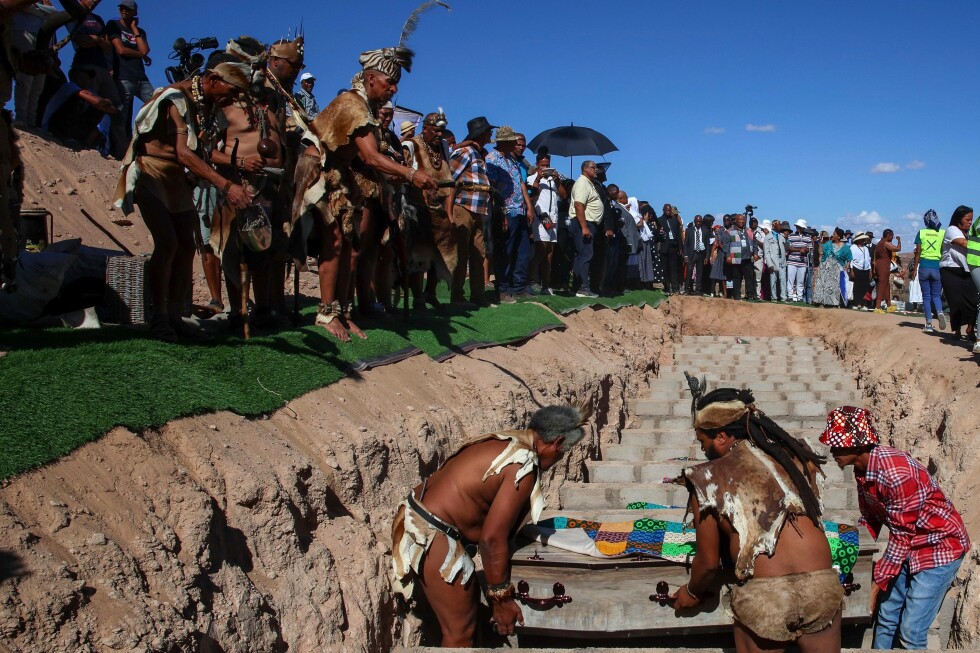
JOHANNESBURG (AP) — In a solemn ceremony marking a significant step toward historical reconciliation, South Africa conducted the reburial of at least 63 ancestral remains belonging to the Khoi and San communities on Monday. The remains, which had been exhumed between 1868 and 1924 and transported to Europe for pseudoscientific research, were recently repatriated from The Hunterian Museum at the University of Glasgow following extensive negotiations initiated in 2022.
South African President Cyril Ramaphosa presided over the ceremony alongside traditional leaders and museum representatives, delivering a powerful condemnation of the colonial-era practices that led to the removal of indigenous remains. He characterized these historical actions as “rooted in racism and used to advance theories of European racial superiority,” noting that human remains had been “dug up and turned into commodities and specimens, displayed under the cold gaze of pseudoscience.”
The repatriation forms part of a broader continental movement across Africa seeking the return of stolen cultural artifacts and human remains. The Khoi and San peoples, widely recognized as southern Africa’s earliest inhabitants, mounted significant resistance against colonial forces, resulting in many deaths at the hands of European settlers.
President Ramaphosa used the occasion to call for greater accountability from former colonial powers, urging European nations to acknowledge the historical injustices inflicted upon African peoples and consider reparations to former colonies. The ceremony represented not only the physical return of ancestral remains but also the restoration of dignity to communities whose heritage had been systematically violated during the colonial era.