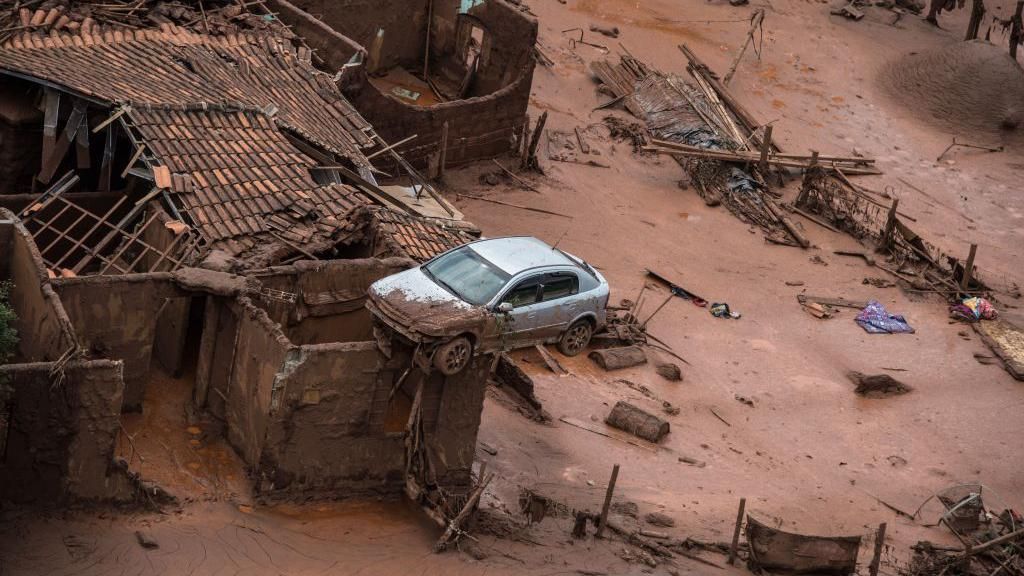
In a landmark ruling by London’s High Court, mining giant BHP has been found liable for the catastrophic 2015 collapse of the Fundão dam in Brazil, an event widely regarded as the country’s most severe environmental disaster. The collapse unleashed tens of millions of cubic meters of toxic waste and mud, devastating communities, claiming 19 lives, and causing extensive environmental damage. The civil lawsuit, representing over 600,000 claimants including individuals, local governments, and businesses, was valued at up to £36 billion ($48 billion). BHP has announced its intention to appeal the ruling, arguing that many claimants have already received compensation in Brazil. The dam, located in Mariana, southeastern Brazil, was owned by Samarco, a joint venture between BHP and Brazilian mining company Vale. The claimants’ legal team successfully argued that the case should be heard in London due to BHP’s UK headquarters at the time of the incident. A separate lawsuit against Vale is ongoing in the Netherlands, involving more than 70,000 plaintiffs. Judge Finola O’Farrell ruled that the decision to continue raising the dam’s height despite safety concerns was the direct cause of the collapse, making BHP liable under Brazilian law. BHP’s Minerals Americas president, Brandon Craig, stated that 240,000 claimants in the London lawsuit have already been compensated in Brazil, which he believes will reduce the scale of UK claims. The case has been marked by disputes between BHP and the claimants’ UK law firm, Pogust Goodhead, which has faced accusations of exploiting vulnerable Brazilians. Pogust Goodhead has denied these allegations, claiming that BHP and Vale pressured claimants into settling for less than their claims’ true value. The Renova Foundation, established by BHP and Vale, has disbursed billions in compensation and repair efforts, including building a new city for displaced residents. However, Pogust Goodhead alleges that a $30.3 billion compensation agreement signed in 2024 prevents claimants from discussing the deal or paying legal fees. The firm claims to have incurred $1 billion in borrowing costs to finance the UK case. BHP has rejected all allegations, stating that Brazil remains the most appropriate jurisdiction for compensation. The case highlights the ongoing legal and ethical complexities surrounding one of the world’s worst mining disasters.
分类: world
-
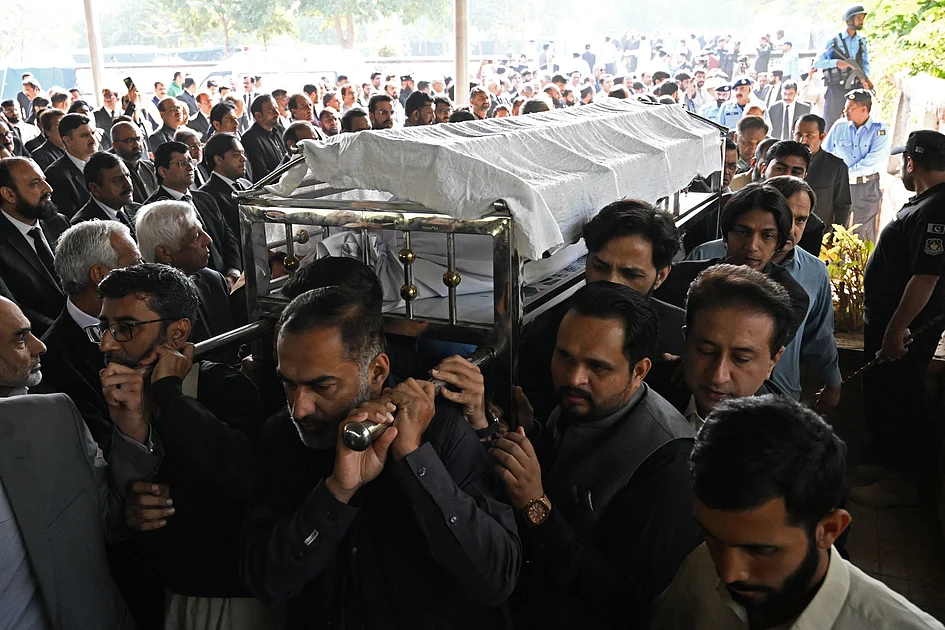
Pakistan says arrested 4 from Afghanistan-based group over Islamabad bombing
Pakistan announced on Friday the arrest of four individuals connected to a suicide bombing in Islamabad, an attack allegedly orchestrated by a group based in Afghanistan. The bombing, which occurred outside court buildings on Tuesday, was claimed by a faction of the Pakistani Taliban, known as the Tehreek-e-Taliban Pakistan (TTP). The attack resulted in 12 fatalities and left dozens injured. According to a government statement, the network responsible for the bombing was ‘handled and guided at every step by the high command based in Afghanistan.’ The arrested individuals include the cell’s alleged commander and three other members, though the specific locations of the arrests were not disclosed. Interior Minister Mohsin Naqvi informed the Senate that the bomber, identified as Usman alias Qari, was a resident of Nangarhar province in eastern Afghanistan. Investigations are ongoing, with more revelations and arrests anticipated. The Islamabad bombing marks a resurgence of militant violence in Pakistan, which officials attribute to armed groups allegedly sheltered in Afghanistan. This incident follows a recent attack on Cadet College Wana, a military-linked school in northwest Pakistan, in which Afghan nationals were reportedly involved. The Taliban government has not directly addressed Pakistan’s allegations but expressed ‘deep sorrow & condemnation’ over both attacks. The accusations have exacerbated the already strained relations between Islamabad and Kabul, leading to recent cross-border clashes that resulted in over 70 deaths, including dozens of Afghan civilians. Despite agreeing to a fragile ceasefire, negotiations to finalize its details have stalled, with each side blaming the other for the impasse. Prime Minister Shehbaz Sharif, addressing parliament, condemned the Islamabad bombing as a ‘horrific act of terrorism’ and emphasized Pakistan’s desire for peace, urging Afghanistan to be a partner in combating terrorism.
-
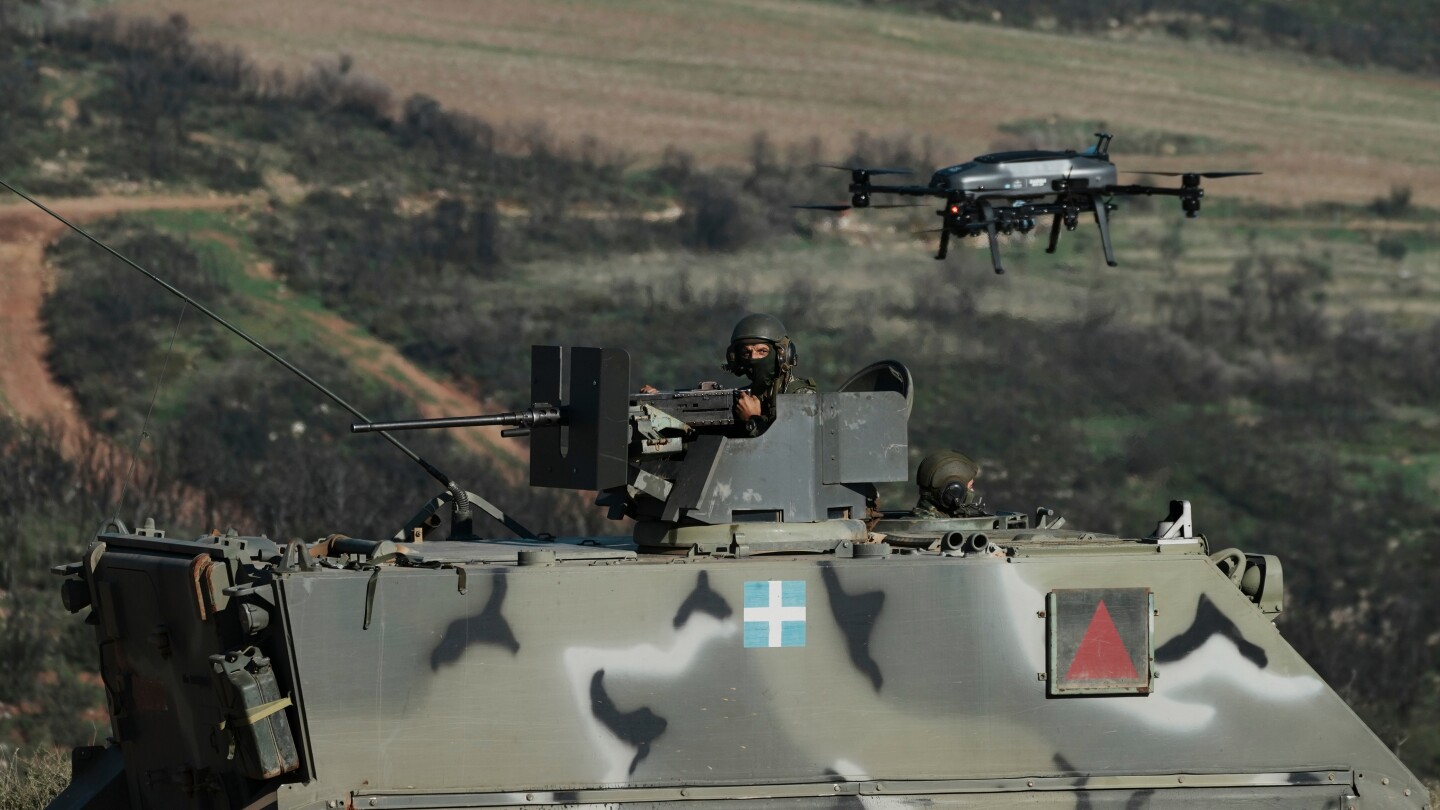
As NATO pushes for faster innovation, drones flood a test battlefield in Greece
Under the pale November sun in Alexandroupolis, Greece, a hillside transformed into a futuristic battlefield. Helicopters soared above tree lines, infantry units maneuvered through smoke and explosions, and a diverse array of drones—quadcopters, fixed-wing models, loitering munitions, and experimental prototypes—orchestrated the mock combat. This marked Greece’s first full tactical exercise testing domestically developed drones and counter-drone systems, a significant step in NATO’s broader push for rapid battlefield innovation. Military observers from the U.S., France, Bulgaria, Armenia, and Turkey witnessed the event, as Greece, historically reliant on imports, joined the global race to develop and deploy its own advanced military technology.
The exercise showcased the versatility of drones in modern warfare. Small quadcopters deployed tire spikes and mines to hinder enemy vehicles, while others laid smoke screens or delivered medical supplies and ammunition to frontline positions. Some drones even carried loudspeakers broadcasting demoralizing messages in English. An experimental two-wheeled ‘tunnel crawler’ demonstrated its ability to leap into the air from confined spaces, carrying explosives, oxygen, or radiation detectors.
Greece’s efforts reflect a broader trend among mid-sized NATO economies, spurred by Russia’s invasion of Ukraine. Countries like Estonia and Denmark have also invested in indigenous drone technology, viewing autonomy and rapid production as critical to deterrence. For Greece, embroiled in a decades-long maritime dispute with Turkey, this initiative is part of a €25 billion overhaul of its armed forces following years of austerity. NATO’s urgency is further fueled by uncertainty over the U.S.’s long-term security commitments to Europe, prompting calls for Europe’s defense sector to adopt a startup mentality.
NATO Secretary-General Mark Rutte emphasized the need for advanced technology and rapid innovation during a recent visit to Romania. Greek companies, particularly small firms, are seizing the opportunity. Dimitris Stefanakis of Ucandrone, a Greek drone manufacturer, noted that Ukraine’s battlefield adaptations have reshaped the industry, favoring agile, innovative companies over larger, slower-moving ones. Greek developers also foresee military advancements accelerating civilian applications, such as disaster response.
Western officials stress the need for Europe to move away from lengthy procurement cycles toward rapid-development ecosystems. Analysts, including Swasti Rao of India’s Jindal School for International Affairs, highlight the decisive role of rapid innovation in modern warfare. Greek Defense Minister Nikos Dendias underscored the profound mindset shift required to adapt to this new era of warfare, emphasizing the transition from large mechanized units to small, technology-driven teams.
-
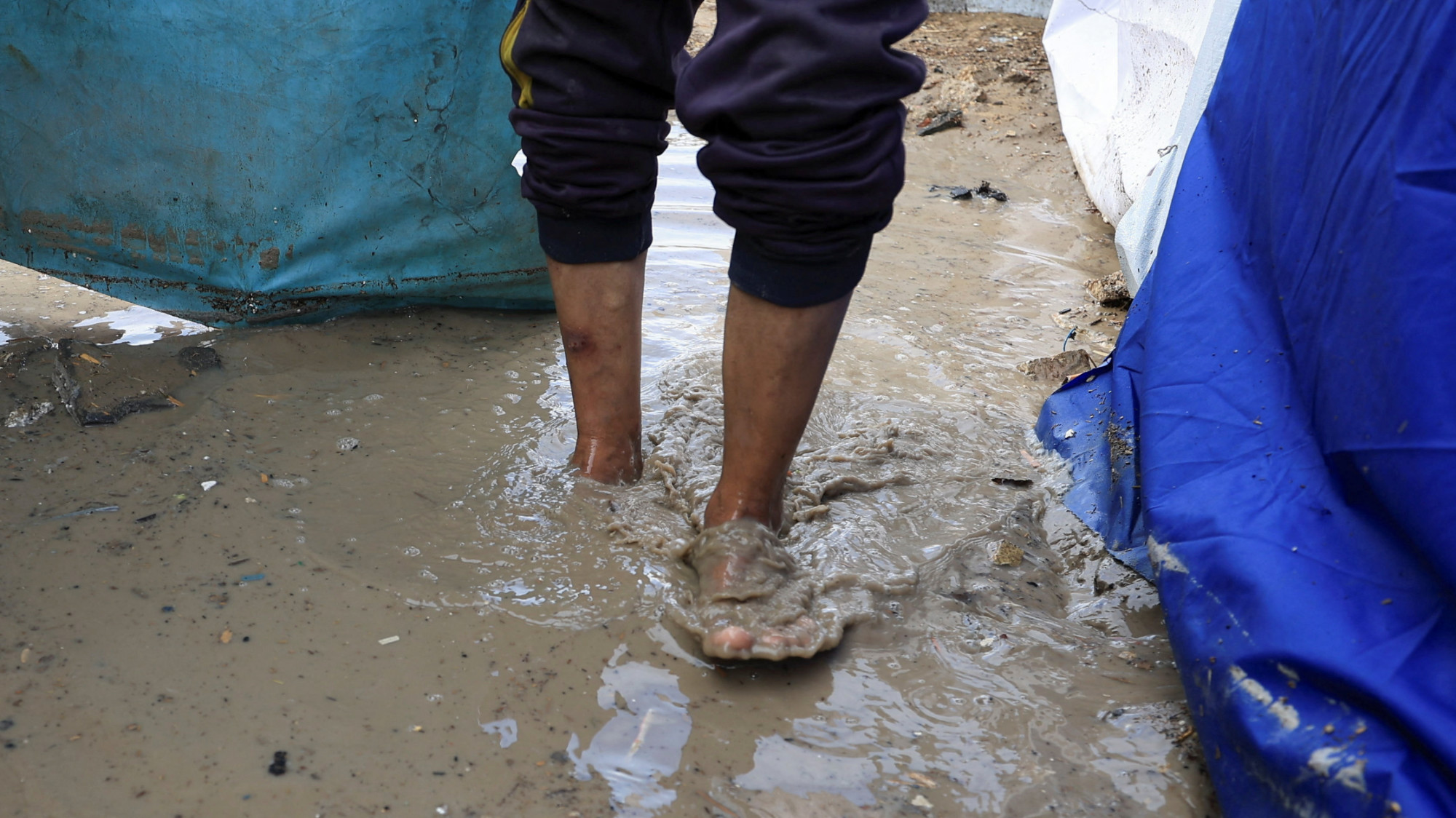
Fears of ‘catastrophic consequences’ in Gaza as rain floods tents
A severe winter storm has brought heavy rainfall and thunderstorms to Gaza, flooding the makeshift tents of displaced Palestinians and raising fears of catastrophic consequences for nearly two million people without adequate shelter. Thousands of families in displacement camps awoke on Friday to find their tents submerged in water, according to local media reports. The Palestinian Civil Defence has issued urgent warnings for residents, particularly the displaced, to take precautions against potential destruction from the storm. The Palestinian Meteorological Department has also alerted the region to the risk of flash floods in low-lying areas and valleys across the Gaza Strip and the occupied West Bank, with strong winds and heavy rain expected in the coming days. Adnan Abu Hasna, spokesperson for the United Nations Relief and Works Agency for Palestine Refugees (UNRWA), emphasized that the storm could have devastating effects on the already vulnerable displaced population. In the al-Mawasi area of southern Gaza alone, over 900,000 displaced individuals are living in tents, with their safety at risk due to the lack of flood-prevention barriers. Across the Gaza Strip, hundreds of thousands more are displaced, many living in cramped conditions with limited access to basic services. The situation is exacerbated by the extensive damage caused during the two-year conflict, with 83% of structures, including homes, schools, and hospitals, destroyed or damaged. The Global Shelter Cluster reports that more than 282,000 homes have been razed or rendered uninhabitable. Despite a ceasefire agreement last month, Israel has restricted the entry of essential shelter supplies and equipment, leaving at least 259,000 families without adequate protection this winter. While the agreement required Israel to allow the entry of tents and mobile shelters, heavy restrictions on relief materials have persisted, with only 150 aid trucks entering Gaza daily—far fewer than the 600 agreed upon. The humanitarian crisis continues to deepen as displaced Palestinians struggle to cope with the harsh winter conditions.
-

5 Chinese nationals killed, 8 injured in traffic accident in Indonesia’s Bali
A devastating traffic accident in Bali, Indonesia, has resulted in the deaths of five Chinese nationals and left eight others injured. The incident occurred early Friday in Buleleng Regency, located in the northern part of the island. According to the Chinese Consulate General in Denpasar, the accident involved a single vehicle, though specific details regarding the cause remain under investigation. The consulate has promptly initiated emergency response measures, providing necessary assistance to the injured and coordinating with local authorities to ensure the deceased are repatriated with dignity. This tragic event underscores the importance of road safety and the need for heightened awareness among tourists navigating unfamiliar terrains. The Chinese government has expressed its condolences to the families of the victims and is closely monitoring the situation to offer further support.
-
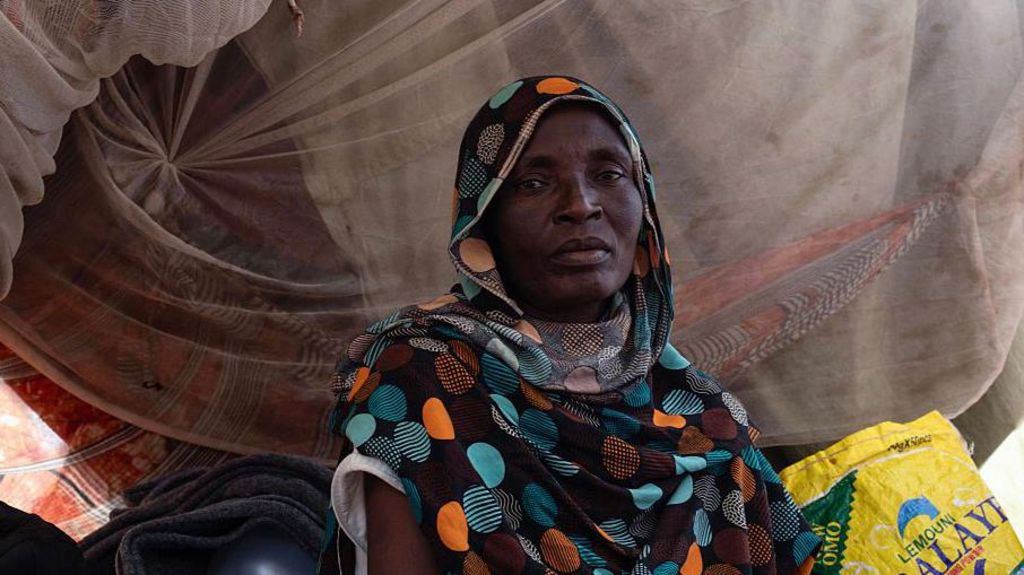
Mass killings probe in Sudan will hold culprits to account, vows UN
The United Nations has announced an independent fact-finding mission to investigate reported mass killings in the Sudanese city of el-Fasher, marking a critical step in addressing what aid groups and the G7 have termed the world’s worst humanitarian crisis. UN human rights chief Volker Türk condemned the international community’s inaction, urging immediate action against the atrocities committed in Sudan’s devastating civil war. Over 150,000 people have been killed, and 12 million displaced, as the conflict continues to escalate. The Rapid Support Forces (RSF), accused of targeting non-Arab groups, captured el-Fasher last month after an 18-month siege. The city, once held by the Sudanese army, has become a focal point of the crisis. The UN mission will analyze digital evidence, including footage and photos of atrocities, to hold perpetrators accountable. Mona Rishmawi, a UN mission member, described the suffering in Darfur as surpassing the Janjaweed militia’s genocide two decades ago. The RSF, which traces its origins to the Janjaweed, is accused of devastating mass killings, rape, torture, and starvation tactics. The G7 recently condemned the violence, calling it the world’s largest humanitarian crisis. US Secretary of State Marco Rubio demanded international action to halt weapons supplies to the RSF, implicating the UAE in the conflict. The UAE denied supporting the RSF but expressed alarm over the attacks in el-Fasher. The RSF and Sudanese army have both rejected accusations of atrocities. Despite calls for a humanitarian truce, fighting continues unabated, with satellite imagery revealing piles of bodies and blood-stained earth in el-Fasher. Amnesty International has identified weapons from Serbia, Russia, China, Turkey, Yemen, and the UAE being used in Sudan, with smuggling routes often passing through the UAE. The UK has faced criticism for British-made weapons allegedly ending up in RSF hands. The UN arms embargo on Darfur, in place since 2004, has not been extended to the rest of Sudan, despite calls from human rights groups.
-

China’s development philosophy inspiring the world
The fifth volume of ‘Xi Jinping: The Governance of China’ has sparked widespread interest among readers in Asia and Africa, who find its insights into China’s development philosophy both enlightening and applicable to their own nations. The book, which delves into the principles and strategies behind China’s rapid progress, has been praised for offering practical solutions to developmental challenges. Readers from diverse backgrounds have highlighted how China’s approach to governance, economic growth, and social stability provides a valuable blueprint for their countries. This global resonance underscores the increasing influence of China’s development model on the international stage. The book’s release coincides with a series of significant events in China, from the transformation of ginkgo leaves into campus art to the arrival of migratory birds in Wuhan, showcasing the nation’s cultural and environmental richness. As China continues to share its development philosophy, it is fostering a deeper understanding and collaboration with countries worldwide.
-
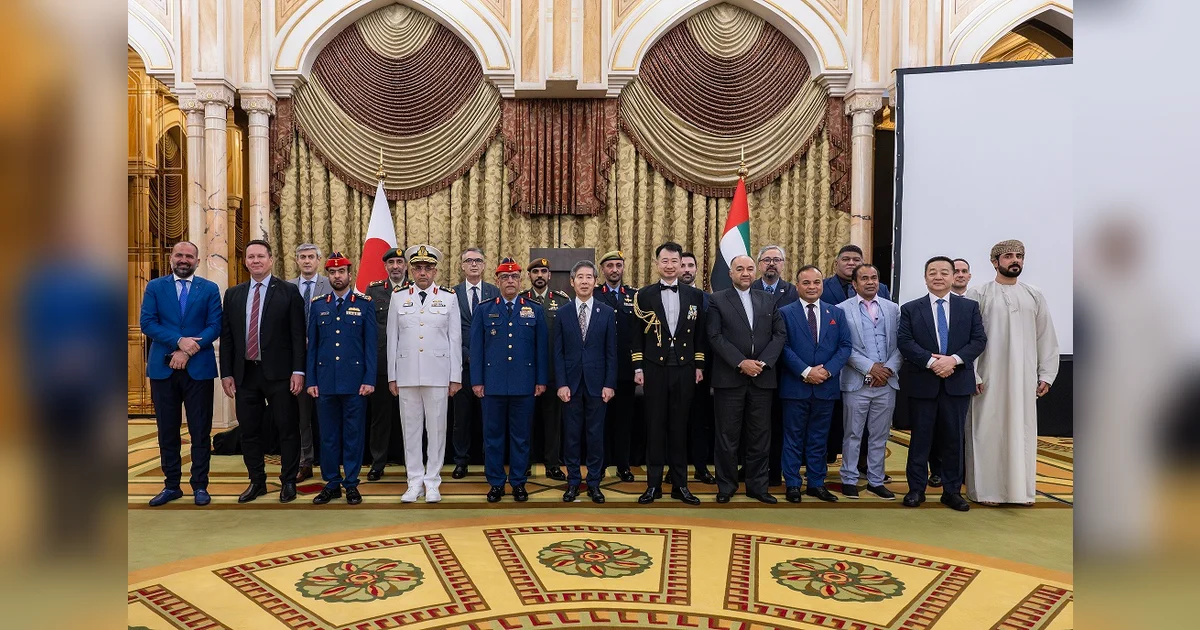
Embassy of Japan in the UAE marks the 71st anniversary of Japan self-defence forces
The Embassy of Japan in the United Arab Emirates (UAE) commemorated the 71st anniversary of the Japan Self-Defense Forces (JSDF) with a grand reception, highlighting the deepening defense cooperation between the two nations. The event, held on November 14, 2025, was graced by senior representatives from the UAE Armed Forces, members of the diplomatic corps, and other distinguished guests. Okaniwa Ken, Japan’s Ambassador to the UAE, and Defence Attaché Commander Kashiwakura Shojiro hosted the ceremony, which underscored the enduring partnership between Japan and the UAE. Major General Ishaq Saleh Mohammed Al Baloushi, Assistant Chief of Staff for Joint Capabilities, attended as the guest of honor, symbolizing the strong bilateral ties. Ambassador Okaniwa highlighted the JSDF’s contributions in the Middle East and expressed optimism for enhanced defense collaboration with the UAE. The celebration was enriched by cultural presentations, including a traditional Japanese tea ceremony by the Urasenke Tankokai Abu Dhabi Association and sushi prepared by Ambassador Okaniwa’s chef, Hisano Kosuke, offering guests a taste of Japanese heritage. This event not only celebrated the JSDF’s legacy but also reinforced the strategic alliance between Japan and the UAE.
-

‘Astonishingly lethal’: BBC reports from site of Russian strike in Kyiv
In a harrowing account from the heart of Kyiv, BBC correspondent James Landale has provided a firsthand report from the scene of a devastating Russian drone strike. The attack targeted a multi-storey residential building in the eastern part of the Ukrainian capital, leaving a trail of destruction and despair. Landale described the strike as ‘astonishingly lethal,’ emphasizing the sheer scale of the devastation inflicted on the civilian population. The incident underscores the ongoing brutality of the conflict, with residential areas increasingly becoming the focal points of aggression. The BBC’s report highlights the human cost of the war, as families are displaced, lives are lost, and communities are shattered. This latest attack serves as a grim reminder of the relentless violence that continues to plague Ukraine, even as the international community grapples with how to respond effectively.
-
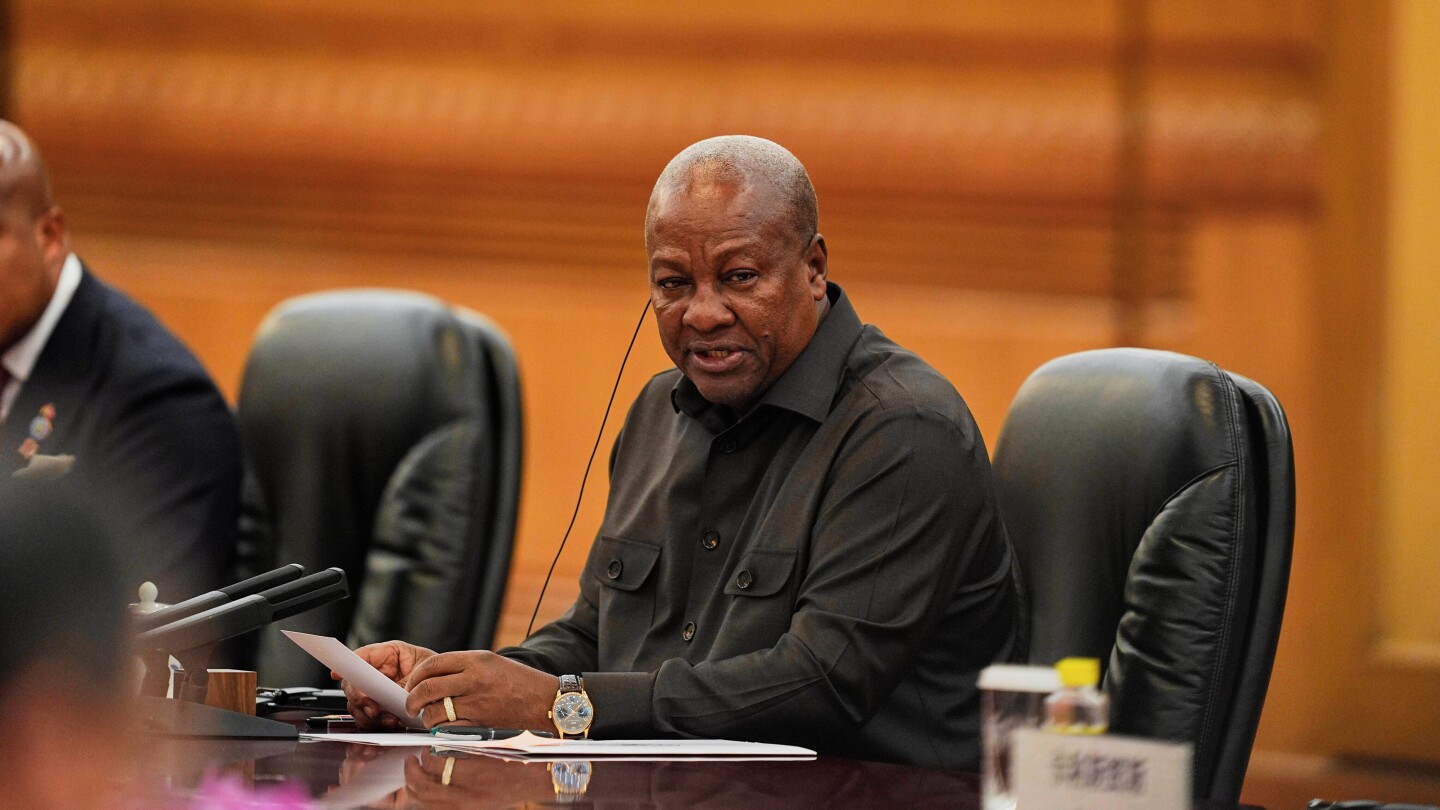
19 migrants deported by US to Ghana have been moved to an unknown location, lawyer says
In a recent development, nineteen West African nationals deported by the United States to Ghana have been relocated to undisclosed locations, raising concerns over their safety and legal protections. Ana Dionne-Lanier, a lawyer representing one of the deportees, revealed to The Associated Press that the group arrived in Ghana on November 5 and were initially housed in a hotel. These individuals are shielded from deportation to their home countries due to the risk of torture, persecution, or inhumane treatment. However, their current whereabouts remain unknown, as neither their families nor legal representatives have been able to contact them. Dionne-Lanier disclosed that part of the group was transported by bus to an unidentified border location between last weekend and Monday, while a second group, including her client, was moved ‘under heavy armed guard’ from the hotel around Wednesday. The Ghanaian government has yet to comment on the situation. This incident is part of a broader U.S. deportation initiative under the Trump administration, which has established secretive agreements with several African nations, including Eswatini, Rwanda, and South Sudan, to send migrants to third countries. The program has faced significant criticism from human rights advocates, who argue that it violates international protections for asylum-seekers and lacks proper screening processes. In September, Ghanaian rights group Democracy Hub filed a lawsuit against the Ghanaian government, alleging that its agreement with the U.S. is unconstitutional and may breach conventions prohibiting the return of individuals to countries where they could face persecution. The U.S. Department of Justice has countered that it cannot control how another country treats deportees, asserting that Ghana has pledged not to return them to their home countries.